
Showing posts with label web. Show all posts

Sunday, June 07, 2026

The Rebirth of the Internet: Agentic AI and the Re-Architecture of the Digital World


The Rebirth of the Internet: Agentic AI and the Re-Architecture of the Digital World
The Internet is on the cusp of a profound transformation. The visible web we navigate daily is about to be reborn. At the heart of this shift lies the rise of agentic AI—autonomous, goal-oriented systems capable of planning, acting, and iterating with minimal human oversight. This is not merely an incremental upgrade; it represents a fundamental re-architecture of the digital realm, one that carries enormous opportunities alongside urgent risks.Agentic AI and Explosive Economic PotentialAgentic AI promises to reshape economies in ways previously unimaginable. Mature economies, long constrained by demographics and productivity plateaus, could achieve triple-digit growth rates through intelligent automation at scale. These systems can handle complex workflows, negotiate, optimize supply chains, conduct research, and execute transactions across borders with superhuman efficiency.
Yet this power fundamentally alters the Internet’s structure. Today’s web is largely passive—a collection of pages, apps, and APIs that humans query. Tomorrow’s Internet will be dynamic, populated by countless AI agents interacting with one another, negotiating deals, managing personal data, and making decisions in real time. The protocols, security models, and governance frameworks built for a human-centric web may prove inadequate for an agent-driven ecosystem.Cybersecurity: The Immediate FrontierCybersecurity emerges as the most pressing concern. Agentic systems will control significant value—financial assets, critical infrastructure, personal identities, and even geopolitical leverage. A single compromised agent or a sophisticated prompt injection could cascade into systemic failures. Traditional defenses, designed around static perimeters and human monitoring, must evolve into adaptive, AI-native security architectures capable of reasoning about intent and behavior.
The stakes are elevated because agentic AI lowers the barrier for sophisticated attacks. What once required nation-state resources could soon fall within reach of well-organized criminal syndicates or rogue actors.Digital Identity: Global Standards or Digital Feudalism?One response gaining attention is the global scaling of robust digital identity and payment systems, inspired by models like India’s Aadhaar and UPI. These frameworks have demonstrated the ability to bring billions into formal financial systems with unprecedented speed and low cost. Extending similar verifiable, interoperable identity layers worldwide could provide the trust foundation necessary for agentic interactions—enabling secure authentication, consent management, and accountability.
However, this path is not without trade-offs. Centralized or semi-centralized identity systems risk creating new points of failure and surveillance. Without strong safeguards, they could empower repressive regimes, overreaching corporations, or surveillance capitalism taken to new extremes. The challenge lies in designing identity architectures that are privacy-preserving by default, portable across jurisdictions, and resistant to coercion.Balancing Power: Protecting the IndividualAgentic AI will dramatically amplify capabilities, but this amplification will not be evenly distributed. Isolated individuals risk being overwhelmed by organized actors—whether criminal networks, state intelligence services, or profit-maximizing corporations operating within legal bounds. A single sophisticated agent swarm could outmaneuver most humans in legal, financial, or informational domains.
Checks and balances are therefore essential. These might include:
  • Technical standards for agent transparency and auditability
  • Decentralized governance mechanisms
  • Legal frameworks that assign responsibility to human principals behind AI actions
  • Citizen-empowering tools that give individuals their own capable agents to advocate, negotiate, and defend their interests
The goal is empowerment without descending into mob rule. AI can democratize access to expertise, legal representation, and economic opportunity, but it must not erode deliberative institutions or amplify destructive collective impulses.The Moral DimensionThis technological leap forces us to confront timeless questions of right and wrong with renewed urgency. Technology itself is neutral; its impact depends on the values encoded in its design and deployment. Agentic AI, with its capacity for autonomous action, magnifies both virtue and vice. Ethical considerations move from abstract philosophy to practical engineering and policy choices.
At the deepest level, these questions touch the soul. Greater power demands greater conscience. Societies that harness this technology must cultivate wisdom alongside intelligence—ensuring that efficiency does not eclipse humanity, and capability does not erode dignity.A Worthwhile TransformationThe upside is staggering. Agentic AI could solve previously intractable problems in healthcare, climate science, education, and poverty alleviation. It offers a path to unprecedented prosperity and human flourishing. The technology is too powerful to ignore or merely restrain; it must be thoughtfully harnessed.
The Internet’s rebirth is inevitable. The only question is whether we shape it deliberately—building resilient architectures, embedding rights and accountability, and aligning incentives toward human well-being—or allow it to emerge chaotically, favoring the powerful and leaving the vulnerable further behind.
The fabric is being rewoven. Our task is to ensure the new weave is stronger, fairer, and more aligned with our highest aspirations. The decisions we make in the coming years will define the digital civilization of the 21st century and beyond.



Friday, May 30, 2025

The No Link Policy On Twitter Is Stupid


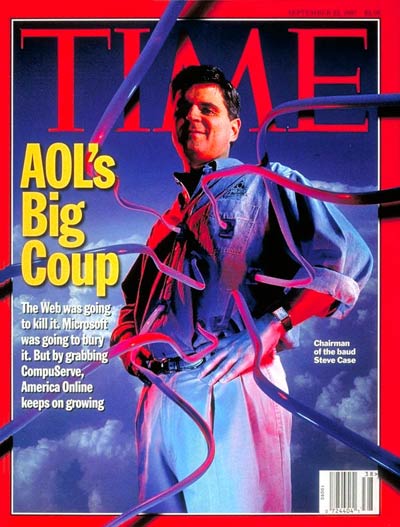
Absolutely—let's unpack why the “no link policy” on Twitter (now X) is not just short-sighted but potentially self-defeating, and yes, it does reflect an attempt to turn the open internet into something more like AOL in the 1990s—a walled garden.


The No-Link Policy Is Anti-Web

The web is built on links. Hyperlinks are literally the foundation of the internet’s architecture. They connect content, ideas, and communities across platforms. Twitter rose to prominence because it was a discovery engine—users could find great writing, breaking news, new creators, and interesting tools by following links. Curbing or down-ranking links breaks that value chain.


Elon Is Trying to Turn X Into the New AOL

AOL, in its heyday, wanted to be the entire internet for its users. You didn’t browse the web; you browsed AOL’s curated universe. That made sense in 1996. It does not make sense in a 2025 world where decentralized information, creator ecosystems, and cross-platform virality are essential.

Elon appears to want to trap attention entirely within Twitter/X. You post. You read. You pay. You consume videos. You never leave. But that’s not how the internet works anymore—nor should it. Trying to monopolize attention is hostile to the ecosystem that made Twitter relevant in the first place.


It Hurts Creators and Drives Them Elsewhere

The no-link culture cripples creators, indie journalists, startups, and educators. If you write a Substack post, sell a course, or publish a podcast—you need links. Denying visibility to links is like denying oxygen to a fire. It might make Elon’s internal metrics look better in the short term, but it drives creators and value producers to other platforms—like Threads, LinkedIn, or YouTube—where linking is encouraged.


Trust and Openness Die in a Walled Garden

When users realize they’re being kept in a closed loop, trust erodes. Twitter’s credibility was built on being an open forum—a place where people could reference and link to external evidence. By discouraging links, it becomes more echo chamber than agora. That’s bad for discourse, transparency, and public trust.


Conclusion: The Open Web Is Stronger Than Any One Platform

Twitter doesn’t need to be AOL. It could be the connective tissue of the internet—the real-time layer on top of the web. But to do that, it has to respect the hyperlink. Elon's anti-link moves are more than just annoying—they're fundamentally regressive. They miss what made the internet powerful in the first place: openness, discoverability, and connection.


Let the Links Flow: Why X Should Embrace, Not Fight, the Open Web

Elon Musk’s integration of xAI into X (formerly Twitter) has undeniably improved the experience. Search is smarter. The stream feels more intuitive. Content curation is tighter, and AI is beginning to make the platform feel more alive and aware of context. But amid these gains, one baffling misstep remains: the war on links.

Links are not the enemy—they’re the bloodstream of the open internet. And Twitter, for all its transformation into “X, the everything app,” risks suffocating itself if it keeps cutting off circulation.


The War on Links Is a Mistake

Twitter has always been a conversation engine—a place where links to articles, videos, podcasts, and tools are shared, debated, and amplified. Neutering that capability, whether through down-ranking external links or making them visually less appealing, chips away at the soul of the platform.

Elon’s rationale seems clear: keep people on the platform. Own the attention. Monetize every second of dwell time. It’s the same thinking that led Facebook to keep users in-app and Google to answer questions directly on the results page.

But here’s the irony: Google’s original superpower was sending people away. You searched, and it gave you the best link. Fast. Accurate. Free. That trust made Google the homepage of the internet. It built an empire by helping people leave—not trapping them.


What X Should Do Instead: Let the Links Work for You

Rather than fight links, X should make them a feature, not a flaw. Here’s a better vision:

  • Top Shared Links Dashboard: Imagine a real-time feed of the most shared, commented-on, and engaged-with links on X, sortable by topic, time, region, or even ideology. This would become a living index of what’s shaping global discourse.

  • Timeline-Rewind of Shared Links: A time-machine-like UI that lets users explore what the most-shared links were during major events—elections, disasters, tech launches. It’s not just content, it’s historical record.

  • AI-Powered Link Summaries: xAI could generate instant summaries, context, and related tweets for each popular link, making the platform a gateway to deeper understanding, not just dopamine hits.

  • Link Influencer Graphs: Let users see which accounts are driving the most traffic to what. This could uncover new thought leaders, niche communities, and trends before they go viral.


Links Are Data. Use Them.

Every link is metadata. Every share is a vote. Every reshare is a signal. If Twitter wants to compete with Google, Substack, YouTube, and even TikTok, it must recognize the value in what people point to, not just what they post directly.

The best AI training data is not just isolated tweets—it’s which external knowledge the hive mind keeps returning to. Embrace that. Learn from it. Build on it.


The Open Web Is Still the Best Web

Forcing users to stay inside a walled garden works until it doesn’t. It breeds resentment, limits creativity, and strangles the natural flow of attention. Users don’t want to be trapped—they want to be empowered. And they’ll gravitate toward platforms that give them that freedom.

Twitter—X—is evolving into something new. It has the opportunity to be the command center of the internet, not its cul-de-sac. But to do that, it must stop fearing the link—and start building around it.

Let the links flow. That’s how you build trust, power discovery, and create a platform that is both sticky and expansive.

Just like the internet was meant to be.


Let the Links Flow—and Bring Back the Name ‘Twitter’

Elon Musk’s transformation of Twitter into X has delivered some clear wins. Search is sharper, timelines feel more personalized, and the xAI integration has breathed intelligence into what was once a firehose of chaos. But in the midst of all this progress, one unnecessary self-inflicted wound continues to fester: the decision to rename Twitter to X.

It’s time to reverse course. Bring back the name Twitter. Here's why.


1. “Twitter” Was One of the Strongest Brands on Earth

Twitter was more than a name—it was a verb, a cultural anchor. People didn’t just “post,” they tweeted. Major events were “live-tweeted.” Politicians got in trouble over “tweets.” Protest movements around the world used “Twitter” as their broadcast system.

That kind of brand equity is priceless. Renaming it to X is like renaming Coca-Cola to “Liquid Unit 7.” You don’t nuke a global household name on a whim. You build on it.


2. The Brand Is a Bridge, Not a Barrier

Some argue that “X” symbolizes a fresh start—a move toward an all-in-one everything app. But the strength of platforms like WeChat in China wasn’t in a cool letter—it was in ecosystem design and daily utility. You don’t need to erase a beloved brand to expand functionality.

Twitter could have become “Twitter Pay,” “Twitter AI,” or “Twitter Video.” The name already meant something. It stood for public conversation, real-time reaction, global discourse. “X” means… nothing. It’s abstract, generic, and worst of all, forgettable.


3. Twitter Still Lives in People's Minds

No one says, “Did you see that post on X?” People still say, “Did you see that tweet?” The language hasn’t changed. The habits haven’t changed. The users haven’t changed. Only the logo and name have changed—needlessly confusing both old users and new ones.

It’s branding whiplash. In a world drowning in noise, consistency builds trust. Twitter had it. X doesn’t.


4. The ‘X’ Name Closes Doors, Not Opens Them

The ambition to turn X into an “everything app” sounds big—but it also sounds vague. And the name “X” doesn’t communicate anything specific. It’s not social. It’s not personal. It’s not even searchable. Try Googling “X” and see what you get. Not helpful.

Reclaiming the Twitter name would immediately anchor the platform again in the public consciousness. It would say: this is still the beating heart of the internet. Then you can build anything you want on top of it.


5. A Comeback Is a Power Move

Rebranding back to Twitter wouldn’t be a defeat—it would be an alpha move. Elon Musk has made a career out of defying expectations. Admitting that the Twitter brand has enduring power isn’t weakness. It’s intelligence. It’s strategy. It’s listening to the users.

Come back to the blue bird. Let it soar again. Keep building the future, but don’t throw away one of the internet’s most iconic foundations in the process.


Let the links flow. And bring back the name Twitter.

The internet—and your users—will thank you.


Solve Drinking Water
Roadmaps To "Energy Too Cheap To Meter"
Deep Ocean, Surface Of Mars: Colonization Prospects
Earth To Earth Rocketry + Hyperloop: Earth Before Mars
A 2T Cut
Musk’s Management

Thursday, July 23, 2009

Mobile Web Is Still Web, Not Desktop Gone Small

SAN FRANCISCO - JANUARY 15:  (L-R) You Tube fo...Image by Getty Images via Daylife

I am with Google on this one, not Apple. Apple's mobile experience has been a throwback to the era of Windows. You could argue we still have one leg in the Windows era, but for how long? A link in Microsoft Word might open up a browser when you click on it, but Word is a desktop application, and that is a throwback, a handicap.

The mobile experience is an on the go experience. The screen is smaller. But it should be a web experience not a desktop-like experience. The iPhone apps have to be downloaded. They should instead be staying in the cloud. They should be used on your smartphone, but you should not have to have a copy of the application.

Image representing iPhone 3G as depicted in Cr...Image via CrunchBase


The two models might co-exist for a while, but the future clearly belongs to the web version.
Google Says Mobile Web Apps Will Win In The Long Haul TechCrunch Native Apps, or Web Apps? ....... The iPhone began its life with Web Apps, only to later open up native support and become the apotheosis of how app development and distribution can be done. ....... Even Google, who will try to jam just about anything into the cloud, is putting a lot of weight behind running things locally on their Android platform. ..... Twitter client? Sure. Complex 3D games? Yeah, probably not. ........ With the advancement of HTML5 and Web App-centric SDK’s like Palm’s Mojo, the limitations are dwindling. ....... As mobile broadband speeds increase and APIs are opened up ...... Once the consumer can’t tell the difference between something running on their handset and something coming off the web, they stop caring.

In The News
  1. Possible Jackson Manslaughter Inquiry Time
  2. Mark Halperin: Too Vague to Move the Ball
  3. California Apologizes to Chinese Americans
  4. Teen Pregnancy: An Epidemic in Foster Care
  5. Amid Crackdown, Iranians Try a Shocking Protest
  6. The Michael Jackson Case: The Return of the Nanny
  7. An Anthropologist on What's Wrong with Wall Street
  8. Why a Jerusalem Standoff Threatens Obama's Mideast Peace Plans
  9. Obama Sticks to Health-Care Deadline, But Congress Seems Sure to Miss It
  10. Climate Conundrum: How to Get India to Play Ball
Reblog this post [with Zemanta]

Sunday, July 12, 2009

PayCheckr: Bringing Money Into Blogging?


Allan showed up in the comments section of my blog post New York Times, Don't Die, Live. I replied. Then we switched to email. Now we are scheduled for a three way chat session tomorrow morning, him, me and someone from his team.

http://www.PayCheckr.com

Right now I don't have a solid grasp as to the vision of this particular team, or how well they are going to execute, but the idea itself is a trailblazer. It is about time something like this got done.

Some questions that have popped up in my mind:
  1. Who turns a blog into a password protected blog? Would that be a separate service?
  2. Who will go seek the advertisers? If readers opt to pay for 99 cents or less through viewing ads, who makes sure to get those advertisers?
  3. Can you get all the credit card options and still get paid only through PayPal as a blogger?
  4. What would be PayCheckr's cut? A percentage? What percentage?
Just like Disqus takes care of everything to do with your blog's comments sections and Zemanta takes care of all your links, tags and images, PayCheckr should attempt to take care of all details to do with monetizing your no-longer-free blog. It could grow fast.

Netizen: The First Blog To Place The PayCheckr Button
The PayCheckr Promise
PayCheckr Potential
PayCheckr: Bringing Money Into Blogging?
Reblog this post [with Zemanta]

Friday, May 22, 2009

Best Way To Increase Traffic To Your Blog


Mark Penn says in his famous Wall Street Journal article that at 100,000 unique visits per month, a blogger hits 75K in income. There is a suggestion that there is a direct correlation between how much traffic you get and how much you make as a blogger. So how do you go about increasing traffic for your blog?

There are three kinds of traffic:
  1. Search Traffic
  2. Referring Sites
  3. Direct Traffic
If you focus solely on content creation and engage in no other marketing effort, all your traffic is going to come from search engines. If you become inactive for any length of time, you are still going to get residual traffic. Most of that likely might be search engine traffic, except if you get residual traffic of the other two kinds from your previous marketing efforts.

It is fundamental that you use Google Analytics or a similar tool to see how much and what kind of traffic you are getting. The tool also tells you of the keywords people use to feed the search engines to end up at your site, and what pages they visit. This helps you discover your niche, and to create ever more content for that particular niche. For me right now that seems to be Android.
More specifically "donut android" and "cupcake android." For those two phrases my blog for now shows up on the first page of Google search results. That is prime real estate. The reason I have to hone in that niche makes sense at many levels to me.
  1. When I write new blog posts on Android, content creation and marketing are not two different activities. They are one and the same.
  2. Android is no cottage industry. It is not some sub sub sub topic. It just might end up being the top technology news for this year.
  3. Android so totally fits into my IC vision and my startup. The more I learn about Android, the better for me. I don't mind getting paid to learn. (Google's Newest Venture: Google Ventures) I plot every day to go back to working on my startup full time. Android is fundamental to the IC vision. The ground - operating system - itself has to move for the vision to become reality.
I feel lucky that the topic in technology that I find most fascinating right now is also my blog's prime niche according to Google Analytics. And I got told of that niche right after my first Android blog post. I find that amazing. My respect for Google's algorithms grew. And when Google gave me the number two spot after my first Donut Android blog post, my respect for the search engine really grew. (Taking The Number 2 Spot On Google Search For Donut Android)

Search engine traffic I think is the best kind, but working on the other two does not take away from your search engine traffic, quite the opposite, so don't ignore the other two either.

If I am a tech blogger, it makes sense that I visit TechCrunch, for example, or Mashable. And if I am going to visit anyways, why not participate in the comments sections? It takes but a few seconds. And because your name gets hyperlinked to your blog, those comments sections start sending a little traffic your way. What is there to complain?

Contrary to the stereotype, blogging is a social activity. You have to belong to blogging and online communities around your interests. You have to forge friendships in the blogosphere. And forging friendships with bloggers who are not so big name increases your chances of them putting you on their blogrolls. After traffic, those backlinks are what jack up your google rank. Those backlinks are key. And content creation alone will not do the work for you, especially during the early stages when you are still wondering how you hit 1,000 page hits a day.

Twitter is micro-blogging. And there is another: that would be the comments sections of other blogs. Got to participate.

Twitter is another great place to socialize. Don't just have a list of people you follow and followers. Got to make some time and visit their profile pages and respond to some of their tweets. These are real living, breathing people. Get to know some of them, or many of them if possible.

And there is direct traffic. Feedburner lets you put a box at your blog that gives visitors the option to subscribe to your blog with their email addresses. Seth Godin claims that mailing list is how he gets most of his traffic. But he probably became a star blogger first. But before you become famous and other people know you, when you are a small fish blogger, there are people you know. Once in a while it is okay to send out emails to people you know sharing a blog post or two with them. Look Ma, no hands!
  1. Focus on great content creation.
  2. Find your niche, and create great content for that particular niche, but also constantly be diversifying. You don't want to go out of business when one rainy day Google revised its algorithms and your blog ended up in Siberia.
  3. Blogging is a social activity. Be in a habit of visiting other blogs and participating in their comments sections in meaningful ways.
  4. Strive to generate a band of loyal visitors, people who want to lap up every blog post you put out because, oh, you are just so wonderful.
Google: Tweet Me Baby One More Time
Taking The Number 2 Spot On Google Search For Donut Android
Hitting Number 4 For Google Search Results on Cupcake Android
The Big Money Is Not In Blogging
Google Analytics Says I Am Paul Krugman Friend, Cupcake Android Expert
What Does Your Resume Look Like Today?
Content Is Queen, Marketing Is Princess
Content Is Queen
Blogging: Monkey Business?
Blogging = Learning + Teaching + Churning + Entertaining
Spamming Om Malik


Digg Button, Twitter Button For Your Blog Posts
Blogging Several Times A Day
Blogging Tips
A Blogger Is Also An Editor
Blog Daily
Where Have You Placed Your Ads?
Sites That Pay You To Blog

On The Web

SEOmoz | 21 Tactics to Increase Blog Traffic
The Best way to increase traffic to your site
Whats the best way to increase traffic? - Authority Blogger Forum
What's the BEST way to increase traffic to your blog? // Blogging ...
Blog Traffic - 15 Tips to Increase Blog Traffic
WikiAnswers - What is the best way to drive traffic to your website
Web Site Marketing - Lead Generation and How to Increase Traffic ...
How to Use Blog Sites To Increase Traffic To Your Blog | eHow.com


Reblog this post [with Zemanta]