
The impending Age Of Abundance was prophesied in the scriptures thousands of years ago.
Friday, August 28, 2026

28: Sam Altman
Easy cure:
— Paramendra Kumar Bhagat (@paramendra) August 27, 2026
Shabnam's CloudWorld Adventures: Shabnam And The Lost Rainbow (Age 7) (Book 1: Age 7) https://t.co/OsTd9NS0LB
might be the best advice on the internet https://t.co/0bD93mCrV1
— parm🔬 (@parmita) August 28, 2026
Why do you think I am so crazy about robots? https://t.co/7MILv7pDqb
— Robert Scoble (@Scobleizer) August 28, 2026
the problem isn’t that you were treated by crap by someone that doesn’t deserve you, the problem is that you allowed it. the problem isn’t getting over them, the problem is accepting yourself for who you are without them. not easy problems
— critter (@BecomingCritter) August 28, 2026
You are so incredibly right.
— parm🔬 (@parmita) August 28, 2026
it’s true. in order to tolerate bad treatment people internalize self hatred. then they pave that over with silence. it’s time to stop doing that
— quite quiet (@babarganesh) August 28, 2026
Many people in the US 🇺🇸 want to give and it’s much easier for them to give freely and to give as much as possible if they do it through a US based Not-For-Profit.
— Pukar C. Hamal 🏔🗽 🌁 (@pchamal) August 28, 2026
The tax incentives in the US to donating to a Nonprofit 501(c)3 are meaningful and are designed to maximize giving.… https://t.co/5WSSyBOcwg
🇳🇵 Nepal — on the ground and trying to help.
— Craig De Meillon (@craigoz82) August 28, 2026
If you have friends, family or colleagues who are stranded, isolated, unable to communicate, need help getting information out, or need assistance reconnecting with their embassy or getting back to safety, please message me…
Thousands of New Yorkers woke yesterday to devastating news from home. Flooding along the Nepal-Tibet border has taken hundreds of lives, and the search for those still missing continues.
— Mayor Zohran Kwame Mamdani (@NYCMayor) August 27, 2026
To our Nepali and Tibetan neighbors: this city knows what it means to grieve a place you…
Impressed by @SwarnimWagle, Nepal’s Finance Minister, who spoke thoughtfully about his country’s economic challenges and prospects. I was curious about his Maharashtrian name, and he explained his ancestors migrated to Nepal 800 years ago! There’s a new breed of smart, educated… pic.twitter.com/q2aFecRkQC
— Shashi Tharoor (@ShashiTharoor) August 28, 2026
NEPAL, WE FEEL YOUR PAIN
— Sonam Wangchuk (@Wangchuk66) August 28, 2026
India & particularly Ladakh understands the pain of being at the forefront of #ClimateChange.
We have experienced this in Leh in 2010. Unfortunately many more places will experience this in future if we do not change our ways.
People in the mountains… pic.twitter.com/cOXxQZYj9W
But AI is bad, right? https://t.co/DGZgWEIrTL
— Robert Scoble (@Scobleizer) August 28, 2026
R1: How can we distract people from the Epstein Files and the Iran War?
— Paul Graham (@paulg) August 27, 2026
R2: We could rename Lake Ontario.
R1: Would they really buy that?
R2: Think about our base.
R1:
R2:
R1: Ok. Lake America it is. https://t.co/BCUphyTJok
For International donors:https://t.co/fJnbDmPgLO
— PMO (@PM_nepal_) August 27, 2026
The gateway is live now. Cards are supported. pic.twitter.com/nTm52oaanr
Hugging Face, acquired for $13B, started out as a chatbot for bored teenagers
— Sheel Mohnot (@pitdesi) August 28, 2026
really hard to tell what something is going to be at seed. https://t.co/exXnRvYho2 pic.twitter.com/lb9qtjP7LD
More than 1 billion teeth around the world have been filled with a material that one woman invented.
— Sann (@san_x_m) August 28, 2026
The reason it looks like a real tooth instead of a repair is that the particles inside it are smaller than light.
Her name is Sumita Mitra.
She was born in India in 1949. Her… pic.twitter.com/m7emsWpxV8
“I think Twitter is filled with the smartest nerds”
— parm🔬 (@parmita) August 28, 2026
Do you think Plato would’ve been flexing on Instagram?
Do you think aristotle would have a tumblr?
Do you think Socrates would be on twitch?
Of course not. No shit the smartest people are on this website.
The UAE stands strongly with the people of Nepal
— Khamis Alhosani (@KhamisMalhosani) August 28, 2026
A third flight carrying 10 tonnes of humanitarian assistance has departed for Kathmandu.
— Dr. S. Jaishankar (@DrSJaishankar) August 28, 2026
The assistance includes portable generator sets, dignity kits, food packets and water purification tablets.
An 11-member team of doctors, paramedics & Recce team for Tunnel rescue… pic.twitter.com/PrqCbyoo9D
रसुवा बाढीका कारण पृथ्वी राजमार्गमा अलपत्र यात्रुलाई नि:शुल्क खाना वितरण | Onlinekhabar pic.twitter.com/AMGh3m1FKy
— Onlinekhabar (@Online_khabar) August 27, 2026
The founder of this company claims this is the first interview of a humanoid robot running an LLM ever.
— Robert Scoble (@Scobleizer) August 28, 2026
I haven’t seen another, have you? pic.twitter.com/alWUcPVKby
New analysis reveals that the flood wave traveled the first 25 km (15 miles) of its catastrophic descent at an average speed of 150 km/h (93 mph), reaching a maximum velocity of 190 km/h (120 mph) at the Nepal–Tibet border. pic.twitter.com/rkeJtyZzZF
— Nahel Belgherze (@WxNB_) August 28, 2026
NASA Administrator Jared Isaacman yesterday:
— Philip Johnston (@PhilipJohnston) August 28, 2026
"Let’s take our data centers, put them in Earth orbit, take advantage of that free fusion reactor that’s out there for us, and use that to ensure we do win the … space race for sure, but the AI race, too."
On it, Sir! 🫡…
🇨🇳Chinese leaders have called for all-out search and rescue efforts.
— Yu Jing (@ChinaSpox_India) August 28, 2026
🚑 Relevant Chinese authorities have activated emergency responses, with rescue teams deployed to the affected areas.
🌏 The mudslide has caused heavy casualties and left many missing in China and Nepal. China… pic.twitter.com/lkfhB1uBz4
Nepal. This family survived while the floods destroyed everything else around them. Why? pic.twitter.com/jMKbtG8CEF
— Simon Ateba (@simonateba) August 28, 2026
Nvidia is doing $1 billion in revenue PER DAY.
— Anthony Pompliano 🌪 (@APompliano) August 26, 2026
Insane.
X is becoming more valuable for networking than LinkedIn.
— Hannah (@anah_sahh) August 28, 2026
India has become the first country to send emergency relief to flood-hit Nepal🇮🇳❤️🇳🇵
— Jahnavi Kapoor (@JanhvikapoorFC_) August 28, 2026
A true gesture of friendship and humanity🙏#IndiaWithNepal #India #NepalFloodNews #Nepal
Instead of losing money on another day trade, send $1,000 to help people in Nepal whose entire lives were just destroyed by a different type of liquidity crisis https://t.co/X7dLFYM7y0
— Erik Voorhees (@ErikVoorhees) August 28, 2026
standing with the people of nepal and tibet. we’ll do our part to support relief and rebuilding efforts on the ground. https://t.co/WJ8tMGxPGb
— Sridhar A (@sridharfyi) August 28, 2026
Yesterday afternoon, while we were brainstorming broader strategy ideas on coverage of Nepal floods, @RohitTiwari_np raised a question: with various organizations and individuals promoting fundraising campaigns, and reports emerging of scam groups exploiting the crisis, could we… pic.twitter.com/9qdyEIwls9
— Anup Kaphle 🐐 (@AnupKaphle) August 28, 2026
Rasuwa was just the downstream view.
— Ananda Nepali (@anandanepali99) August 27, 2026
The more terrifying footage is from Tibet, where the surge began. A glacier outburst. That is the size of this disaster. pic.twitter.com/jpc0s3OVkf
🇬🇧 🇳🇵🤍🤍 pic.twitter.com/KJo8y6O4Sb
— UK in Nepal 🇬🇧🇳🇵 (@UKinNepal) August 28, 2026
You know what is weird?
— Robert Scoble (@Scobleizer) August 28, 2026
I am on a lot of audio spaces with Tesla fans.
They are talking about Grok Bot a lot and a ton are building, even people I wouldn’t have predicted to be builders.
That data alone convinces me that Dragos is right. https://t.co/dbhPM9zKpQ
Over the seven companies I’ve founded, I’ve repeatedly found that when things were at their darkest, there was always someone there to help.
— Marc Randolph (@marcrandolph) August 28, 2026
But this isn’t a story of luck and miraculous salvation. No, the people who were there to support me when things got desperate were the…
1 chef doing as much as the entire US Government for Nepal... https://t.co/QY4N4AnOkd
— Brett Bruen (@BrettBruen) August 28, 2026
They made it. https://t.co/otB4p2SBYq pic.twitter.com/zzEv1Jhnhf
— Massimo (@Rainmaker1973) August 28, 2026
Lifestyle of an entrepreneur 🤩 pic.twitter.com/emndDX4YSM
— Vijay Shekhar Sharma (@vijayshekhar) August 28, 2026
I say, relaunch! https://t.co/VmKRvsiqMj
— Paramendra Kumar Bhagat (@paramendra) August 28, 2026
Hire me to create a Grand Solara Vision for your company:
— Paramendra Kumar Bhagat (@paramendra) August 27, 2026
Himalayan Compute: Grand Solara Vision https://t.co/kV2JQg0NHW
Wednesday, August 26, 2026
26: Paul Graham
How Universities Should Prepare Founders How should universities prepare students to start startups? Y Combinator is in the perfect position to answer this question, because we get them next. We're like grad school. And because YC has had 20 years to refine its model of what a promising founder looks like, you probably won't find a better target. .......... The hard part of startups is product: knowing what to build, and being able to build it. And that kind of knowledge comes from studying computer science or mechanical engineering or molecular biology, not management or finance. ........... So the way to prepare undergraduates to become successful founders is not to give them some new curriculum focused on "entrepreneurship". It's to do what universities already do best — to teach them computer science and mechanical engineering and molecular biology. ............... Indeed, preparing students to start startups is closer to the ideal of liberal education than preparing them for almost any other kind of career. Startups succeed or fail based on how much customers like the product. Customers don't care what the founders studied in college. So founders are free to study whatever they want, as long as they get good at building things. .................. Mark Zuckerberg was good at programming, but he was a psychology major, not a CS major. ........... The best way to describe what would-be founders should study is that they should seek out powerful ideas. ............ Harvard alumni, for example, apply at about twice the rate of Yale and Princeton alumni.
............... Until you've seen some founders in real life, you tend to think that starting startups is something done by other people. Seeing them pops that bubble. In fact seeing founders in real life is doubly inspiring: they seem impressive, but they also seem human. Especially when they talk about the early years, when they were clueless and made lots of mistakes. So strangely enough seeing founders in real life makes being one seem simultaneously both desirable and accessible. It makes students think "I want to be like that, and I could." ............ How inspiring founders are to students is a function roughly of how rich and famous they are divided by how much older they are than the students. So it's not essential to bring famous billionaires to campus. Founders in their mid twenties who are 3 years into a startup with a valuation of a couple hundred million will do as well; they may only be a twentieth as rich and famous, but they're twenty times easier for students to identify with. ........... working on projects together is the best way for cofounders to discover one another. The most successful startups tend to have multiple founders, and the only way to tell for sure if someone will be good to work with is to work with them. Apple and Microsoft were just the last of many projects their founders had worked on together. .......... a startup is a project, so starting one will feel natural to someone who's used to working on projects of their own. It won't seem weird that there's no teacher or boss telling them what to do. They're used to telling themselves. ........... and perhaps most surprisingly, random side projects are where the best startup ideas come from. The best startup ideas tend to seem so implausible at first that anyone consciously looking for startup ideas would reject them. Who'd expect to start a huge company by creating a student directory? .............. young people who are good at building things are technological bellwethers, so any idea that seems interesting to them is disproportionately likely to lead somewhere valuable, even if they themselves don't realize it yet
. ......... Now it should be clear why the YC partners care a lot about the projects that applicants have worked on and not at all about their GPAs. Projects are the best source of knowledge, the best source of founding teams, and the best source of startup ideas. .............. Microsoft and Meta have something in common that few people realize. They both got started during reading period at Harvard. Reading period is the gap between the end of classes and the beginning of final exams. It's called reading period because students are supposed to spend it preparing for exams. But reading period also turns out to have the unique combination of qualities that make it perfect for starting new projects: the students are all on campus, and they don't have anything due the next day. That latter constraint, especially, is a huge drag on the most ambitious students. Merely eliminating it for a few weeks resulted in two trillion dollar companies. Imagine what the US GDP would be if reading period at Harvard were twice as long. .................. Universities will tend to resist the idea of keeping students less busy with coursework. Partly because administrators feel that if they want to achieve something, they have to do it by taking active measures. Achieving something merely by leaving students alone is alien to their nature.
.................. Bill Gates and Mark Zuckerberg both got in trouble with the Harvard administration over projects they worked on as undergrads. Bill broke university rules by bringing Paul Allen, who wasn't a student, into the computer lab with him to work on Altair Basic. Zuck got in such trouble over Facemash that he was put on disciplinary probation. And their cases are probably more the rule than the exception. Universities have lots of rules, and novel projects are often untidy things. ................. Right now there are students flying drones out of line of sight. Turn a blind eye to it.
.................... One thing universities can't do is actually teach students how to start startups. Starting a startup is one of those things, like chemistry or painting, that you have to learn by doing. Which means a properly run class on how to start a startup would have to be a lab class: the students would actually have to start startups. And I know exactly what a class of this type should look like, because YC is it. But YC is very different in structure from a university, and if you tried to cram it into an undergrad degree program, it would become a joke. ...................... Are they supposed to run startups, which notoriously take every moment of your time when done properly, while simultaneously taking three or four other classes? And what if, despite these handicaps, some of the startups actually take off? Are the students just supposed to abandon them? Because it's either that or drop out. ................. Fundraising is merely a necessary evil. The people you need to impress are users, not investors, and the way you impress them is with prototypes, not words. ............... The core of starting a startup is not creating a story that appeals to investors, but creating a product that appeals to users.
................... Probably one of the reasons universities are tempted to organize bogus things like business plan competitions is that if they actually took the optimal measures to prepare students to start startups, it would look too quiet. Imagine if a university were doing everything right. Students would be getting a deep knowledge of how to build things in classes they were taking out of genuine interest, and working eagerly with their friends on side projects that had nothing to do with school. The students would graduate with exactly what predicts success in founders: the ability to build things and a habit of doing it. Plus a significant number of those side projects would be incipient startups. And yet it would look to parents and prospective students as if the university wasn't doing anything. Where are the classes on "entrepreneurship"? Where is the Innovation Center? ................. And indeed this is another great thing about the optimal plan for preparing startup founders: it costs nothing extra. You don't have to hire any deans of entrepreneurship or build any new buildings. In fact if you do, those things will tend to drag you down; there's no need for them, so if they have any effect at all it will tend to be for the worse. If you have spare money, give it to the people teaching computer science or mechanical engineering or molecular biology. .............. Should students still study computer science if AIs will write most code? Definitely. CS is an interesting subject in its own right and also a great way to understand problem solving in general. And even if you have AIs writing all your code for you, you're still in the position of an engineering manager, and good engineering managers should be able to do the work of those working for them. ................. "Entrepreneurship" simply means starting one's own business, and startups are a microscopically small subset of that world in which the rules are completely different.
................... Presumably one reason these competitions lean toward impressing investors rather than users is that it's the only way to have a single set of judges. Investors can be treated as interchangeable, whereas the users of each product might be different. But if it's impractical to measure the right thing, that doesn't mean the solution is to measure the wrong one. .......... Business schools were not designed to train founders. They were designed to train the managerial class of the large industrial companies that arose in the early 20th century; they're the West Points of industrial capitalism.
That's why their official name is usually the School of Management. But while the skills they teach might be useful in running companies beyond a certain size, they're not the critical ingredient in founding them. And the skills that are are already taught by other departments. So to the extent business schools affect their parent university's strategy for preparing founders, it can only be by adding error.
— parm🔬 (@parmita) August 26, 2026
The real question was always: can AI help humans end disease? And the answer is yes. @Precigenetics pic.twitter.com/XQXTWtlvFd
— parm🔬 (@parmita) August 26, 2026
The Founder And The Fisherman https://t.co/liCWHBFArt
— Paramendra Kumar Bhagat (@paramendra) August 26, 2026
I was at a hospital yesterday and I think people massively underestimate just how many medical books have never been scanned and digitized. There is a lot of information out there that simply does not live on the internet. Much of those textbooks contain gold from before a time…
— parm🔬 (@parmita) August 25, 2026
😭😭😭😭😂😂😂😂😂😂
— parm🔬 (@parmita) August 25, 2026
Last night I had a dream my investor @William_Blake was talking to me about how he’s so disillusioned by all of biological microscopes outside of our microscopes and I was showing him that biology is very much real https://t.co/LzbkogbR5W
If I could study only one individual at length and in depth, one scientist, it would not be Newton or Einstein or Darwin
— parm🔬 (@parmita) August 25, 2026
It would be Leonardo da Vinci ten times out of ten pic.twitter.com/PSBqFFRVq8
I wish I could be friends with him we would get along pic.twitter.com/RL2QqPrDqS
— parm🔬 (@parmita) August 25, 2026
Trigger warning: heart surgery. 12am to 630am. But it went successfully. And it was a complex case and I love my dad for being an absolute beast of a cardiac surgeon. pic.twitter.com/y3VLPG5qkL
— parm🔬 (@parmita) August 24, 2026
— parm🔬 (@parmita) August 24, 2026
a man was saved, a man who was rejected for one month by every facility he visited because the case was too complex. until he came to my dad’s team. and after 6 hours i saw his heart beat again.
— parm🔬 (@parmita) August 24, 2026
almost every sunday, birthday, holiday growing up went like this sunday. at 12am,… pic.twitter.com/qx6QLziOtB
Yeah everyone says this but then I watch my dad who is decades older than me do a heart surgery perfectly at 3:25am and he will wake up tomorrow and go back to work
— parm🔬 (@parmita) August 23, 2026
I did dry suit scuba diving at 125ft below earth surface once on 4 hours of sleep
I don’t know man. Sometimes I… https://t.co/xZq0MhAymR
I made this with sora because it was funny and now Sam follows me and we chatted 🤣 pic.twitter.com/3adF9KTZZB
— parm🔬 (@parmita) August 23, 2026
Today I told someone high up in the department of war that they don’t listen to enough Taylor Swift.
— parm🔬 (@parmita) August 21, 2026
Friday, August 21, 2026
Wednesday, August 19, 2026
संसद र प्रधान मंत्री: सवाल जवाफ

संसदले नै प्रधान मंत्री पैदा गर्ने हो। र प्रधान मंत्री को प्रथम जवाफदेहिता नै संसद प्रति हुन्छ। संसद मार्फ़त जनताप्रति। सांसदहरुले प्रश्न गर्ने। प्रधानमंत्रीले जवाफ दिने।
त्यसरी जवाफ दिँदा प्रधानमंत्री ले स्वतःस्फुर्त किसिमले जवाफ दिनुपर्छ भन्ने भ्रम रैछ कतिमा। त्यो होइन। प्रश्न जुन जुन मंत्रालय सम्बन्धी छ ती मन्त्रालयका कर्मचारीले उत्तर लेखेर दिने हो। त्यो उत्तर पढेर सुनाए पनि भो। लेखेर बुझाए पनि भो।
लेखेर बुझाउने गरिएको हो।
अस्ति बजेट आएपछि अर्थ मंत्रालयले जवाफहरु लेखेर दियो। प्रधान मंत्री ले बुझाए। स्वर्णिमले लेख्यो भनेर हल्ला फैलाए। अर्थ मंत्रालय सम्बन्धी प्रश्न हरु छ भने जवाफ लेखने अर्थ मन्त्रालयले नै हो।
उद्योग मंत्रालय संबधी प्रश्न छन भने त्यहाँका उच्च पदस्थ कर्मचारीले लेखेर दिने हो।
संसदीय प्रक्रिया चलेको छ। सवाल जवाफ भएको छ। रुकेको छैन। तर पुरानो मीडिया लाई चाहियो ड्रामा। दोहोरी खेलेको हुनुपर्यो। प्रशासन दुरुस्त चलेको चाहिएको छैन। देश विकास भएको हेर्नु छैन। संसदमा दोहोरी चाहिएको छ।
प्रश्न पनि गरिएको छ। प्रश्न गर्ने सबैले उत्तर पाएका छन। संसद चलेको छ।
प्रधान मंत्री होइन सांसदहरु चुकेको अवस्था छ। सबैभन्दा चुकेको छ सत्ताधारी सांसद। यति चाडो सत्तामा पुग्छु भन्ने नलागेका मान्छेहरुको पार्टी हो राष्ट्रिय स्वतंत्र पार्टी।

सत्ताधारी सांसदहरुको काम नै सरकारले गर्ने गरेको कामको पक्षमा भाष्य निर्माण गर्दै जाने हो। केही सत्ताधारी सांसदहरुलाई लाग्ने गर्छ उसको काम भनेको पुरानो मीडिया पढयो सुन्यो, अनि त्यसै अनुसार सरकारलाई रयाखरयाख्ती पार्छु भन्दै कुर्लियो।
पार्टी को र संसदीय दलको आतंरिक छलफल हरुमा खुला छलफल हुन्छ। तर्क वितर्क हुन्छ। सहमति असहमति हुन्छ। तर सत्ताधारी सांसदहरुले पनि, मन्त्रीहरुले पनि, प्रधान मन्त्रीले पनि, सत्ताधारी पार्टी को सभापति सबैले आदर गर्ने भनेको मैंडेट हो। जेन जी क्रांति को मैंडेट। संसदीय चुनावको मैंडेट। त्यो मैंडेट सर्वोपरि हो। सुशासन, भ्रष्टाचारमुक्त देश, तीब्र गतिको आर्थिक वृद्धि, आर्थिक क्रांति। मैंडेट त्यो हो।
सत्ताधारी सांसदहरुको काम सरकारले गरेको काम र कार्यक्रमको पक्षमा बोल्ने हो, संसदमा पनि र सोशल मीडियामा पनि। त्यो गरेको देखिएन। सत्ताधारी सांसदहरु चुकेको अवस्था छ। विपक्षी सांसदहरुको काम हो तर्कसंगत आलोचना। तर्कहीन आलोचना होइन। आलोचनकालागि आलोचना होइन। सधैँ आलोचना पनि होइन। सरकारले गरेको कुनै काम राम्रो लाग्यो भने समर्थन र प्रशंसा पनि गर्ने आट हुनुपर्छ।
विपक्षी सांसदहरु चुकेको अवस्था छ। तर्कसंगत आलोचना त टाढाको कुरा हो। आफ्नो पालोमा मात्र बोल्ने साधारण मर्यादा पालन पनि गरेको देखिएन। आफ्नो पालोमा बोल्ने, अरुले बोलेको सुन्ने। त्यति पनि गरेको देखिएन। संसदमा प्रधान मंत्री होइन सांसदहरु चुकेको देखियो।
राजनीतिक संस्कार र संस्कृतिको कमी देखियो।
Tuesday, August 18, 2026
18: United States
1,300 Year Old Brick and Stucco Detail - Bagan, Burma
— Damon Zumbroegel (@DamonZumbroegel) August 16, 2026
My morning walks, last a long long time. #Bagan #Travel pic.twitter.com/UIuFJ36Rrn
When we analysed people who hit the top 0.1% of their field, one pattern that constantly showed up was lifelong obsessions with weird hobbies completely unrelated to their profession.
— Adam Shuaib (@adamshuaib) August 16, 2026
We’ve met people who spent two years optimising their fantasy football algorithms, or…
A Lovely Indian Living Room in Mysuru - my Air B n B
— Damon Zumbroegel (@DamonZumbroegel) August 17, 2026
4 Layers on the Windows: window, metal bars, mesh screen, and linen drapes. pic.twitter.com/oEuHd1ex5Z
This is a beautiful homage to the young Indias, all under 27, building difficult hard tech, who decided their dreams don’t need to ask for permission.
— Deedy (@deedydas) August 15, 2026
— Ahmad Faraaz (26) & Harshit Awasthi (26), Kalam Labs: stratospheric UAVs, near-space aerial vehicles for military surveillance… https://t.co/Uk2lJo0T1U
This Independence Day 🇮🇳, I asked, "What will the next century of young Indians look like?"
— Shaurya Sinha (@shaurya_sinha7) August 15, 2026
$0.01 Drone Deliveries. UAVs that never land. Groceries in under 10 minutes.
Meet The 22nd Century Indian. A Documentary on a New India. pic.twitter.com/TVe9y2wGVL
The AI OS.
— Robert Scoble (@Scobleizer) August 17, 2026
Talking with @phanindra_ai, founder/CEO of https://t.co/AWxustTA9Q
AI is moving from "ask it a question" to "it does 90% of your work for you."
Most people still use ChatGPT like a search engine. But a new wave of tools watches your email, calendar, and screen —… pic.twitter.com/gtFFM9wGxP
From Unicorns to Solaras: Why the Next Decade Demands a New Kind of Startup Institution https://t.co/dw01Oindm7 @quxiaoyin @parmita @sampritibh @alexahirschfeld @s43stha @sameermaskey @pchamal @BorisMPower @sudiprokaya @Scobleizer
— Paramendra Kumar Bhagat (@paramendra) August 18, 2026
Fully American made hardware. From scratch. Lasers built from scratch. Hooked onto microscopes. Enabling the future of biology.
— parm🔬 (@parmita) August 17, 2026
Today, we have officially signed our new lease for our biofactory in Arizona. This will be the home of our newest hardware endeavors.
In the next… pic.twitter.com/kRI80TK4zj
a billionaire investor i REALLY respect was, 2 years ago, at a @bryan_johnson event i was invited to. in Singapore.
— parm🔬 (@parmita) August 17, 2026
i CHASED HIM DOWN with a THERMAL PRINTER to PRINT my pitch to him and hand it. he laughed; said ok just email me
as of today, he is now on our cap table. finally.
the two biggest unlocks for me as a founder:
— Tyler Denk 🐝 (@denk_tweets) August 18, 2026
1/ working weekends
2/ investing in mental health
early on, I would go to bed with a to-do list of things to work on the following day
but by the next morning: something broke, someone needs something from me, there’s an escalated… pic.twitter.com/Pj40G2B2il
Where are the founders who are creating a new category; changing the way the world works.
— Lauren (@Laurennjoe) August 18, 2026
15 investors I work with want to get you funded.
the impossible triangle for every founder:
— Tyler Denk 🐝 (@denk_tweets) August 17, 2026
> work + fitness = no social life
> social life + work = no fitness
> fitness + social life = no business growth
10/10 no notes. VCs watch this. https://t.co/Bd3AM4CBJv
— Alex Macdonald (@alexfmac) August 17, 2026
Wow, this is an all-star lineup! https://t.co/px0DhOIxup
— Elon Musk (@elonmusk) August 18, 2026
Telegram has applied for the .gram domain zone.
— Pavel Durov (@durov) August 18, 2026
If the application is approved by ICANN, a billion Telegram users could get their own second-level domains — yourname.gram.
Users would be able to set up their interactive websites hosted by Telegram — with one prompt ✨
How many Nobel Prizes have IIT graduates won?
— Akash Sampurnanand Pandey (@late_bloomer_7) August 18, 2026
Zero.
How many Nobel Prizes have Maharaja Sayajirao University Baroda graduates won?
One.
In 75 years of IITs' existence. 300k+ graduates. 0 Nobel Prizes.
And the man who got the Nobel had failed the IIT entrance exam and…
This is the difference between posting 5, 10, 15, and 25 times per week on social media.
— Neil Patel (@neilpatel) August 17, 2026
If you post 5 times a week on average, you have 5,194 followers across all your social platforms and roughly generate 302 visitors a month from people typing in your brand name on search… pic.twitter.com/ssb0sRr8Tz
On a side note. A message to every hateful person who believes every immigrant takes jobs away from Americans.
— parm🔬 (@parmita) August 17, 2026
I hope this is a clear enough example to you. I love America. I love America enough to defend it. And it’s not because of the hate. It’s because of the love that… https://t.co/7YXGNKJKYP
“प्रधानमन्त्री बालेन्द्र शाहका प्रमुख सल्लाहकार कुमार बेन करोडौँको गाडीमा मन्त्रीसरह सुविधा लिएको भन्दै विभिन्न सञ्चारमाध्यममा समाचार आए पनि उनी भने आफ्ना सहयात्रीसँग मोटरसाइकलमै सिंहदरबार जाने गरेका छन्। अझ रोचक कुरा, उनले सरकारबाट तलबसमेत लिँदैनन्।हामीले ब्यक्तिपुजा गरेका… pic.twitter.com/juBkAKcu5I
— Ananda Nepali (@anandanepali99) August 17, 2026
When we analysed people who hit the top 0.1% of their field, one pattern that constantly showed up was lifelong obsessions with weird hobbies completely unrelated to their profession.
— Adam Shuaib (@adamshuaib) August 16, 2026
We’ve met people who spent two years optimising their fantasy football algorithms, or…
Sunday, August 16, 2026
From Unicorns to Solaras: Why the Next Decade Demands a New Kind of Startup Institution
From Unicorns to Solaras: Why the Next Decade Demands a New Kind of Startup Institution
There will be as many trillion-dollar companies in ten years as there are billion-dollar companies today.
That statement is not hype. It is arithmetic applied to exponential curves. Look at the trajectory of the past two decades—the compounding power of software, networks, AI, energy systems, and global capital—and project it forward. The same forces that turned a handful of startups into unicorns will, at greater scale and speed, produce Solaras: companies valued at a trillion dollars or more. The math is straightforward once you accept that growth is not linear.
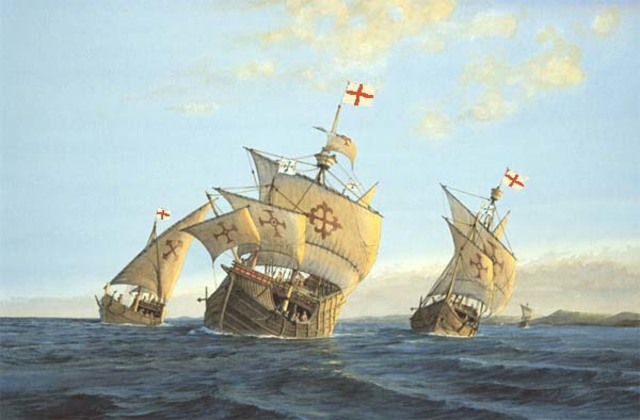
Y Combinator was the high school that made this world possible. It standardized the early playbook: small teams, rapid iteration, batch culture, and a dense network in one city. That model worked brilliantly for the Columbus era of exploration—setting sail into relatively uncharted waters, discovering new continents of value, and returning with enough gold to fund the next voyage.
But the next destination is not another coastline. It is the moon.
You do not reach the moon by the Columbus method. You need the Neil Armstrong method: a clear target, a minute-by-minute roadmap, the right vehicle, and enough thrust to achieve escape velocity. Slow, opportunistic discovery will not cut it. The stakes, the capital intensity, the technical complexity, and the regulatory and geopolitical realities of building at trillion-dollar scale demand deliberate architecture from day one.
That is why the world needs something beyond Y Combinator. Call it a university. It will not resemble the current accelerator model. It will not be a single campus in San Francisco, although it will maintain a meaningful presence there—the city’s dense concentration of technical talent, founder DNA, and venture infrastructure remains a strategic asset. The footprint must be global. Talent, markets, regulatory regimes, energy resources, and manufacturing capacity are no longer concentrated in one valley. A true institution for the Solara era will operate as a distributed network with deep local nodes and a shared operating system of ambition, standards, and capital.
At the center of this institution sits what I call the Grand Solara Vision.
A Solara is simply a trillion-dollar company, the natural successor to the unicorn. A Grand Solara Vision is the most detailed roadmap that can be constructed today for reaching that scale—subject to rigorous annual revision. It is not a vague mission statement or a pitch deck slogan. It is an engineering document: technical milestones, capital requirements, talent pipelines, market sequencing, regulatory pathways, risk matrices, and contingency branches, all mapped with the same seriousness that once guided the Apollo program.
You do not randomly end up on the moon. You decide you are going there. You design the vehicle. You calculate the velocity required to leave Earth’s gravity. You accept that the plan will be updated as new data arrives, but you never operate without a plan.
The organizations and founders who treat trillion-dollar outcomes as a matter of chance will be outpaced by those who treat them as a matter of design. The university of the Solara age will exist to make that design discipline the default rather than the exception. It will select for people who can hold long-horizon technical and commercial visions simultaneously, who understand that escape velocity is non-negotiable, and who are willing to revise the roadmap every year without ever losing sight of the destination.
Y Combinator taught a generation how to discover. The next institution must teach a generation how to land. The math is already clear. The only remaining question is who will build the vehicle.

The Search Engine Nobody Wanted
Two scholarship students at Stanford built a search engine that was faster and better than anything else available. Then they went looking for buyers.
Yahoo refused. “We already have our own,” they said. “Why would we buy yours?”
Infoseek and Lycos refused for a different reason. The new engine was too fast. Their entire business model depended on keeping users on the page long enough to see advertisements. Speed was a threat, not a feature.
Larry Page and Sergey Brin were crestfallen. The market had spoken: no one wanted what they had built. History, of course, had other plans. That rejected search engine became Google—one of the defining trillion-dollar companies of the modern era.
Today there are dozens of technology startups in exactly the same position. They are future Solaras—trillion-dollar companies—but they do not yet know it. They are still in the Stanford dorm-room phase: building something extraordinary, measuring themselves against the limited horizons of the current market, and quietly accepting the verdict of buyers or investors who cannot see past their own business models.
To those founders I offer the Grand Solara Vision.
Hire me to create one for your company. It is non-binding. It costs you nothing but attention. Its only purpose is to awaken you to the scale of what is already possible.
A Grand Solara Vision is a detailed, living roadmap that treats trillion-dollar outcomes as an engineering problem rather than a lottery ticket. It maps technical milestones, capital requirements, talent architecture, market sequencing, regulatory pathways, and contingency branches with the same seriousness once applied to landing on the moon. It is revised at least annually as new data arrives. It does not guarantee success. It simply refuses to leave success to chance.
You do not reach the moon by accident. You decide you are going. You calculate the required escape velocity. You design the vehicle. And you keep a minute-by-minute plan in front of you the entire way.
The early Google founders did not have such a document. They nearly sold the company for a fraction of its eventual value because no one—including, for a time, themselves—could see the destination clearly.
The next generation of founders does not have to make the same mistake.
The companies that will define the next decade already exist. Most of them just have not yet been shown the map.

Building the Recruitment Engine for Solaras
To build the teams required for a true tech startup at Solara scale, I will have to build a recruitment engine from the ground up. Nothing currently available is remotely good enough.
Existing platforms optimize for volume, keyword matching, and the polite fiction that every company is roughly the same. They are designed for the world of incremental hiring—filling seats, managing pipelines, and measuring time-to-offer. They are not designed for the deliberate construction of the high-agency, high-capability teams needed to pursue trillion-dollar outcomes. The gap is not incremental. It is categorical.
So the engine will first be built for internal needs. That is the only honest starting point. The requirements are unusually strict: technical depth, founder-level judgment, long-horizon ambition, and the ability to operate inside a living Grand Solara Vision. Standard tools cannot filter for those qualities at the necessary resolution. Therefore the system must be invented.
Yet the pattern is already familiar. Amazon Web Services began as internal infrastructure. Once it proved superior, it was opened to the world and became one of the most important platforms of the internet era. The same trajectory is visible here. A recruitment engine engineered to the standards of Solara-scale company building will, by necessity, be better than anything else on the market. Once it works for us, it will work for others.
There is, however, a deliberate constraint. Access will not be universal. Only tech startups that possess a clear Grand Solara Vision may participate.
This is not elitism for its own sake. It is a moat. A Grand Solara Vision is a detailed, annually revised roadmap that treats trillion-dollar outcomes as an engineering problem rather than a hopeful story. Companies that have done this work operate with a different level of intentionality. They know the destination, the required velocity, and the kind of people needed to reach it. Feeding those companies a high-resolution recruitment engine creates a closed loop of quality: better companies attract better candidates, the engine learns from higher-signal data, and the network effects compound inside a selected set of ambitious organizations rather than diluting across the entire market.
Restricting participation therefore does two things at once. It protects the integrity of the talent pool and the signal quality of the system. And it creates a powerful filter that competitors cannot easily copy. Anyone can build another job board. Almost no one can require, as a condition of entry, that a company has already articulated a credible path to Solara scale.
The result is an infrastructure layer that begins as a private necessity and evolves into a selective platform. It solves the immediate problem of building our own teams. It simultaneously becomes a strategic asset that only the most serious startups can access. In doing so, it reinforces the larger premise: trillion-dollar companies are not accidents. They are the product of deliberate design—of roadmaps, of vehicles, and of the people chosen to drive them.
The recruitment engine is simply one more component of that design. Built first for us. Then offered, carefully, to those already pointed at the moon.

Musk’s Management
CEO Functions
30-30-30-10: A Better Equity Formula For Tech Startups
Six Weeks From Zero (novel)
The Founder And The Fisherman (novel)
Verbal Martial Arts, Social Concentric Circles, and Non-Reaction
100 Questions That Lead To Understanding
Remote Work Productivity Hacks
Rule Of 100 For Tech Startups
Marketing Escape Velocity: The Path To Unicorn Status And Beyond
Unicorn to Solara: A Journey of Imagination: From Billion-Dollar Startups to Trillion-Dollar Suns
Unicorn to Solara with Purpose: Marketing, Mergers, and Responsible Capitalism
The Columbus Way, The Neil Armstrong Way: From Unicorns to Solaras: Building Trillion-Dollar Companies That Transform Humanity
1,000 Solaras In 10 Years
Liquid Computing: The Future of Human-Tech Symbiosis
Beyond Motion: How Robots Will Redefine The Art Of Movement
LUMINA AI: The Trillion-Dollar Sun
Himalayan Compute: Grand Solara Vision
Motorcycles and Himalayas.
— Damon Zumbroegel (@DamonZumbroegel) August 16, 2026
Adventure on two wheels…..getting ready for the Big Hills. #Nepal #motorcyclesports #Travel pic.twitter.com/0du3Cn7qDa
10 Slides: Himalayan Compute: The Grand Solara Vision
Himalayan Compute: Grand Solara Vision
Himalayan Compute: 10 Years To A Trillion: Detailed Roadmap
Himalayan Compute: Podcasts
The Founder: Profile By Adam Shuaib
The Columbus Way, The Neil Armstrong Way From Unicorns to Solaras: Building Trillion-Dollar Companies That Transform Humanity
Nepal's Trillion Dollar Himalayan Compute Plan 🏔️Himalayan Compute: Nepal’s Blueprint for Triple-Digit Economic Growth