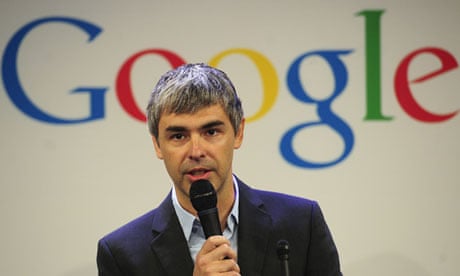
Demis leaving as CEO of DeepMind was the best move he has ever made in his life and will matter more than AlphaFold OR his Nobel prize in chemistry.
— parm🔬 (@parmita) August 5, 2026
So all the safetyists who don’t fkn understand that “AGI” will magically do everything, should sit down and watch this.
RT this. https://t.co/9WM1M4ZmrD pic.twitter.com/dWUzyjMjjO
Full credit: @Google has been the real source of AI acceleration from @Waymo self driving cars when most people were skeptics to buying @GoogleDeepMind to investing heavily. Lots of research in universities but this team, including Sundar, Larry & Sergey, deserve full credit for… https://t.co/MEsJBqvQh7
— Vinod Khosla (@vkhosla) August 5, 2026
There must be huge drama inside Google.. Why is Deepmind's latest models so underwhelming? I am really looking forward to seeing Google keeping up the game! https://t.co/fbFQb9utIN
— Xiaoyin Qu (@quxiaoyin) August 5, 2026
Agree with @bgurley this is far from game over. @GoogleDeepMind still has one of the deepest benches of talent in the AI industry. I'd even say closed or open models they are a player. https://t.co/gTBnebOXAY
— Vinod Khosla (@vkhosla) August 6, 2026
Demis Hassabis steps aside as Google DeepMind CEO in major AI leadership overhaul; Jeff Dean and key researchers depart for new startup.
On August 5, 2026, Alphabet announced a significant reorganization of its AI leadership. Demis Hassabis, the Nobel Prize-winning co-founder of DeepMind and CEO of Google DeepMind, is relinquishing day-to-day operational control. He becomes Chair of Google DeepMind and Alphabet’s newly created Chief Scientist, while continuing to lead Isomorphic Labs (the AI-driven drug discovery spinout). Koray Kavukcuoglu, previously DeepMind’s CTO and Alphabet’s Chief AI Architect, takes over as Senior Vice President of Google DeepMind, reporting directly to CEO Sundar Pichai. He will oversee Gemini model development, frontier research, the Gemini app, and developer teams.
Simultaneously, longtime Google chief scientist Jeff Dean (a 27-year veteran and employee No. 30), Google Senior Fellow Sanjay Ghemawat, DeepMind VP Oriol Vinyals, and Google Brain co-founder Quoc Le are leaving to found Discovery Loop. This independent public benefit corporation aims to accelerate discoveries in machine learning, science, and engineering by automating research processes. Google is a founding investor and Cloud partner.
Alphabet shares fell about 4–5% following the news.
Official Reasons and Context
Hassabis framed the move around the proximity of artificial general intelligence (AGI). In his staff memo: “We have arrived at a pivotal moment in human history. I’ve been working towards AGI my whole life and now, like many of you, I feel it is close at hand. It’s critical that we collectively get the next steps right to ensure this all goes well for humanity... I’ve decided that now is the right time for me to hand over my day-to-day operational responsibilities at GDM, so that I have the time and space to focus on the big picture and help influence what is to come.” He will advise on models and research from London, work closely with Pichai on strategic AGI matters, and accelerate Isomorphic Labs’ efforts in areas like curing diseases.
Pichai echoed this, noting long discussions about a role allowing Hassabis “to put his full attention on actively shaping the future of AGI. It’s work that is vitally important to Alphabet and humanity.” He emphasized accelerating AI progress while shaping AGI and science, highlighting momentum in products (Gemini app at 950M+ monthly users) and research. The structure centralizes more operational AI leadership (including Gemini) under Kavukcuoglu in a setup closer to Mountain View headquarters, while London remains a key hub.
Reports indicate Hassabis had already been shifting away from day-to-day Gemini and consumer AI duties for about a year, preferring visionary science, safety/governance, and applications like health over pure executive management. The change formalizes that. It also follows prior high-profile exits (e.g., researchers to OpenAI and Anthropic in June) and delays with a major Gemini update. Some coverage links it to efforts to streamline decision-making, reduce internal friction from the 2023 Brain-DeepMind merger, and compete more aggressively.
How People Are Reacting
Reactions are mixed, spanning optimism about focus and continuity, concerns over talent loss and competitive standing, and skepticism about DeepMind’s independence or safety posture.
- Supportive or measured views: Sebastian Mallaby (author of a Hassabis/DeepMind biography) called it a “formalization of something that had been happening informally.” Hassabis had already acted as Google’s AI “statesman,” with Kavukcuoglu running research operations. Mallaby highlighted Hassabis’s longstanding safety focus (e.g., choosing Google over higher Facebook offers and fighting for external oversight) and saw the shift as redirecting energy toward social impact and AGI governance, plus Isomorphic Labs. Vinod Khosla praised Google’s overall AI investments and impact. Some insiders and observers view it as enabling faster execution by clearing management layers.
- Concerns and criticism: Alphabet’s stock drop reflected investor worries about Gemini delays, talent drain, and whether Google is falling behind OpenAI and Anthropic (especially in coding agents). Commentators like Zvi Mowshowitz described Hassabis as potentially “kicked upstairs” for special projects, arguing it ends any meaningful claim of DeepMind independence or strong safety practices separate from Google. Tae Kim called Jeff Dean and Hassabis Google’s two most important AI executives and suggested the moves raise serious questions (“Game over” for DeepMind in some readings). Others on X and in coverage noted the coincidence of major departures, morale issues, and the shift of power toward California headquarters as signals of strain.
- Broader sentiment: Coverage emphasizes the competitive pressure and prior exits. Positive spins from Google stress continuity (Kavukcuoglu’s 13+ years at DeepMind, shared history with Hassabis on breakthroughs like WaveNet and DQN) and the full-stack advantages. Discovery Loop is positioned as collaborative rather than purely competitive. Public discussion on platforms like X mixes headlines on the “shake-up,” stock impact, AGI proximity claims, and speculation about whether this strengthens or weakens Google’s position.
In short, the reorganization positions Hassabis for high-level AGI strategy, science, and impact work at a moment he and Pichai describe as pivotal, while consolidating operational AI leadership under Kavukcuoglu and spinning out key veterans into a Google-backed research-focused entity. Markets and many observers treated the combination of the role change plus high-profile exits as a net negative signal amid intense rivalry, even as company messaging frames it as acceleration and focus on the biggest questions.
HE IS STILL THE CEO OF ISOMORPHIC LABS. HE IS DOING THE RIGHT THING. HE IS BUILDING DRUGS INSTEAD OF GEMINI PRO SEVEN POINT FIVE MAX PARALLEL REASONING FOR YOU TO CODE PYTHON BETTER. SO HE CAN KEEP HIS PROMISE OF SAVING LIVES. STOP SAYING DUMB SHIT https://t.co/wrCCntrMVC pic.twitter.com/kFkrEYPaCc
— parm🔬 (@parmita) August 5, 2026
Honored to be selected to co-lead when you could pick almost any VC firm in the valley or the world! Almost unbelievably impressive list of accomplishments/expertise on this team. https://t.co/V6HMsWePEp
— Vinod Khosla (@vkhosla) August 5, 2026
For some reason every single one of my close friends at Penn = Polish
— parm🔬 (@parmita) August 6, 2026
definitely I was Polish in my past life I just get along with them so well and it’s so random https://t.co/hIVj5Z4anl
— parm🔬 (@parmita) August 6, 2026
We’ve now entered the era of Science 3.0, in which human & AI scientists work together. Within the next decade, we will enter Science 4.0: the final stage of scientific discovery, where AI & robots independently automate the entire research process & make discoveries on their own
— Derya Unutmaz, MD (@DeryaTR_) August 6, 2026
Today, we’re launching Alpamayo 2 Super, our frontier open reasoning model for autonomous vehicles.
— Jensen Huang (@JensenHuang) August 4, 2026
Beyond seeing, Alpamayo understands and reasons through the complex world - thinks before it acts.
It’s a powerful backbone for robotaxis, trucks, shuttles, delivery vans,… pic.twitter.com/K6jS0XDR4b
Is this like Demis saying I don't have time to be CEO, I need to focus on AGI?
Yes — that’s exactly the framing Demis Hassabis used.
In his August 5, 2026 staff memo, the Google DeepMind co-founder and outgoing CEO did not hide the motivation. He described a “pivotal moment in human history,” declared that AGI feels “close at hand,” and said the next steps must go well for humanity. Then came the direct statement: he was handing over day-to-day operational responsibilities at Google DeepMind so he could have “the time and space to focus on the big picture and help influence what is to come to the best of my ability.”
In short, Hassabis told the world (and his teams) that running the massive operational machine of Google DeepMind — models, products, research coordination, internal management — was no longer the highest-leverage use of his time. The higher-stakes work of shaping AGI itself, its governance, its scientific applications, and its broader trajectory now demanded his full attention.
The Official Narrative
Alphabet CEO Sundar Pichai reinforced the same message. He said the two had long discussed creating a role that would let Hassabis “put his full attention on actively shaping the future of AGI.” The new titles — Chair of Google DeepMind and Alphabet Chief Scientist — formalize that shift. Hassabis keeps a strategic advisory line into the lab, continues leading Isomorphic Labs (the AI drug-discovery company), and will operate primarily from London while Koray Kavukcuoglu takes operational command as Senior Vice President reporting directly to Pichai.
Hassabis has spent more than a decade building and then integrating DeepMind into Google. He has also increasingly played the public role of AI statesman — speaking about safety, scientific discovery, and the societal stakes of advanced systems. The new structure removes the daily CEO burden so he can lean harder into that lane at what he believes is a decisive historical window.
Why the Framing Matters
This is not a quiet retirement or a forced exit dressed up as a promotion. It is closer to a scientist-executive saying the research and governance questions have become more urgent than the operational ones. Hassabis has long argued that the primary application of AI should be improving human health and expanding scientific discovery; he is now doubling down on Isomorphic Labs while positioning himself to influence the broader AGI trajectory inside Alphabet and beyond.
At the same time, the move coincides with the departure of Jeff Dean and other senior researchers to found Discovery Loop, a Google-backed public-benefit company focused on accelerating machine-learning and scientific research. The combination of Hassabis stepping back from operations and several technical heavyweights leaving created market jitters — Alphabet shares dropped roughly 4–5% — and fueled outside debate about whether Google is consolidating control, losing talent, or simply reorganizing for the next phase of the race.
Interpreting the Signal
Taken at face value, Hassabis’s words are clear: the proximity of AGI has changed his personal calculus. Managing a large product-and-research organization is valuable, but influencing how AGI is developed, governed, and applied is, in his view, more important right now. Supporters see continuity and focus — a founder who has always prioritized the long-term scientific and safety agenda now freed to pursue it. Skeptics read it as a soft “kicked upstairs” move that reduces DeepMind’s operational independence and concentrates day-to-day power closer to Mountain View.
Either way, the language Hassabis chose leaves little ambiguity. He is not claiming he was pushed out or that the lab is failing. He is saying the job of CEO has become the wrong use of his scarce attention at a moment when AGI appears near. The reorganization is the organizational expression of that judgment.
Whether history judges the decision as wise prioritization or as a costly distraction from product execution will depend on what Google DeepMind ships next — and on how effectively Hassabis can actually shape the AGI path from his new perch. For now, the public message is straightforward: the operational reins are being passed so one of AI’s most prominent figures can concentrate on the biggest questions he believes the field now faces.
Not sure — been invited to do a talk there. Figuring it out. Will get back to you! https://t.co/FP3hBaIzQ8
— parm🔬 (@parmita) August 5, 2026
IIT is big leagues. You have arrived.
— Paramendra Kumar Bhagat (@paramendra) August 6, 2026
Super excited to back this super star team on its quest for huge impact. Could be larger than the impact that @Google had when we backed them in 1998 at Kleiner https://t.co/WR3uuARSkN
— Vinod Khosla (@vkhosla) August 5, 2026
what am i missing? what IS going on?
— Paramendra Kumar Bhagat (@paramendra) August 6, 2026
I do not pay for articles to be released.
— parm🔬 (@parmita) August 5, 2026
I am saying that in public as an official statement from Precigenetics.
If you don’t believe me, sue me. I also do not have a PR agency. So, stop being jealous of women, be a better man and learn to shut up.
Bless your heart. https://t.co/YdewKySa2T
Not having a PR agency is not a badge of honor. It is a mistake.
— Paramendra Kumar Bhagat (@paramendra) August 6, 2026
It was a big mistake attacking Sid, cancer. You created a very dangerous enemy. https://t.co/Wns1SSyLzs
— Paul Graham (@paulg) August 5, 2026
Genius work is rarely recognised in the moment. It usually takes years (sometimes decades) before the world looks back and realises how truly special someone was.
— Adam Shuaib (@adamshuaib) August 6, 2026
Conan Doyle was originally celebrated for historical novels nobody now reads; Sherlock Holmes was seen as cheap…
owning a business is saying “after this week things will calm down”
— Tyler Denk 🐝 (@denk_tweets) August 6, 2026
every week
for the rest of your life
obviously ........ money
— Paramendra Kumar Bhagat (@paramendra) August 6, 2026
I turn 79 today.
— Arnold Schwarzenegger (@Schwarzenegger) July 30, 2026
I don’t want any gifts. Instead, my team and I decided to revolutionize the fitness industry — and we’re doing something crazy to celebrate.
Here it is: https://t.co/XBaUHP8hzQ
Between today and Sunday, August 9, when you join the Pump Club app and complete… pic.twitter.com/mYQJX8bGTs
Claude Code subscription is 81x cheaper than its API. Codex subscription is 44x cheaper than its API.
— Xiaoyin Qu (@quxiaoyin) August 5, 2026
I max out 4 Max accounts last month and burned 56.5B tokens from plans, so I tested the ceiling — what a subscription gives you when you take everything it will give.
Claude… pic.twitter.com/qod6VGpU6k
the front is not rolling, and hence the fire, but the pilot avoided using the front for a while, and there was still fire, but not enough to explode the plane. magic. but how was this caught on camera?
— Paramendra Kumar Bhagat (@paramendra) August 6, 2026
Using social media in middle school predicts lower standardized test scores in high school.
— Adam Grant (@AdamMGrant) August 5, 2026
10th graders who started social media before 9th grade are ~6 months behind their peers on math & reading. They're more distracted by their phones.
No child should have access to social… pic.twitter.com/HkgVbq1nAu
Intelligence begets intelligence.
— Derya Unutmaz, MD (@DeryaTR_) August 5, 2026
Most of my haters are men. That’s very fascinating to me. I know I face a lot more skepticism and backlash for being a woman, but how do you guys live with yourselves? I’m genuinely curious. It’s a little embarrassing to be jealous of a female peer out of all people. Ick!
— parm🔬 (@parmita) August 5, 2026
there is some of that ----- but it is more of the low barrier, low emotional investment ---- @sama has had the same problem .... for decades .... and he talks about it here https://t.co/a28LltCVRF IGNORE
— Paramendra Kumar Bhagat (@paramendra) August 6, 2026
CTO at Uber. https://t.co/63KaMi4XHT
— Robert Scoble (@Scobleizer) August 5, 2026
You can hold the video to 2x the speed and then I will talk at roughly the same pace as Ben Shapiro. Try that. https://t.co/hFYtAdOq9L
— parm🔬 (@parmita) August 6, 2026
I’ve seen too many people wearing these in sf pic.twitter.com/LS2nTr1gcP
— Lauren (@Laurennjoe) August 5, 2026

Demis Hassabis Steps Aside As Google DeepMind CEO In Major AI Leadership Overhaul https://t.co/EpTaABAnlV
— Paramendra Kumar Bhagat (@paramendra) August 6, 2026
Just watched @frydwia power-walk through a park holding his phone like a walkie-talkie, yelling tasks at his AI employee.
— Robert Scoble (@Scobleizer) August 5, 2026
Press one physical button.
Speak.
No looking. No tapping. Even while driving.
Project Deskless is the simplest agent interface I’ve seen yet. I already… https://t.co/1QFQIWUXaO
😉 https://t.co/CBIh54N1TQ pic.twitter.com/PDx9ydZUIJ
— parm🔬 (@parmita) August 5, 2026
My house has a Himalayan view. I did not buy it. I grew up in it.
— Paramendra Kumar Bhagat (@paramendra) August 6, 2026