

Daytona (daytona.io) is a secure, elastic infrastructure platform designed for running AI-generated code and powering AI agent workflows. It provides fast, isolated, stateful "sandboxes" (programmatic runtime environments) that AI agents and developers can spin up in milliseconds, execute code in, and manage programmatically.
Core Product and Features
Daytona was founded in 2023 as a self-hosted "Development Environment Manager" to simplify and standardize dev environments (addressing "works on my machine" issues, remote setups, etc.). It raised a $2M pre-seed in late 2023, went open-source, then raised $5M more in 2024 (led by Upfront Ventures).
It pivoted/hardened its focus around 2025 toward AI agent sandboxes and infrastructure for running AI-generated code. In February 2026, it raised a $24M Series A at a ~$125M valuation, led by FirstMark Capital (with Matt Turck joining the board). Total funding mentioned around $31M+. Investors include Upfront, Pace, Darkmode, E2VC, Datadog, Figma Ventures, and prominent angels from the devtools/AI space.
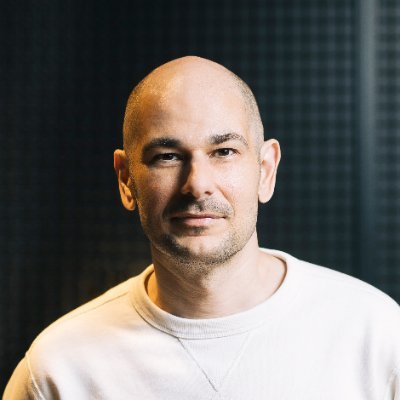
Headquartered in New York (with team roots in Croatia), company size ~11-50 employees. It runs a startup program with significant credits. Founder and TeamIvan Burazin is the Co-founder & CEO. He is a serial entrepreneur from Croatia with deep experience in dev tools and infrastructure.
Co-founders:
Daytona represents the evolution of cloud dev environments into the AI agent era: reproducible, secure, programmable "computers" that agents can reliably use, with strong ties to the founders' long history in the space. For the latest, check their site, docs, or GitHub directly.
- Lightning-fast sandboxes: Sub-90ms to sub-200ms creation times for isolated environments supporting languages like Python, TypeScript, Ruby, Go, Java, and more.
- Security and isolation: Strong emphasis on separated/isolated runtimes to execute untrusted AI-generated code with zero risk to host infrastructure. Supports customer-managed compute (your cloud, no shared tenancy), compliance (HIPAA, SOC 2, GDPR), open-source transparency, and options for enhanced isolation.
- Stateful and persistent: Environments run indefinitely, with snapshots for saving/restoring workflows, volumes for shared data, and support for long-running agent tasks.
- Programmatic control: SDKs (Python, TypeScript), APIs for process execution (with real-time output), file system ops, Git integration, LSP (Language Server Protocol) support, Docker/Dockerfile/Docker Compose compatibility, and more.
- Developer/agent access: SSH, browser-based VS Code, web terminal, and "human-in-the-loop" capabilities. Also offers virtual desktops (Linux/Windows/macOS) for computer-use scenarios.
- Deployment flexibility: Open-source core (GitHub: daytonaio/daytona), self-hosted/open-source stack, managed service (app.daytona.io), hybrid options, and multi-region support (US, EU, Asia). Pay-as-you-go pricing with free credits.
- AI/agent focus: Optimized for LLMs, agents, evals, parallelization, and "giving every AI agent its own computer." It evolved/pivoted toward this from broader dev environment management.
Daytona was founded in 2023 as a self-hosted "Development Environment Manager" to simplify and standardize dev environments (addressing "works on my machine" issues, remote setups, etc.). It raised a $2M pre-seed in late 2023, went open-source, then raised $5M more in 2024 (led by Upfront Ventures).
It pivoted/hardened its focus around 2025 toward AI agent sandboxes and infrastructure for running AI-generated code. In February 2026, it raised a $24M Series A at a ~$125M valuation, led by FirstMark Capital (with Matt Turck joining the board). Total funding mentioned around $31M+. Investors include Upfront, Pace, Darkmode, E2VC, Datadog, Figma Ventures, and prominent angels from the devtools/AI space.
Headquartered in New York (with team roots in Croatia), company size ~11-50 employees. It runs a startup program with significant credits. Founder and TeamIvan Burazin is the Co-founder & CEO. He is a serial entrepreneur from Croatia with deep experience in dev tools and infrastructure.
- Co-founded Codeanywhere in 2009 (pioneering cloud IDE).
- Founded/ran the Shift developer conference (a major event in Southeast Europe).
- Served as Chief Developer Experience Officer at Infobip.
- Based in the San Francisco Bay Area; active on X (@ivanburazin).
Co-founders:
- Vedran Jukić: Co-founder & CTO.
- Goran Draganić: Co-founder & Chief Architect.
Daytona represents the evolution of cloud dev environments into the AI agent era: reproducible, secure, programmable "computers" that agents can reliably use, with strong ties to the founders' long history in the space. For the latest, check their site, docs, or GitHub directly.
Aggressive Growth & Marketing Plan: Daytona to Unicorn ($1B+) and Decacorn Trajectory (2026–2030+)
Daytona is perfectly positioned in the exploding AI agents market (projected $50B–$180B+ by 2030–2033, with 40–50%+ CAGRs). With ~$5M forward revenue run rate by early 2026 (after hitting $1M ARR in ~2 months post-pivot and doubling quickly), 74% MoM growth signals, customers like LangChain and Fortune 100s, and strong isolation/persistence for agent workloads, the path to unicorn is realistic within 18–24 months via hyper-scaling in the "every agent needs its own computer" category. 1. Vision & Ambition
Execution: Hire aggressively (sales, infra, solutions architects, growth engineers). Target 100–200 people by end-2027. Use bare-metal + custom scheduler for cost leadership.3. Go-to-Market & Sales Strategy (Hyper-Growth Engine)
Execute fast, ship benchmarks/case studies publicly, and make "agents run on Daytona" the default. The infrastructure layer wins big in this era.
Daytona is perfectly positioned in the exploding AI agents market (projected $50B–$180B+ by 2030–2033, with 40–50%+ CAGRs). With ~$5M forward revenue run rate by early 2026 (after hitting $1M ARR in ~2 months post-pivot and doubling quickly), 74% MoM growth signals, customers like LangChain and Fortune 100s, and strong isolation/persistence for agent workloads, the path to unicorn is realistic within 18–24 months via hyper-scaling in the "every agent needs its own computer" category. 1. Vision & Ambition
- Short-term (End 2026–Mid 2027): Reach $50–100M ARR → $500M–$1B+ valuation (unicorn).
- Medium-term (2028): $300M+ ARR, category king in agent infrastructure.
- Long-term (2030+): Multi-billion ARR platform (the "AWS for agents"), 10B+ valuation. Expand into full agent OS/runtime layer with orchestration, observability, and enterprise compliance.
- Core Moat: Sub-100ms stateful sandboxes, BYOC/self-hosted, bare-metal efficiency, enterprise security (HIPAA/SOC2), and developer/agent-first DX. Lean into this vs. lighter competitors (E2B, Modal, Vercel Sandbox).
- Core: Double down on performance (aim <50ms cold starts at scale), massive concurrency (millions of daily sandboxes), GPU/RL/eval optimization, and advanced snapshots/branching for agent exploration.
- Expansion:
- Multi-agent orchestration and "agent cloud" layer.
- Deeper integrations: LangChain/LlamaIndex/AutoGen, major LLM providers, Cursor/Claude/Codeium.
- Enterprise: Advanced compliance, audit logs, private VPCs, on-prem/air-gapped.
- New: Virtual desktops for computer-use agents, marketplace for pre-built agent environments/templates.
- Open Source: Accelerate community (build on existing stars momentum) with SDKs, examples, and agent frameworks. Goal: 100k+ GitHub stars, dominant in AI agent repos.
- Pricing: Usage-based (compute-second) with aggressive startup credits ($10k–$50k tiers), enterprise contracts (annual + overages), and volume discounts. Introduce "Agent Units" metering for predictability.
- Product-Led Growth (PLG): Free tier + generous credits for individuals/startups. Frictionless SDK onboarding. Viral loops via agent templates and shareable environments.
- Sales-Led:
- Enterprise motion: Target AI-native companies, Fortune 500s doing evals/RL, and agent platforms. Land-and-expand via usage spikes.
- Partnerships: Deep embeds with framework makers, VC/accelerator programs (YC, a16z, etc.), cloud providers (AWS/GCP/Azure for BYOC).
- Startup Grid 2.0: Scale credits program; co-market with top VCs for deal flow and case studies.
- International: EU/Asia data centers + localization. Self-hosted for regulated markets.
- Metrics Target: Maintain 50–100%+ YoY growth initially, then stabilize at hyper-scale. Focus on net revenue retention >150% via usage growth.
- Thought Leadership: Position Ivan Burazin as "the voice of agent infrastructure." Podcast tours (Latent Space, etc.), keynotes at NeurIPS/DevAI events, op-eds on "why agents need computers."
- Content & Community:
- Agent showcases: Weekly "Agent of the Week" with massive compute credits.
- Hackathons/buildathons globally (virtual + in-person SF/NY/London).
- Discord/Slack/YouTube tutorials, benchmarks vs. competitors.
- Open-source advocacy and contributions to popular agent repos.
- Performance Marketing:
- Paid: Targeted LinkedIn/Google for "AI agent sandbox" keywords; retargeting agent builders.
- Billboards/events in SF (continue what worked), Dev conferences sponsorships.
- Developer relations: Free swag, ambassador program, conference speaking slots.
- PR & Storytelling: "Fastest-growing infra company" narrative, customer logos/case studies (850k sandboxes/day wins), funding announcements. Aim for TechCrunch/Forbes features monthly.
- Budget: Allocate 20–30% of raise to marketing initially, scaling with revenue. Measure CAC:LTV rigorously.
- Next Round: Series B in late 2026 at $400M–$800M valuation post-$30M–$50M ARR. Use for capacity, acquisitions (smaller sandbox/tools), and global expansion.
- Subsequent: Series C/D for infrastructure buildout and potential IPO path by 2028–2029.
- Smart Capital: Bring on strategic investors (cloud giants, AI labs) for distribution and co-selling.
- Competition: Differentiate hard on statefulness, isolation, self-hosting, and multi-language support. Monitor E2B/Modal/Vercel closely; acquire or partner where needed.
- Execution at Scale: Infra reliability is key—invest in observability and SRE early. Customer support as differentiator (noted strength).
- Market: Agent hype cycles—focus on real ROI (cost savings, speed) and enterprise-grade features.
- Team: Retain with equity; hire elite infra/AI talent from Datadog, Snowflake, etc.
- Q4 2026: $20M+ ARR, 10k+ paying orgs, dominant mindshare.
- 2027: Unicorn valuation, $100M ARR run-rate.
- Beyond: Platform expansion into agent orchestration/monitoring → sticky, high-margin revenue. Potential acquisitions or ecosystem plays.
Execute fast, ship benchmarks/case studies publicly, and make "agents run on Daytona" the default. The infrastructure layer wins big in this era.
Ivan. Do you need help with hypergrowth?
— Paramendra Kumar Bhagat (@paramendra) June 23, 2026
Netizen: Daytona https://t.co/dvO7TaT8Ww
Marketing Escape Velocity: The Path To Unicorn Status And Beyond https://t.co/hUmu5bv6z0

No comments:
Post a Comment