
This was a real discovery moment for me on Twitter. I could not have made this discovery any place else.
Ground game is innovation. Who would have thought? But then, that totally speaks to the human at the center thesis.
Most of our team are engineers, a lot of them ex-Palantir, who spend weeks at a time on-site with customers, learning from them, getting into the nittiest of gritty details. ................... The term gets a bad rap, but relative to engineers who spend all day at a desk prompting Claude, they are the most Social Engineers. Engineers who understand people, business, and AI will rule the world. If that sounds like you, come join us at Poetic.
Engineers are expensive. I think the ground game can be peopled by less expensive people.
This entire time of generative AI, and AI generated code, I have stood my ground saying the game is still best served if the spec is one domain, and code is another. AI allows you to write much more complex specs. And spec is where the new industry, and the giant company will be invented. And then you translate that spec into code, mostly with AI.
Our goal is to discover the perfect process for every business - the plan, the set of steps that is ideal for achieving your goals.
For me this is spec territory. Let the speccers spec, let the coders code. And let both use a ton of AI.

Stepping outside my Stanford/Google/Waymo research bubble and sitting with real American companies made me realize why the bulk of the economy was not automatable by software or AI.
— Markie Wagner (@markiewagner) June 12, 2026
We needed something new that is neither strictly code or AI, something that can flex but deliver… pic.twitter.com/LtjpSZSO0h
Impressive.
— Paramendra Kumar Bhagat (@paramendra) June 13, 2026
Return on Tokens = (Value of Output - Cost of Tokens) / Cost of Tokens x 100
— Poetic (@PoeticHQ) June 12, 2026
Thinking is expensive but happens rarely. Doing is cheap and happens forever.
Agents should do the thinking, code should do the doing.
From the @markiewagner @packyM essay.https://t.co/Xqq7uTbzvH
@MarkieWagner explaining to @TBPN how Poetic is able to run multi-hour complex processes for F500s with 99% accuracy in production, all with minimal token spend. pic.twitter.com/Rsv31Dra9I
— Poetic (@PoeticHQ) June 12, 2026
In November 2022, @markiewagner wrote Choose Good Quests, then she went dark to work on her own.
— Packy McCormick (@packyM) June 10, 2026
Today, she's launching Poetic, a new class of software that's adaptive like AI, reliable like code.
This is her first public essay since CGQ, on why & how.https://t.co/bhpxhiKjVY
".......a new class of software that's adaptive like AI, reliable like code.........."
— Paramendra Kumar Bhagat (@paramendra) June 13, 2026
W-h-a-t IS this?? #discovery
She also told me, before everyone else came to the same conclusion, that tokenmaxxing was bullshit, because behind closed doors, the Fortune 500 CEOs she works with were all saying some version of “We committed to all this token spend and I have no idea what we’re getting out of it.” ............ She was right, I think she’s going to be right again, she’s backed by Founders Fund, Kleiner Perkins, Genius Ventures, and OpenAI to go prove it, and now she’s explaining her logic publicly in her first written piece since Good Quests. ............... What I suspected before and learned in my travels is that the way that the market has implemented AI thus far is the wrong way. It’s not endgame. It is too wasteful, too forgetful, and too imprecise. I’ve been in the fucking Sahara Desert out here fighting demons to learn this wisdom. ............... Tokenmaxxing - literally maximizing the amount of tokens you or your organization spends, tracked in leaderboards and rewarded with trinkets - was a mass delusion, something like a commercial form of AI psychosis.
............. Employees who direct their Agents to use the most tokens are recognized as AI Innovators. ................. Everyone fell for it, for a while. The market incentivized companies to spend tokens, so boards incentivized leaders to spend tokens, so leaders incentivized managers to spend tokens, so managers incentivized employees to spend tokens. Nobody had an incentive to say that the tokens aren’t doing useful stuff. ................ Ramp’s Veeral Patel called it the Token Casino: “useful software wrapped in mechanics that make spend feel like progress. It starts with the oldest trick in the book: abstract the money.” Palantir CEO Alex Karp told the TBPN boys that tokenmaxxing is like “a porn addiction.” ............... Even Sam Altman, a prominent token vendor himself, admitted on CNBC that “You hear companies saying, ‘I am spending a ton of money on AI, and I know some great stuff is happening, but I know there’s a ton of waste, and you know, when… how long do I have to wait for it to really show up in revenue, and how long do I have to wait to really get the costs under control?’” It had become, he admitted, a “huge issue.” .............. Every cycle has its dumb metric. In the mid-nineteenth century, the market wanted miles of railroad track as a proxy for future monopoly and the benefits thereof, and so railroads raced to lay miles, often along the same routes as competitors. At the turn of the 21st century, the market wanted eyeballs, and so dot coms attracted eyeballs and served them up on a platter. In the 2010s, the market wanted top-line gross revenue, and so companies like WeWork delivered top line gross revenue. ................... Which is not to say that tokens can’t be valuable. Cornelius Vanderbilt’s New York Central ended up becoming very valuable, as did the Pennsylvania Railroad. Google and Facebook have converted eyeballs to cashflow better than anyone has ever converted anything to cashflow. Uber ended up turning top line growth into market dominance and turning that into $10 billion in 2025 free cash flow. .................... Use Anthropic and OpenAI’s best models for the really big brain stuff, but do most of the work with cheap Chinese open source models.
.................... Because you know what’s cheaper than Chinese models? Code. ........................ Code, good old fashioned deterministic code, is not only cheap, it is a better fit for most economically valuable work. ................ we believe that there are more fundamental structural reasons for the negative ROT: Agents are the wrong architecture for most work. ........................ The Agentic architecture can’t do long-running work at the nines of quality that real economic work requires.............. Agents improvise. They’re spawned fresh onto repetitive tasks like every day is their first day on the job, which hurts consistent accuracy. For new features, prototypes, or dashboards, 80% accuracy is fine. For the real repetitive work on which the economy runs, like fraud detection or underwriting decisions, 80% accuracy is 0% usable......................... Engineers don’t know what to build because they don’t do the work.................. Most of the process-driven work we’re describing exists as a combination of written rules, which Agents can ingest, and then like 3,000 tacit rules and sub-rules that live in people’s heads, in offices around the country, far away from the engineers’ San Francisco desks. AI can only evolve what it can touch, which is why it’s been great at coding but has largely failed to do useful things in the enterprise. ................. The original sin is that there are no goals............. If people have no goals then the Agent has no goals, and then the thing achieves no end. Without a goal to hill-climb against, code (whether written by humans or generated by Agents) decays into slop in the limit because there’s no purifying force to evaluate what’s good and bad...................... People are searching for new things for Agents to do assuming that AI will do for everything else what it’s done for code. But it doesn’t have to. ..................... There is a surprising amount of work that is best done with plain old code. The challenge has been that, until recently, there were not enough engineers to turn everything every business does into code, and then update it as things changed. There are now. AI makes writing code trivial, so if we can get the knowledge out of people’s heads, we can turn businesses into code.
................... Thinking is expensive but happens rarely. Doing is cheap and happens forever. .................. Agents should do the thinking, code should do the doing. ............. For most economic work, you want to use humans to figure out the rules, use AI to turn the rules into code, and then run that code forever at near-zero token cost, only bringing the AI back in when the rules change. .................... Why would you use a prompt to add two numbers? Just write a line of Python, dawg.
............................. The current Thinking-Doing Ratio (TDR) in AI implementations is roughly 1000:1, which is not surprising. San Francisco is a Thinking town. Anthropic’s hats say, simply, “thinking.” .................... Silicon Valley built AI assuming work is mostly thinking, but work is mostly doing. ............................. So we use Agents for Doing, but Agents are the BlackBerry of doing. They are not where most work will get done inside of companies in five years’ time. It will get done in the deterministic code that they write. ...................... Everyone thinks the thing that is going to change in the world is that AI is going to become a person, but the real change is that a business is going to become a piece of software. ................. We are building the antidote to tokenmaxxing: software that tokenminns itself. ................... Poetic is a new class of software: adaptive like AI, reliable like code.
........................ We use AI as the compiler. We learn everything that a business does by taking in all of the processes that are written down, then going on-site in Nebraska or Providence or wherever the work is done, sitting on people’s shoulders, and asking “What did you just do?” “Why did you do that?” hundreds of times to learn the thousands of hidden tacit rules on which every company runs. Then we turn it into code. ....................... The result is 100x less token usage and nines of accuracy on complex tasks. Put differently, each token you spend does 100x more, and it does it right. ............... The value of the output increases, because Poetic does something that your business actually needs to do, over and over. And the cost of tokens is lower, because Poetic only uses tokens when the world changes. Combined, Poetic generates a clear, measurable Return on Tokens. ................... AIG CEO Peter Zaffino said that Poetic has already “achieved 99%+ quality outcomes on multi-hour processes - delivering real enterprise value.” ................... These companies’ leaders believe what we believe: that every business will have to be re-founded as a software business. The story of the next decade is the beginning of those new businesses. Some will be truly new, built from scratch. Others will be businesses that have existed for hundreds of years, brave enough to reinvent themselves. ................... Everyone talks about the fact that it took reconfiguring factories around electricity to benefit from electricity, and follows that with the AI equivalent of “so the new businesses that are built to throw a ton of electricity at the problem will win.” What you really need to do is refactor the businesses into code. ........................ Doing that takes a ground game, going deep into the guts of companies, wherever they are, to understand how they work and migrate their logic into programs. We need people to get out there into Minnesota to be like, what the hell do you guys do all day? .................. Most of our team are engineers, a lot of them ex-Palantir, who spend weeks at a time on-site with customers, learning from them, getting into the nittiest of gritty details. ................... The term gets a bad rap, but relative to engineers who spend all day at a desk prompting Claude, they are the most Social Engineers. Engineers who understand people, business, and AI will rule the world. If that sounds like you, come join us at Poetic....................... We tokenminn to ROTmaxx.
............ Over billions of years, we have evolved from ocean slime, through trial and error, into fish, lizards, voles, monkeys, and humans.......... We don’t want to have to wait billions of years for businesses to evolve into their diverse and ideal forms, and Agents won’t build them. You cannot build the butterfly........... Beautiful, ideal, complex things can only emerge through evolution. I want to speed it up and see how far we can go.
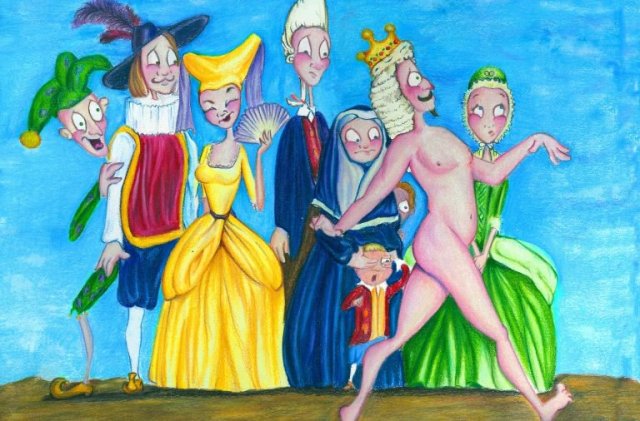
Hire me to create a Grand Solara Vision for @PoeticHQ https://t.co/pE0rgvSieC
— Paramendra Kumar Bhagat (@paramendra) June 13, 2026
Unicorn to Solara: A Journey of Imagination: From Billion-Dollar Startups to Trillion-Dollar Suns https://t.co/aW3k05R3bM
👇👇
1,000 Solaras In 10 Years https://t.co/4gg0Z3FUmJ 👆👆
— Paramendra Kumar Bhagat (@paramendra) June 13, 2026

No comments:
Post a Comment