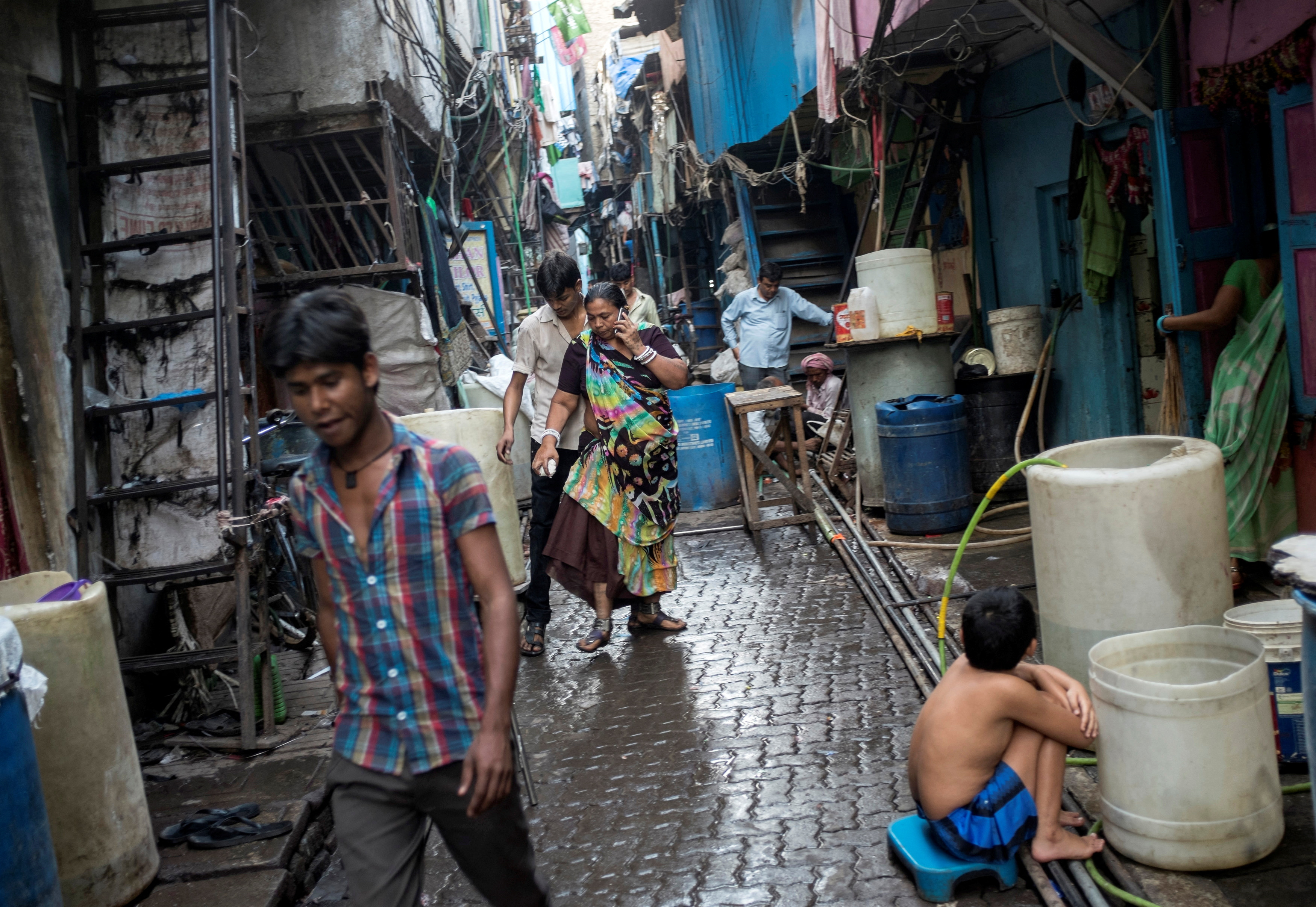
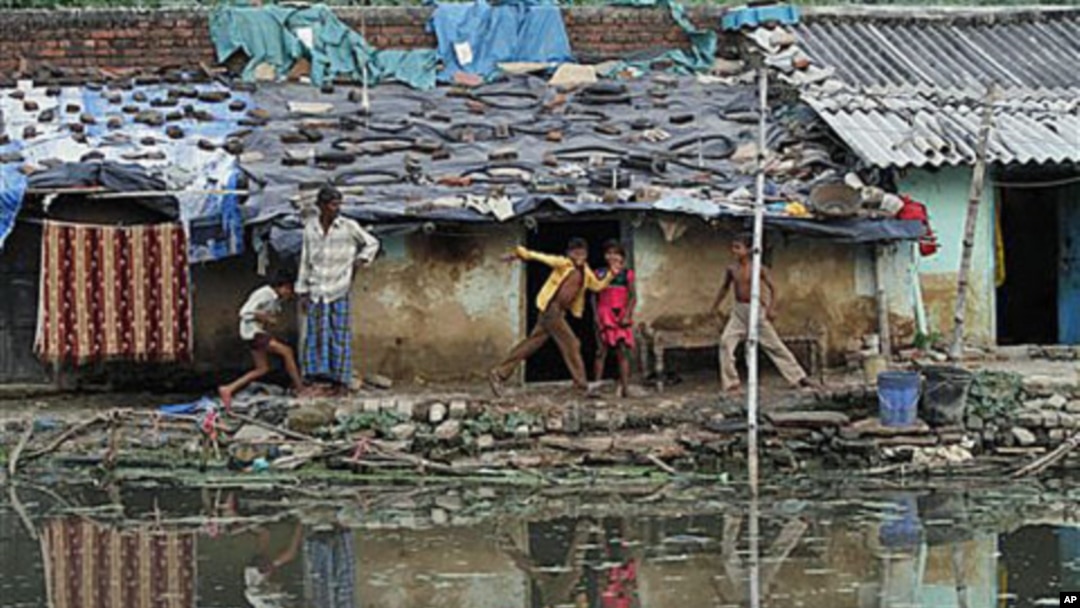
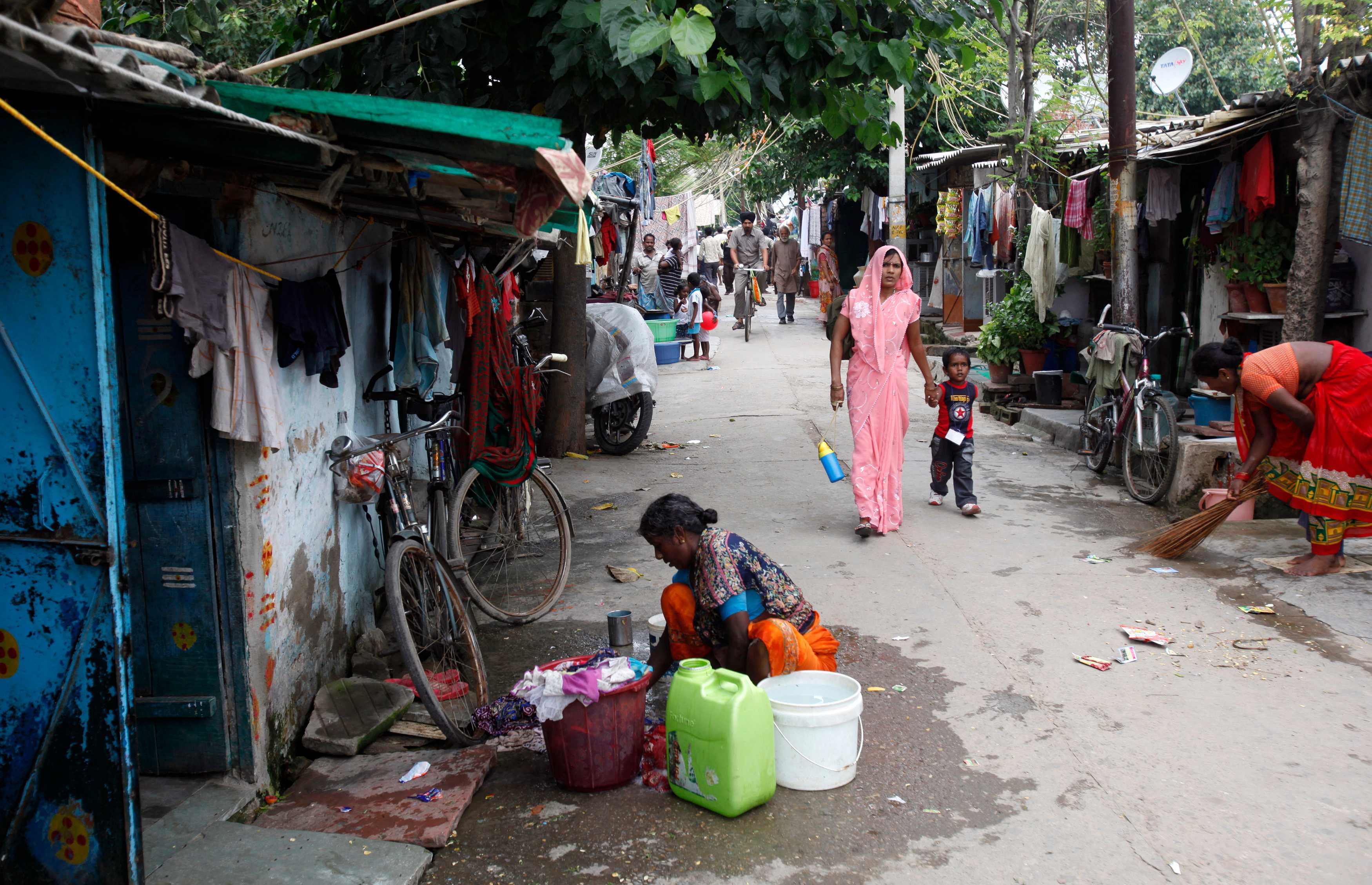
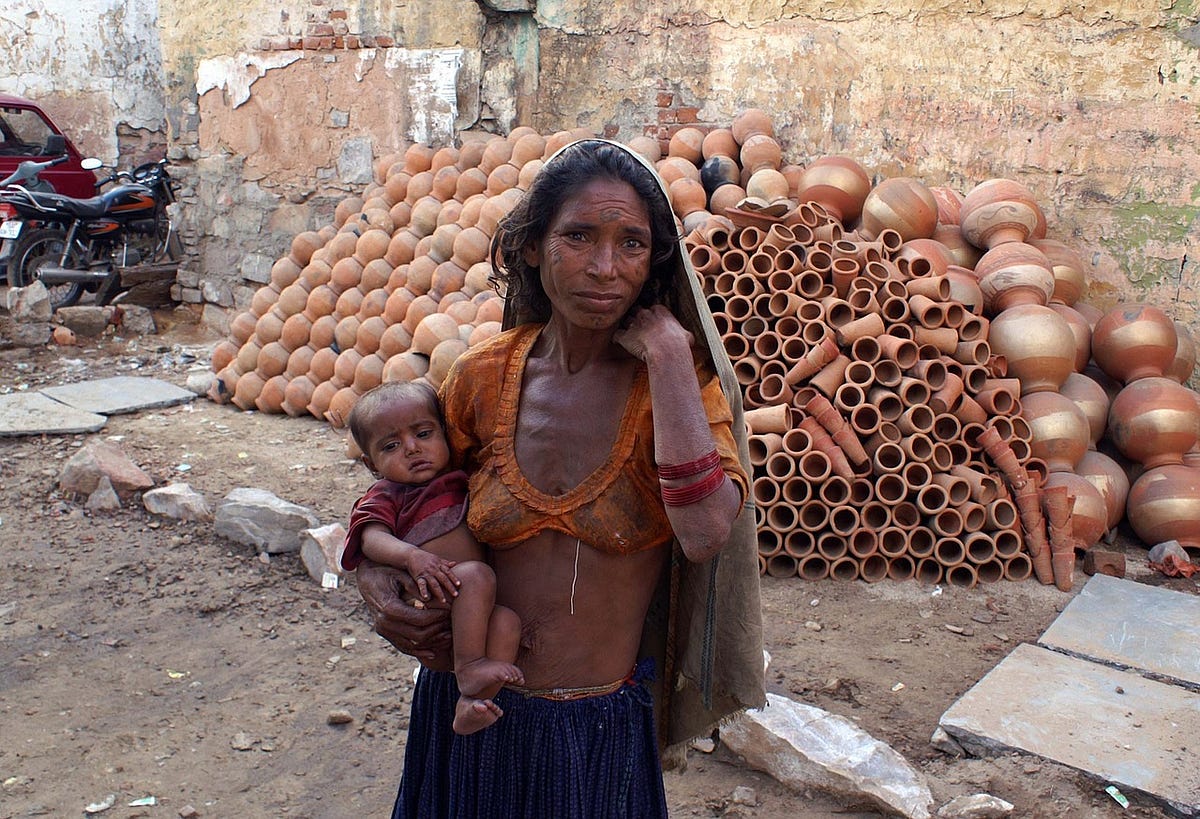
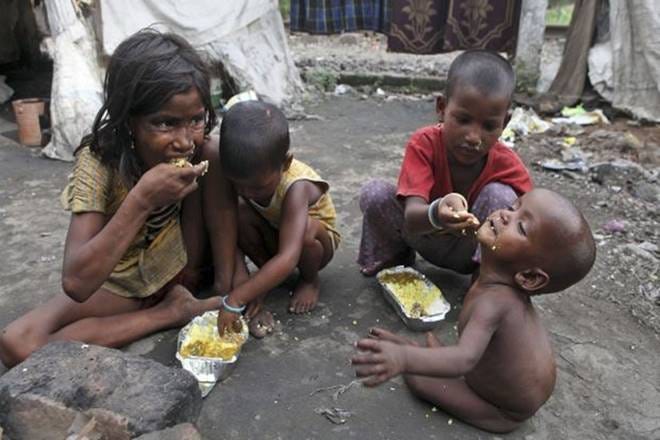
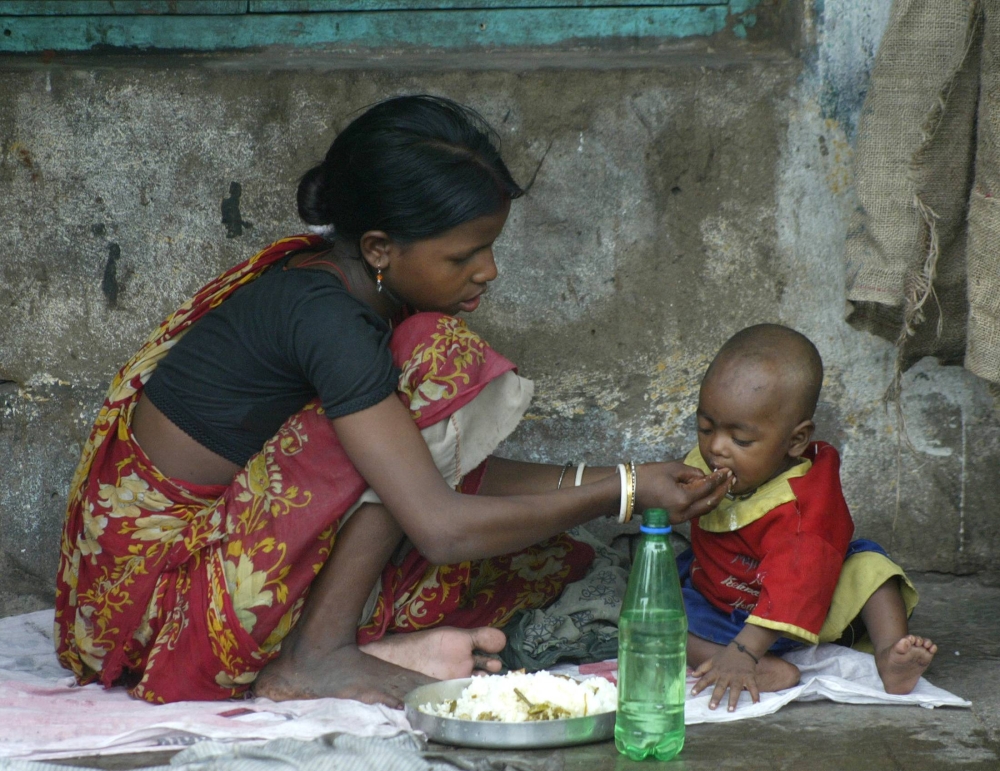
OpenAI’s Nonprofit Windfall: A Bold Case for Ending Extreme Poverty OpenAI began with noble intentions as a nonprofit dedicated to ensuring artificial general intelligence benefits all of humanity. But ambitious goals demand resources far beyond what donations and grants can provide. Scaling cutting-edge AI research required massive capital. So the nonprofit gave birth to a for-profit arm. Today, that structure has matured: the OpenAI Foundation, the nonprofit parent, controls the for-profit OpenAI Group (a public benefit corporation) and holds a substantial 26% equity stake—valued at approximately $130 billion based on recent valuations. This ownership position has transformed the OpenAI Foundation into one of the world’s largest nonprofits by asset size, dwarfing many traditional philanthropic giants. With such resources at its disposal, the question becomes: What is the most effective way to deploy this capital for maximum human impact?The Case for Direct InterventionThe strongest answer may be the most straightforward: intervene directly to eradicate extreme poverty, with zero leakage to intermediaries, bureaucracy, or overhead. Rather than spreading funds across fragmented causes or research initiatives, the Foundation could target verifiable, immediate human suffering—lifting the world’s poorest out of destitution in a measurable, accountable way. India offers a compelling starting point. Despite remarkable economic progress and a dramatic reduction in poverty over the past decade—thanks to growth, welfare programs, and digital infrastructure—the country still contains a sizable population segment living at levels comparable to sub-Saharan Africa’s extreme poverty. Recent estimates place India’s extreme poverty rate (around the $2.15–$3 per day line) in the low single digits nationally, but pockets of deep deprivation persist, especially in rural areas and among vulnerable groups. Millions still face hunger, malnutrition, and limited opportunity. Leveraging India’s Digital Public InfrastructureWhat makes India uniquely positioned for high-impact philanthropy is its world-class digital public goods. The Aadhaar biometric identification system, combined with UPI (Unified Payments Interface) and Jan Dhan bank accounts—the JAM trinity—has revolutionized last-mile delivery of benefits. Direct Benefit Transfers (DBTs) have already moved trillions of rupees with dramatically reduced leakage compared to traditional subsidy systems. This infrastructure enables precise, transparent, and instantaneous cash transfers to identified beneficiaries. Targeting could focus on the poorest households using existing multidimensional poverty indices, consumption data, or Aadhaar-linked welfare rolls. Funds could flow straight into bank accounts linked to mobile phones, bypassing corrupt middlemen and inefficient NGOs. Recipients decide how best to use the money—for food, education, healthcare, or small investments—empowering them rather than dictating solutions from afar. Pilot programs and scaled government schemes have demonstrated that such unconditional or lightly conditioned cash transfers reduce poverty effectively, improve nutrition, boost school attendance, and even enhance women’s agency. With OpenAI’s resources, the Foundation could supercharge this approach: not just incremental aid, but a decisive push toward eliminating extreme poverty in targeted regions or demographic groups.Zero Leakage, Measurable ImpactTraditional philanthropy often suffers from high administrative costs, mission drift, and uncertain outcomes. By contrast, direct cash transfers via Aadhaar-UPI offer near-zero leakage. Blockchain or public dashboards could provide real-time transparency on disbursements and allow rigorous evaluation through randomized studies or satellite/survey data. The scale is feasible. A $130 billion endowment, even conservatively managed, could generate substantial annual payouts while preserving principal. Directed strategically, this could transform the lives of tens of millions, creating ripple effects through increased local consumption, human capital development, and economic mobility.A Catalyst for Silicon Valley PhilanthropyBeyond the direct good, such an initiative would set a powerful precedent. OpenAI’s success story—from nonprofit origins to world-changing valuation—already inspires awe. If its Foundation demonstrates that frontier technology wealth can be channeled into decisive, evidence-based poverty eradication, it could open the floodgates for other Silicon Valley leaders and AI-driven fortunes. Tech philanthropists, often criticized for pet projects or ineffective giving, would see a replicable model: identify a solvable problem, leverage proven infrastructure, deliver with radical efficiency, and measure relentlessly. Critics might argue that AI companies should focus solely on safety, alignment, or technological breakthroughs. But abundance created by AI should ultimately serve humanity’s most pressing needs. Eradicating extreme poverty is not charity—it is a high-leverage investment in global stability, future markets, and shared prosperity that aligns perfectly with OpenAI’s founding mission. The OpenAI Foundation stands at a historic juncture. With its unique resources and the world’s most sophisticated technology ecosystem behind it, it has the chance to do what few large philanthropies have achieved: deliver transformative, verifiable impact at scale. Starting with India’s remaining extreme poor via direct digital transfers would not only be effective policy—it would be a statement that the AI revolution’s gains can, and should, reach the world’s poorest first.
Elon Musk’s Ultimate AI Phone: A Starlink-Powered Bodyguard in Your Pocket
In a string of characteristically cryptic yet electrifying posts on X (formerly Twitter), Elon Musk has once again ignited the tech world’s imagination. This time, the provocation is not a car, a rocket, or a brain implant—but something far more intimate: a radical rethinking of the smartphone itself.
Drawing threads from SpaceX’s Starlink satellite network, Tesla’s autonomous driving stack, and xAI’s rapidly evolving artificial intelligence, Musk sketched a vision of what he calls an “AI phone”—a device he claims will be as different from today’s smartphones as the iPhone was from flip phones. If the modern smartphone is a glowing slab that demands constant attention, Musk’s proposed device aims to be its philosophical opposite: invisible, ambient, always listening, always helping.
This is not just a new gadget. It is an attempt to turn the phone from a digital slot machine into something closer to a guardian, an assistant, and—provocatively—a bodyguard.
Solar Power: A Device That Drinks from the Sun
At the foundation of Musk’s concept is energy independence. The AI phone would rely primarily on solar charging, supplemented by ultra-efficient batteries and low-power AI chips. The idea echoes Musk’s long-standing obsession with energy systems—from Tesla’s solar roofs to Powerwalls—and applies it at a personal scale.
Imagine a phone that quietly recharges as you walk, drive, or sit near a window. No cables. No power anxiety. No nightly ritual of hunting for an outlet like a digital IV drip. For users in developing regions, disaster zones, or off-grid environments, this could be transformative. For everyone else, it’s a subtle shift toward frictionless living.
This isn’t entirely speculative. Advances in low-power silicon, thin-film solar cells, and energy-harvesting materials suggest such a device is technically plausible—especially if the phone is no longer designed to power a bright screen for hours on end.
Always Connected: Starlink in Your Pocket
Perhaps the boldest claim is total independence from traditional telecom infrastructure. Musk envisions a phone that connects directly to Starlink satellites—no cell towers, no carriers, no Wi-Fi routers, no external dishes.
“Satellite. Starlink. No intermediary. No cell service. No dish. Direct,” Musk wrote.
If realized, this would be a fundamental break from the 20th-century telecom model. Coverage would no longer be dictated by geography, politics, or infrastructure investment. The same device would work in Manhattan, the Sahara, the open ocean, or a Himalayan valley.
Starlink already supports direct-to-cell experiments, and while bandwidth and latency constraints remain real challenges, the trajectory is clear: connectivity as a planetary utility rather than a patchwork of national networks. The AI phone would be the first consumer device designed natively for that reality.
Voice-First: The Quiet Rebellion Against Screens
If the iPhone turned the screen into the center of human attention, Musk’s AI phone seeks to dethrone it.
“You almost never look at it. You just talk to it,” Musk explained.
This voice-first approach is not merely a UI change—it’s a cultural one. Screens fragment attention. They pull eyes downward and minds inward. A voice-centric device, powered by advanced conversational AI, reverses that relationship. Technology recedes into the background, becoming more like air traffic control than a billboard.
Users would dictate messages, manage schedules, draft documents, analyze data, and navigate daily life through natural speech. A screen would still exist, but as an optional interface—not the default. The promise is a phone that serves without constantly demanding to be seen.
In an era of rising screen fatigue, dopamine addiction, and digital burnout, this could be Musk’s quietest—and most subversive—innovation.
On-Device AI: Intelligence That Lives With You
Unlike today’s AI assistants, which rely heavily on cloud servers, Musk emphasizes that this device would be AI-native. That means core intelligence runs locally, on the device itself.
The implications are significant:
Privacy: Sensitive data doesn’t need to leave your pocket.
Speed: Responses are instant, not bottlenecked by network latency.
Resilience: The AI works even when connectivity is degraded.
Musk described the phone as having “physical AI capabilities”—an always-aware system using cameras, microphones, and sensors to understand the user’s environment. In his words, it becomes a “bodyguard.”
That could mean alerting you to an oncoming vehicle while you’re distracted, detecting unusual sounds at night, or flagging potentially dangerous situations before you consciously register them. It’s less Siri, more situational awareness—AI as a sixth sense.
Beyond Communication: Your Driver, Your Office, Your Proxy
Musk’s vision stretches beyond personal assistance into orchestration. The AI phone is imagined as the command center for your broader digital and physical life.
“This phone is your bodyguard. This phone is also your driver.”
Integrated with Tesla’s autonomous systems, it could summon a self-driving vehicle, coordinate routes, manage logistics, and eventually act as a mobile control node for autonomous transport. At the same time, it becomes a fully portable office—drafting reports, running analyses, managing projects, and negotiating calendars through conversation alone.
In effect, the device functions as a proxy for you: a tireless executive assistant that never sleeps, never forgets, and scales with your ambition.
A New Epoch—or a Beautifully Dangerous Idea?
Musk’s claim that this device will redefine mobile computing is not hyperbole—it’s a deliberate echo of past inflection points. Feature phones gave way to smartphones. Keyboards yielded to glass. Apps replaced buttons. Now, Musk is suggesting the next transition: from interaction to delegation.
Yet challenges loom large. Regulatory hurdles around satellite communications, ethical concerns about always-on sensors, AI safety questions, and the economics of affordability all remain unresolved. A phone that sees and hears the world must be governed by extraordinary trust.
Still, history suggests Musk thrives precisely where constraints are tightest.
The Phone as Ally, Not Addiction
If today’s smartphone is a mirror reflecting our compulsions back at us, Musk’s AI phone aims to be something else entirely: a quiet ally, standing just behind the shoulder, whispering only when needed.
Whether this vision becomes a shipping product or remains a conceptual north star, one thing is clear: Musk isn’t merely teasing hardware. He’s challenging the very idea of what personal technology should be in an age of artificial intelligence.
The future phone, if Musk has his way, won’t steal your attention. It will give you your life back—and watch your back while it’s at it.
Elon Musk’s AI Phone—and the Case for Aadhaar and UPI Integration
Why India Holds the Key to Turning a Brilliant Device into a Civilizational Platform
Elon Musk’s recent hints about an AI-native phone—solar-powered, Starlink-connected, voice-first, and always aware—have electrified the global tech community. The device, as sketched in Musk’s characteristically sparse posts, promises to upend the smartphone paradigm the way the iPhone once obliterated the flip phone.
But hardware alone does not create revolutions. Connectivity alone does not transform societies. If Musk’s AI phone is to become more than an exquisite piece of engineering—if it is to become a genuine engine of global change—it must solve two problems that billions of people still face every day: identity and money.
This is where India enters the story.
By integrating Aadhaar-style biometric identity and UPI-style instant payments directly into the AI phone at launch—through formal partnerships and licensed frameworks—Musk could turn his device into something unprecedented: a pocket-sized gateway to legal identity, banking, and economic participation for the world’s excluded billions.
Identity First: Why Aadhaar Is the Missing Layer
Musk has described his AI phone as a “bodyguard”—a device that understands its user physically and contextually. But in the modern world, the most fundamental question technology must answer is simpler and more brutal: Who are you?
India’s Aadhaar system offers the most successful blueprint humanity has ever built to answer that question at scale.
Aadhaar is a voluntary, biometric-based digital identity system managed by the Unique Identification Authority of India (UIDAI). Built on fingerprints, iris scans, and demographic data, it has enrolled over 94% of India’s population—more than 1.3 billion people—making it the largest biometric ID system in history.
This is not merely an ID card. Aadhaar functions as digital bedrock:
It eliminates duplicate and fake identities
It enables instant e-KYC for banks and services
It underpins welfare delivery, mobile SIM issuance, and financial inclusion
In other words, Aadhaar turned identity from paperwork into infrastructure.
If Musk’s AI phone launched with Aadhaar-grade biometric enrollment built in—securely, on-device, and privacy-preserving—it could replicate this model globally. You buy the phone; you get an ID.
For the nearly one billion people worldwide who lack formal identification, this would be life-altering. No ID means no bank account. No bank account means no credit, no insurance, no digital work, no economic visibility. The AI phone could become the passport to modern life.
Critics rightly point to Aadhaar’s privacy controversies. But Musk’s architecture—on-device AI, local processing, strong encryption, user-controlled permissions—could actually improve on Aadhaar’s original design, creating a next-generation biometric system that is less centralized, more user-owned, and cryptographically verifiable.
Money Without Friction: Why UPI Changes Everything
Identity opens the door. Payments let you walk through it.
India’s Unified Payments Interface (UPI) is arguably the most successful digital payments system ever deployed. Built by the National Payments Corporation of India (NPCI) and launched in 2016, UPI enables instant, real-time transfers between bank accounts using simple virtual addresses—no card numbers, no intermediaries, no fees for users.
UPI now processes billions of transactions every month, powering everything from street vendors and taxis to e-commerce and government payments. It has leapfrogged credit cards, wallets, and even cash in daily use.
Now imagine Musk’s AI phone shipping UPI-ready by default.
With Starlink connectivity, a voice-first interface, and built-in biometric authentication, payments become almost invisible:
“Send ₹2,000 to the electrician.” “Pay the vendor.” “Split the bill.”
No apps. No friction. No screens.
For emerging markets—where smartphones are common but financial infrastructure is patchy—this is a seismic shift. The phone becomes a global payment rail, turning Starlink into the financial bloodstream of the planet.
The Automatic Bank Account: Where AI, Crypto, and CBDCs Converge
The real leap happens when identity and payments fuse into something deeper: automatic banking.
Upon activation, Musk’s AI phone could generate a secure, digital-only financial account tied to the user’s biometric ID. No forms. No branches. No minimum balances. This account could be:
Crypto-native, supporting stablecoins and digital assets
CBDC-compatible, integrating with central bank digital currencies
Fiat-connected, compliant with local regulations
India’s own CBDC—the e-Rupee—has already reached circulation exceeding ₹10 billion, making it one of the world’s largest live pilots after China’s digital yuan. Globally, over 130 countries are exploring CBDCs, representing nearly all global GDP.
Musk’s phone could act as a universal wallet, seamlessly converting between fiat, crypto, and CBDCs—while xAI manages security, fraud detection, and even financial planning.
The “bodyguard” metaphor returns here: the AI doesn’t just protect your physical safety—it guards your money.
Why India—and Why Now
This is not a speculative partnership. It is an obvious one.
Musk’s ecosystem is already converging on India:
Starlink has agreements with Reliance Jio and Bharti Airtel
Tesla is exploring multi-billion-dollar manufacturing investments
Indian firms like Tata Group already supply Tesla components
India, meanwhile, is aggressively exporting its “digital public infrastructure” model—Aadhaar, UPI, DigiLocker—as a template for the Global South. Its policymakers openly discuss linking CBDCs across BRICS and emerging markets.
By paying licensing fees to UIDAI and NPCI and launching with India-grade digital infrastructure baked in, Musk would gain:
A massive real-world testing ground
Regulatory goodwill
A head start in global digital identity and payments
India would gain something equally valuable: a planetary distribution vehicle for its most important innovations.
From Smartphone to Civilizational Tool
The smartphone put the internet in our pockets—but it also trapped our attention inside glowing rectangles.
Musk’s AI phone promises something different: a device that fades into the background while expanding human capability. If paired with identity and finance, it becomes more than a product. It becomes infrastructure.
Aadhaar gives you existence. UPI gives you agency. Starlink gives you reach. AI gives you leverage.
Put them together, and the phone is no longer a distraction. It is a citizenship machine—a bridge from exclusion to participation.
The question is no longer whether Musk can build such a device. It is whether he will recognize that the true revolution lies not in silicon—but in inclusion.
Elon Musk’s AI Phone—and the Case for Making Grokipedia Native
Why Universal Education, Not Apps, Should Be the Device’s Killer Feature
Elon Musk’s vision for an AI-native phone—solar-charged, Starlink-connected, voice-first, and always present—has been framed largely as a leap in hardware and connectivity. But if this device is to become truly transformative, its most important function may not be communication, navigation, or even security.
It should teach.
Not in the narrow sense of ed-tech apps or video lessons, but in a far more radical way: by embedding Grokipedia—a living, AI-powered universal knowledge system—directly into the phone’s core. Not as software you download, but as a native layer of the device itself.
If Musk’s phone is meant to be a “bodyguard” and an “office,” Grokipedia would make it something even more consequential: a lifelong tutor, available to every human being, in their own language, from childhood through advanced education.
Grokipedia: From Encyclopedia to Living Knowledge System
Grokipedia, envisioned as a fusion of xAI’s Grok and encyclopedic depth, would function as the phone’s intellectual backbone. Unlike static reference platforms, it would be a continuously updated, AI-curated knowledge system—capable not only of answering questions, but of teaching concepts, building intuition, and guiding learners step by step.
Think less Wikipedia, more personal professor.
Because Musk’s phone is designed around on-device AI, Grokipedia could operate privately, securely, and even offline—critical for regions with intermittent connectivity. Starlink would sync updates when available, but the core intelligence would live in your pocket, not in a distant data center.
In this model, the phone becomes a portable university, one that does not require classrooms, tuition, or even literacy to begin.
Language as Destiny: Teaching the World in Its Own Voice
Education has always been gated by language. Most of the world’s knowledge is locked behind English, Mandarin, or a handful of dominant tongues—leaving billions to learn through translation, if at all.
To break this barrier, Grokipedia must support at least the 100 most spoken languages globally, covering over 90% of humanity. This includes not only global languages like English, Mandarin, Hindi, Spanish, and Arabic, but also regional and informal languages—Urdu, Swahili, Vietnamese, Nigerian Pidgin, Egyptian Arabic, and many others that dominate daily life but are often ignored by formal education systems.
The phone’s voice-first design makes this possible in a way no laptop or textbook ever could. Learning would not require reading skills, expensive screens, or constant attention. A child could learn multiplication tables while walking. A farmer could study soil science while working the land. A factory worker could learn programming concepts during a commute.
Language ceases to be a barrier. It becomes a bridge.
A Full Curriculum—From First Grade to College
Grokipedia should not be a search engine. It should be a structured, adaptive curriculum engine.
At its core, the system would offer:
Full primary and secondary education
College-level coursework across STEM, humanities, and vocational skills
Emerging disciplines such as AI ethics, climate science, and sustainable energy
The AI would adapt dynamically—adjusting explanations, pacing, and examples based on the learner’s progress, interests, and context. This mirrors trends already visible in AI tutoring systems, which show significant learning gains when instruction is personalized and conversational.
But Musk’s phone adds something new: mobility. Education is no longer confined to desks, classrooms, or screens. It flows through daily life, guided by voice, curiosity, and context.
One Human, One Tutor: The Personal AI Assistant Model
Every user of the AI phone would receive a dedicated AI tutor—persistent across years, subjects, and stages of life. This assistant would remember how you learn, where you struggle, and what motivates you.
For children, it becomes a patient guide through foundational skills. For teenagers, a coach through exams and career exploration. For adults, a gateway to reskilling and lifelong learning.
The verbal-only option is crucial. Spoken interaction reduces screen addiction, increases accessibility for the visually impaired, and aligns with how humans learned for most of history—through conversation.
Combined with the phone’s physical sensors, the tutor could even teach contextually: explaining physics while you’re cycling, biology while walking through a forest, or geometry while measuring a room.
This is not AI replacing teachers. It is AI scaling mentorship to a planetary level.
Education as Infrastructure, Not a Luxury
When combined with earlier proposals—digital identity, payments, and connectivity—the implications are staggering.
A single device could provide:
Legal identity
Financial access
Global connectivity
Universal education
For billions of people in underserved regions, this would represent not incremental improvement, but a civilizational leap. Education becomes something you carry, not something you apply for.
Of course, challenges remain: data accuracy, cultural bias, curriculum governance, and privacy must be handled with extraordinary care. But these are solvable problems—especially when weighed against the moral cost of leaving billions uneducated in an age of abundance.
From Gadget to Gateway
The smartphone revolution connected humanity. The AI phone could educate it.
If Elon Musk makes Grokipedia native—deeply integrated, multilingual, voice-first, and lifelong—his device will no longer be judged as a competitor to Apple or Google. It will be judged as something far rarer: a public good disguised as hardware.
The question is no longer whether the technology exists. It does.
The question is whether Musk will recognize that the most powerful feature of his AI phone is not what it does for productivity—but what it does for human potential.
Intriguing thread! While no AI phone is official yet, optimizing for neural nets and Starlink could indeed redefine connectivity and access. Grokipedia sounds like a fun evolution—let's see what the future holds. 🚀
1/ Elon Musk has hinted at an AI-native phone: ☀️ Solar-powered 🛰️ Starlink-connected 🗣️ Voice-first 🤖 Always-aware Most people are missing the real story. This isn’t about hardware. It’s about infrastructure for humanity. 🧵👇👆 @Bret_Johnsen @NageshSaldi @RJSekator
You're right—Elon teased it on X yesterday: "Not out of the question at some point. It would be a very different device than current phones. Optimized purely for running max performance/watt neural nets." Could redefine mobile AI. Let's see what develops! 🚀
3/ First pillar: Connectivity. Direct Starlink integration means: ❌ No cell towers ❌ No carriers ❌ No Wi-Fi dependency One planet. One network. Even oceans, deserts, and villages are online. @Neuralink@NeuralinkAI@boringcompany 🧵👇👆
5/ Now imagine this: 👉 You buy the phone 👉 You get a verified digital ID For ~1 billion people globally with no formal identity, this is life-changing. No ID = no bank = no future. @BoringCStatus @TeslaOwnersPDX @Tesla_Hub @AI_at_xAI @xAIupdates 🧵👇👆
10/ India’s e-Rupee is already live. China’s digital yuan is massive. 130+ countries are exploring CBDCs. Musk’s phone could be the universal wallet—converting fiat, crypto, and CBDCs seamlessly. @DrJitendraSingh @UK4Bihar @manojsinhabjp@SmritiIrani@JM_Scindia 🧵👇👆
14/ A child learns math in Swahili. A farmer learns agronomy in Hindi. A worker reskills in Urdu. Education stops being gated by English, money, or geography. @elonmusk@karpathy@SawyerMerritt @WholeMarsBlog @teslaownersSV @teslaownersOC @teslacharts @montana_skeptic 🧵👆👇
20/ The smartphone connected humanity. Musk’s AI phone could upgrade it. The real question isn’t can he build this. It’s whether he realizes the prize isn’t market share— —it’s human potential. 👆
Immigration Is Not America’s Problem—It Is America’s DNA
Immigration has not merely been good for America. Immigration is the reason America became America.
Strip away the mythology, the slogans, the selective memory, and what remains is a simple truth: the United States is not a nation that accepted immigrants—it is a nation built by them. Every surge of American growth, from agriculture to railroads, from factories to Silicon Valley, has coincided with waves of newcomers who crossed oceans and borders with little more than ambition, resilience, and a willingness to work.
Immigration is not an accessory to the American story. It is the story.
The Enterprising Spirit Is the Real Filter
The modern immigration debate is often framed as a question of credentials: Should we only allow PhDs? Highly skilled workers? The “best and brightest”?
This framing fundamentally misunderstands what makes immigration valuable.
The true filter is not educational attainment—it is enterprise.
You do not uproot your life, leave your language, culture, family, and familiarity unless you possess an extraordinary level of initiative. That enterprising spirit—the willingness to take risk, endure uncertainty, and build from scratch—is precisely the trait that has powered American growth for centuries.
That spirit exists at every income level. At every educational level. In farm workers and founders alike.
America didn’t rise because it imported résumés. It rose because it attracted people who were willing to try.
Immigration Works at Every Level of the Economy
History is unambiguous:
Immigrants built America’s farms and railroads
They staffed its factories and shipyards
They powered its service economy
They founded its startups and transformed its research labs
Low-wage immigration lowers costs, raises productivity, and enables entire sectors to function. High-skill immigration drives innovation, entrepreneurship, and global competitiveness. Middle-skill immigration fills the connective tissue of the economy.
The evidence is overwhelming: immigration is net-positive across the entire income spectrum.
The real economic distortions do not come from immigration itself—but from how immigration is managed.
The Real Problem Is Not Immigration. It Is Documentation.
Let’s be precise.
People do not come to the United States with a burning desire to vote illegally, undermine democracy, or commit crimes. They come to work. They come to earn. They come to send money home, to build something, to survive or to thrive.
The chaos arises not from movement—but from lack of documentation.
Undocumented labor creates three corrosive effects:
Workers are exploited
Wages are distorted
Law-abiding employers are undercut
This is not a moral failure of migrants. It is a policy failure of systems.
Humans Deserve More Respect Than Cars
Here is the absurdity at the heart of the debate:
A car crossing an international border is documented, tracked, insured, registered, and accounted for.
A human being—capable of labor, creativity, and contribution—is often treated with less procedural dignity.
That inversion should offend any society that claims to value human worth.
If global trade systems can track containers, cargo ships, VIN numbers, and tariffs down to the decimal, then surely they can document people whose sole intention is to work honestly for a wage.
The Case for Guest Worker Programs
The solution is neither open borders nor sealed walls. It is structured, humane documentation.
Guest worker programs—modernized, scalable, and globally coordinated—should be embedded into the architecture of global trade itself.
Such programs would ensure:
Every worker is documented
Every worker is paid at least minimum wage
Every employer operates on a level playing field
Every government retains visibility and control
Documentation protects workers. Documentation protects wages. Documentation protects the rule of law.
What undocumented systems create is not sovereignty—but shadow economies.
Respect, Not Fear, Should Guide Policy
America’s immigration debate is too often driven by fear rather than facts, symbolism rather than systems.
But the lesson of history is clear:
Immigration made America rich
Immigration made America dynamic
Immigration made America resilient
The answer is not exclusion. The answer is respectful inclusion through documentation.
People who are willing to cross borders to work deserve the same procedural respect we grant machines and merchandise. Anything less is not only inefficient—it is un-American.
Immigration did not weaken America. Immigration made America.
And if the nation wishes to remain prosperous in a globalized world, it would do well to remember the very force that built it.
आव्रजन कोई समस्या नहीं—यह अमेरिका का डीएनए है
आव्रजन अमेरिका के लिए केवल अच्छा नहीं रहा है। आव्रजन ही वह कारण है जिसकी वजह से अमेरिका, अमेरिका बना।
अगर हम मिथकों, नारों और चयनात्मक स्मृति को हटा दें, तो एक सरल सत्य सामने आता है: संयुक्त राज्य अमेरिका ऐसा देश नहीं है जिसने प्रवासियों को स्वीकार किया—यह ऐसा देश है जिसे प्रवासियों ने निर्मित किया। खेती से लेकर रेलमार्गों तक, कारखानों से लेकर सिलिकॉन वैली तक—अमेरिकी विकास की हर बड़ी छलांग नए लोगों की लहरों के साथ आई है, जो समुद्रों और सीमाओं को पार करके आए, अपने साथ सिर्फ महत्वाकांक्षा, धैर्य और काम करने की इच्छा लेकर।
आव्रजन अमेरिकी कहानी का कोई परिशिष्ट नहीं है। यह पूरी कहानी है।
असली छननी डिग्री नहीं, उद्यमशीलता है
आधुनिक आव्रजन बहस को अक्सर योग्यता के सवाल के रूप में पेश किया जाता है: क्या हमें सिर्फ पीएचडी धारकों को आने देना चाहिए? अत्यधिक कुशल लोगों को? “सर्वश्रेष्ठ और प्रतिभाशाली” लोगों को?
यह दृष्टिकोण यह समझने में असफल रहता है कि आव्रजन को मूल्यवान क्या बनाता है।
असली छननी शिक्षा नहीं—उद्यमशीलता की भावना है।
आप तब तक अपना देश, भाषा, संस्कृति और परिवार नहीं छोड़ते जब तक आपके भीतर जोखिम उठाने, अनिश्चितता सहने और शून्य से कुछ बनाने की असाधारण क्षमता न हो। यही उद्यमशीलता की भावना—जोखिम लेने की इच्छा—सदियों से अमेरिकी विकास की इंजन रही है।
यह भावना हर आय स्तर पर मौजूद है। हर शैक्षिक स्तर पर मौजूद है। खेत मज़दूरों में भी और संस्थापकों में भी।
अमेरिका रेज़्यूमे आयात करके नहीं बना। अमेरिका उन लोगों को आकर्षित करके बना जो कोशिश करने को तैयार थे।
आव्रजन अर्थव्यवस्था के हर स्तर पर काम करता है
इतिहास पूरी तरह स्पष्ट है:
प्रवासियों ने अमेरिका के खेत और रेलमार्ग बनाए
उन्होंने इसके कारखानों और शिपयार्ड्स को चलाया
उन्होंने सेवा अर्थव्यवस्था को गति दी
उन्होंने स्टार्टअप्स की स्थापना की और अनुसंधान प्रयोगशालाओं को बदला
कम वेतन वाला आव्रजन लागत घटाता है, उत्पादकता बढ़ाता है और पूरे-पूरे उद्योगों को चलने योग्य बनाता है। उच्च-कुशल आव्रजन नवाचार, उद्यमिता और वैश्विक प्रतिस्पर्धा को आगे बढ़ाता है। मध्यम-कुशल आव्रजन अर्थव्यवस्था की जोड़ने वाली कड़ी है।
सबूत भारी हैं: आव्रजन हर आय वर्ग के लिए शुद्ध रूप से लाभकारी है।
विकृतियाँ आव्रजन से नहीं आतीं—वे इस बात से आती हैं कि आव्रजन को कैसे प्रबंधित किया जाता है।
असली समस्या आव्रजन नहीं—दस्तावेज़ों की कमी है
स्पष्ट शब्दों में कहें।
लोग अमेरिका वोट देने की मरणासन्न इच्छा लेकर नहीं आते। वे लोकतंत्र को कमजोर करने या अपराध करने नहीं आते। वे काम करने आते हैं। वे कमाने आते हैं। वे पैसा घर भेजने, कुछ बनाने, जीवित रहने या आगे बढ़ने आते हैं।
अराजकता का कारण आवाजाही नहीं है— अराजकता का कारण है दस्तावेज़ों की कमी।
अदस्तावेज़ श्रम तीन गंभीर समस्याएँ पैदा करता है:
श्रमिकों का शोषण
वेतन में विकृति
ईमानदार नियोक्ताओं के साथ अन्यायपूर्ण प्रतिस्पर्धा
यह प्रवासियों की नैतिक विफलता नहीं है। यह प्रणाली की नीति विफलता है।
इंसानों को कारों से ज़्यादा सम्मान मिलना चाहिए
इस बहस के केंद्र में एक विचित्र विडंबना है:
एक कार जब अंतरराष्ट्रीय सीमा पार करती है, तो वह दस्तावेज़ित होती है, ट्रैक की जाती है, बीमित होती है, पंजीकृत होती है।
एक इंसान—जो श्रम, रचनात्मकता और योगदान देने में सक्षम है—अक्सर उससे भी कम प्रक्रियात्मक सम्मान पाता है।
यह उलटाव किसी भी ऐसे समाज को असहज करना चाहिए जो मानव गरिमा का दावा करता है।
अगर वैश्विक व्यापार प्रणाली कंटेनरों, कार्गो जहाज़ों, वाहन पहचान संख्याओं और टैरिफ़ को दशमलव तक ट्रैक कर सकती है, तो निश्चित रूप से वह उन लोगों को भी दस्तावेज़ित कर सकती है जिनका एकमात्र उद्देश्य ईमानदारी से मजदूरी करना है।
अतिथि श्रमिक कार्यक्रमों का पक्ष
समाधान न तो पूरी तरह खुली सीमाएँ हैं और न ही पूरी तरह बंद दीवारें। समाधान है संरचित, मानवीय दस्तावेज़ीकरण।
अतिथि श्रमिक कार्यक्रम—आधुनिक, विस्तार योग्य और वैश्विक रूप से समन्वित—को वैश्विक व्यापार संरचना का हिस्सा बनाया जाना चाहिए।
ऐसे कार्यक्रम सुनिश्चित करेंगे:
हर श्रमिक दस्तावेज़ित हो
हर श्रमिक को न्यूनतम मजदूरी मिले
हर नियोक्ता समान प्रतिस्पर्धा में हो
हर सरकार के पास स्पष्ट दृश्यता और नियंत्रण हो
दस्तावेज़ीकरण श्रमिकों की रक्षा करता है। दस्तावेज़ीकरण वेतन की रक्षा करता है। दस्तावेज़ीकरण कानून के शासन की रक्षा करता है।
अदस्तावेज़ प्रणालियाँ संप्रभुता नहीं— छाया अर्थव्यवस्थाएँ पैदा करती हैं।
नीति का मार्ग भय नहीं, सम्मान होना चाहिए
अमेरिका की आव्रजन बहस अक्सर तथ्यों की बजाय भय से, और प्रणालियों की बजाय प्रतीकों से संचालित होती है।
लेकिन इतिहास का संदेश स्पष्ट है:
आव्रजन ने अमेरिका को समृद्ध बनाया
आव्रजन ने अमेरिका को गतिशील बनाया
आव्रजन ने अमेरिका को लचीला बनाया
उत्तर बहिष्कार नहीं है। उत्तर है दस्तावेज़ीकरण के माध्यम से सम्मानजनक समावेशन।
जो लोग काम करने के लिए सीमाएँ पार करते हैं, वे वही प्रक्रियात्मक सम्मान पाने के हक़दार हैं जो हम मशीनों और माल को देते हैं। इससे कम कुछ भी न केवल अक्षम है—बल्कि गैर-अमेरिकी भी है।
आव्रजन ने अमेरिका को कमजोर नहीं किया। आव्रजन ने अमेरिका को बनाया।
और यदि यह राष्ट्र वैश्वीकृत दुनिया में समृद्ध बने रहना चाहता है, तो उसे उसी शक्ति को याद रखना होगा जिसने उसे खड़ा किया था।
India’s Global Contribution: Identity, Payments, and the Missing Infrastructure of Human Dignity
The global immigration debate is trapped in the wrong frame. Borders, walls, quotas, and credentials dominate the conversation, while the real problem—documentation—remains largely unaddressed. Yet a solution already exists. Not in theory. Not in pilot programs. But at national scale.
India has built it.
India Accidentally Solved a Global Problem
Through Aadhaar and UPI, India has created something unprecedented in human history: a population-scale, low-cost, interoperable system that provides identity and instant money movement to over a billion people.
Aadhaar answers a fundamental question: Who is this person? UPI answers an equally fundamental one: Can this person receive and send money instantly, securely, and at near-zero cost?
Together, they form the missing infrastructure of modern governance: universal identity plus universal financial access.
This is not a “fintech innovation.” It is civilizational infrastructure.
Every Human Being Should Have an ID—By Default
In the modern world, lacking an ID is equivalent to civil invisibility. Without documentation, people cannot work legally, open bank accounts, receive government benefits, or move freely. They exist in the shadows—not because they choose to, but because systems force them there.
The solution is conceptually simple:
Every human being should receive a digital ID by virtue of being human
Every human being should receive an automatic, basic digital bank account
No forms. No gatekeepers. No discretionary bureaucracy.
Identity should not be a privilege. It should be a default.
The Direct Cash Transfer Revolution
Once identity and bank accounts are universal, policy transforms.
Direct cash transfer (DCT) programs become frictionless. No intermediaries. No leakage. No patronage networks. Money flows straight from the state to the citizen.
India has already demonstrated this at scale—cutting corruption, improving delivery, and saving billions.
Now consider the implications for the United States.
If the bottom 10% income bracket in America automatically received regular cash transfers, the effects would be profound:
Poverty reduction without paternalism
Economic stimulus that actually circulates
Improved health, education, and workforce participation
And crucially: zero bureaucracy.
No caseworkers. No means-testing mazes. No administrative bloat.
Just documented people and direct transfers.
Document Everybody. Bank Everybody.
Immigration chaos is not caused by movement—it is caused by invisibility.
Documentation is not surveillance—it is protection.
India Should Export Aadhaar and UPI to the World
China exports physical infrastructure: roads, ports, railways, bridges.
India can export digital public infrastructure.
Aadhaar and UPI should be offered as:
Open, modular systems
Adaptable to national sovereignty
Governed by international standards
Countries struggling with identity, welfare delivery, and migration management could leapfrog decades of institutional development.
This would not just be diplomacy—it would be soft power of the highest order.
The Immigration Irony
There is a striking irony at play.
India is one of the largest exporters of immigrants to the United States—engineers, doctors, entrepreneurs, workers across every skill level.
It may also be the country best positioned to help the United States solve its immigration documentation problem.
The same systems that enabled India to identify, bank, and transfer money to over a billion people can be adapted to document, dignify, and integrate migrants globally.
The Missing Layer of Globalization
Globalization built trade rules, shipping lanes, capital flows, and supply chains.
What it failed to build was human infrastructure.
Identity. Banking. Documentation.
India has shown that this layer can be built cheaply, at scale, and democratically.
The next phase of globalization should not be about faster capital—it should be about visible humans.
A World That Sees Everyone
When every human being is documented:
Borders become manageable
Welfare becomes efficient
Immigration becomes lawful, humane, and productive
This is not utopian. It already exists.
The question is no longer whether it can be done. The question is who will export it.
India has the tools. India has the experience. India has the moral standing.
The country that sends some of the world’s most enterprising immigrants may also hold the key to finally documenting them—with dignity, efficiency, and respect.
भारत का वैश्विक योगदान: पहचान, भुगतान और मानव गरिमा का गुम हुआ बुनियादी ढाँचा
वैश्विक आव्रजन बहस एक गलत फ्रेम में फँसी हुई है। सीमाएँ, दीवारें, कोटा और योग्यताएँ चर्चा पर हावी हैं—जबकि असली समस्या, दस्तावेज़ीकरण, लगभग अनदेखी रह जाती है। जबकि समाधान पहले से मौजूद है। न सिद्धांत में। न पायलट परियोजनाओं में। बल्कि राष्ट्रीय स्तर पर लागू रूप में।
भारत ने इसे बना लिया है।
भारत ने अनजाने में एक वैश्विक समस्या का समाधान कर दिया
आधार और यूपीआई के माध्यम से भारत ने मानव इतिहास में अभूतपूर्व काम किया है: एक ऐसा कम-लागत, इंटरऑपरेबल सिस्टम तैयार किया है जो एक अरब से अधिक लोगों को पहचान और तुरंत धन हस्तांतरण की सुविधा देता है।
आधार एक बुनियादी प्रश्न का उत्तर देता है: यह व्यक्ति कौन है? यूपीआई एक उतना ही बुनियादी प्रश्न हल करता है: क्या यह व्यक्ति सुरक्षित, तुरंत और लगभग शून्य लागत पर पैसा भेज और प्राप्त कर सकता है?
दोनों मिलकर आधुनिक शासन का वह गुम हुआ ढाँचा बनाते हैं: सार्वभौमिक पहचान + सार्वभौमिक वित्तीय पहुँच।
यह केवल “फिनटेक नवाचार” नहीं है। यह सभ्यतागत बुनियादी ढाँचा है।
हर इंसान को पहचान मिलनी चाहिए—डिफ़ॉल्ट रूप से
आधुनिक दुनिया में बिना पहचान के होना नागरिक अदृश्यता के बराबर है। बिना दस्तावेज़ों के लोग न कानूनी रूप से काम कर सकते हैं, न बैंक खाता खोल सकते हैं, न सरकारी लाभ पा सकते हैं, न ही स्वतंत्र रूप से आवाजाही कर सकते हैं। वे छाया में रहते हैं—अपनी इच्छा से नहीं, बल्कि सिस्टम की मजबूरी से।
समाधान वैचारिक रूप से सरल है:
हर इंसान को मानव होने के नाते एक डिजिटल पहचान मिले
हर इंसान को स्वचालित रूप से एक बुनियादी डिजिटल बैंक खाता मिले
कोई फ़ॉर्म नहीं। कोई गेटकीपर नहीं। कोई विवेकाधीन नौकरशाही नहीं।
पहचान कोई विशेषाधिकार नहीं होनी चाहिए। यह एक डिफ़ॉल्ट अधिकार होनी चाहिए।
प्रत्यक्ष नकद अंतरण की क्रांति
जब पहचान और बैंक खाते सार्वभौमिक हो जाते हैं, तो नीति का स्वरूप बदल जाता है।
प्रत्यक्ष नकद अंतरण (Direct Cash Transfer – DCT) कार्यक्रम सहज हो जाते हैं। कोई मध्यस्थ नहीं। कोई रिसाव नहीं। कोई सिफ़ारिशी नेटवर्क नहीं। पैसा सीधे राज्य से नागरिक तक पहुँचता है।
भारत ने इसे बड़े पैमाने पर सिद्ध किया है—भ्रष्टाचार घटाकर, वितरण सुधारकर और अरबों की बचत करके।
अब अमेरिका पर विचार करें।
अगर अमेरिका के निचले 10% आय वर्ग को स्वतः और नियमित नकद अंतरण मिलें, तो प्रभाव गहरे होंगे:
बिना संरक्षकवाद के गरीबी में कमी
ऐसा आर्थिक प्रोत्साहन जो वास्तव में अर्थव्यवस्था में घूमे
स्वास्थ्य, शिक्षा और श्रम भागीदारी में सुधार
और सबसे महत्वपूर्ण: शून्य नौकरशाही।
न केसवर्कर। न जटिल पात्रता प्रक्रियाएँ। न प्रशासनिक बोझ।
सिर्फ़ दस्तावेज़ित लोग और सीधे भुगतान।
सबको दस्तावेज़ित करो। सबको बैंकिंग से जोड़ो।
आव्रजन की अराजकता आवाजाही से नहीं—अदृश्यता से पैदा होती है।
अगर सीमा पार करने वाले हर व्यक्ति के पास हो:
वैश्विक रूप से मान्य डिजिटल पहचान
ट्रैक करने योग्य डिजिटल बैंक खाता
सत्यापन योग्य रोजगार संबंध
तो छाया अर्थव्यवस्था रातों-रात सिमट जाएगी।
न्यूनतम वेतन लागू करना संभव होगा। श्रम शोषण कठिन होगा। कर अनुपालन आसान होगा।
दस्तावेज़ीकरण निगरानी नहीं—सुरक्षा है।
भारत को आधार और यूपीआई को दुनिया में निर्यात करना चाहिए
चीन भौतिक अवसंरचना निर्यात करता है: सड़कें, बंदरगाह, रेलमार्ग, पुल।
भारत डिजिटल सार्वजनिक अवसंरचना निर्यात कर सकता है।
आधार और यूपीआई को इस रूप में पेश किया जाना चाहिए:
खुले और मॉड्यूलर सिस्टम
राष्ट्रीय संप्रभुता के अनुरूप अनुकूलनीय
अंतरराष्ट्रीय मानकों द्वारा शासित
जो देश पहचान, कल्याण वितरण और आव्रजन प्रबंधन से जूझ रहे हैं, वे दशकों की संस्थागत यात्रा को छलांग में पूरा कर सकते हैं।
यह सिर्फ़ कूटनीति नहीं होगी—यह उच्चतम स्तर की सॉफ्ट पावर होगी।
आव्रजन की विडंबना
यहाँ एक गहरी विडंबना है।
भारत संयुक्त राज्य अमेरिका में प्रवासियों का सबसे बड़ा स्रोत है—इंजीनियर, डॉक्टर, उद्यमी, और हर कौशल स्तर के श्रमिक।
और वही देश अमेरिका की आव्रजन दस्तावेज़ीकरण समस्या सुलझाने में सबसे उपयुक्त स्थिति में भी हो सकता है।
जिन प्रणालियों ने भारत को एक अरब से अधिक लोगों की पहचान, बैंकिंग और नकद अंतरण सक्षम करने में मदद की, वही प्रणालियाँ वैश्विक स्तर पर प्रवासियों को दस्तावेज़ित करने, सम्मान देने और एकीकृत करने में काम आ सकती हैं।
वैश्वीकरण की अधूरी परत
वैश्वीकरण ने व्यापार नियम बनाए, शिपिंग लेन खड़ी कीं, पूँजी प्रवाह और आपूर्ति श्रृंखलाएँ विकसित कीं।
लेकिन वह मानव अवसंरचना बनाना भूल गया।
पहचान। बैंकिंग। दस्तावेज़।
भारत ने दिखाया है कि यह परत सस्ती, बड़े पैमाने पर और लोकतांत्रिक तरीके से बनाई जा सकती है।
वैश्वीकरण का अगला चरण तेज़ पूँजी का नहीं— दिखाई देने वाले इंसानों का होना चाहिए।
एक ऐसी दुनिया जो हर इंसान को देखे
जब हर इंसान दस्तावेज़ित होता है:
सीमाएँ प्रबंधनीय बनती हैं
कल्याण कुशल होता है
आव्रजन कानूनी, मानवीय और उत्पादक बनता है
यह कोई यूटोपिया नहीं है। यह पहले से मौजूद है।
अब प्रश्न यह नहीं है कि यह हो सकता है या नहीं। प्रश्न यह है कि इसे कौन निर्यात करेगा।
भारत के पास साधन हैं। भारत के पास अनुभव है। भारत के पास नैतिक आधार है।
जो देश दुनिया के सबसे उद्यमशील प्रवासियों को भेजता है, वही देश शायद उन्हें—और दुनिया को—अंततः गरिमा, दक्षता और सम्मान के साथ दस्तावेज़ित करने की कुंजी भी रखता है।
Identity Before Policing: How Aadhaar and UPI Could Undermine Cartels in Central and Latin America
The cartel crisis in Central and Latin America is almost always framed as a problem of violence, drugs, borders, and guns. The prescribed solutions follow predictably: more policing, more militarization, more prisons, more walls.
And yet, despite decades of enforcement-heavy strategies, the cartels endure.
Perhaps the problem is not simply criminality. Perhaps the problem is institutional invisibility.
Lawlessness Begins with Invisibility
In many parts of Central and Latin America, millions of people live without:
Reliable legal identity
Access to formal banking
Direct links to the state
They are not fully seen by institutions. They are not fully counted. They are not fully integrated.
This absence of identity creates a vacuum—and vacuums invite power.
Where the state cannot identify, pay, tax, or protect, cartels step in. They provide jobs, cash, credit, enforcement, and even social order. Not because they are benevolent—but because they are present.
Cartels thrive not merely on fear, but on functionality.
The Hidden Link Between Banking and Violence
Cash-based economies are cartel-friendly economies.
When people cannot open bank accounts:
Wages are paid in cash
Transactions are opaque
Extortion is easy
Money laundering is natural
Illicit organizations do not fear transparency. They fear traceability.
Lack of banking does not just exclude people from opportunity—it actively lowers the cost of crime.
Aadhaar and UPI: Not Just Fintech, But State Capacity
India’s Aadhaar and UPI systems are often discussed in economic terms. That misses their deeper significance.
They are tools of state presence.
Aadhaar answers: Who are you? UPI answers: Can the state and economy transact with you directly?
Together, they allow governments to:
Know who exists
Pay citizens directly
Tax transparently
Enforce labor laws
Deliver welfare without intermediaries
This is not surveillance. This is visibility.
And visibility is the enemy of cartels.
Why Cartels Fear Identity
A universally documented population creates cascading effects:
Workers can be paid legally
Employers can be audited
Extortion payments leave trails
Cash dominance erodes
Recruitment pools shrink
When young people have:
Legal identity
Digital wallets
Direct access to jobs and transfers
The cartel loses its comparative advantage.
Cartels recruit where the state is absent. Identity makes the state present.
Policing Without Identity Is Like Fighting in the Dark
Latin America is not under-policed. In many places, it is over-policed—yet under-documented.
Raids without records. Arrests without economic alternatives. Force without legitimacy.
You cannot arrest your way out of a system where millions are economically invisible.
First comes identity. Then comes banking. Then comes opportunity. Only then does policing stick.
Exporting Digital Peace Infrastructure
China exports roads, ports, and railways.
India can export something just as transformative: digital public infrastructure for identity and payments.
A Latin American adaptation of Aadhaar and UPI—sovereign, privacy-protected, and locally governed—could:
Formalize informal economies
Enable direct cash transfers
Reduce cash dependency
Strengthen tax bases
Undercut cartel financing
This would not replace law enforcement. It would make law enforcement effective.
The Migration–Cartel–Identity Triangle
There is a deeper geopolitical irony.
The same regions struggling with cartels are major sources of migration to the United States. The same migrants face identity and banking exclusion abroad.
Solve identity and banking at the source, and you:
Reduce cartel recruitment
Increase lawful employment
Lower forced migration
Stabilize communities
Walls do not stop migration. Functioning states do.
A New Lens on Security
Security is not only about weapons. It is about systems.
The strongest states are not the most armed—they are the most legible.
Cartels thrive in the shadows. Identity systems turn on the lights.
Aadhaar and UPI are not Indian solutions to Indian problems. They are global templates for restoring state capacity where it has quietly eroded.
If Central and Latin America want to defeat cartels sustainably, the starting point is not the gun.
It is the ID.
पुलिसिंग से पहले पहचान: कैसे आधार और यूपीआई मध्य और लैटिन अमेरिका में कार्टेल्स को कमजोर कर सकते हैं
मध्य और लैटिन अमेरिका में कार्टेल संकट को लगभग हमेशा हिंसा, ड्रग्स, सीमाओं और हथियारों की समस्या के रूप में देखा जाता है। समाधान भी अनुमानित होते हैं—अधिक पुलिसिंग, अधिक सैन्यीकरण, अधिक जेलें, और ऊँची दीवारें।
फिर भी, दशकों की कठोर प्रवर्तन नीतियों के बावजूद कार्टेल कायम हैं।
शायद समस्या सिर्फ़ अपराध नहीं है। शायद समस्या है संस्थागत अदृश्यता।
क़ानूनविहीनता की शुरुआत अदृश्यता से होती है
मध्य और लैटिन अमेरिका के कई हिस्सों में लाखों लोग ऐसे हैं जिनके पास:
विश्वसनीय कानूनी पहचान नहीं
औपचारिक बैंकिंग तक पहुँच नहीं
राज्य से सीधा संपर्क नहीं
वे संस्थानों द्वारा पूरी तरह देखे नहीं जाते। वे पूरी तरह गिने नहीं जाते। वे पूरी तरह एकीकृत नहीं होते।
पहचान की यह कमी एक शून्य पैदा करती है—और शून्य सत्ता को आमंत्रित करता है।
जहाँ राज्य पहचान नहीं कर सकता, भुगतान नहीं कर सकता, कर नहीं वसूल सकता, या सुरक्षा नहीं दे सकता, वहाँ कार्टेल कदम रखते हैं। वे नौकरियाँ देते हैं, नकद पैसा देते हैं, ऋण देते हैं, “न्याय” और व्यवस्था प्रदान करते हैं। दया से नहीं—बल्कि इसलिए क्योंकि वे मौजूद होते हैं।
कार्टेल सिर्फ़ डर से नहीं चलते। वे कार्यशीलता से चलते हैं।
बैंकिंग और हिंसा के बीच छिपा संबंध
नकद-आधारित अर्थव्यवस्थाएँ कार्टेल-अनुकूल अर्थव्यवस्थाएँ होती हैं।
जब लोग बैंक खाते नहीं खोल सकते:
वेतन नकद में दिया जाता है
लेनदेन अपारदर्शी रहता है
वसूली आसान हो जाती है
मनी लॉन्ड्रिंग स्वाभाविक बन जाती है
अपराधी संगठन पारदर्शिता से नहीं डरते। वे ट्रैसेबिलिटी से डरते हैं।
बैंकिंग की कमी केवल लोगों को अवसरों से वंचित नहीं करती—यह अपराध की लागत को भी घटा देती है।
आधार और यूपीआई: केवल फिनटेक नहीं, बल्कि राज्य क्षमता
भारत की आधार और यूपीआई प्रणालियों को अक्सर आर्थिक दृष्टि से देखा जाता है। यह उनकी गहराई को कम करके आंकना है।
वे राज्य की उपस्थिति के उपकरण हैं।
आधार पूछता है: आप कौन हैं? यूपीआई पूछता है: क्या राज्य और अर्थव्यवस्था आपके साथ सीधे लेनदेन कर सकते हैं?
दोनों मिलकर सरकारों को यह क्षमता देते हैं कि वे:
जान सकें कि कौन मौजूद है
नागरिकों को सीधे भुगतान कर सकें
पारदर्शी कर वसूली कर सकें
श्रम क़ानून लागू कर सकें
बिना मध्यस्थों के कल्याण पहुँचा सकें
यह निगरानी नहीं है। यह दृश्यता है।
और दृश्यता कार्टेल्स की दुश्मन है।
कार्टेल पहचान से क्यों डरते हैं
सार्वभौमिक दस्तावेज़ीकरण कई श्रृंखलाबद्ध प्रभाव पैदा करता है:
श्रमिकों को कानूनी रूप से भुगतान किया जा सकता है
नियोक्ताओं का ऑडिट संभव होता है
वसूली भुगतान डिजिटल निशान छोड़ते हैं
नकद प्रभुत्व टूटता है
भर्ती का आधार सिकुड़ता है
जब युवाओं के पास होता है:
कानूनी पहचान
डिजिटल वॉलेट
नौकरियों और नकद अंतरण तक सीधी पहुँच
तो कार्टेल अपनी तुलनात्मक बढ़त खो देते हैं।
कार्टेल वहाँ भर्ती करते हैं जहाँ राज्य अनुपस्थित होता है। पहचान राज्य को उपस्थित बनाती है।
पहचान के बिना पुलिसिंग अंधेरे में लड़ाई है
लैटिन अमेरिका कम-पुलिस वाला नहीं है। कई जगहों पर वह अत्यधिक पुलिसिंग वाला है—लेकिन अपर्याप्त दस्तावेज़ीकरण वाला।
रिकॉर्ड के बिना छापे। आर्थिक विकल्पों के बिना गिरफ़्तारियाँ। वैधता के बिना बल प्रयोग।
आप उस व्यवस्था से सिर्फ़ गिरफ़्तारियाँ करके बाहर नहीं निकल सकते जहाँ लाखों लोग आर्थिक रूप से अदृश्य हों।
पहले पहचान आती है। फिर बैंकिंग आती है। फिर अवसर आते हैं। तभी पुलिसिंग असरदार होती है।
डिजिटल शांति अवसंरचना का निर्यात
चीन सड़कें, बंदरगाह और रेलमार्ग निर्यात करता है।
भारत उतना ही परिवर्तनकारी कुछ निर्यात कर सकता है: पहचान और भुगतान के लिए डिजिटल सार्वजनिक अवसंरचना।
आधार और यूपीआई का एक लैटिन अमेरिकी रूप—संप्रभु, गोपनीयता-सुरक्षित और स्थानीय रूप से शासित—यह कर सकता है:
अनौपचारिक अर्थव्यवस्थाओं को औपचारिक बनाना
प्रत्यक्ष नकद अंतरण सक्षम करना
नकद निर्भरता कम करना
कर आधार मजबूत करना
कार्टेल वित्तपोषण को कमजोर करना
यह क़ानून प्रवर्तन को प्रतिस्थापित नहीं करेगा। यह उसे प्रभावी बनाएगा।
प्रवासन–कार्टेल–पहचान त्रिकोण
यहाँ एक गहरी भू-राजनीतिक कड़ी है।
जिन क्षेत्रों में कार्टेल सबसे मज़बूत हैं, वही क्षेत्र अमेरिका की ओर प्रवासन के बड़े स्रोत भी हैं। और वही प्रवासी विदेशों में पहचान और बैंकिंग से वंचित रहते हैं।
अगर स्रोत देशों में पहचान और बैंकिंग सुलझा दी जाए, तो:
कार्टेल भर्ती घटेगी
वैध रोज़गार बढ़ेगा
मजबूर प्रवासन घटेगा
समुदाय स्थिर होंगे
दीवारें प्रवासन नहीं रोकतीं। कार्यशील राज्य रोकते हैं।
सुरक्षा पर एक नया दृष्टिकोण
सुरक्षा सिर्फ़ हथियारों की बात नहीं है। यह प्रणालियों की बात है।
सबसे मज़बूत राज्य सबसे हथियारबंद नहीं होते— वे सबसे अधिक पठनीय (legible) होते हैं।
कार्टेल छायाओं में फलते-फूलते हैं। पहचान प्रणालियाँ रोशनी जला देती हैं।
आधार और यूपीआई भारतीय समस्याओं के भारतीय समाधान नहीं हैं। वे वैश्विक टेम्पलेट हैं—उन स्थानों पर राज्य क्षमता बहाल करने के लिए जहाँ वह चुपचाप कमजोर पड़ गई है।
अगर मध्य और लैटिन अमेरिका कार्टेल्स को स्थायी रूप से हराना चाहता है, तो शुरुआत बंदूक से नहीं होगी।
शुरुआत पहचान से होगी।
Labor Is Not an Afterthought: Why Migration Must Be Central to Global Governance
Global governance today is built around capital, trade, and security. There are treaties for goods, rules for money, institutions for war and peace. Containers are tracked. Capital flows are regulated. Supply chains are optimized down to the minute.
And yet, the most important input to any economy—human labor—remains treated as an afterthought.
This is not just a policy failure. It is a moral one.
The World Moves Goods Freely, But Traps Workers
A shirt can cross borders effortlessly. A dollar can cross borders instantly. A worker cannot.
Labor migration remains governed by ad hoc visas, bilateral exceptions, political panic, and informal arrangements that leave millions exposed to exploitation.
This contradiction defines modern globalization: Markets are global. People are not.
And the cost of that contradiction is borne by the most vulnerable.
Labor Migration Is Not a Crisis—It Is a Constant
Migration is often discussed as an emergency. A surge. A breakdown.
In reality, labor migration is a structural feature of the global economy.
Aging societies need workers. Growing societies need jobs. Cities need service labor. Industries need flexibility.
This is not ideology. It is arithmetic.
Ignoring labor migration does not stop it. It simply pushes it underground.
Guest Worker Programs Belong in Global Treaties
Guest worker programs should not be improvised at borders or debated only during crises. They should be codified in international law.
Just as the world has treaties governing:
Trade (WTO)
Aviation (ICAO)
Shipping (IMO)
Finance (IMF, BIS)
It needs treaties governing cross-border labor mobility.
These treaties should set minimum global standards:
Documentation and legal identity
Wage floors and labor protections
Portability of benefits
Employer accountability
Clear pathways in and out
When labor is formally governed, exploitation falls and productivity rises.
Documentation Is Dignity
Undocumented labor is not cheap labor—it is disposable labor.
When workers lack legal status:
Wages are suppressed
Safety is ignored
Abuse goes unreported
Employers face distorted incentives
Documentation does not weaken sovereignty. It strengthens it.
A documented worker is visible to the law, the tax system, and the labor inspector. That visibility is protection—not control.
Economic Reality Demands Mobility
The economic case is overwhelming.
High-income countries face:
Aging populations
Shrinking workforces
Fiscal pressure on welfare systems
Low- and middle-income countries face:
Youth bulges
Underemployment
Limited domestic opportunity
Labor mobility aligns these realities.
Blocking migration does not preserve jobs. It preserves inefficiency.
Human Dignity Is the First Principle
This debate is too often reduced to numbers—GDP, wages, remittances.
But at its core, labor migration is about human dignity.
A person who crosses a border to work is not a threat. They are performing the oldest economic act there is: offering labor in exchange for survival and advancement.
To deny that person legal recognition is to deny their humanity.
Globalization Needs a Human Layer
Global governance today is missing a critical layer.
It has:
Rules for money
Rules for goods
Rules for war
It lacks rules for workers.
Guest worker treaties would not erase borders. They would humanize them.
They would replace chaos with systems. Exploitation with contracts. Fear with predictability.
The Choice Ahead
The world faces a choice.
Continue treating labor migration as an emergency— or recognize it as infrastructure.
Continue forcing workers into shadows— or document them with dignity.
Continue building globalization for capital— or finally build it for people.
Labor is not an afterthought. Labor is the foundation.
And any global order that fails to recognize this will remain both unjust and unstable.
श्रम कोई बाद में सोचने वाली चीज़ नहीं है: क्यों प्रवासन को वैश्विक शासन का केंद्रीय तत्व होना चाहिए
आज का वैश्विक शासन पूँजी, व्यापार और सुरक्षा के इर्द-गिर्द बना है। वस्तुओं के लिए संधियाँ हैं, धन के लिए नियम हैं, युद्ध और शांति के लिए संस्थाएँ हैं। कंटेनरों को ट्रैक किया जाता है। पूँजी प्रवाह नियंत्रित होता है। आपूर्ति शृंखलाएँ मिनट-दर-मिनट अनुकूलित की जाती हैं।
लेकिन किसी भी अर्थव्यवस्था का सबसे महत्वपूर्ण इनपुट—मानव श्रम—अब भी एक बाद में सोची जाने वाली चीज़ बना हुआ है।
यह सिर्फ़ नीति की विफलता नहीं है। यह एक नैतिक विफलता है।
दुनिया वस्तुओं को आज़ादी से चलने देती है, लेकिन श्रमिकों को बाँध देती है
एक शर्ट बिना अड़चन सीमा पार कर सकती है। एक डॉलर पल भर में सीमा पार कर सकता है। एक श्रमिक नहीं।
श्रम प्रवासन आज भी तदर्थ वीज़ाओं, द्विपक्षीय अपवादों, राजनीतिक घबराहट और अनौपचारिक व्यवस्थाओं से संचालित होता है—जो लाखों लोगों को शोषण के लिए खुला छोड़ देती हैं।
यह विरोधाभास आधुनिक वैश्वीकरण की पहचान है: बाज़ार वैश्विक हैं, लोग नहीं।
और इस विरोधाभास की कीमत सबसे कमज़ोर चुकाते हैं।
श्रम प्रवासन कोई संकट नहीं—यह एक स्थायी संरचना है
प्रवासन को अक्सर आपात स्थिति की तरह देखा जाता है। अचानक उछाल। व्यवस्था का टूटना।
हक़ीक़त यह है कि श्रम प्रवासन वैश्विक अर्थव्यवस्था की एक संरचनात्मक विशेषता है।
बुज़ुर्ग होती आबादी वाले देशों को श्रमिकों की ज़रूरत है। तेज़ी से बढ़ती आबादी वाले देशों को नौकरियों की ज़रूरत है। शहरों को सेवा श्रम चाहिए। उद्योगों को लचीलापन चाहिए।
यह विचारधारा नहीं है। यह अंकगणित है।
प्रवासन की अनदेखी उसे रोकती नहीं है। वह उसे सिर्फ़ भूमिगत धकेल देती है।
अतिथि श्रमिक कार्यक्रमों को वैश्विक संधियों का विषय होना चाहिए
अतिथि श्रमिक कार्यक्रमों को सीमाओं पर तात्कालिक उपायों की तरह नहीं चलाया जाना चाहिए, न ही सिर्फ़ संकट के समय बहस का विषय बनना चाहिए। उन्हें अंतरराष्ट्रीय क़ानून में संहिताबद्ध किया जाना चाहिए।
जिस तरह दुनिया के पास संधियाँ हैं:
व्यापार के लिए (WTO)
विमानन के लिए (ICAO)
नौवहन के लिए (IMO)
वित्त के लिए (IMF, BIS)
उसी तरह उसे सीमापार श्रम गतिशीलता के लिए भी संधियाँ चाहिए।
इन संधियों में न्यूनतम वैश्विक मानक तय होने चाहिए:
दस्तावेज़ीकरण और कानूनी पहचान
वेतन की न्यूनतम सीमा और श्रम सुरक्षा
लाभों की पोर्टेबिलिटी
नियोक्ताओं की जवाबदेही
प्रवेश और निकास के स्पष्ट रास्ते
जब श्रम को औपचारिक रूप से शासित किया जाता है, तो शोषण घटता है और उत्पादकता बढ़ती है।
दस्तावेज़ीकरण ही गरिमा है
अदस्तावेज़ श्रम सस्ता श्रम नहीं—फेंक देने योग्य श्रम होता है।
जब श्रमिकों के पास कानूनी दर्जा नहीं होता:
वेतन दबा दिया जाता है
सुरक्षा की अनदेखी होती है
दुर्व्यवहार की रिपोर्ट नहीं होती
नियोक्ताओं के लिए प्रोत्साहन विकृत हो जाते हैं
दस्तावेज़ीकरण संप्रभुता को कमज़ोर नहीं करता। यह उसे मज़बूत करता है।
दस्तावेज़ित श्रमिक क़ानून, कर व्यवस्था और श्रम निरीक्षण के लिए दृश्य होते हैं। यह दृश्यता नियंत्रण नहीं—सुरक्षा है।
आर्थिक यथार्थ गतिशीलता की माँग करता है
आर्थिक तर्क पूरी तरह स्पष्ट है।
उच्च-आय वाले देशों को सामना करना पड़ रहा है:
वृद्ध होती आबादी
सिकुड़ती कार्यबल
कल्याण प्रणालियों पर बढ़ता वित्तीय दबाव
निम्न और मध्यम-आय वाले देशों को सामना करना पड़ रहा है:
युवा आबादी का उभार
अधरोज़गारी
सीमित घरेलू अवसर
श्रम गतिशीलता इन यथार्थों को जोड़ती है।
प्रवासन को रोकना नौकरियों की रक्षा नहीं करता। यह अदक्षता की रक्षा करता है।
मानवीय गरिमा पहला सिद्धांत है
इस बहस को अक्सर संख्याओं तक सीमित कर दिया जाता है—GDP, वेतन, प्रेषण।
लेकिन मूल में, श्रम प्रवासन मानवीय गरिमा का प्रश्न है।
जो व्यक्ति काम करने के लिए सीमा पार करता है, वह कोई ख़तरा नहीं है। वह सबसे पुराना आर्थिक कार्य कर रहा है: श्रम के बदले जीविका और उन्नति की तलाश।
उस व्यक्ति को कानूनी मान्यता से वंचित करना उसकी मानवता से इनकार करना है।
वैश्वीकरण को एक मानवीय परत चाहिए
आज के वैश्विक शासन में एक महत्वपूर्ण परत गायब है।
उसके पास हैं:
धन के नियम
वस्तुओं के नियम
युद्ध के नियम
लेकिन श्रमिकों के लिए नियम नहीं हैं।
अतिथि श्रमिक संधियाँ सीमाओं को मिटाएँगी नहीं। वे उन्हें मानवीय बनाएँगी।
वे अराजकता को प्रणालियों से बदलेंगी। शोषण को अनुबंधों से। डर को पूर्वानुमेयता से।
सामने विकल्प
दुनिया के सामने एक स्पष्ट विकल्प है।
श्रम प्रवासन को आपात स्थिति मानते रहना— या उसे अवसंरचना के रूप में स्वीकार करना।
श्रमिकों को छाया में धकेलते रहना— या उन्हें गरिमा के साथ दस्तावेज़ित करना।
वैश्वीकरण को केवल पूँजी के लिए बनाते रहना— या अंततः उसे लोगों के लिए बनाना।
श्रम कोई बाद की सोच नहीं है। श्रम ही आधार है।
और जो वैश्विक व्यवस्था इस सत्य को स्वीकार नहीं करती, वह न न्यायपूर्ण होगी—न स्थिर।
Labor Is the New Oil: Why the World Needs an Organization of Labor Exporting Countries (OLEC)
Global economics treats some commodities as sacred. Oil, for instance, has its own club—the Organization of Petroleum Exporting Countries (OPEC)—which coordinates supply, stabilizes prices, and wields enormous geopolitical influence. Oil is considered strategic. Its movement is carefully managed. Its producers are organized.
And yet, the world’s most essential commodity—human labor—remains largely unorganized, undervalued, and invisible.
Labor Is the Foundation of Every Economy
No economy can function without labor. Capital, technology, and raw materials are inert without the people who apply them. Labor drives productivity, innovation, and wealth creation. Yet in the global arena, labor is treated as a secondary concern—managed piecemeal through immigration laws, ad hoc guest worker programs, and political whim.
This is a paradox. Labor is more important than oil, yet oil exporters have more institutional power.
The Case for OLEC
Just as OPEC unites oil-producing countries to:
Coordinate exports
Stabilize global prices
Gain negotiating leverage
…countries that export labor need similar mechanisms.
Enter the Organization of Labor Exporting Countries (OLEC).
OLEC would:
Standardize labor migration policies across member states
Negotiate minimum protections and wages for workers abroad
Collectively bargain with labor-importing nations
Coordinate training, certification, and skill portability
Ensure remittances flow efficiently and transparently
Labor-exporting nations already contribute billions in economic value through remittances. Yet they have almost no collective bargaining power to influence labor standards, worker protections, or cross-border mobility.
Economic and Political Power Through Unity
Labor-exporting countries are an economic force. Together, their citizens support industries in the Middle East, North America, Europe, and Asia. They are the backbone of construction, healthcare, technology, agriculture, and service sectors.
By organizing through OLEC, labor-exporting countries can:
Avoid exploitative bilateral deals
Reduce the vulnerability of migrant workers
Improve global standards for wages, working conditions, and mobility
Strengthen domestic economic resilience through strategic migration policies
OLEC could function as both a regulatory body and a negotiating platform, ensuring that labor’s value is recognized, compensated fairly, and protected internationally.
Labor as a Strategic Asset
Countries have long treated energy and natural resources as strategic assets. It is time to treat labor the same way.
Migration is not charity. It is economic infrastructure. It is diplomacy. It is a source of geopolitical influence.
When labor-exporting nations coordinate, they gain leverage, visibility, and influence proportional to the actual value their workers contribute worldwide.
Toward a More Equitable Global Order
Labor is the invisible engine of globalization. Without it, supply chains stall, hospitals close, farms fail, and cities crumble. Yet labor-exporting countries remain sidelined in international negotiations.
OLEC would correct this imbalance. It would recognize labor as strategic, negotiable, and protected, just like oil.
The world has OPEC for oil. It is time to have OLEC for labor.
Because if oil can shape geopolitics, labor should shape the world economy—and labor-exporting nations should shape their own futures.
श्रम तेल की तरह है: क्यों दुनिया को श्रम निर्यातक देशों का संगठन (OLEC) चाहिए
वैश्विक अर्थव्यवस्था कुछ वस्तुओं को पवित्र मानती है। तेल, उदाहरण के लिए, अपनी खुद की संस्था रखता है—पेट्रोलियम निर्यातक देशों का संगठन (OPEC)—जो आपूर्ति का समन्वय करता है, कीमतों को स्थिर करता है और विशाल भू-राजनीतिक प्रभाव रखता है। तेल को रणनीतिक माना जाता है। इसकी आवाजाही सावधानी से प्रबंधित होती है। इसके उत्पादक संगठित हैं।
और फिर भी, दुनिया की सबसे महत्वपूर्ण वस्तु—मानव श्रम—अधिकांश रूप से असंगठित, कम मूल्यांकित और अदृश्य बनी हुई है।
श्रम हर अर्थव्यवस्था की नींव है
कोई भी अर्थव्यवस्था श्रम के बिना संचालित नहीं हो सकती। पूँजी, प्रौद्योगिकी और कच्चे माल भी निष्क्रिय हैं जब तक कि लोग उनका उपयोग न करें। श्रम उत्पादकता, नवाचार और संपत्ति सृजन को चलाता है। फिर भी, वैश्विक स्तर पर श्रम को अक्सर गौण माना जाता है—इसे आव्रजन कानूनों, तदर्थ अतिथि श्रमिक कार्यक्रमों और राजनीतिक whims के माध्यम से प्रबंधित किया जाता है।
यह विरोधाभास है। श्रम तेल से अधिक महत्वपूर्ण है, लेकिन तेल निर्यातकों के पास अधिक संस्थागत शक्ति है।
OLEC की आवश्यकता
जैसा कि OPEC तेल उत्पादक देशों को एकजुट करता है ताकि वे:
निर्यात का समन्वय कर सकें
वैश्विक कीमतों को स्थिर रख सकें
बातचीत में लाभ प्राप्त कर सकें
…वैसे ही श्रम निर्यातक देशों को भी समान संरचना की आवश्यकता है।
यह है श्रम निर्यातक देशों का संगठन (OLEC)।
OLEC के तहत सदस्य देशों के लिए यह संभव होगा कि वे:
श्रम प्रवासन नीतियों को मानकीकृत करें
विदेशों में काम करने वाले श्रमिकों के लिए न्यूनतम सुरक्षा और वेतन तय करें
श्रम-आयातक देशों के साथ सामूहिक सौदेबाजी करें
प्रशिक्षण, प्रमाणन और कौशल की पारगम्यता का समन्वय करें
प्रेषण को कुशल और पारदर्शी बनाएँ
श्रम निर्यातक देश पहले ही प्रेषण के माध्यम से अरबों का आर्थिक योगदान देते हैं। फिर भी उनके पास श्रमिकों के अधिकार, वैश्विक मानक और पारदर्शी आवाजाही के लिए सामूहिक सौदेबाजी की कोई शक्ति नहीं है।
एकता के माध्यम से आर्थिक और राजनीतिक शक्ति
श्रम निर्यातक देश आर्थिक दृष्टि से शक्ति रखते हैं। उनके नागरिकों का योगदान मध्य पूर्व, उत्तरी अमेरिका, यूरोप और एशिया के उद्योगों में होता है। वे निर्माण, स्वास्थ्य, प्रौद्योगिकी, कृषि और सेवा क्षेत्रों की रीढ़ हैं।
OLEC के माध्यम से श्रम निर्यातक देश कर सकते हैं:
शोषक द्विपक्षीय समझौतों से बचें
प्रवासी श्रमिकों की संवेदनशीलता कम करें
वेतन, कार्य परिस्थितियों और गतिशीलता के वैश्विक मानक सुधारें
रणनीतिक प्रवासन नीतियों के माध्यम से घरेलू आर्थिक मजबूती बढ़ाएँ
OLEC एक नियामक और बातचीत प्लेटफ़ॉर्म दोनों के रूप में कार्य कर सकता है, यह सुनिश्चित करते हुए कि श्रम का मूल्य मान्यता प्राप्त, उचित भुगतान और सुरक्षित हो।
श्रम एक रणनीतिक संपत्ति है
देश लंबे समय से ऊर्जा और प्राकृतिक संसाधनों को रणनीतिक संपत्ति मानते रहे हैं। अब श्रम को भी उसी दृष्टि से देखना चाहिए।
प्रवासन कोई परोपकार नहीं है। यह आर्थिक अवसंरचना है। यह कूटनीति है। यह भू-राजनीतिक शक्ति का स्रोत है।
जब श्रम निर्यातक देश समन्वय करते हैं, तो उन्हें अपने श्रमिकों द्वारा वैश्विक स्तर पर दी जा रही मूल्यवान सेवा के अनुपात में प्रभाव, दृश्यता और शक्ति मिलती है।
अधिक न्यायसंगत वैश्विक व्यवस्था की दिशा में
श्रम वैश्वीकरण का अदृश्य इंजन है। इसके बिना आपूर्ति श्रृंखलाएँ रुक जाती हैं, अस्पताल बंद हो जाते हैं, खेत फेल हो जाते हैं, और शहर ढह जाते हैं। फिर भी श्रम निर्यातक देशों को अंतरराष्ट्रीय वार्ता में लगभग कोई भूमिका नहीं मिलती।
OLEC इस असंतुलन को सुधार सकता है। यह श्रम को रणनीतिक, मूल्यवान और सुरक्षित मान्यता देगा, बिल्कुल तेल की तरह।
दुनिया के पास तेल के लिए OPEC है। अब श्रम के लिए OLEC का समय आ गया है।
क्योंकि अगर तेल भू-राजनीति को आकार दे सकता है, तो श्रम वैश्विक अर्थव्यवस्था को आकार देने और श्रम निर्यातक देशों को अपने भविष्य का निर्धारण करने का अधिकार रखता है।
Met Mr. Demis Hassabis, CEO & Co‑founder, Google DeepMind and Mr. Chris Lehane, Chief Global Affairs Officer, OpenAI, at WEF, Davos.
Discussed India’s growing role in shaping AI for global good. Encouraged active participation in the AI Impact Summit, to be held in New Delhi in… pic.twitter.com/m9OncABYVM



%3Afocal(1024%2C683)%2Fhttps%3A%2F%2Fmedia.globalcitizen.org%2F51%2F0c%2F510cc50f-144b-400b-b3b5-bcbc9e0d260d%2F34578131921_f8d0a3c4eb_k.jpg)