
The impending Age Of Abundance was prophesied in the scriptures thousands of years ago.
Tuesday, July 07, 2026

Wednesday, June 17, 2026
17: Rajasthan
One thing you don't realize till you have haters is that haters are also stalkers. They're obsessed with you, and in practice this obsessiveness is more disturbing than the nastiness of what they actually say. It's so creepy.
— Paul Graham (@paulg) June 16, 2026
Your comments sections are large enough that I don't really venture into them, so I don't know. But you look visible enough that you might have haters.
— Paramendra Kumar Bhagat (@paramendra) June 17, 2026
Verbal Martial Arts, Social Concentric Circles, and Non-Reaction https://t.co/k4p63FVrv5
today is yc demo day.
— steve (@gpusteve) June 16, 2026
just about a year ago, @gpuemi and i stepped onto that stage and presented wafer (f.k.a. herdora).
what felt like the end of a chaotic batch turned out to be the beginning of everything that mattered.
for everyone presenting today: enjoy the moment,… pic.twitter.com/oKAwcyO7B4
SpaceX’s Cursor Acquisition: A Bold Catch-Up Play in Generative AI Coding https://t.co/bqwMdxZNpx
— Paramendra Kumar Bhagat (@paramendra) June 17, 2026
Cursor CEO Michael Truell on the future of writing code: "Our goal with Cursor is to invent a new type of programming."
— a16z (@a16z) June 16, 2026
"It looks like a world where you have a representation of the logic of your software that does look more like English."
"You can imagine kind of an evolution… https://t.co/8DlEPyG7v8 pic.twitter.com/CjQuHMVUJk
One of the things that makes @SpaceX so valuable is how valuable it is. The Cursor acquisition costs materially less in dilution because of SpaceX’s high valuation.
— Bill Ackman (@BillAckman) June 16, 2026
SpaceX’s ability to do economically, strategically, and technologically accretive acquisitions is an important… https://t.co/Yvud6iyIb5
I got my 1st institutional LP at YC Demo Day a year ago@dakshgup made me go because I’d just started SF1 & he thought it would be good for me to meet the other VCs who’d be there
— sudarshan (@ItzSuds) June 17, 2026
I met @utkbajpai who asked me after 5 min if I’d pitched GC’s Fund of Funds & introduced me 🐐❤️🔥 pic.twitter.com/jxw1UQaQun
Calling all haters of @WisprFlow - give me your biggest issue with Wispr.
— Tanay Kothari (@tankots) June 16, 2026
Yes I will personally read through each and every comment and have our team right some wrongs.
Former Google CEO Eric Schmidt on why you should hire the divas: “Steve Jobs was a diva”
— Startup Archive (@StartupArchive_) June 17, 2026
“If you read any management textbook, it says ‘don’t hire the divas’ because they’re nothing but a pain in the ass. And by the way, they are. But the people who are the divas—who believe—are… pic.twitter.com/aKMrlJ2Lui
People have no idea what's coming with the next generation of kids who are AI native.
— Shane Parrish (@shaneparrish) June 17, 2026
My youngest teen just started an internship.
On the first day he was given a "challenging" two weeks worth of work with very specific objectives, timelines, etc. By 10am the next morning he…
Should SpaceX build a von Neumann probe (self replicating spacecraft)?
— Brian Armstrong (@brian_armstrong) June 17, 2026
Potentially fastest path to explore the galaxy but without humans. It extends the light of consciousness, just not human consciousness.
Robotic exploring is better. Also robotic mining in the asteroid belt.
— Paramendra Kumar Bhagat (@paramendra) June 17, 2026
BREAKING: The four Cursor co-founders are now reportedly worth ~$5.5B each after $SPCX $60B acquisition deal. pic.twitter.com/Ej9wtR3mQu
— VanquishTrader (@VanquishTrader) June 16, 2026
Many founders get stuck trying to find the perfect startup idea before they commit. But the perfect idea doesn't exist in the abstract. The only way to find what works is to pick one, go deep, and get feedback from real customers.
— Y Combinator (@ycombinator) June 17, 2026
In this episode of Startup School, YC's @xuster… pic.twitter.com/ID5DanKlrv
One of the most difficult treks is Harihar Fort in Maharashtra! pic.twitter.com/m0HR2Sogz7
— Harsh Goenka (@hvgoenka) June 17, 2026

Whenever I meet engineers out in the wild, I always ask if they ever thought about starting something of their own.
— Lisa (@inferredbylisa) June 17, 2026
Last night this guy told me that he had no desire to be a startup founder because his dad had been an entrepreneur all his life and he never “made it” he just…
Gwynne Shotwell reveals the true reason behind SpaceX's focus on the Moon
— X Freeze (@XFreeze) June 17, 2026
“We haven't taken our eyes off Mars. The very first time I met Elon 24 years ago, it was all about Mars... and he has never lost that passion”
But right now, there is a massive renewed focus on the Moon… pic.twitter.com/ZyneFRXjea
This was the first and only time the Queen appeared in such a "cinematic" scene.
— CineHub (@RoseElla1234) June 17, 2026
The Queen agreed to star alongside Daniel Craig as James Bond.
When Bond arrived to greet her at Buckingham Palace, the Queen's famous corgi dogs also appeared in the scene.
This moment quickly… pic.twitter.com/neJNFNYnxl
How exciting to visit the world’s largest renewable plant - in Gujarat, India 🇮🇳.
— Erik Solheim (@ErikSolheim) June 17, 2026
2 years back I went to Khavda. At the time the enormous reneawble plant built in the salty desert was in its early days. There were about 30 windmills, now there are more than 400. There were a few… pic.twitter.com/TyuniwhTfH
The Silver Lining in the Strait: Why This Moment May Be the Best Path Forward for Iran https://t.co/HHKUd0KyuP @AlinejadMasih @IranRights_org @NiohBerg @PahlaviReza @NoorPahlavi @ShahbanouFarah @kosareftekharii @simamoradb51053 @MarziehHamidi @shervin @spencerguard @dkhos
— Paramendra Kumar Bhagat (@paramendra) June 17, 2026
Friday, June 12, 2026
OpenAI’s Nonprofit Windfall: A Bold Case for Ending Extreme Poverty

OpenAI began with noble intentions as a nonprofit dedicated to ensuring artificial general intelligence benefits all of humanity. But ambitious goals demand resources far beyond what donations and grants can provide. Scaling cutting-edge AI research required massive capital. So the nonprofit gave birth to a for-profit arm. Today, that structure has matured: the OpenAI Foundation, the nonprofit parent, controls the for-profit OpenAI Group (a public benefit corporation) and holds a substantial 26% equity stake—valued at approximately $130 billion based on recent valuations.
This ownership position has transformed the OpenAI Foundation into one of the world’s largest nonprofits by asset size, dwarfing many traditional philanthropic giants. With such resources at its disposal, the question becomes: What is the most effective way to deploy this capital for maximum human impact?The Case for Direct InterventionThe strongest answer may be the most straightforward: intervene directly to eradicate extreme poverty, with zero leakage to intermediaries, bureaucracy, or overhead. Rather than spreading funds across fragmented causes or research initiatives, the Foundation could target verifiable, immediate human suffering—lifting the world’s poorest out of destitution in a measurable, accountable way.
India offers a compelling starting point. Despite remarkable economic progress and a dramatic reduction in poverty over the past decade—thanks to growth, welfare programs, and digital infrastructure—the country still contains a sizable population segment living at levels comparable to sub-Saharan Africa’s extreme poverty. Recent estimates place India’s extreme poverty rate (around the $2.15–$3 per day line) in the low single digits nationally, but pockets of deep deprivation persist, especially in rural areas and among vulnerable groups. Millions still face hunger, malnutrition, and limited opportunity. Leveraging India’s Digital Public InfrastructureWhat makes India uniquely positioned for high-impact philanthropy is its world-class digital public goods. The Aadhaar biometric identification system, combined with UPI (Unified Payments Interface) and Jan Dhan bank accounts—the JAM trinity—has revolutionized last-mile delivery of benefits. Direct Benefit Transfers (DBTs) have already moved trillions of rupees with dramatically reduced leakage compared to traditional subsidy systems.
This infrastructure enables precise, transparent, and instantaneous cash transfers to identified beneficiaries. Targeting could focus on the poorest households using existing multidimensional poverty indices, consumption data, or Aadhaar-linked welfare rolls. Funds could flow straight into bank accounts linked to mobile phones, bypassing corrupt middlemen and inefficient NGOs. Recipients decide how best to use the money—for food, education, healthcare, or small investments—empowering them rather than dictating solutions from afar.
Pilot programs and scaled government schemes have demonstrated that such unconditional or lightly conditioned cash transfers reduce poverty effectively, improve nutrition, boost school attendance, and even enhance women’s agency. With OpenAI’s resources, the Foundation could supercharge this approach: not just incremental aid, but a decisive push toward eliminating extreme poverty in targeted regions or demographic groups.Zero Leakage, Measurable ImpactTraditional philanthropy often suffers from high administrative costs, mission drift, and uncertain outcomes. By contrast, direct cash transfers via Aadhaar-UPI offer near-zero leakage. Blockchain or public dashboards could provide real-time transparency on disbursements and allow rigorous evaluation through randomized studies or satellite/survey data.
The scale is feasible. A $130 billion endowment, even conservatively managed, could generate substantial annual payouts while preserving principal. Directed strategically, this could transform the lives of tens of millions, creating ripple effects through increased local consumption, human capital development, and economic mobility.A Catalyst for Silicon Valley PhilanthropyBeyond the direct good, such an initiative would set a powerful precedent. OpenAI’s success story—from nonprofit origins to world-changing valuation—already inspires awe. If its Foundation demonstrates that frontier technology wealth can be channeled into decisive, evidence-based poverty eradication, it could open the floodgates for other Silicon Valley leaders and AI-driven fortunes. Tech philanthropists, often criticized for pet projects or ineffective giving, would see a replicable model: identify a solvable problem, leverage proven infrastructure, deliver with radical efficiency, and measure relentlessly.
Critics might argue that AI companies should focus solely on safety, alignment, or technological breakthroughs. But abundance created by AI should ultimately serve humanity’s most pressing needs. Eradicating extreme poverty is not charity—it is a high-leverage investment in global stability, future markets, and shared prosperity that aligns perfectly with OpenAI’s founding mission.
The OpenAI Foundation stands at a historic juncture. With its unique resources and the world’s most sophisticated technology ecosystem behind it, it has the chance to do what few large philanthropies have achieved: deliver transformative, verifiable impact at scale. Starting with India’s remaining extreme poor via direct digital transfers would not only be effective policy—it would be a statement that the AI revolution’s gains can, and should, reach the world’s poorest first.


%3Afocal(1024%2C683)%2Fhttps%3A%2F%2Fmedia.globalcitizen.org%2F51%2F0c%2F510cc50f-144b-400b-b3b5-bcbc9e0d260d%2F34578131921_f8d0a3c4eb_k.jpg)
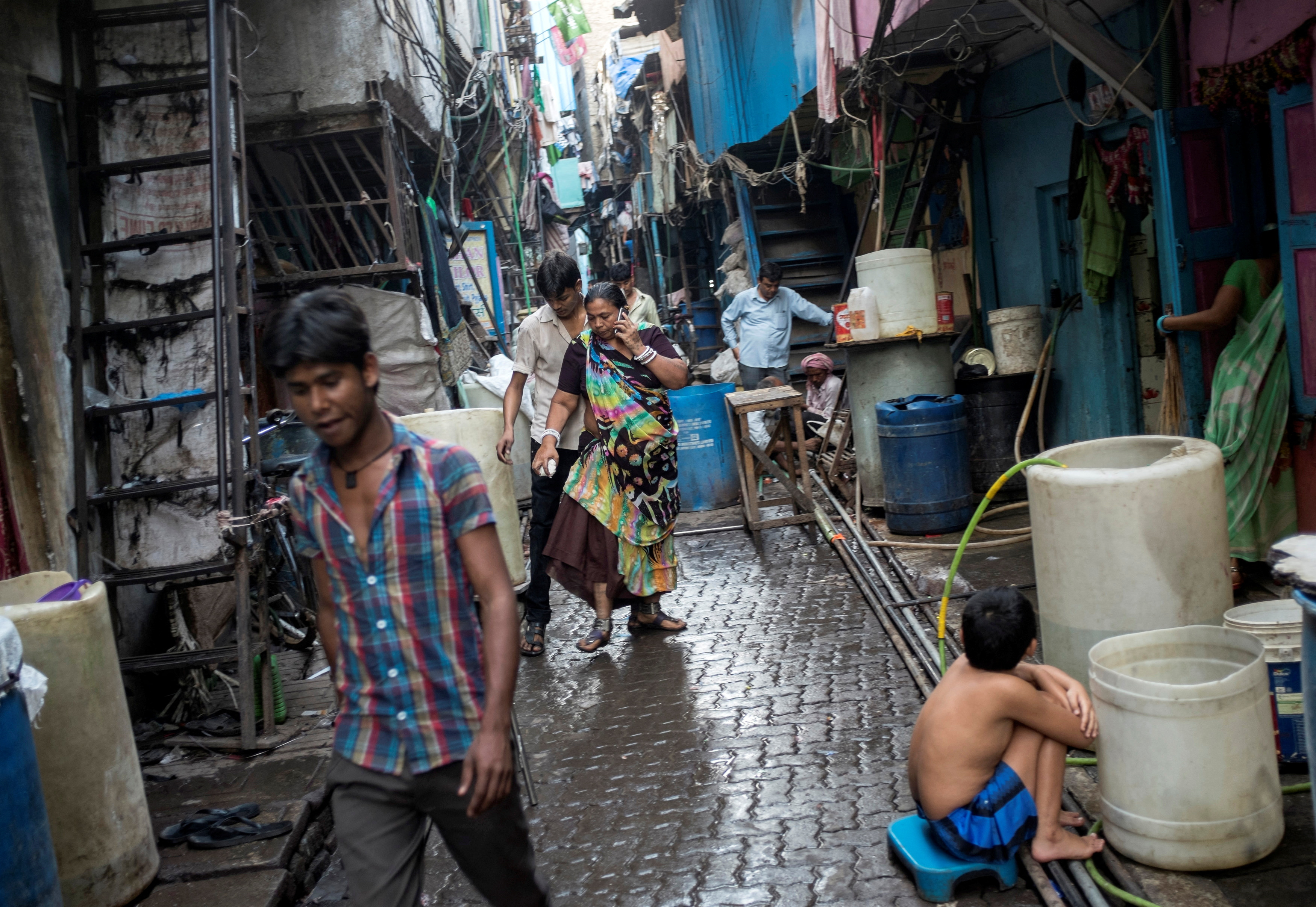



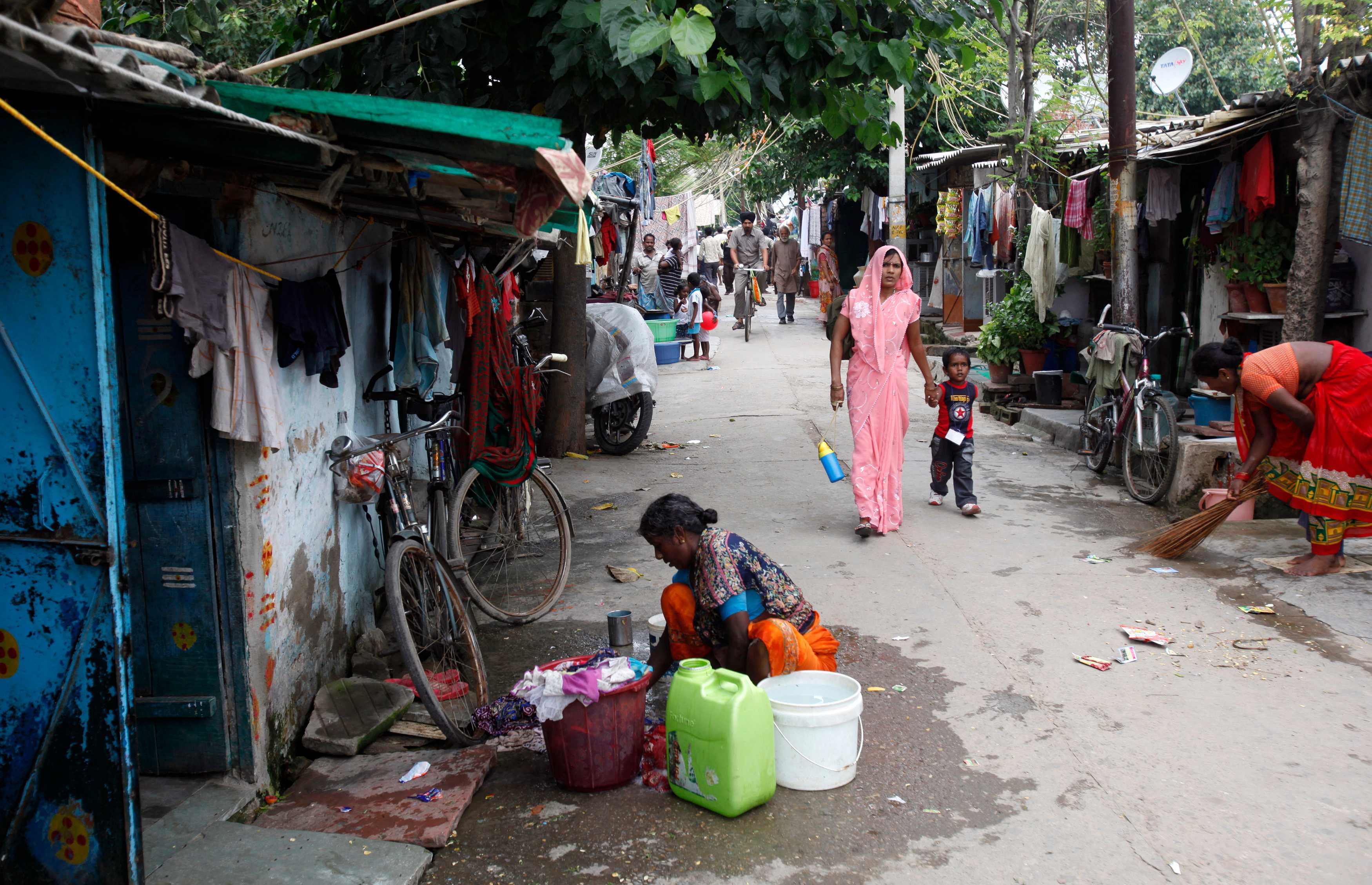




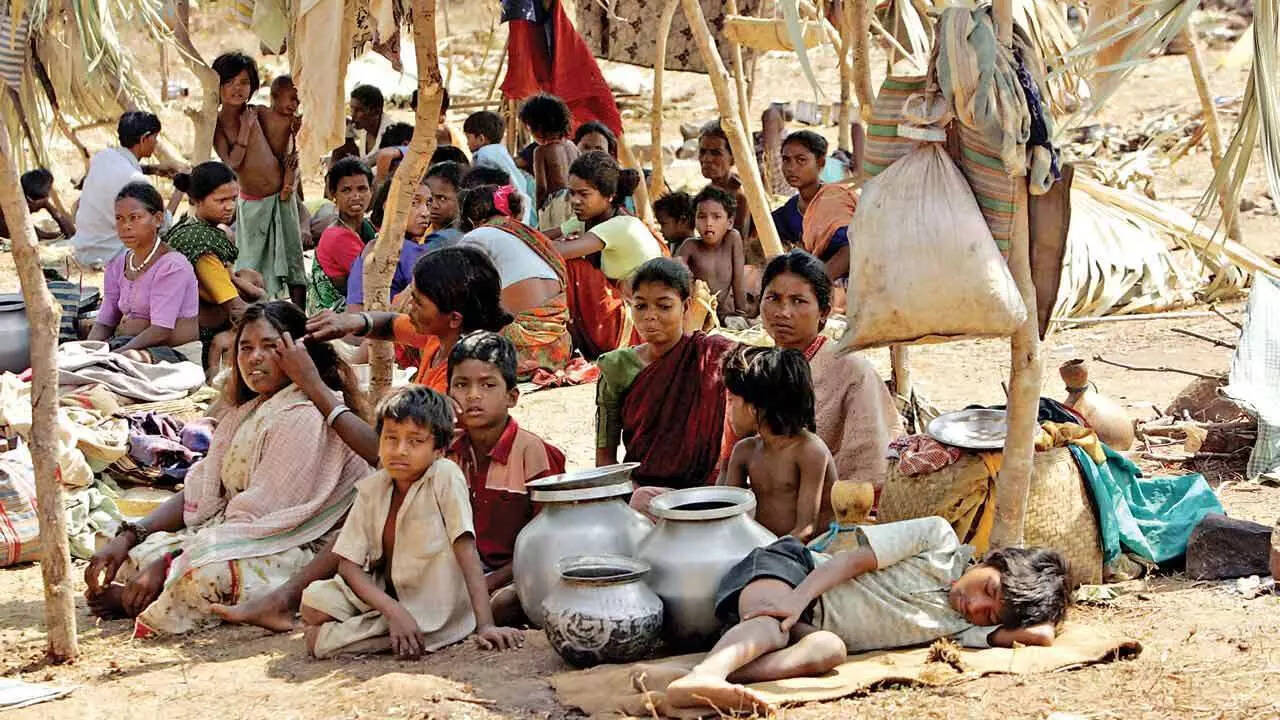

OpenAI’s Nonprofit Windfall: A Bold Case for Ending Extreme Poverty https://t.co/sXolaO1S2y @OpenAI @sama @gdb @ilyasut @woj_zaremba @miramurati @bradlightcap @kevinweil @markchen90 @billpeeb@aditya_ramesh @pabbeel @karpathy @jeffclune @ikostrikov @sharifshameem @nickturley
— Paramendra Kumar Bhagat (@paramendra) June 13, 2026
Wednesday, June 10, 2026
10: Modi
Breaking the Heart of the Heartland White rural voters are belatedly awakening to reality .............. And if, in the midst of this “Golden Age”, someone should observe that Americans aren’t feeling so golden, and are in fact feeling very feeling negative about the economy, the Trumpist answer is that it’s all fake news. Kevin Hassett, the administration’s top economist, says that low consumer sentiment numbers are “being driven by Democrats who have Trump derangement syndrome.” ............. So it will be news to Hasset that rural whites – who are very Trumpy – have now fallen victim to Trump derangement syndrome. Or, more accurately, they are finally awakening to the nightmarish reality that Trump has created for them. .................. When I say that rural whites are very Trumpy, I mean very Trumpy. In 2024 Donald Trump narrowly won the popular vote, with only a 1.5 percentage point margin. But he won rural areas by 30 points. ............ Trump won rural areas by such a large margin because farmers were wildly optimistic about what he would do for them. The Purdue/CME Ag Economy Barometer, which is basically an index of farmers’ economic sentiment, surged with Trump’s victory ............. white rural voters’ views about Trump’s economic policy have turned astonishingly negative.
............... only 29% of Americans approve of Trump’s handling of the economy, while 71% disapprove. Yet 60% of Republicans still approve. ............... rural white voters are no longer behaving like non-rural Republican voters. They are almost as negative on the economy as the population as a whole, with only 32% of rural whites approving of Trump’s handling of the economy, and 68% disapproving. Trump has made the rural economy so bad that reality has overridden Trump voters’ usual tendency to make excuses for him. ................. the devastation hitting the heartland is squarely a consequence of Trump’s actions and not, like the Biden inflation of 2021-22, a result of forces outside presidential control. ............... First, there is Trump’s trade war, which has raised the cost of living for all Americans.
But farmers have been hit especially hard because they are highly dependent on imported inputs. The tariffs raised the prices of farm machinery, chemicals and fertilizer. The final straw was the loss of foreign markets to rival agricultural exporters such as Brazil -- losses that began during the trade wars of Trump’s first term and have accelerated during his second term: ..................... In 2025 the damage to the American farm economy from Trumpian policies caused a 46% rise in farm bankruptcies. The carnage looks much worse this year: farmers are being hit with another double whammy from the effects of the Iran war. ............... Like Trump’s tariffs, the Iran war is hitting farmers both as consumers and as producers. Along with all Americans, they are facing an overall rise in the cost of living as a result of the closure of the Strait of Hormuz. Farmers are also suffering from a large increase in agricultural operating costs. For example, the crisis in the Strait has raised the price of diesel fuel, which runs most agricultural machinery, more than it has raised gasoline prices. In addition, there has been a sharp increase in the price of fertilizer because a significant share of the world’s supply comes from the Persian Gulf. ................ The carnage in the heartland raises the question of why rural whites so overwhelmingly believed that Trump would improve their lives. After all, Trump made no secret of his intention to pursue aggressive tariff policies that would start a global trade war. And U.S. agriculture is a highly globalized business. It sells much of what it produces overseas — for example, normally we export 40 percent or more of our soybean crop. Furthermore, it was entirely predictable that tariffs would raise the prices of farm machinery, chemicals and fertilizer. ............................ It’s true that farmers didn’t know either that Trump would attack Iran or that he would botch the war so badly. But his indifference to the impact of his actions on ordinary people’s lives should have come as no surprise to anyone paying attention. When he said “I don’t think about Americans’ financial situation” when making decisions about Iran, the news was that he admitted it, not that he felt that way. ................... Why, then, did rural Americans vote to return Trump to office? Obviously, culture war issues and racism played important roles. But it’s also clear in hindsight that rural whites weren’t willing to see their livelihoods destroyed in order to stick it to the liberals by voting for Trump. Instead, they fell for a fantasy, believing that by voting for Trump they could simultaneously own the libs and do well financially. ................ Instead, they have been betrayed: far from supporting a conservative vision of rural life, Trump is destroying their livelihoods with his vandalism. ................. Recent polls show that the Senate race in Iowa, which Trump won by 13 points in 2024, is now effectively a tossup. The heartland may be awakening to reality, with immense political consequences.
The Senate Should NOT Confirm This Person He believes that his legal client is Trump, not the United States .......... The Senate should not confirm Todd Blanche as attorney general. ........ Blanche, who used to be Trump’s private lawyer, has treated the Justice Department as Trump’s private law firm. He still believes that Trump — rather than the United States — is his client. .............. At the very least, the Senate should insist, as a condition of confirming Blanche, that the May 19 deal Blanche devised to immunize Trump and his family from all future prosecutions — which Blanche alone signed — be nullified. ............. The purpose of that immunity deal — which resulted from Trump’s own bizarre lawsuit against the IRS — should by now be clear. It’s to prevent any future government inquiry into the corrupt dealings of Trump and his family. ............... Boiled down to its bare essentials, the deal “forever” protects Trump and his family from “all claims” or “causes of action” or “requests for any relief” including “examinations” that “could have been” asserted by the United States against Trump, his children, “or affiliated individuals” or “parties” which arise out of “any matters” or of “Lawfare and/or Weaponization” or of any matters that “could be pending” before the United States or its agencies and departments. .......... Put another way, the U.S. government is prohibited from looking into any of the corrupt sh*t Trump or his family have gotten into. ....... And there’s a lot of corrupt sh*t. .............. Trump is the most corrupt president in American history. Since being in office for a second time, he’s so far increased his wealth by an estimated $4 billion, and his sons’ and daughters’ wealth by billions more. ............ Trump and his family have created multiple crypto businesses — World Liberty Financial and the $TRUMP meme coin — that have received favorable deregulatory treatment and reportedly generated at least $2.3 billion in income for Trump and his family since he won the presidency. ............ Six days after a company backed by Eric and Donald Jr. took a 20 percent stake in an American mining group, the group’s parent company received $1.6 billion in federal financing. That’s because the president of Kazakhstan granted the company the right to mine the world’s largest known undeveloped deposit of tungsten, an element used in semiconductors, lightbulbs, and warheads. .............. In late 2025, Don Jr.’s firm 1789 Capital acquired an equity stake in critical minerals company Vulcan Elements. Shortly after, the White House and the Pentagon awarded Vulcan a $620 million federal loan without competitive procurement or independent technical review. ................. After Eric and Don Jr. backed the drone manufacturer Powerus, the U.S. Air Force awarded the company a lucrative contract. ................... Eric and Don Jr. have conducted numerous undisclosed meetings with foreign government officials (including representatives from Hungary, the UK, Vietnam, and Qatar) while simultaneously negotiating global real estate deals for the Trump Organization. ............. Don Jr. serves as a strategic advisor or investor in prediction market firms Kalshi and Polymarket, which have received favorable, deregulatory treatment from the Commodity Futures Trading Commission (CFTC).......... Don Jr. is on the board of prescription drug platform BlinkRX, which will benefit from the administration’s promotion of direct-to-patient medicine sales............. Presumably, someone has made a fortune trading stocks and bonds on the basis of insider knowledge of decisions that Trump would announce — about tariffs, his war in Iran, and other news that moved stock and bond markets. The trades occurred just before the announcements. ............. In May, Trump disclosed that his trust was actively trading individual stocks, an unprecedented practice for a sitting U.S. president in the modern era. ............ Trump has pardoned some of the most brazen financial criminals in American history, and one can only wonder what he received in return. They include Philip Esformes, convicted in what Trump’s own Department of Justice described as the “largest health care fraud scheme ever charged”; Joseph Schwartz, convicted for a $38 million fraud scheme; and reality stars Todd and Julie Chrisley, convicted for multimillion-dollar bank fraud. He’s granted clemency to Lawrence Duran after a $205 million fraud conviction. He commuted Jason Galanis’s sentence and pardoned Devon Archer, both tied to tens of millions in fraud. ............. If the “settlement” remains in force, we will never know the details of any of these transactions, because the “settlement” — devised and signed by Todd Blanche — will result in the largest cover-up of presidential wrongdoing and illegality in American history.
10 Slides: Himalayan Compute: The Grand Solara Vision https://t.co/8ZX7KsF4Ch
— Paramendra Kumar Bhagat (@Paramendra18804) June 10, 2026
Himalayan Compute: Grand Solara Vision https://t.co/vcJrrX0Wje
Himalayan Compute: 10 Years To A Trillion: Detailed Roadmaphttps://t.co/5QMtGUnZR6