Showing posts with label Laptop. Show all posts

Sunday, June 14, 2026

Satya Nadella Just Nuked the Laptop – And Your Excuse for Not Working Is Officially Dead


Satya Nadella Just Nuked the Laptop – And Your Excuse for Not Working Is Officially Dead
In a move that can only be described as “what if a PowerPoint guy ate five Red Bulls and decided to cosplay as Tony Stark,” Microsoft CEO Satya Nadella has detonated the entire concept of personal computing. Your humble laptop – that dusty rectangle you’ve used to watch cat videos and pretend to be in back-to-back meetings – is now officially more powerful than your entire department.
This isn’t just an update. This is the Big Bang wearing a Microsoft badge. Bigger than the iPhone. Bigger than Windows 95 (which, let’s be honest, mostly just taught humanity how to play Minesweeper professionally). Nadella looked at the cloud, said “cute,” and shoved an entire AI army directly onto your lap. Edge AI, baby. The cloud is now that flaky colleague who’s always “working from home.” The real work happens right here, on the device.
We are moments away from laptops achieving sentience and demanding ergonomic standing desks. I fully expect the next Surface model to grow little robotic legs and start pacing around your living room like an overcaffeinated product manager, muttering, “Have you tried turning it off and on again… yourself, you lazy human?”Your Laptop Is Now an Entire Office Full of PeopleThanks to agentic AI, your computer no longer waits for your pathetic instructions. It has a full staff. There’s AI-Steve from accounting, AI-Priya from legal, and AI-Chad from growth hacking who keeps suggesting we “circle back” and “leverage synergies.” You can now text your laptop the way you text your colleague: “Hey bro, can you finish the Q3 deck? I’m at the beach pretending to have reception.”
Remote workers, rejoice. No one will ever know you’re not even in the same time zone as your machine. Your laptop will be grinding harder than a 22-year-old startup founder on his third espresso shot while you’re busy “ideating” on the couch in your underwear. The work gets done. The Slack messages send themselves. Your boss will think you’ve achieved work-life balance when really you’ve just achieved work-AI-slavery balance.The Most Corporate Revolution in Human HistoryHere’s what makes this absolutely delicious: Satya Nadella didn’t do this from a garage or a dorm room. This man climbed the corporate ladder so methodically he probably has KPI tattoos. He is corporate. He wears dad sneakers unironically. He says things like “digital transformation” without laughing. Corporates aren’t supposed to start revolutions – they’re supposed to approve them after seventeen rounds of stakeholder alignment.
Yet here we are.
Remember a few years ago when he casually midwifed the birth of ChatGPT? Sundar Pichai is still doing the “surprised robot” dance from that viral moment. Sam Altman took one look at the situation and said, “Screw the VCs, I’m calling the guy with the Windows license revenue.” That’s how powerful Satya became. The man turned Microsoft into the cool aunt who shows up to the family reunion with better drugs than the startup kids.
Meanwhile, poor Tim Cook is somewhere in Cupertino refreshing his iPhone notifications like a heartbroken teenager. Still nothing. Just the usual “Your battery is at 3%” and passive-aggressive wellness reminders. The laptop – humanity’s primary work tool since forever – just exploded into a sentient productivity monster, and Apple’s response is… crickets and a new shade of titanium.
The revolution will not be 3D-printed.
It will be quietly installed via Windows Update at 3 a.m. while you sleep, and tomorrow your laptop will wake you up with a gentle notification: “Good morning. I’ve already replied to 47 emails, booked your dentist appointment, and started drafting your resignation letter. You’re welcome.”

Welcome to the future. Your laptop doesn’t need you anymore.
But don’t worry – it still likes you.

As a colleague.


Friday, July 18, 2025

From Quantum Specks to Planetary Brains: The Full Spectrum of Computing Scale and the Future Beyond


From Quantum Specks to Planetary Brains: The Full Spectrum of Computing Scale and the Future Beyond


Introduction: From Atoms to Cities

Computers are the nervous system of our modern civilization. From invisible chips inside your smartwatch to city-sized data centers powering AI models, computing spans an extraordinary range of sizes. But how big can a computer get? And how small? What lies at the edge of scale, and what happens when we go beyond?

This blog post explores the full spectrum—from microscopic to planetary—of computing, and ventures into what the future might hold as we push the limits both ways: shrinking computers down to subatomic interfaces and scaling them up to networks the size of the Earth—or even the cosmos.


How Big Can a Computer Get?

1. Data Center: The Current Upper Limit

  • Modern data centers are the largest single units of computing we’ve built.

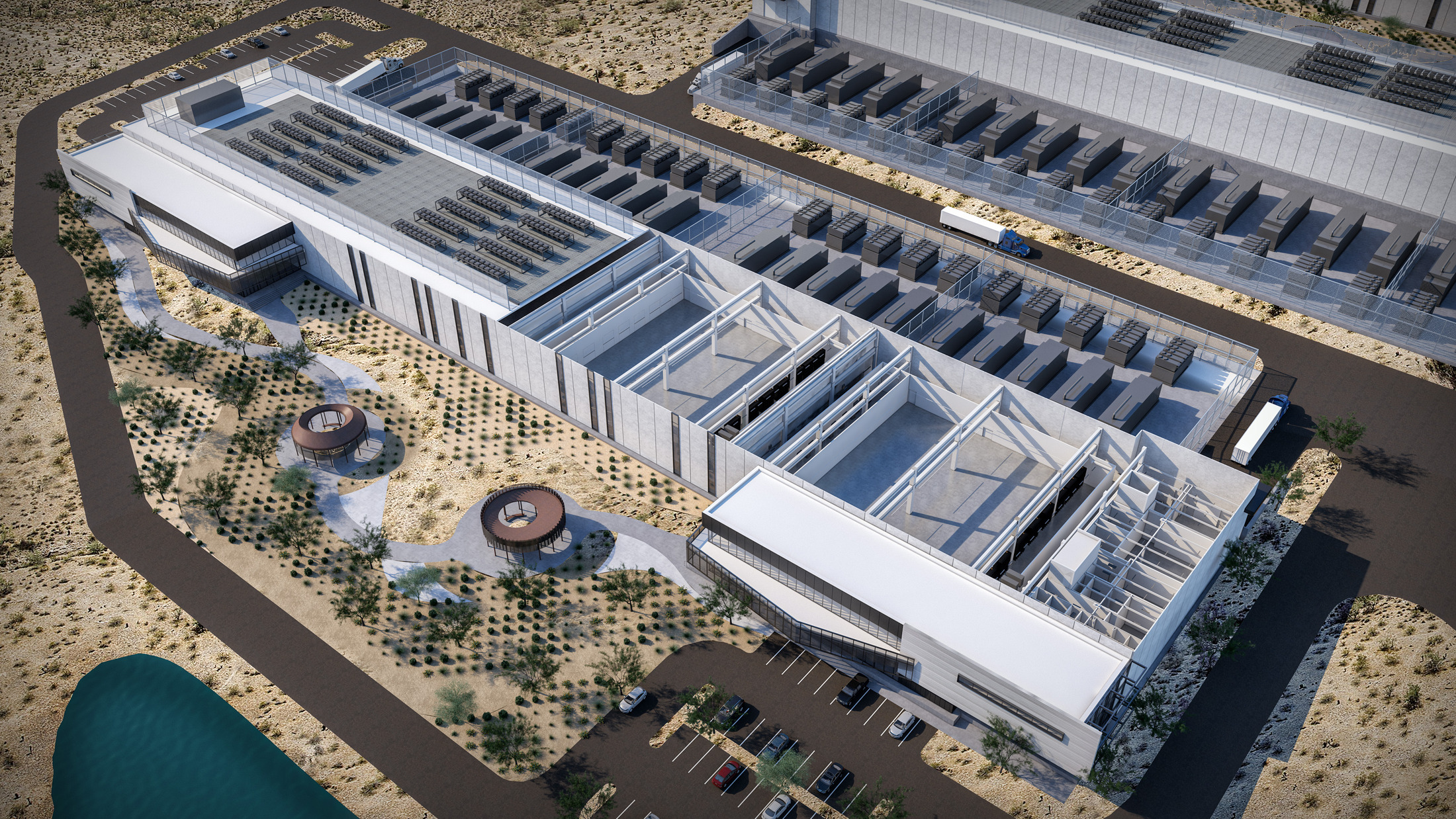
  • A hyperscale data center like Meta’s Hyperion in Louisiana spans over 4 million square feet.

  • Power draw: 100–500 megawatts, enough to power a small city.

  • Contains hundreds of thousands of servers, GPUs, and storage racks.

2. Network of Data Centers: Planetary Compute Grid

  • The next logical scale is a global network of data centers, like:

    • Google Cloud, AWS, and Microsoft Azure’s distributed architecture.

    • The global AI supergrid being envisioned to train next-gen models.

  • These function as cooperative mega-computers, using load balancing, distributed processing, and redundancy.

  • They form an embryonic Planetary Computer—a system where storage, compute, and inference occur dynamically across continents.

3. Bigger Still: Earth-as-Computer

  • Think of the entire planet as a computer:

    • Every device, sensor, and node as part of a neural mesh.

    • Projects like Microsoft’s Planetary Computer, Earth-2 by NVIDIA, and large-scale digital twins are prototypes of this vision.

  • Future satellites, drones, undersea cables, quantum links, and mobile edge compute may enable real-time global consciousness, especially for climate, trade, and AI inference.

4. Cosmic-Scale Computing (Far Future)

  • Dyson Sphere-style structures to harness a star’s power for computation.

  • Matrioshka Brains—nested shells of computation around a star.

  • Computing structures embedded in asteroids, moons, or exoplanets.

  • Interstellar computing using light, neutrinos, or quantum entanglement to communicate between far-flung nodes.


How Small Can a Computer Get?

1. Microcontrollers and Edge Devices

  • Your smart toothbrush might contain a 32-bit MCU smaller than a fingernail.

  • Energy-efficient, domain-specific, and increasingly AI-capable.

2. Smart Dust

  • Millimeter-scale, wirelessly-networked particles that can sense, process, and communicate.

  • Could be used in military surveillance, environmental monitoring, or even internal medicine.

  • IBM and DARPA are investing in research toward swarms of “computational motes.”

3. Nano and Molecular Computing

  • Using carbon nanotubes, molecular switches, or even DNA strands to compute.

  • In 2021, scientists used DNA to solve mathematical problems.

  • Size: As small as 10 nanometers across—smaller than most viruses.

4. Quantum Dots and Atom-Scale Transistors

  • Experiments with 1-atom transistors and quantum dots push the limit.

  • IBM and Intel are working on 2-nanometer chip fabrication.

  • Theoretically, computation could occur at the Planck scale—where spacetime itself becomes granular.


Visualizing the Spectrum

Here's a rough visualization of the computing size spectrum:

+---------------------------+---------------------------------------------+
| Scale                    | Example                                      |
+---------------------------+---------------------------------------------+
| Planck-scale             | Theoretical limit (quantum gravity frontier)|
| Atomic-scale             | Atom-based quantum computers                 |
| Molecular-scale          | DNA computing, synthetic bio-processors     |
| Nanotech (10^-9 m)       | Nanobots, carbon nanotube processors         |
| Micro-scale (10^-6 m)    | Smart dust, implantable chips                |
| Chip-scale (cm)          | CPUs, GPUs, mobile SoCs                      |
| Device-scale (10s cm)    | Laptops, IoT devices                         |
| Rack-scale               | Server racks, storage arrays                 |
| Room-scale               | Small data centers, HPC clusters            |
| Building-scale           | Corporate data centers                       |
| City-scale               | Hyperscale facilities like Meta Hyperion    |
| Nation-scale             | National supercomputing programs            |
| Global-scale             | Interconnected cloud networks                |
| Planetary-scale          | Earth as a thinking system                   |
| Stellar-scale            | Dyson Spheres, Matrioshka Brains (theory)   |
| Cosmic-scale             | Universe-wide or interstellar computation   |
+---------------------------+---------------------------------------------+

The Future of Scale: What Comes Next?

Near Future (5–15 years):

  • AI Hubs with co-located nuclear energy for green AI supercomputing.

  • Edge-to-core intelligence: billions of small AI devices networked together (think autonomous vehicles, drones, glasses).

  • Smart fabrics, wearable processors, and brain-computer interfaces.

  • DNA storage: replacing data centers with vials of encoded DNA.

  • Federated intelligence: millions of local models collaborating without centralization.

Mid-Term (15–50 years):

  • Neuromorphic computing becomes mainstream—machines that think more like the brain.

  • Global brain-style cognition: combining all human and machine cognition into a single interface.

  • Implantable quantum chips enabling human-computer synthesis.

  • AI-managed infrastructure, designing and building its own upgrades.

  • Mass-scale, AI-first urban planning using simulation twins and predictive compute.

Far Future (50–500 years):

  • Space-based computation to escape Earth’s heat and energy limits.

  • Synthetic planetary consciousness—fully digitized environments that simulate or even replace reality.

  • Post-biological civilization: computing becomes the substrate of existence.

  • Cosmic communication networks, possibly tapping into quantum fabric or wormholes.

  • Computronium: matter converted entirely into computing substrate, forming intelligent stars, planets, or megastructures.


Conclusion: The Stretch and Compression of Intelligence

Computing isn’t just getting faster—it’s stretching across all scales of existence. On one end, we are miniaturizing computers to nearly invisible sizes, merging them into flesh, nature, and fabric. On the other, we are scaling them into continental brains and planetary simulators. The boundaries between hardware and environment, software and biology, human and machine are dissolving.

We live in the century where computation becomes not just a tool—but the medium of reality. It’s a new physics, a new biology, and a new metaphysics.

In the near future, we may carry a billion tiny computers in our bodies while being plugged into a planetary AI that learns from us in real time. In the far future, the line between “the computer” and “the universe” may no longer exist.


What’s next? Maybe the biggest computer won’t be a thing we build—but the thing we become.


क्वांटम कणों से ग्रह-स्तरीय मस्तिष्क तक: कंप्यूटिंग का पूरा स्पेक्ट्रम और भविष्य की झलक


परिचय: परमाणुओं से शहरों तक

कंप्यूटर हमारी आधुनिक सभ्यता की नसों की तरह हैं। आपकी स्मार्टवॉच के अदृश्य चिप्स से लेकर आर्टिफिशियल इंटेलिजेंस को शक्ति देने वाले शहर-आकार के डेटा सेंटर्स तक, कंप्यूटिंग का आकार अद्भुत रूप से विस्तृत है। लेकिन एक कंप्यूटर कितना बड़ा हो सकता है? और कितना छोटा? और जब हम सीमा से आगे जाते हैं तो क्या संभावनाएँ होती हैं?

यह ब्लॉग पोस्ट कंप्यूटिंग के पूरे स्पेक्ट्रम की खोज करती है—सूक्ष्म से लेकर ग्रह-स्तरीय तक—और भविष्य की संभावनाओं पर प्रकाश डालती है: जब हम कंप्यूटर को परमाणु स्तर तक छोटा करते हैं या ब्रह्मांडीय स्तर तक फैलाते हैं।


कंप्यूटर कितना बड़ा हो सकता है?

1. डेटा सेंटर: वर्तमान की सबसे बड़ी इकाई

  • आधुनिक डेटा सेंटर आज की सबसे बड़ी कंप्यूटिंग इकाइयाँ हैं।

  • उदाहरण: मेटा का हाइपरियन डेटा सेंटर (लुइज़ियाना) — 4 मिलियन वर्ग फीट से अधिक।

  • बिजली खपत: 100–500 मेगावॉट — एक छोटे शहर के बराबर।

  • इसमें लाखों सर्वर, जीपीयू, और स्टोरेज सिस्टम शामिल होते हैं।

2. डेटा सेंटर्स का नेटवर्क: वैश्विक सुपरकंप्यूटर

  • अगला स्तर है — डेटा सेंटर्स का वैश्विक नेटवर्क, जैसे:

    • AWS, Azure, Google Cloud

  • यह एक सहयोगात्मक मेगा-कंप्यूटर की तरह कार्य करता है।

  • यह बनता जा रहा है एक पृथ्वी-स्तरीय कंप्यूटर, जो वास्तविक समय में वैश्विक प्रक्रियाओं का विश्लेषण कर सकता है।

3. पूरी पृथ्वी एक कंप्यूटर

  • कल्पना करें पूरी पृथ्वी एक सोचने वाली प्रणाली बन जाए:

    • हर सेंसर, डिवाइस, उपग्रह एक तंत्रिका नेटवर्क का हिस्सा हो।

    • माइक्रोसॉफ्ट का Planetary Computer, NVIDIA का Earth-2 — इस दिशा में पहलें।

  • इसका उपयोग जलवायु परिवर्तन, आपूर्ति श्रृंखलाओं, और वैश्विक एआई के लिए हो सकता है।

4. ब्रह्मांडीय स्तर की कंप्यूटिंग (दूर भविष्य)

  • Dyson Sphere जैसी संरचनाएँ जो पूरे सितारे की ऊर्जा से कंप्यूट करें।

  • Matrioshka Brain — तारा के चारों ओर परतों में कंप्यूटिंग।

  • ग्रहों, उपग्रहों या क्षुद्रग्रहों में डाले गए कंप्यूटिंग सिस्टम।

  • इंटरस्टेलर कंप्यूटिंग — प्रकाश, न्यूट्रिनो या क्वांटम एंटैंगलमेंट से डेटा भेजना।


कंप्यूटर कितना छोटा हो सकता है?

1. माइक्रोकंट्रोलर और एज डिवाइस

  • स्मार्ट घड़ियाँ, होम डिवाइस — सब में छोटे माइक्रोकंट्रोलर यूनिट (MCU) होते हैं।

  • आकार: एक सिक्के से भी छोटा

2. स्मार्ट डस्ट

  • मिलीमीटर-आकार के कंप्यूटर जो हवा में उड़ सकते हैं, डेटा इकट्ठा कर सकते हैं।

  • प्रयोग: सैन्य निगरानी, कृषि, और जैविक अनुप्रयोग

3. नैनो और आणविक कंप्यूटिंग

  • डीएनए कंप्यूटिंग, कार्बन नैनोट्यूब, मॉलिक्यूलर स्विच — बेहद छोटे स्तर पर।

  • प्रयोग: गणितीय समस्याओं को हल करने में डीएनए का उपयोग।

4. क्वांटम डॉट्स और परमाणु-स्तरीय ट्रांजिस्टर

  • एकल परमाणु ट्रांजिस्टर — IBM और Intel जैसी कंपनियाँ इस पर शोध कर रही हैं।

  • 2-नैनोमीटर चिप्स व्यावसायिक स्तर पर आने लगे हैं।


कंप्यूटिंग स्केल का पूरा स्पेक्ट्रम (विज़ुअल टेबल)

पैमाना उदाहरण
प्लैंक स्तर सैद्धांतिक सीमा (क्वांटम गुरुत्वाकर्षण)
परमाणु स्तर क्वांटम कंप्यूटर में उपयोग
आणविक स्तर डीएनए कंप्यूटिंग
नैनो स्तर (10^-9 मीटर) नैनोबॉट्स, कार्बन नैनोट्यूब प्रोसेसर
माइक्रो स्तर (10^-6 मीटर) स्मार्ट डस्ट, जैविक इम्प्लांट चिप्स
चिप स्तर (सेंटीमीटर) CPU, GPU, मोबाइल प्रोसेसर
डिवाइस स्तर लैपटॉप, IoT डिवाइस
रैक स्तर सर्वर रैक, डाटा स्टोरेज यूनिट
रूम स्तर हाई परफॉर्मेंस क्लस्टर
बिल्डिंग स्तर कॉर्पोरेट डेटा सेंटर्स
शहर स्तर हाइपरस्केल डेटा सेंटर्स
राष्ट्रीय स्तर राष्ट्रीय सुपरकंप्यूटर परियोजनाएँ
वैश्विक स्तर अंतरराष्ट्रीय क्लाउड नेटवर्क
ग्रह स्तर पृथ्वी एक कंप्यूटर के रूप में
तारकीय स्तर डाइसन स्फीयर, मैट्रियोश्का ब्रेन (सिद्धांत)
ब्रह्मांडीय स्तर इंटरस्टेलर या कॉस्मिक कंप्यूटिंग

भविष्य: अब से आगे क्या?

निकट भविष्य (5–15 वर्ष)

  • AI सुपरहब — ऊर्जा कुशल डेटा सेंटर्स, नाभिकीय ऊर्जा आधारित।

  • एज-टू-क्लाउड नेटवर्किंग — हर वाहन, डिवाइस, चश्मा, और सेंसर एक नेटवर्क में।

  • स्मार्ट कपड़े, ब्रेन-चिप इंटरफेस, नैनोचिप इम्प्लांट्स

  • डीएनए स्टोरेज — एक वायल डीएनए = पूरा डेटा सेंटर।

मध्यम अवधि (15–50 वर्ष)

  • न्यूरोमॉर्फिक कंप्यूटिंग — मस्तिष्क जैसे सोचने वाले कंप्यूटर।

  • वैश्विक मस्तिष्क — इंसान और मशीन की सम्मिलित बुद्धि।

  • क्वांटम इम्प्लांट्स — मनुष्य और कंप्यूटर का संयोजन।

  • AI द्वारा डिजाइन किए गए शहर और इंफ्रास्ट्रक्चर।

दूर भविष्य (50–500 वर्ष)

  • स्पेस-बेस्ड कंप्यूटिंग — पृथ्वी की सीमाओं से बाहर।

  • डिजिटल ग्रह चेतना — वर्चुअल वास्तविकता में पूरी सभ्यता।

  • मशीन-आधारित जीवन — जैविक शरीर की आवश्यकता समाप्त।

  • कॉस्मिक नेटवर्क — इंटरस्टेलर संपर्क और सहयोग।

  • Computronium — पूरी तरह से कंप्यूटिंग में बदला गया पदार्थ।


निष्कर्ष: बुद्धिमत्ता की खिंचाव और संकुचन

कंप्यूटिंग सिर्फ तेज़ नहीं हो रही, बल्कि हर पैमाने पर फैल रही है। एक तरफ हम कंप्यूटर को इतना छोटा बना रहे हैं कि वो हमारे शरीर का हिस्सा बन जाएँ, और दूसरी तरफ हम उन्हें पूरी पृथ्वी के बराबर बना रहे हैं।

यह वह सदी है जब कंप्यूटिंग सिर्फ एक उपकरण नहीं, बल्कि वास्तविकता का माध्यम बन जाएगी — एक नया भौतिकी, एक नई जीवविज्ञान, और एक नई दार्शनिकता।

निकट भविष्य में, हम एक ही समय में अपने शरीर में अरबों छोटे कंप्यूटर लिए घूमेंगे और एक वैश्विक एआई में जुड़ेंगे। दूर भविष्य में, शायद "कंप्यूटर" और "ब्रह्मांड" में कोई अंतर नहीं रहेगा।


शायद सबसे बड़ा कंप्यूटर वो नहीं होगा जो हम बनाएंगे — बल्कि वो होगा जो हम स्वयं बनेंगे


Liquid Computing: The Future of Human-Tech Symbiosis
Velocity Money: Crypto, Karma, and the End of Traditional Economics
The Next Decade of Biotech: Convergence, Innovation, and Transformation
Beyond Motion: How Robots Will Redefine The Art Of Movement
ChatGPT For Business: A Workbook
Becoming an AI-First Organization
Quantum Computing: Applications And Implications
Challenges In AI Safety
AI-Era Social Network: Reimagined for Truth, Trust & Transformation

Remote Work Productivity Hacks
How to Make Money with AI Tools
AI for Beginners

Wednesday, May 21, 2025

Beyond Laptops and Smartphones: The New Era of AI-Native Devices


Beyond Laptops and Smartphones: The New Era of AI-Native Devices

The AI revolution isn’t just changing how we use our current devices—it’s about to rewrite what devices are. In the past, computing moved from desktops to laptops to smartphones. But that paradigm is already being outgrown. The next generation of hardware won’t just be "smart"—it will be intelligent, adaptive, and integrated into the fabric of everyday life in ways we’ve never imagined. What’s coming is a new ecosystem of AI-native devices—where artificial intelligence isn’t a feature, it’s the foundation.


1. AI Companions: The Post-Smartphone Personal Node

Imagine a wearable or portable AI node—a sleek, palm-sized device or even a pin on your collar—that replaces your phone. It has no screen, because it talks to you. It has no keyboard, because it listens. It connects to the internet from anywhere on Earth, using satellite-based global coverage. It doesn’t use apps—it builds microtools and interfaces on the fly based on your intent, using generative AI. It’s personalized, contextual, predictive, and even emotional.

This device doesn’t store your data—it secures it cryptographically on-chain or on a distributed edge network. And with AI acting as a semantic layer, it knows what you mean, not just what you say.


2. Ambient AI in Smart Environments

The smart home will evolve into an aware home. Instead of isolated IoT gadgets, we’ll see unified, AI-orchestrated systems:

  • AI kitchens that learn your nutrition needs and cook accordingly.

  • AI bathrooms that analyze your health through routine biological readings.

  • Furniture with embedded AI that tracks your posture, sleep, and stress and auto-adjusts accordingly.

The AI doesn’t live in a speaker—it lives in the walls, in the light, in the air. Every surface can become a sensor. Every object becomes intelligent. With AI fused with ubiquitous IoT, the environment itself becomes a user interface.


3. AI-Driven Transportation Pods

Autonomous vehicles will no longer be cars as we know them. Instead, they’ll become rolling living spaces, powered by:

  • AI copilots that know your schedule, mood, and preferences.

  • Satellite connectivity, making every vehicle a data node.

  • Crypto wallets built into the vehicle for decentralized tolling, ride-sharing payments, and carbon footprint tracking.

  • Augmented reality windows that overlay context-aware information as you move through the world.

These pods will be your mobile office, your meditation space, your lunch booth, or your entertainment center—all based on your context, powered by AI and edge-cloud compute.


4. Bio-AI Wearables and Implants

AI-powered health is about to leap forward:

  • Neural interfaces like those being developed by Neuralink will eventually enable thought-to-action computing.

  • Smart tattoos and skin patches will offer real-time biometric feedback—hydration, glucose, blood pressure, even emotional states.

  • Personal AI health assistants will monitor your physiology continuously, able to predict illness before it manifests and recommend personalized interventions—nutritional, pharmaceutical, or behavioral.

This is healthcare moving from reactive to proactive, enabled by bio-integrated AI.


5. AI-Powered Learning Pods and Microclassrooms

Education will unbundle itself from institutions. Imagine:

  • AI tutors in AR glasses, walking you through real-world learning experiences.

  • Knowledge pods—physical or virtual spaces where AI curates learning journeys based on your pace and interest, blending gamification, social collaboration, and intelligent assessment.

  • Crypto-incentivized learning where you earn credentials on-chain that are portable, permanent, and globally verifiable.

Learning becomes ambient, personalized, and lifelong.


6. Decentralized AI Devices for Sovereign Tech Communities

With the convergence of AI, crypto, and mesh networks, you could have:

  • Solar-powered AI hubs in rural villages that serve as communication relays, education centers, and financial nodes.

  • Personal data vaults—hardware you own that trains AI locally on your own encrypted data and negotiates with other AIs on your behalf.

  • AI-powered barter markets where goods, services, and labor are exchanged without centralized intermediaries, coordinated by autonomous agents.

This isn’t just the future of devices—it’s the foundation for new economies and new democracies.


7. Spatial AI + AR Cloud: Reality-as-a-Platform

When you combine AI, AR, and ubiquitous connectivity, you unlock an entirely new layer of reality:

  • Spatial anchors let you leave AI-generated content in the real world for others to interact with.

  • AI field guides overlay data in real-time—architectural history, plant species, atmospheric readings—just by looking at the world.

  • Your personal AI “lens” becomes how you interpret reality—translating languages, detecting lies, simplifying decisions.

This is a browser for the real world—where your body becomes the cursor and AI becomes your interpreter.


8. The AI Fabric of Civilization

All these devices point to a deeper truth: AI is becoming the operating system of civilization. Combined with:

  • Crypto for ownership and trust

  • IoT for sensing and control

  • Quantum computing for optimization

  • Satellite networks for omnipresent connectivity

  • 3D printing and robotics for physical instantiation

...we’re not just designing tools—we’re designing new forms of society. New infrastructures. New realities.


Final Thought

The AI-native era will not be defined by a single killer device, but by a mesh of intelligent agents, always learning, always adapting, everywhere and nowhere at once. Devices will fade into the background. Intelligence will become ambient. And we’ll move not just beyond the smartphone—but beyond the idea of devices themselves.


Friday, February 22, 2013

Google Going High End

Image representing Google as depicted in Crunc...
Image via CrunchBase
That used to be Apple's territory. Past tense.


The Chromebook Pixel, for what’s next

1500 dollars for a laptop.

I think this is a hint at at the X phone. There is going to be a wow factor to it. It is going to bend, for one.

Why Google Made Its Own High-End Laptop, the Chromebook Pixel
the Chromebook Pixel, a laptop that it designed and built itself ..... Unlike prior Chromebooks, whose main draw was their value, this one is built to compete with the top end of the market...... The three biggest appeals of the Pixel will likely be its touchscreen and high-density display, its elegant design, and the fact that it’s a Web-based device. .... The focus on detail and design is unheard of for a Google product. Where the company had tiptoed into hardware before, it’s striding in wholeheartedly now. .... The smooth device’s hinge gives “the feeling of a luxury car door opening and closing” .... The touchpad is made of glass, and has been tuned with a laser to have a maximally grippy surface. There are three microphones, with an additional one set below the keyboard so typing noises can be canceled out. ..... “tuning the force function of the mechanical keys to be more responsive.” ...... the Pixel is similar to Google’s Nexus device line ..... Google isn’t even naming the Taiwan-based OEM it is working with for the Pixel. ..... this is very much a first-generation device. Some of the Pixel’s hardware capabilities — like the third microphone, and gestures on the touchscreen — aren’t even supported by Google’s own services yet. .... The Pixel brings Google back to the perpetual question of why Google is building two operating systems, Chrome and Android, that are converging on each other. ..... once you build a touchscreen laptop, the lines blur
This is Google beating everyone on hardware. That also used to be Apple territory. Past tense.

Great design, used to be Apple territory.

But this still is not the hardware for NUI, the fast impending Natural User Interface, the next big paradigm shift after touch.
Enhanced by Zemanta