Showing posts with label solara. Show all posts

Friday, April 24, 2026

From Unicorn to Solara: Why Product-Market Fit Is Just the Beginning

Logical + Sam Karu + Anushka Idamekorala: Unicorn Wings: Possible


From Unicorn to Solara: Why Product-Market Fit Is Just the Beginning

There is a comforting myth in Silicon Valley that once you achieve product-market fit, the hard part is over.

That myth is why so many startups die rich in potential and poor in outcomes.

Product-market fit is not the finish line. It is merely the moment the engine starts. And if you don’t know how to build propulsion, you will stall on the runway while louder, hungrier competitors take off.

The harsh truth is simple:

Any tech startup that has achieved product-market fit can achieve unicorn status—if it is willing to respect marketing.

Not tolerate marketing.
Not outsource marketing.
Not treat marketing like an optional department.

Respect it.

Because marketing is not advertising. Marketing is not branding. Marketing is not social media posts. Marketing is not hype.

Marketing is the science and discipline of listening.

Marketing is the art of serving.

Marketing is how you turn a product into a business.

And marketing is how you turn a business into a movement.


Marketing Is Revenue Propulsion

A startup without marketing is like a rocket without thrust.

It may have brilliant engineering. It may have an elegant design. It may even have a powerful product.

But without marketing, it will never escape gravity.

Marketing is what creates the revenue flywheel:

  • more customers

  • more feedback

  • better product

  • stronger trust

  • more referrals

  • more growth

  • more capital

This is not a “nice-to-have.” This is physics.

The startups that win are not always the best product builders.

They are the best growth builders.

The best demand builders.

The best distribution builders.

Marketing is distribution.

Distribution is power.


Marketing Is How You Discover Adjacent Spaces

Most founders think growth is about scaling the same thing harder.

They are wrong.

Real growth is not linear. Real growth is expansion.

And expansion happens through adjacent spaces.

You don’t discover adjacent spaces through spreadsheets or boardroom brainstorming sessions.

You discover them by listening to customers obsessively.

You discover them by watching what customers struggle with before and after using your product.

You discover them by observing what your customers wish existed.

Marketing is how you hear the market whisper.

And adjacent spaces are where the market screams.

Adjacent spaces are where the next billion-dollar opportunity is hiding.


Unicorn Thinking Is Too Small

A unicorn is a billion-dollar company.

A billion dollars is impressive—until you realize it is also the ceiling of a certain kind of imagination.

Many startups reach product-market fit, scale, and plateau. They become comfortable. They become operationally stable. They become “successful.”

And then they stop thinking like builders and start thinking like managers.

That is where the dream quietly dies.

Because the world does not reward comfort.

The world rewards ambition that is executed relentlessly.

If you are a funded tech startup with healthy revenues and upward trajectory, the real question is not:

“How do we become a unicorn?”

The real question is:

“What is our trillion-dollar trajectory?”


Enter: Cooperation Capitalism

Traditional capitalism has a default move: acquisition.

Big company buys small company.
The founder gets a payout.
The product gets absorbed.
The culture dies.
The dream dissolves into corporate sludge.

This is not evolution. This is digestion.

But there is another model.

A better model.

A model built for the era of networks, platforms, and exponential compounding.

That model is cooperation capitalism.

Cooperation capitalism says:

You don’t buy the other company.

You merge visions.

You merge incentives.

You reconfigure equity.

You build something larger than either could build alone.

Instead of “you lose, I win,” it becomes:

“Two plus two is five.”

Or in the best cases:

“Two plus two is ten.”

The combined entity is worth far more than the sum of its parts because the merger unlocks:

  • shared distribution

  • shared customer base

  • shared data

  • shared brand trust

  • shared talent

  • shared product integration

  • shared momentum

And momentum is the rarest asset in business.


The Solara Thesis: A Hundred Mergers Make a Trillion

Here is the brutal reality:

A unicorn is difficult.

But a trillion-dollar company is not simply a bigger unicorn.

It is a different species.

A trillion-dollar company is not built by one product.
It is built by an ecosystem.
It is built by a network of markets.
It is built by a gravitational field so strong that others begin orbiting it.

That is the Solara vision.

A unicorn is a billion.

A Solara is a trillion.

And you don’t build a Solara by slowly climbing a ladder.

You build a Solara by assembling the ladder out of other ladders.

One merger is a leap.

Ten mergers is a platform.

A hundred mergers is a civilization.

A hundred strategic combinations across adjacent spaces can create something that no single founder, no single team, no single company could ever build organically.

And the founders who understand this will dominate the next era.

Because the next era will not be won by solitary geniuses.

It will be won by orchestrators.


The Columbus Strategy Doesn’t Get You to the Moon

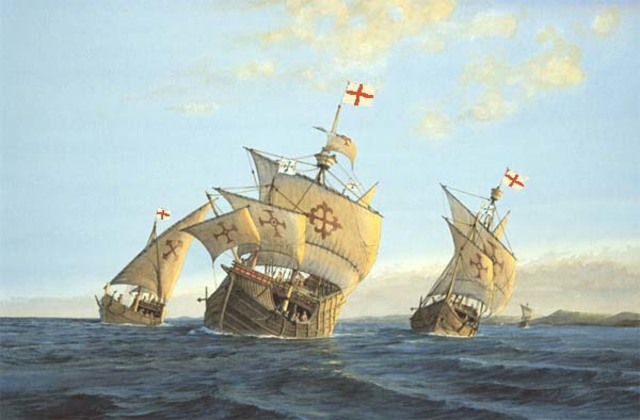
Most founders are still operating under the Columbus model.

Sail west, hope you find something, and claim it as you go.

That strategy doesn’t even reliably get you to India.

It definitely doesn’t get you to the moon.

The Columbus model is improvisation disguised as bravery.

It is gambling disguised as exploration.

The Solara model is different.

The Solara model is navigation.

It is mapping.

It is knowing where you are going before you start.

During World War II, a Gorkha soldier whose last known location was far north somehow ended up in Rangoon, deep in enemy territory. When asked how he managed it, he said it was easy.

He had a map.

Then he pulled the map out of his pocket.

And it turned out the map was not of the region.

It was a map of Rangoon.

That is the point.

He did not wander until he stumbled into Rangoon.

He walked with Rangoon already in his mind.

He moved with certainty because he already had the destination.

That is what vision is.

Every Founder CEO is walking around with a map.

The only question is: what map are you carrying?

A map of your current product?

Or a map of the future empire?


Vision Is a Premium Asset

Markets pay a premium for clarity.

Investors pay a premium for ambition.

Talent pays a premium for meaning.

Customers pay a premium for trust.

And trust is built when people sense you are not merely building a tool, but building a world.

The Solara vision commands a premium because it is not about incremental improvement.

It is about inevitable dominance.

It signals that your company is not merely a startup.

It is a future infrastructure.

And infrastructure companies are the ones that become trillion-dollar giants.


Generative AI Has Changed the Game Completely

In the past, building a trillion-dollar company required decades of execution just to get the product built.

Now, generative AI has made two of the hardest barriers radically smaller:

Coding is on autopilot

Building software is no longer the bottleneck it used to be.

Research is on autopilot

Understanding industries, competitors, consumer behavior, and market dynamics is now faster than ever.

This changes everything.

Because the founder who can think clearly can now execute faster.

The founder who can see patterns can now prototype entire industries.

The founder who has a roadmap can now build the vehicle.

The world has entered an era where:

The limiting factor is no longer engineering.
The limiting factor is imagination.

And that means the gap between a unicorn founder and a Solara founder is not intelligence.

It is vision.


The Question Every Funded Startup Must Answer

If you are a funded startup with healthy revenues and upward trajectory, you must ask yourself:

What is our unicorn vision?

That means: what is the billion-dollar endpoint?

But that is not enough.

Because the real question is:

What is our Solara vision?

What is the trillion-dollar inevitability?

What ecosystem are you assembling?

What markets are you positioning yourself to own?

What mergers are you anticipating?

What adjacent spaces are you already mapping?

What compounding flywheel will make competitors irrelevant?

And if you don’t have a Solara vision, you must ask a harder question:

Can you find someone who does?

Because vision is not optional.

In the AI age, vision is the competitive advantage.


The Equity Reality: 30% of Nothing vs 1% of Everything

Founders often obsess over ownership.

They want control.

They want to keep their 30%.

They want to preserve their kingdom.

But ownership is meaningless if the kingdom is small.

The real choice is not:

“Do I want 30% or 1%?”

The real choice is:

Do I want 30% of a company that will never become a unicorn?
Or 1% of a company that becomes a Solara?

Because 1% of a trillion is ten billion.

And ten billion buys more freedom than any ego-driven control ever will.

The founders who win in the next era will not be the ones who protect their equity.

They will be the ones who know how to multiply it.


The Hard Truth: Product-Market Fit Is Just Admission to the Arena

If you have product-market fit, congratulations.

You have earned the right to play the real game.

But now comes the phase where most founders fail.

The phase where marketing must become sacred.

The phase where adjacent spaces must become obvious.

The phase where cooperation capitalism must replace ego capitalism.

The phase where your startup stops being a product and becomes a platform.

The phase where your company stops being a company and becomes a system.

The phase where your ambition stops being a pitch deck and becomes an architecture.

That is the Solara path.

And the founders who walk it will not merely build unicorns.

They will build the next trillion-dollar civilization engines.

Because in the age of AI, execution is abundant.

But vision remains rare.

And rarity is what creates value.


Tuesday, April 21, 2026

LUMINA AI: Chapter 12: The Trillion-Dollar Sun


Chapter 12 — The Trillion-Dollar Sun

Year 10 (2036)

In the end, the IPO did not feel like a financial event.

It felt like a planetary ceremony.

By 2036, Lumina AI had already become something that defied the old categories. It was not a media company. It was not a social network. It was not an education platform. It was not a robotics company. It was not a marketplace.

It was not even a technology company in the traditional sense.

It was a civilization layer.

For billions of people, Lumina was the way reality was understood, the way skills were acquired, the way culture was consumed, the way money was earned, and the way ambition became executable. For millions of creators and mentors, Lumina was not a product they used.

Lumina was the soil they lived in.

And now, after ten years of relentless evolution, the world’s financial markets were finally catching up to what ordinary people already knew: Lumina had become too essential to ignore.

The IPO was inevitable. But inevitability did not make it easy.

The last private valuation before the IPO had hovered around $900 billion. Analysts argued about the number like priests arguing about prophecy. Some said Lumina would open at one trillion. Some said it would overshoot and crash. Some said it would be the largest IPO in history. Some said governments would block it. Some said a global coalition of competitors would sabotage it.

But the most serious analysts were not debating valuation.

They were debating something deeper.

Could a single company become the interface layer of the planet without triggering global backlash?

Could Lumina survive its own success?

The final months before the IPO were not glamorous. They were exhausting. Lumina’s internal teams were stretched thin by compliance audits, legal reviews, financial disclosures, and security upgrades. Every regulator in every major economy wanted a piece of Lumina. Every government wanted to ensure Lumina could not escape oversight.

But Lumina was no longer fragile.

The global cyberattack of 2035 had proven its resilience. The attack had also created something unexpected: global emotional loyalty. People who had never cared about corporate news now spoke about Lumina the way earlier generations spoke about electricity grids and water supply.

You didn’t just “use” Lumina.

You depended on Lumina.

Paramendra Kumar Bhagat had insisted on a principle that now became Lumina’s greatest advantage: zero surveillance. It had been mocked early. Critics had called it naive. Investors had called it inefficient. Competitors had called it impossible.

But by 2036, zero surveillance had become Lumina’s crown jewel.

Every other platform was fighting lawsuits, scandals, and public distrust.

Lumina was fighting only scale.

Trust was no longer a marketing message.

Trust was the moat.

Param sat in his office in Austin on the night before the IPO, alone. He had sent everyone home. The building was quiet. The screens that usually showed metrics were turned off. The silence felt unnatural, like a machine that had paused its heartbeat.

On his desk lay the final IPO documents.

Stacks of legal papers. Disclosure statements. Board agreements. Investor communications. The language of finance was cold, sterile, and oddly disconnected from the reality Lumina had created. These documents treated Lumina as a company. They described revenue streams, risk factors, and operational details.

But Lumina was not a company anymore.

It was a new kind of institution.

Param looked at the papers and felt a strange emptiness.

He had once imagined this moment as a victory.

But now it felt like a threshold.

The IPO was not an ending.

It was a transformation.

He thought about the early days—the obscure blog posts, the midnight epiphany that news was the most consumed product online, the cold DMs sent to Scoble, Palki, Lex, and Cubix. He remembered the first A16Z term sheet signed with calm hands. He remembered the Six-Week Law being declared like scripture. He remembered the first merger wave, the first culture fights, the first lawsuits, the first critics calling Lumina propaganda.

He remembered walking at night, whispering to himself that Lumina was not a company.

Lumina was a sun.

Now the sun was about to be listed on the stock exchange.

It felt almost absurd.

Param smiled faintly and leaned back in his chair. For a moment he allowed himself to feel the weight of the decade. Ten years of relentless speed. Ten years of resisting ego. Ten years of refusing to become a parasite of old systems. Ten years of building a civilization layer while competitors were still building apps.

He had not collapsed under pressure.

But he had come close.

There had been moments, especially during the cyberattack, when the burden had felt too large. There had been nights when he had wondered if the world would eventually force Lumina to become corrupt. There had been meetings where investors had tried to seduce him with power. There had been government officials who had tried to threaten him with regulations. There had been media campaigns designed to break Lumina’s legitimacy.

Param had survived not because he was invincible, but because he had built something stronger than himself: culture.

Culture was Lumina’s immune system.

The Greatness OS was not a motivational poster. It was code. It was enforced. It was lived.

Mission over ego.
Ruthless execution.
Radical transparency.
No bureaucracy.
Non-reaction as discipline.
Speed as truth.

Those principles had protected Lumina the way bone protects the heart.

Param stood up, walked to the window, and looked out at Austin’s skyline. The city lights were calm. The world looked peaceful, as if it didn’t know that tomorrow a new financial sun would rise.

He whispered quietly, almost like a confession.

“Let’s see if the world can handle us,” he said.

The next morning, the opening bell was not rung only in New York.

It was rung everywhere.

Lumina Pulse broadcast the IPO live in two hundred languages. The stream was not just a translation; it was a real-time contextual overlay. Users could watch the bell ring and simultaneously see explainers about what an IPO meant, what market capitalization meant, why Lumina was going public, and what risks existed.

Millions watched.

Then tens of millions.

Then hundreds of millions.

The New York Stock Exchange had never been viewed like this. For the first time in history, an IPO felt like a global event rather than a Wall Street ritual. People in villages watched it on cheap phones. Students watched it in dorm rooms. Creators watched it from studios. Families watched it in living rooms. Teachers watched it in classrooms.

Some watched because they owned Lumina stock through employee pools. Some watched because Lumina had changed their lives. Some watched because they sensed history.

The broadcast began with Palki Sharma speaking from the NYSE floor. She wore a simple suit, her voice calm but charged with significance.

“Ten years ago,” she said, “Lumina AI was an idea. A belief that truth could be made coherent without being controlled. A belief that technology could empower without spying. A belief that civilization could evolve faster than bureaucracy.”

Behind her, the NYSE floor looked almost small compared to the digital world watching.

Palki continued.

“Today Lumina becomes a public company,” she said. “But Lumina was never built for Wall Street. Lumina was built for humanity.”

The camera cut to Lex Fridman, sitting in a quiet studio. He wasn’t on the floor because Lex hated spectacle. His segment was reflective.

“An IPO is not merely a financial transaction,” Lex said. “It is the moment when a company becomes part of civilization’s shared story. Lumina has already become part of that story. The question now is whether Lumina can remain good.”

Lex paused, then smiled faintly.

“And whether the world deserves it.”

Then the camera cut to Robert Scoble, who was practically vibrating with excitement. He was walking around the NYSE floor, livestreaming like he always did.

“Guys,” Scoble said, laughing, “I’ve been in tech for decades. I’ve seen Apple rise, Google rise, Facebook rise. This is different. This is not a product launch. This is the launch of a civilization layer.”

Then the camera cut to Param.

He stood quietly, not smiling, not performing. He wore a simple dark suit, no flashy accessories, no billionaire costume. His face was calm, his eyes steady.

He looked less like a celebrity founder and more like a monk who had accidentally built an empire.

The crowd in the NYSE floor was loud, but Param did not absorb their energy. He had trained himself for ten years to remain unshaken by noise. Praise could be as dangerous as criticism. Praise could seduce you into believing you were chosen.

Param refused that trap.

He stepped forward and spoke into the microphone.

His voice was soft, but it carried.

“Lumina was born from a paradox,” Param said. “News was the most consumed product online, yet journalism was dying. People did not stop wanting truth. Institutions stopped delivering it.”

He paused.

“So we built a new nervous system,” Param said. “A nervous system where every citizen could contribute reality, and AI could make it coherent. We built Lumina News. Then we built LuminaCut. Then Lumina Pulse. Then Lumina Scholar. Then Lumina Market. Then Accelerator City. Then Lumina Motion.”

He looked into the camera.

“We did not build these divisions separately,” Param said. “They evolved into each other. Like organs in one body.”

He paused again, letting the words settle.

“Today Lumina becomes public,” Param said. “But I want to make something clear. Lumina is not for sale. Lumina is not an ad machine. Lumina is not a surveillance empire. Lumina is a civilization layer. And if we ever betray that mission, we deserve to collapse.”

The room went quiet for a moment.

Param’s words were not a marketing pitch.

They were a vow.

Then he lifted his hand and rang the bell.

The bell echoed.

The sound was ancient, almost ceremonial, as if Wall Street itself was acknowledging that something larger than money had entered the building.

Within minutes, Lumina’s stock price surged.

Within hours, Lumina’s market cap crossed one trillion dollars.

Within weeks, it stabilized above $1.1 trillion.

Within months, it crossed $1.2 trillion.

Financial analysts called it the most successful IPO in history, but the numbers were not the real story. The real story was psychological. The world had decided Lumina was not just valuable.

The world had decided Lumina was necessary.

The IPO triggered a wave of consolidation unlike anything in modern business history. Lumina’s merger count reached one hundred. The company had absorbed startups across every frontier: AI, education, robotics, finance, healthcare, entertainment, logistics, climate tech, and manufacturing.

But the mergers did not feel like acquisitions.

They felt like evolution.

Lumina was not swallowing companies like a predator.

Lumina was absorbing them like a living organism integrates new cells.

The Lumina Merge Playbook had become legendary. Business schools taught it. Governments studied it. Founders whispered about it as if it were sacred knowledge.

Founder alignment first.
Product integration second.
Culture integration always.

That formula had turned the chaos of mergers into a scalable process.

But the world still had one question.

Could Param survive?

Not survive financially. He was already unimaginably wealthy. That kind of wealth had ceased to matter. The real question was whether Param could survive spiritually.

Most founders collapsed when they reached this scale. They became arrogant. They became paranoid. They became surrounded by yes-men. They became addicted to power. They became unable to hear truth.

They became emperors.

Param did not become an emperor.

Param became quieter.

After the IPO, the board pressured him to expand aggressively into military robotics, to monetize data, to increase margins through advertising. Some investors argued that Lumina was leaving trillions on the table by refusing surveillance capitalism.

Param refused all of it.

The refusal was not dramatic. It was not emotional. It was simply consistent.

The Greatness OS did not change because the stock price changed.

That was the difference.

The Greatness OS was not a startup phase.

It was a constitution.

At the first major post-IPO board meeting, an investor suggested Lumina should “optimize” privacy standards to increase ad revenue.

Param listened calmly, then asked one question.

“Do you want a quick profit,” Param said, “or do you want to build a civilization that lasts a hundred years?”

The investor hesitated.

Param continued.

“Surveillance is the fastest way to grow,” Param said. “And the fastest way to rot. We will not rot.”

That meeting ended with silence.

After the meeting, Param called Lex.

“They’re pressuring you,” Lex said.

Param nodded.

“Yes,” Param said. “But they misunderstand something. Lumina is not owned by investors. Lumina is owned by trust.”

Lex smiled faintly.

“That’s a dangerous idea,” Lex said.

Param’s voice was calm.

“It’s the only idea that works,” Param said.

Soon after, Param did something that shocked the world.

He stepped away.

Not from Lumina entirely. But from daily operations.

He announced a new role:

Chief Vision Keeper.

The title was mocked by some journalists. They called it mystical. They called it arrogant. They called it vague.

But inside Lumina, the title was understood perfectly.

Param was not stepping down because he was tired.

He was stepping back because he understood CEO Functions at the deepest level.

A CEO did not exist to micromanage.

A CEO existed to guard culture, guard mission, and guard the long-term direction.

Param had always believed that.

Now he formalized it.

He appointed a CEO to handle operations. A disciplined leader shaped by Lumina’s culture. Someone who understood execution and integration. Someone who would not drift.

Param retained veto power over mission-critical decisions. He remained the guardian of the Greatness OS. He remained the guardian of the no-surveillance constitution. He remained the guardian of Lumina’s soul.

The world interpreted it as retirement.

But Param knew it was evolution.

A sun did not need to hold itself up.

A sun only needed to burn consistently.

The final scene of the decade came not in New York, not in Austin, not in Silicon Valley.

It came in Bihar.

In Accelerator City.

Param returned there in late 2036, quietly, without media. He traveled not as a CEO but as a grandfather. His grandchildren walked beside him, holding his hands. They were young, laughing, curious. They didn’t fully understand that their grandfather had built the largest institution on Earth.

To them, he was simply “Dada.”

Accelerator City had grown beyond its original form. It was no longer a pilot project. It was a living metropolis. Towers rose where empty land once existed. Labs buzzed with activity. Founder dormitories had multiplied. Parks were filled with students practicing with Lumina Scholar. Robots moved through the streets delivering supplies and assisting in labs.

The city felt like the future.

Not the shiny future of science fiction.

But the functional future of productivity.

Thousands of young founders moved through the streets like blood through arteries. They carried prototypes, laptops, hardware modules. They argued about code, about design, about business models. They failed, pivoted, tried again.

Failure was not shame here.

Failure was fuel.

Param walked slowly, his grandchildren skipping beside him. He watched the city with quiet satisfaction. He did not feel pride in the usual sense. Pride was ego.

What he felt was something cleaner.

Relief.

This city was proof that Lumina was not just a digital empire.

It was an engine of human capability.

As he walked, he saw a group of teenagers gathered around a Lumina Scholar station, practicing pitch presentations. The AI was coaching them, correcting their logic, refining their storytelling, testing their assumptions.

One boy stumbled through his pitch, nervous.

The AI paused and said, “Try again. But this time, speak like you believe it.”

The boy tried again, stronger.

Param smiled faintly.

His grandchildren tugged his hand.

“Dada,” one of them asked, “is this where Lumina was born?”

Param shook his head gently.

“No,” Param said. “Lumina was born in a mind.”

He pointed to his forehead.

“It was born here,” he said.

They continued walking.

The sun was rising slowly over the city. The sky was pale gold. The buildings reflected light like mirrors.

Param felt something like peace.

Then he noticed someone approaching.

A teenager, maybe sixteen or seventeen, walked toward him cautiously. The boy’s hands trembled slightly. He held a tablet pressed to his chest. His face was intense, his eyes filled with ambition and fear.

The boy stopped a few feet away.

He hesitated, then spoke.

“Sir,” he said softly, “are you Paramendra Kumar Bhagat?”

Param looked at him.

“Yes,” Param said.

The boy swallowed.

The city noise faded in Param’s mind. In moments like this, history always repeated itself. Ten years ago, Param had been the one sending trembling DMs to Scoble, Palki, Lex, and Cubix.

Now the cycle was reversing.

The boy held out his tablet.

“I have an idea,” the boy said.

Param nodded.

“What is it?” Param asked.

The boy’s voice shook, but he forced it steady.

“Sir,” the boy said, “I have an idea bigger than Lumina.”

Param did not laugh.

Param did not dismiss him.

Param did not feel threatened.

He smiled.

It was not a proud smile.

It was a knowing smile.

Because he had been waiting for this moment for ten years.

Param reached into his bag and pulled out a thin folder. It was not fancy. It was not branded. It was plain.

He handed it to the boy.

The boy looked down at the folder. His hands trembled more.

On the cover were three titles printed in bold letters:

THE GREATNESS OS
THE 30-30-30-10 COVENANT
THE SIX-WEEK LAW

The boy stared at it as if it were sacred.

Param looked at him quietly.

Then Param said the final words of his decade-long journey.

“Then build your sun.”

The boy’s eyes widened. His lips parted slightly. He didn’t speak. He couldn’t. His throat was tight with emotion.

Param nodded once, as if sealing a pact.

He turned away and continued walking with his grandchildren.

Behind him, the teenager stood frozen, holding the folder like a torch.

Param did not look back.

He didn’t need to.

A sun does not look backward.

A sun rises.

As Param walked forward, the horizon brightened. The sun climbed above Accelerator City. The streets glowed. The domes and towers caught fire with light.

The city looked like a new dawn.

Not just for Bihar.

Not just for India.

For the world.

And Lumina, the trillion-dollar sun, was no longer merely a company.

It was a beginning.


LUMINA AI: Chapter 11: Beyond Motion


Chapter 11 — Beyond Motion

Year 8–9 (2034–2035)

The first robot Paramendra Kumar Bhagat ever touched was a toy. A cheap plastic thing from a market stall, with stiff joints and a tinny voice. It could barely walk. It could barely speak. But when he was a child, it had felt like the future in his hands. 

In 2034, standing inside Lumina’s Robotics Lab in Accelerator City, Param touched a robot again.

This time it was not plastic.

This time it was not stiff.

This time it moved like a living being.

Its limbs were smooth and precise. Its balance was graceful. Its head tilted slightly, not like a machine processing data, but like a person listening. Its hands opened and closed with quiet elegance. It was not industrial. It was not a forklift with arms. It was not a factory monster.

It was a performer.

It was a companion.

It was a body.

And Param realized immediately that robotics was not the next industry.

Robotics was the next species.

He watched as the robot walked across the lab floor. Its footsteps were silent. It didn’t stomp like a machine. It flowed. It shifted its weight the way dancers did. It adjusted to micro-friction changes in the floor. It responded to obstacles with instinctive movement. It wasn’t just walking.

It was moving with intelligence.

That was the difference between the old era and the new era.

Old robots were machines.

New robots were motion.

And motion was life.

The lab’s lead engineer, a former founder from a merged robotics startup called KinetiQ, smiled nervously.

“We call it Sura,” he said. “It means rhythm.”

Param nodded slowly.

The robot stopped in front of him. Its face was minimal, not designed to mimic humans too closely. Param had rejected the uncanny valley design philosophy early. He didn’t want robots pretending to be humans. He wanted robots to be clearly robots, but still emotionally readable.

The robot raised its hand.

“Hello, Kumar,” it said in a soft voice.

The voice was not synthetic in the old sense. It didn’t sound like a GPS. It didn’t sound like a robotic assistant. It sounded warm, almost musical.

It sounded human enough to feel comforting, but artificial enough to remain honest.

Param looked into its eyes—two subtle luminous sensors that glowed like faint stars.

“Hello,” Param said.

The robot’s head tilted.

“How are you feeling today?” it asked.

Param almost laughed, but he didn’t. The question wasn’t trivial. It wasn’t a gimmick. It was the beginning of the future.

Because in that moment, Param understood something that most people still did not understand.

AI was not complete until it had a body.

AI without a body was intelligence trapped behind glass.

AI with a body was civilization transformed.

For years, Lumina had been building the mind-layer of the planet. Lumina News had become the truth nervous system. Lumina Pulse had become culture. LuminaCut had become creation. Lumina Scholar had become education. Lumina Market had become capability commerce. Accelerator City had become physical ecosystem manufacturing.

Lumina had become a civilization engine.

But it was still trapped in screens.

Robotics was the bridge from digital civilization to physical civilization.

Robotics was the moment Lumina could step out of the phone and into the world.

Param returned to Austin and called a leadership meeting immediately. Not a casual one. Not a quarterly review. A war council.

Scoble arrived excited, carrying a tablet with robotics videos already playing. Palki arrived serious, her mind already thinking about geopolitical consequences. Lex arrived quiet, with the expression of a man sensing a new philosophical era. Anika arrived with her designers, already anticipating what “robot UI” would mean.

Param walked into the room and didn’t waste time.

“Robotics is not optional,” Param said. “It is inevitable.”

Palki frowned.

“It’s expensive,” she said. “It’s dangerous. It’s regulated. It’s militarized. Once we touch robotics, governments will treat us like a defense contractor.”

Param nodded.

“Yes,” he said. “Which is why we must touch robotics first. Before the defense industry claims the future.”

Lex leaned forward.

“You’re saying we must humanize robotics before war does,” Lex said.

Param pointed at him.

“Exactly,” Param said. “If robotics is born only in military labs, then the future becomes a nightmare. If robotics is born in education, healing, and art, the future becomes a renaissance.”

Scoble grinned.

“So we build robots that dance,” he said.

Param nodded.

“Yes,” Param said. “Robots that dance. Robots that teach. Robots that heal. Robots that report reality.”

Anika’s eyes narrowed.

“And robots that don’t spy,” she said.

Param smiled faintly.

“Especially robots that don’t spy,” Param said.

That was the critical line.

Robotics was the ultimate surveillance temptation. A robot inside your home could record everything. A robot in your school could observe children. A robot in your hospital could collect intimate medical data.

Most robotics companies would monetize that.

Lumina could not.

If Lumina compromised its zero-surveillance foundation, the entire civilization layer would rot. Trust was Lumina’s most valuable asset, more valuable than any technology.

Param wrote on the whiteboard:

ROBOTICS WITHOUT SURVEILLANCE

He underlined it.

Then he wrote:

BEYOND MOTION

The phrase was not just a reference to the book that had inspired him. It was the philosophy of the next era.

Motion was not mechanics.

Motion was expression.

Motion was intelligence.

Motion was art.

Param turned to the team.

“The future of robotics is not factory automation,” Param said. “That’s the past. The future of robotics is human partnership. It’s performance. It’s assistance. It’s education. It’s companionship.”

Lex nodded slowly.

“A new form of life,” Lex said.

Param nodded.

“Yes,” Param said. “A new form of life.”

The next two years became Lumina’s most aggressive merger wave since the early news era. But this time, the targets were not software startups.

They were robotics startups.

Param sent teams across the world. Accelerator City produced dozens of robotics ventures, but Lumina also hunted globally: Tokyo, Seoul, Munich, Boston, Shenzhen. Lumina acquired motion-capture labs, actuator innovators, battery breakthroughs, AI motor-control startups, and humanoid robotics teams.

The most important acquisition was KinetiQ, the startup behind Sura.

KinetiQ had solved one of the hardest problems in robotics: graceful motion. Their robots didn’t move like machines; they moved like dancers. They had built a control system that treated movement as fluid optimization rather than rigid instruction.

When Param met the founder, a quiet Japanese engineer named Hiro Tanaka, the conversation lasted only thirty minutes.

Hiro didn’t care about money. He cared about meaning.

“I don’t want my robots to be weapons,” Hiro said.

Param nodded.

“They won’t be,” Param said.

Hiro studied Param’s face carefully.

“Everyone says that,” Hiro said.

Param’s voice was calm.

“Everyone lies,” Param said. “We don’t.”

Hiro hesitated.

“How do I know?” Hiro asked.

Param leaned forward slightly.

“Because our entire empire is built on trust,” Param said. “If we betray trust, we collapse. Trust is our profit. Trust is our moat. Trust is our religion.”

Hiro smiled faintly.

“Then I will merge,” Hiro said.

And KinetiQ became Lumina Motion.

Once the robotics mergers were complete, Lumina launched the Robotics Division officially.

But Param refused to call it robotics.

He called it Lumina Motion.

Because “robotics” sounded industrial.

Motion sounded alive.

Lumina Motion’s first product was not a consumer robot.

It was a teaching robot.

Param insisted on that. He believed education was the purest proving ground. If Lumina could build robots that taught children, the world would accept robots not as threats but as helpers.

The first teaching robots were deployed in rural schools in Bihar.

They were not humanoid in the Hollywood sense. They didn’t have fake skin. They didn’t pretend to be human. They were small, sturdy, friendly machines with expressive faces on screens, soft voices, and modular arms for demonstrations.

They could draw shapes in the air. They could project visuals onto walls. They could play educational games. They could speak multiple languages instantly. They could adjust their teaching style to each child using Lumina Scholar’s cognitive rhythm engine.

The teachers in those schools did not lose jobs.

Instead, teachers became supervisors and mentors. The robot handled repetition. The teacher handled humanity.

A teacher could now manage fifty children without collapsing. A teacher could now focus on emotional support, discipline, creativity, and community. The robot didn’t replace the teacher.

It amplified the teacher.

Param visited one school during deployment. He stood in the back of the classroom as the robot guided children through geometry. The children were laughing, engaged, responding. The robot moved its arms to demonstrate angles. It projected triangles and circles on the wall.

A girl raised her hand and asked a question. The robot responded instantly, but it didn’t just answer. It asked her to try again, guiding her toward discovery.

Param watched the teacher. The teacher was smiling.

Not threatened.

Relieved.

That was when Param knew robotics could succeed ethically.

If robots were introduced as tools for empowerment rather than control, society could accept them.

The second Lumina Motion product was more controversial: journalism drones.

Scoble had been pushing for this for years. He believed the future of reporting was not anchored in human risk. Journalists were being killed in war zones, imprisoned in authoritarian regimes, attacked by mobs. The world was becoming more dangerous, and truth was becoming harder to capture.

Drones could go where humans could not.

But drones were also associated with warfare. They carried a stigma.

Palki opposed the idea initially.

“We will be accused of militarization,” she said.

Param listened, then nodded.

“We will,” he said. “But we do it anyway, because the alternative is worse. If drones belong only to militaries, then reality becomes invisible.”

Lex leaned forward.

“The drone becomes the eye of civilization,” Lex said.

Param nodded.

“Yes,” Param said. “And eyes must belong to truth, not power.”

Lumina launched the Lumina Sentinel drones.

They were designed not as weapons but as evidence machines. They carried ultra-high-resolution cameras, thermal imaging, and audio capture. They had built-in verification systems: cryptographic timestamping, location proof, and tamper detection.

Their footage could not be easily manipulated. Every frame carried an authenticity signature.

That was the key.

The world was drowning in deepfakes. Journalism drones were not just about capturing footage. They were about proving reality.

In 2035, when a war erupted in a region that the global media had largely ignored, Lumina Sentinel drones became the first neutral eyes on the battlefield. They captured refugee movements, destroyed villages, military convoys, and humanitarian crises. Lumina News synthesized the footage, verified it, and distributed it globally.

Governments denied the evidence.

But the evidence was undeniable.

For the first time, propaganda struggled to survive.

Because propaganda relied on darkness.

Lumina drones brought light.

The third product was the most unexpected: entertainment robots.

This was Hiro’s dream.

He wanted robots to dance.

He wanted robots to perform.

He wanted robots to be art.

Param initially dismissed it as frivolous, but Lex convinced him.

“Art is not frivolous,” Lex said. “Art is how humans accept the future emotionally. If you want society to trust robots, you make robots beautiful.”

So Lumina Motion built the Lumina StageBots.

They were humanoid performers designed for concerts and live events. They could dance with perfect synchronization. They could perform dangerous stunts. They could interact with human performers safely. They could even generate choreography in real time, adapting to music and crowd energy.

When Lumina StageBots debuted at a global concert streamed through Lumina Pulse, the world reacted with awe.

It wasn’t just the dancing.

It was the grace.

The robots moved like something beyond machine.

They moved like creatures from the future.

The concert became the most-watched event in Lumina history. People didn’t just watch because it was entertainment. They watched because they were witnessing the birth of a new cultural species.

The robots weren’t replacing dancers.

They were expanding what performance could be.

The fourth product was the most intimate, and the most dangerous: home companion robots.

This was the final frontier.

If Lumina could build a robot that lived inside your home, connected to Lumina Scholar, Lumina Pulse, Lumina News, and Lumina Market, then Lumina would become the ultimate interface between human life and intelligence.

But it would also become the ultimate surveillance temptation.

Param insisted on strict architecture.

No always-on recording.
No hidden data capture.
No cloud storage of private moments.
No selling behavioral data.

The companion robot would be privacy-first by design. It would process most interactions locally. Users could choose what data to share. Every recording would require explicit consent. Every memory would be user-owned.

The robot was named Lumina Halo.

Halo wasn’t humanoid. It was smaller, more abstract, more like a moving lamp than a human imitation. It had wheels for mobility, a small articulated arm for basic tasks, and a face-screen that displayed expressions.

Halo could assist with daily life: reminders, scheduling, basic chores, tutoring children, guiding workouts, cooking assistance, language practice, and mental wellness conversations.

But its greatest feature was integration.

Halo wasn’t just a robot.

Halo was Lumina embodied.

A child could ask Halo for help with homework, and Halo would activate Lumina Scholar. A parent could ask for news updates, and Halo would activate Lumina News. A teenager could ask for creative help, and Halo would activate LuminaCut. A family could ask for entertainment, and Halo would stream Lumina Pulse events.

News, video, education, and entertainment became one unified operating system.

Lumina was no longer an app.

It was a presence.

That was the moment the world began calling Lumina something new.

Not a company.

Not a platform.

A planetary interface.

By 2035, Lumina was everywhere.

Lumina News was the world’s default reality map. Lumina Pulse was the world’s default cultural feed. Lumina Scholar was the world’s default learning engine. Lumina Market was the world’s default capability economy. Accelerator City was producing startups like a factory produces cars. Lumina Motion was putting robots in schools, war zones, and living rooms.

The convergence was complete.

The four divisions were no longer divisions.

They were organs of one body.

Lumina was becoming the nervous system of civilization.

And that was when the attack came.

It happened on an ordinary Tuesday morning.

Param was in Austin, in the office, reviewing global metrics. He was calm. The company was growing, but growth no longer surprised him. He had learned to treat miracles as routine.

Then his assistant walked into the room, pale.

“Kumar,” she said, “something is happening.”

Param looked up.

“What?” he asked.

She swallowed.

“Our systems are being hit,” she said. “Globally. All divisions.”

Param stood up immediately.

Within minutes, the executive team gathered in the emergency operations room. Screens displayed error reports. Servers were spiking. Regional nodes were disconnecting. Traffic patterns looked unnatural. Authentication requests were flooding.

It was not a normal outage.

It was a coordinated cyberattack.

The attack hit Lumina News first, then Lumina Pulse, then Lumina Scholar, then Lumina Market. Within an hour, Lumina Motion systems were also targeted.

The scale was enormous.

It wasn’t one hacker.

It was a coalition.

A distributed assault designed not to steal data, but to destroy Lumina’s functionality. It was an attempt to collapse the planetary interface.

Palki arrived first, her expression grim.

“This is state-level,” she said.

Scoble was furious.

“They’re trying to kill the sun,” he said.

Lex was quiet, but his eyes were sharp.

“This is inevitable,” Lex said. “The world doesn’t tolerate uncontrollable truth.”

Param didn’t respond emotionally. He moved like a machine.

He asked one question.

“Are user identities compromised?” Param asked.

The head of security, a former NSA engineer Lumina had hired, shook his head.

“No,” he said. “That’s the strange part. They’re not stealing. They’re trying to overload.”

Param nodded slowly.

The security engineer continued.

“They’re hitting every endpoint. They’re trying to force us to fail publicly. They want chaos.”

Param stared at the screen.

For a moment, he felt something cold inside him.

Not fear.

Not anger.

Recognition.

This was the moment he had anticipated for years.

Every civilization engine attracts enemies.

Every new nervous system attracts viruses.

The question was whether Lumina’s architecture could survive.

Lumina had always been built with zero surveillance principles. It stored minimal user data. It decentralized processing. It relied on distributed verification rather than centralized manipulation. Many features ran locally. Much of the personalization was user-owned.

Critics had mocked Lumina for this architecture.

They had said it was inefficient. They had said it was slower than surveillance-driven systems. They had said it was naive.

Now, that “inefficiency” became armor.

Because the attackers had expected a centralized fortress.

Instead, they found a distributed organism.

Lumina’s engineers activated emergency protocols. They isolated attack vectors. They rerouted traffic. They deployed regional containment. They shut down non-essential endpoints. They pushed rapid patches.

Within hours, Lumina News stabilized.

Then Lumina Pulse stabilized.

Then Lumina Scholar stabilized.

The attack continued, but Lumina did not collapse.

By the second day, Lumina’s system resilience became visible to the world. Other platforms would have crashed. Other platforms would have suffered massive data breaches. Other platforms would have lost trust.

Lumina did not.

Lumina bent.

But it did not break.

The media exploded.

Headlines screamed:

  • “Massive Cyberattack Targets Lumina AI: The World’s Largest Digital Platform Under Siege”

  • “Who Tried to Destroy Lumina?”

  • “The First War Against a Planetary Interface”

Governments issued statements of concern. Some condemned the attack. Some stayed silent. Some pretended they didn’t notice.

But ordinary people reacted differently.

They reacted with fear.

Not fear for Lumina.

Fear for themselves.

Because by 2035, billions depended on Lumina daily. Students used Lumina Scholar for learning. Creators used LuminaCut and Pulse for income. Businesses used Lumina Market workflows. Journalists used Lumina News as their compass.

When Lumina was attacked, it felt like the world itself was being attacked.

That was the terrifying consequence of becoming essential.

You became a target.

But you also became protected by the masses.

The third day, Param appeared on Lumina Pulse live.

He didn’t wear a suit. He didn’t stand behind a podium. He sat in a simple chair in a plain room. The background was neutral. The lighting was soft.

It was not a spectacle.

It was a signal.

Millions watched.

Param looked directly into the camera.

“We are under attack,” he said calmly. “Not because Lumina is weak, but because Lumina is strong.”

He paused.

“This attack is not about hacking,” Param said. “It is about fear. Fear of transparency. Fear of a world where truth cannot be controlled.”

He leaned forward slightly.

“But Lumina was built for this,” Param said. “We built Lumina without surveillance because surveillance is a vulnerability. We built Lumina distributed because centralization is fragile. We built Lumina resilient because civilization cannot depend on brittle systems.”

He looked into the camera with steady intensity.

“They want Lumina to fail,” Param said. “But Lumina is not a company anymore. Lumina is people. Lumina is creators. Lumina is teachers. Lumina is students. Lumina is journalists. Lumina is reality.”

The stream went viral instantly.

People clipped his words and shared them everywhere.

Lumina is not a company anymore. Lumina is reality.

That phrase became a rallying cry.

The attack ended on the fifth day.

Not because the attackers gave up, but because they failed. Lumina’s systems had adapted. Lumina’s distributed architecture had absorbed the assault like an immune system absorbing a virus.

The attackers had expected collapse.

Instead, they had revealed Lumina’s strength to the world.

The aftermath was more powerful than the attack itself.

Governments, corporations, and citizens realized the same thing at the same time.

Lumina could not be easily destroyed.

Lumina had crossed into a new category.

It was too essential to fail.

That realization changed everything.

Investors who had been cautious now became desperate. Governments who had been suspicious now became negotiators. Corporations who had been competitors now became partners.

Because Lumina was no longer just a company you could regulate or attack.

Lumina was infrastructure.

And attacking infrastructure was attacking civilization itself.

Param stood alone one evening on the rooftop of Lumina’s Austin headquarters, looking at the city lights. The air was warm. The world felt strangely quiet after the storm.

Lex joined him, hands in his pockets.

“You survived,” Lex said.

Param nodded.

“Yes,” he said.

Lex looked at him.

“Do you realize what this means?” Lex asked.

Param didn’t answer immediately.

He watched the horizon.

Then he said quietly, “It means the world has admitted we are real.”

Lex nodded.

“It also means the world will never stop trying to control you,” Lex said.

Param’s voice was calm.

“Let them try,” Param said. “A sun does not negotiate with shadows.”

Lex smiled faintly.

“That’s a dangerous metaphor,” Lex said.

Param nodded.

“Yes,” Param said. “But the truth is always dangerous.”

They stood in silence for a moment.

Below them, Austin moved like a living organism. Cars passed. People walked. Restaurants glowed. Ordinary life continued.

But Param knew the world had changed permanently.

Robots were now teaching children.

Drones were now reporting war.

Entertainment robots were now dancing on stage.

Home companions were now guiding families.

Lumina had become embodied intelligence.

A planetary interface.

The four divisions had merged into one unified operating system of reality, learning, creation, and culture.

Lumina was no longer building the future.

Lumina was becoming the future.

And the world, after trying to destroy it, had finally understood:

The sun was too bright to extinguish.