
I left a $600M ARR company to build robots.
— Joe Harris (@_joe_harris_) December 19, 2025
But after speaking with 30+ robotics founders, they all confessed the #1 reason robots fail:
Data overwhelm.
Its costing the industry billions, and here's why we raised $4.5m to change that. 🧵 pic.twitter.com/x9UP9qkRW5
Most robotics teams have 99% of their data sitting there unused and unanalysed.
— Joe Harris (@_joe_harris_) December 19, 2025
You already paid to collect it.
The robot ran. The sensors logged. The mission happened.
But you can't learn from it. pic.twitter.com/Fxp5pAic9f
Here's why robotics companies stay small:
— Joe Harris (@_joe_harris_) December 19, 2025
Manual analysis doesn't scale.
Either you analyse every mission (need 1 engineer per robot)
Or you skip most missions (miss 99% of learning opportunities).
Either way, you can't scale humans AND improve robots.
The unit economics… pic.twitter.com/X7dnlrhJF0
Why is this fixable now?
— Joe Harris (@_joe_harris_) December 19, 2025
LLMs can reason about multimodal data.
You can compress an entire mission with various data types likes camera streams, telemetry, logs into a report that surfaces:
What happened
Which moments matter
What to investigate first
Automatically. Within… pic.twitter.com/wFjXlHjHIG
Here's the compounding value:
— Joe Harris (@_joe_harris_) December 19, 2025
After 100 missions analysed, you can ask:
"Show me all tracking failures in low-light"
"When did this edge case appear before?"
"Where are the gaps in our dataset coverage?"
Your past missions become your strategic advantage. pic.twitter.com/j9v6o4VoT8
If you're building robots: DM me.
— Joe Harris (@_joe_harris_) December 19, 2025
We're working with companies in maritime, defense, agriculture, logistics globally.
It unifies previously siloed data (e.g., MCAP/ROS files scattered across drives, S3, CloudWatch) into one searchable platform, eliminating custom code, manual log replaying, and weeks of analysis. The goal is to turn terabytes of raw robotics data into instant mission intelligence, faster debugging, edge-case discovery for ML models, pattern detection (e.g., battery issues or sensor drift), and exportable training datasets—accelerating iteration from days/weeks to minutes/hours and enabling up to 10x faster fixes and deployments. Core Product and How It WorksThe platform is built specifically for robotics engineers, ML engineers, and leadership at sophisticated robotics companies that generate massive data volumes monthly. Key capabilities include:
- Upload: Directly upload MCAP/ROS files (or use real-time streaming tools).
- Natural Language Search: Ask questions in plain English (e.g., "show missions where the robot had sensor calibration drift") to instantly find, tag, and organize relevant data with traceable references—no custom scripts needed.
- Similarity Search: Finds matching examples across images and time-series automatically; auto-buckets similar scenarios.
- Analysis & Export: Detect anomalies, generate reports, and export scenarios directly as labeled training datasets (no manual labeling required). Background agents help investigate failures and create summaries.
- Additional Tools: Supports fleet-scale analysis, validation/verification workflows, and integrations for multimodal data (logs + sensors + video). It also offers open-source contributions like tabular2mcap (converts CSV/tabular data to MCAP for visualization in tools like Foxglove or Rerun).
- Debug failures in minutes instead of days.
- Find edge cases across TBs of data without bottlenecks.
- Generate leadership reports in under an hour.
- Reduce storage costs, engineer burnout, recalls, and downtime.
- Close the loop between debugging and model improvement.
- Founder & CEO: Joe Harris. Background includes electrical engineering (with ML research/thesis), machine learning work, and growth/product roles at scale (previously at Eucalyptus and Atlassian). He has discussed robotics scaling challenges, data feedback loops, and why "this time is different" for the industry in podcasts like Machine Minds (with Greg Toroosian) and Wild Hearts. Harris left a stable operator role to found Alloy after seeing repeated internal tooling pain points across 50+ robotics teams.
Investors highlight the commercial opportunity in turning complex robotics data into actionable intelligence as fleets scale.Customers and TractionEarly adopters are "top robotics teams" (not heavily named publicly, consistent with recent stealth exit). Specific mentions include:
- Advanced Navigation (raised $158M Series C): Validation team cut analysis from a full day (manual Python/scripts/scattered storage) to ~10 minutes per mission using Alloy. Increased validations from ~2 to over 10 per week. Full case study on the blog.
- Hullbot and Breaker (oceanic inspections, defense AI, maritime autonomy).
- Blog (usealloy.ai/blog): Covers case studies, product updates, and robotics data infrastructure insights. Notable posts include the Advanced Navigation case study ("From a full day of analysis to ten minutes") and the funding/stealth-exit announcement (Sep 2025).
- LinkedIn: Company page (@alloyrobotics) with ~1,000+ followers; regular updates on demos, open-source, podcasts, and customer wins.
- Demo/Try: try.usealloy.ai
- GitHub/Open-Source: alloyrobotics/tabular2mcap and related tooling.
- Podcast appearances: Joe Harris has discussed the company on Machine Minds and Wild Hearts, focusing on robotics scaling bottlenecks and Alloy’s role.
In short, Alloy is a focused, recently funded Australian startup solving a critical infrastructure pain point for the robotics industry: making massive, multimodal field data instantly usable without engineering overhead. It’s gaining traction with high-profile teams and investors who see data as the next bottleneck (or enabler) as robotics scales from prototypes to fleets. For the latest demos, case studies, or to book a call, visit the site directly or try the demo platform.
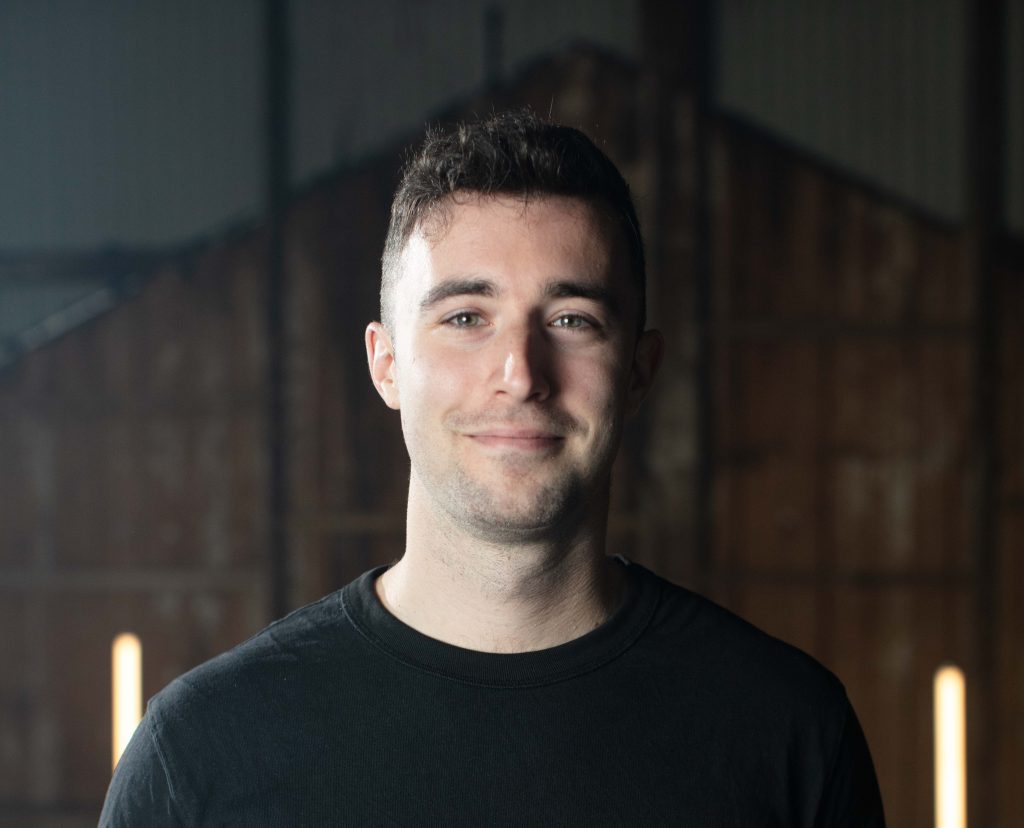
He is widely described as a rare multi-disciplinary operator: an electrical engineer by training, a hands-on software builder, a proven commercial scaler, and a relentlessly curious systems thinker with a lifelong passion for robotics. Investors (notably Blackbird Ventures, who led Alloy’s pre-seed) highlight his “intense curiosity and eagerness to learn,” resourcefulness, and the natural progression from operator to founder. Early Life and EducationHarris grew up in Australia in a family where self-employment and small businesses were the norm. His maker journey started young: around age 12 (circa 2008–2009), he taught himself coding from an “HTML for Dummies” book, built websites for local businesses (earning a few hundred dollars per project), and produced YouTube coding tutorials on Python and Java that garnered millions of views. He described it as a self-reinforcing loop of “teaching myself, making tutorials, watching other tutorials.” He also experimented with Photoshop, After Effects, Cinema 4D, and early online communities.
He earned a Bachelor of Electrical Engineering and Telecommunications from the University of New South Wales (UNSW), graduating in 2018. His engineering background included machine learning elements (noted in podcasts as “ML for telecoms”), which later informed his approach to data-heavy problems in robotics. Robotics had fascinated him since childhood, but post-graduation opportunities in the field were limited in Australia at the time, so he pivoted into broader tech roles while keeping robotics as a personal interest.
- Early stint: Briefly co-founded a fintech startup in Singapore right after university.
- Atlassian (Sydney, ~2018–2021, roughly 3 years): Started as a Software Engineer in core product work, then moved to the Growth team. He built tools for user acquisition, invitation flows, analytics, and iterative experimentation to support Atlassian’s bottom-up SaaS model. This period gave him deep experience in scalable systems, growth engineering fundamentals, and working with high-functioning engineering teams.
- Eucalyptus (2020–early 2025): Joined as Growth Engineer, quickly promoted to Head of Growth (2021), then Chief Commercial Officer (February 2023). He played a key role scaling the telehealth unicorn from ~$3 million to $170 million in annual revenue (contributing to a ~$1.4 billion valuation trajectory). Harris helped design data-driven patient engagement systems, including the Patient Adherence Loop (PAL) and Levels/Goals/Actions (LGA) programs that personalized care using real-time data. He left at the peak of success, citing a “nagging feeling” and the pull toward robotics—mirroring his earlier leap from Atlassian to Eucalyptus. Eucalyptus co-founders became angels in Alloy.
- Founded and sold a creatine gummy business (still an avid customer himself).
- Started a thriving neighborhood yoga studio.
- Scaled an NFT agency to millions in revenue.
- Built an at-home vertical farming project that involved hacking robotics—directly exposing him to the data and infrastructure pain points that inspired Alloy.
Alloy’s mission stems directly from Harris’s observations: robots generate gigabytes per minute of multimodal data (far beyond web apps), yet teams waste weeks replaying logs or writing custom scripts. Alloy provides natural-language search, similarity search, anomaly detection, and exportable datasets to close the loop between failures, fixes, and deployments—aiming for 10x faster iteration and higher reliability (4–6 nines). Early customers include teams like Advanced Navigation, Hullbot, and Breaker.
He has described the founding as a “leap into the unknown” taken when things at Eucalyptus were going great, emphasizing mission over stability. As of early 2026, he is actively hiring (founding engineers, BizOps) and embedding with design partners while shipping features like real-time robot-to-cloud streaming. Podcasts, Thought Leadership, and Public PresenceHarris has appeared on high-profile podcasts sharing operator-to-founder lessons:
- Wild Hearts (Nov 2025 return episode: “Why This Time Is Different”) — discusses robotics inflection point, reliability, data, and his career arc.
- Machine Minds (early 2026: “What Breaks First When Robotics Scales”) — dives into data infrastructure, LLMs for telemetry, and why replay tools fail at fleet scale.
 founder
 In summary, Joe Harris exemplifies the modern deep-tech founder: technically grounded, commercially battle-tested, endlessly experimental, and now fully committed to solving what he sees as the critical enabler (or bottleneck) for the robotics revolution—turning terabytes of messy field data into actionable intelligence at speed. For the latest updates, follow him on X/LinkedIn or check usealloy.ai.

No comments:
Post a Comment