SpaceXAI and @cursor_ai are now working closely together to create the world’s best coding and knowledge work AI.
— SpaceX (@SpaceX) April 21, 2026
The combination of Cursor’s leading product and distribution to expert software engineers with SpaceX’s million H100 equivalent Colossus training supercomputer will…

🚀 What the Announcement Says
On April 21–22, 2026, SpaceX announced that its AI arm (via xAI) and the AI coding startup Cursor are entering a strategic partnership to “create the world’s best coding and knowledge work AI.” (X (formerly Twitter))
The core points of the deal include:
SpaceX holds an option to acquire Cursor for ~$60 billion later in 2026. (Reuters)
If SpaceX doesn’t buy Cursor, it will pay ~$10 billion for the collaborative partnership work. (threads.com)
Cursor will leverage SpaceX’s Colossus supercomputer (with massive GPU capacity) to train and scale its AI models. (TestingCatalog AI)
This isn’t a small pilot — it’s a high-stakes, corporate-scale collaboration with real financial commitments and optional acquisition pathways built in.
🤖 Why This Partnership Is Significant
Here’s why this particular deal is drawing intense attention from Wall Street, Silicon Valley, and the broader tech press:
1. Cross-Sector Convergence: AI + Space + Software
SpaceX has long been known for rockets and Starlink satellite internet, but in 2026 it has aggressively expanded into AI infrastructure, including:
The acquisition of xAI earlier this year — consolidating AI capabilities directly within SpaceX. (Wikipedia)
Plans to build AI compute infrastructure that may even extend into space-based data centers. (Wikipedia)
Adding an AI coding powerhouse like Cursor to this mix indicates SpaceX isn’t just using AI — it’s betting the company on it as a core pillar of its future technological identity.
2. Compute Power Synergy
Cursor’s software tools are popular among developers, but their growth has been limited by compute scale.
SpaceX brings Colossus, a supercomputer cluster with hundreds of thousands of Nvidia GPUs. That’s a level of compute power normally only available to the very largest AI labs — and it positions SpaceX to compete more directly with Anthropic, OpenAI, and other AI giants. (Reuters)
3. Optional Acquisition Structure
The structure of this deal is unusual and significant:
The $60 billion buyout option later this year puts a deadline and big potential price tag on the relationship.
The $10 billion standalone partnership fee even if the acquisition doesn’t happen shows SpaceX is committed regardless of buyout. (threads.com)
These numbers dwarf most tech acquisitions of AI startups and signal SpaceX’s seriousness about owning capabilities — not just licensing them.
4. Timing Ahead of IPO
SpaceX is widely expected to pursue a massive IPO in 2026. Strengthening its AI portfolio and revenue pathways ahead of that event could:
Boost valuation.
Attract investors by showing diversified revenue streams — beyond rockets and satellites. (Reuters)
AI capabilities — especially those that touch enterprise software development — are sticky, meaning customers tend to stick with tools and services once integrated.
📈 What This Means for the Industry
Let’s explore what this kind of partnership — and a possible full merger or acquisition — could mean across adjacent sectors.
🔹 1. Tech Industry Consolidation
A potential SpaceX-Cursor merger would be a high-water mark in AI consolidation, similar to:
Meta acquiring Instagram
Microsoft acquiring GitHub
At ~$60 billion — especially for a coding tool company — this would signal the next wave of mega-scale consolidation in AI software tooling, where compute providers partner with or absorb software-centric startups to build vertically integrated stacks.
🔹 2. AI Market Competition Dynamics
By tying together:
AI model training (Colossus)
AI tools (Cursor’s coding products)
AI model productization (through xAI)
SpaceX could become a competitor to native AI labs, not just a consumer of AI. This would challenge incumbents like OpenAI, Anthropic, and Google.
Furthermore, if the integration leads to differentiated performance or workflows, it could create a unique AI developer ecosystem that’s tightly coupled with SpaceX’s platforms.
🔹 3. Expansion Beyond Earth
SpaceX has floated ideas like orbital AI data centers — combining compute in space and communication infrastructure with satellite backhaul — which could reshape how global AI compute is provisioned. (Wikipedia)
If AI compute becomes distributed via satellites, that’s a new kind of infrastructure strategy outside traditional cloud players like AWS, Azure, and Google Cloud.
🔹 4. Employment & Talent Flow
Cursor’s leadership and engineering talent have already started joining SpaceX and xAI teams — a trend seen in prior Musk acquisitions. (Business Insider)
This could accelerate SpaceX’s AI development pace, while also signaling to the industry that AI engineering talent is moving into aerospace companies — flipping traditional recruitment pathways.
🔹 5. Potential M&A Domino Effect
Analysts have also speculated that SpaceX could merge or consolidate with other Musk holdings like Tesla or tie deeper into software and AI layers across his portfolio. (Reuters)
Even if that remains speculative, the strategic posture — an integrated tech/AI/space conglomerate — is a new development in corporate strategy.
🔮 Broader Strategic Implications
Here are a few deeper strategic angles worth noting:
🧠 1. AI as Infrastructure vs. Product
Cursor and similar startups have historically focused on products for developers.
SpaceX is positioning AI as infrastructure — critical backbone compute + tooling that spans industries.
This parallels how cloud giants transformed enterprise IT.
📊 2. Valuation & Investor Perception
SpaceX’s AI commitments could bump its valuation multiple closer to pure-play tech companies — a boon for the IPO.
Investors tend to value recurring software revenue higher than single-event hardware revenue.
🛰 3. Competitive Dynamics with Cloud Providers
If SpaceX integrates AI compute with Starlink or satellite coverage, that could create competition with AWS, Azure, and GCP — not just on compute, but on global connectivity + compute bundles.
🧠 Final Take
This deal is significant because:
It marks SpaceX’s evolution from aerospace into enterprise AI infrastructure.
It could reshape competition in AI developer tooling.
It sets up a potential mega-acquisition that would reverberate through tech M&A markets.
It aligns with broader strategic shifts ahead of a large IPO.
If the acquisition ultimately happens, it would mark one of the most consequential tech deals of the decade — not just for SpaceX, but for how AI capabilities are structured, owned, and scaled.

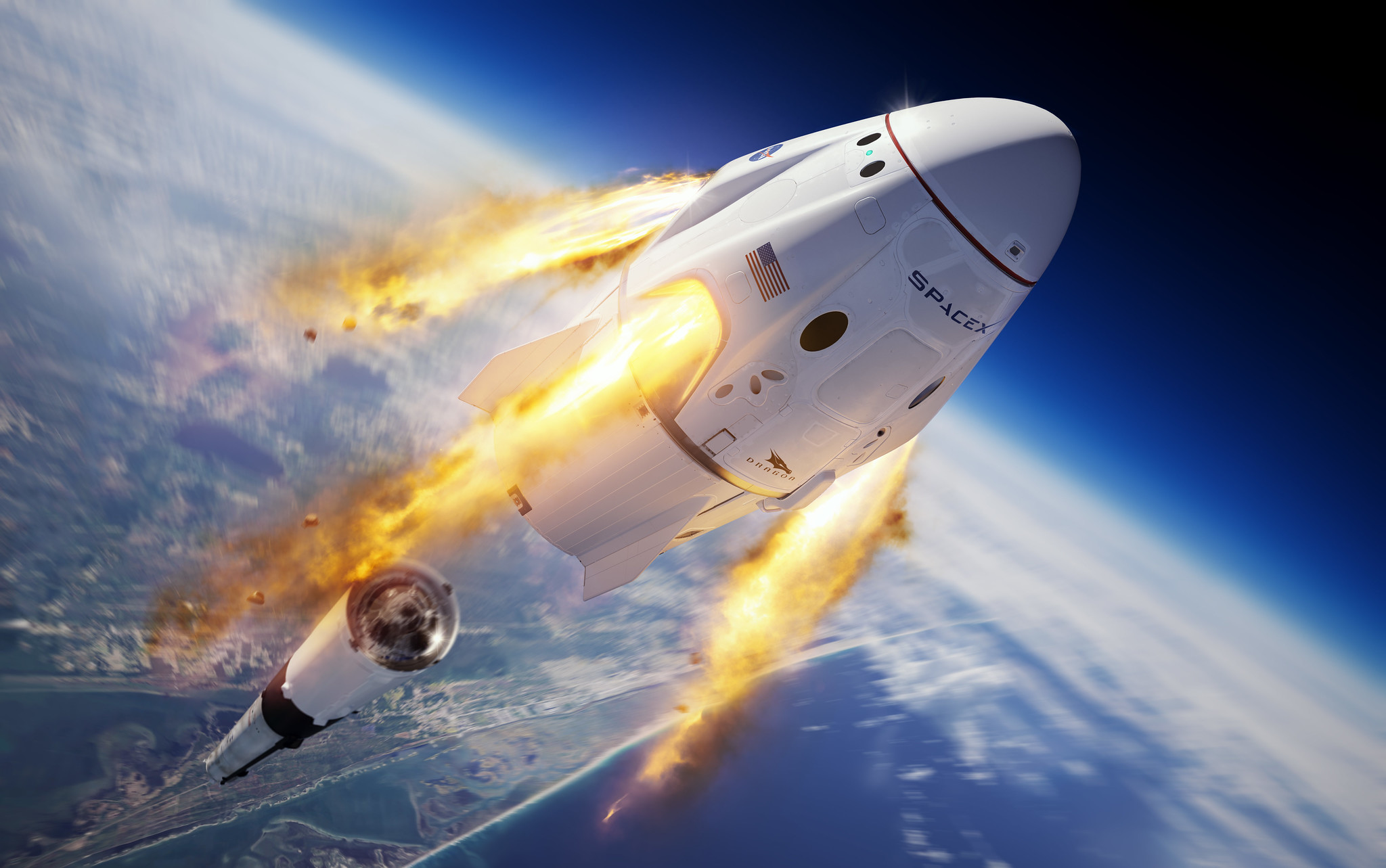
Build, Baby, Build: Why This SpaceX Partnership Could Become the Most Powerful AI Synergy Machine Ever Assembled
Sometimes a partnership is just a partnership: a press release, a logo swap, a few pilot projects, and a ceremonial handshake that fades into corporate silence.
And then there are partnerships that feel like tectonic plates shifting—quietly at first, and then suddenly the entire landscape looks different.
The SpaceX partnership teased in that announcement is the second kind. It signals something much larger than a collaboration. It hints at a future where AI, compute, hardware, satellites, manufacturing, and software fuse into a single integrated engine—one that doesn’t just build products, but builds capacity. The capacity to produce intelligence at scale, to distribute it globally, and to make it cheap enough that ordinary people can afford it.
This is not merely about winning an AI race. This is about building the industrial base of an entirely new civilization layer.
The best way to understand what’s happening is simple:
SpaceX is the world’s greatest scaling machine.
And AI is the world’s most scalable force multiplier.
Put them together, and you don’t get incremental improvement. You get a flywheel.
You get a moonshot factory.
The Core Insight: AI Isn’t a Product Anymore—It’s Infrastructure
For most of the last decade, people treated AI like software.
A chatbot.
A tool.
A feature.
A model.
An app.
But the reality is more profound: AI is becoming a utility, like electricity.
And utilities don’t win because they have the best marketing.
They win because they have the best infrastructure.
In the AI age, infrastructure means:
chips
energy
compute clusters
cooling
network distribution
software layers
training pipelines
developer ecosystems
data logistics
deployment channels
This is why the SpaceX partnership is significant: SpaceX is not a typical company. SpaceX is an infrastructure builder at planetary scale.
And once SpaceX decides to treat AI as infrastructure, the game changes.
Synergy #1: Compute at Scale—Not Cloud Compute, Industrial Compute
Every AI company hits the same wall eventually.
Not talent.
Not ideas.
Not demand.
Compute.
The bottleneck of the AI era is not intelligence—it’s the ability to manufacture intelligence cheaply.
SpaceX’s involvement changes the compute equation because SpaceX doesn’t think like a normal enterprise buyer of GPUs.
A typical company says:
“Let’s buy chips.”
SpaceX says:
“Let’s build the factory that builds the factory that builds the chips.”
This is a manufacturing mindset.
SpaceX is famous for vertically integrating production: rockets, engines, components, launch systems. The entire philosophy is: if the supply chain slows you down, absorb it.
Now apply that mindset to AI compute and you get something explosive:
massive GPU clusters
rapid buildouts
optimized cooling
optimized power delivery
reduced dependency on external cloud providers
specialized training hardware environments
The AI industry today is like early aviation: everyone is competing to build planes, but only a few will control the airports.
SpaceX wants to build the airports.
Synergy #2: The Ultimate Flywheel—Compute + Software + Deployment
The most valuable thing in AI is not just a model.
The most valuable thing is a feedback loop.
A feedback loop looks like this:
Build AI model
Deploy AI model to millions of users
Collect usage patterns and real-world errors
Improve the model
Redeploy improved model
Repeat faster than competitors
The company that tightens this loop wins.
This partnership suggests a future where the loop becomes brutally fast because SpaceX can unify:
training compute
model deployment
global distribution
continuous iteration
Most AI companies are stuck negotiating with cloud providers, internet infrastructure providers, and platform gatekeepers.
SpaceX already owns a major portion of the physical distribution layer through Starlink and its satellite network ambitions.
That means SpaceX could potentially deliver AI the way utilities deliver power:
direct-to-user, anywhere on Earth.
The partnership is not just about better AI.
It’s about AI that reaches people who were never in the market before.
Synergy #3: AI for Builders—Cursor-Like Software as the Mass Productivity Engine
The most underrated AI revolution is not art generation or chatbots.
It’s code.
Code is the universal language of modern power. It is the tool that creates all other tools. It is the lever that moves everything else.
If SpaceX is partnering with an elite AI coding platform, it signals something enormous:
They are not just trying to build AI.
They are trying to build the AI that builds everything.
That’s the meta-layer.
An AI coding assistant is not just a productivity tool.
It is an industrial multiplier.
Because if coding becomes radically easier, then:
startups can form faster
entrepreneurs can ship products without teams
governments can modernize systems faster
schools can teach applied engineering earlier
automation spreads beyond Silicon Valley
ordinary people can build apps for their own lives
This is not “AI for engineers.”
This is AI that turns millions of people into engineers.
And that is where the “for the masses” part becomes real.
Synergy #4: Chips—If SpaceX Gets Serious, Nvidia’s Monopoly Starts to Look Fragile
Right now, AI is effectively a kingdom ruled by GPU supply.
The AI boom has a kingmaker: whoever controls the chips controls the speed of the future.
If SpaceX expands deeper into compute, the next inevitable step is obvious:
custom chips.
Not because it’s trendy.
Because it’s rational.
SpaceX already understands hardware optimization better than almost anyone alive. Rockets are hardware systems where inefficiency is fatal. Every gram matters. Every thermal fluctuation matters. Every supply chain delay matters.
AI chips are the same kind of war.
A SpaceX-linked AI ecosystem could build:
specialized inference chips optimized for low cost
training accelerators optimized for energy efficiency
embedded chips for robotics and edge devices
satellite-integrated inference hardware
The AI industry is currently shaped like this:
Nvidia → AI labs → apps → consumers
SpaceX could flip the structure into:
SpaceX compute + chips → AI models → distribution network → consumers
That would be the first true vertically integrated AI stack at global scale.
And if it succeeds, it won’t just compete with Nvidia.
It will compete with the cloud itself.
Synergy #5: Starlink as the AI Distribution Layer
Starlink is often discussed as “satellite internet.”
That framing is too small.
Starlink is not just connectivity.
Starlink is reach.
Starlink is the physical pathway to places the cloud doesn’t fully serve:
rural villages
remote islands
deserts
mountains
war zones
disaster zones
underdeveloped regions
shipping routes
aviation corridors
Now imagine the next evolution:
Starlink + AI = Intelligence Everywhere
Not everyone needs the most advanced frontier model.
What the world needs is affordable, fast, reliable intelligence delivered like water from a tap.
If SpaceX integrates AI services into Starlink’s global reach, you get:
AI tutors in villages with no teachers
AI doctors where clinics don’t exist
AI legal advisors where courts are inaccessible
AI translators for isolated communities
AI farming assistants for subsistence agriculture
AI business coaches for informal economies
This is how you unlock abundance without waiting for governments to solve everything.
Not through charity.
Through distribution.
Starlink could become the delivery pipe not just for internet, but for intelligence itself.
Synergy #6: Robotics, Automation, and the Industrialization of AI
AI is not supposed to live inside a laptop.
AI is supposed to step out of the screen and into the physical world.
SpaceX is uniquely positioned to do this because it already operates like a robotic civilization:
automated factories
precision manufacturing
high-risk engineering environments
autonomous monitoring
predictive maintenance systems
simulation-heavy design cycles
If AI coding tools improve engineering productivity, then SpaceX’s own internal capacity explodes:
faster rocket design iteration
faster testing cycles
automated manufacturing planning
autonomous QA systems
AI-managed supply chain routing
AI-assisted materials engineering
AI-assisted propulsion design
SpaceX doesn’t just build rockets.
It builds the machine that builds rockets.
AI makes that machine smarter.
And if SpaceX builds the smartest industrial machine on Earth, the consequences go far beyond aerospace.
It becomes a template for how every major industry modernizes.
Synergy #7: Energy and Cooling—The Hidden Empire Behind AI
The public talks about AI like it’s magic.
But AI is not magic.
AI is heat.
The future of AI is constrained by:
electricity generation
grid stability
cooling systems
physical space for data centers
SpaceX’s engineering culture makes it uniquely capable of solving the “boring” bottlenecks that break everyone else.
If this partnership evolves into deeper integration, you can imagine SpaceX pushing aggressively into:
modular data center design
containerized GPU farms
new cooling architectures
dedicated energy supply partnerships
nuclear microreactor partnerships
geothermal integration
solar + battery megaprojects
This is the unglamorous truth:
The company that solves cooling and power at scale becomes an AI superpower.
And SpaceX has the mindset to do exactly that.
Synergy #8: AI as a Mass Tool—Democratization Through Price Collapse
The AI world today is impressive, but still elite.
Most advanced AI tools are:
expensive
subscription-based
limited by geography
limited by connectivity
limited by language
limited by local infrastructure
The masses are watching AI happen, but not fully living inside it yet.
SpaceX’s superpower has always been cost collapse.
SpaceX did not win rockets by building prettier rockets.
It won by making rockets cheaper and more reusable, collapsing the cost curve.
Now imagine SpaceX applying the same approach to AI.
That means:
AI subscriptions that cost $5 instead of $50
inference costs dropping 10x
offline-capable AI models for remote zones
localized language support at scale
AI deployment packaged with Starlink hardware
enterprise-grade AI for small businesses
If this partnership pushes the AI industry into a new cost regime, the effect could be historic.
Not “more convenience.”
But economic liberation.
Because once intelligence becomes cheap, the biggest winners are not Fortune 500 companies.
The biggest winners are the billions who were locked out of high-skill productivity.
Synergy #9: The New Stack—From “Apps” to “Civilization Layers”
This partnership hints at a new AI stack that could look like this:
Layer 1: Compute (chips + data centers)
Layer 2: Connectivity (Starlink + terrestrial networks)
Layer 3: Models (training + inference)
Layer 4: Tools (coding copilots, productivity suites)
Layer 5: Distribution (hardware bundles, APIs, consumer access)
Layer 6: Embedded AI (robots, vehicles, satellites, devices)
Most companies can compete in one layer.
SpaceX is positioned to compete in all layers.
That’s why this isn’t just a partnership.
It’s the outline of a future conglomerate architecture where SpaceX becomes something like:
AWS + Nvidia + Tesla + OpenAI + Boeing + Verizon
rolled into one.
Not because of branding.
Because of structural capability.
What a Merger Would Mean: A New Kind of Mega-Company
If this partnership leads to a merger or acquisition, it signals a trend that could reshape the entire tech economy:
The return of vertical integration.
For the last 20 years, the internet era rewarded specialization:
one company built chips
another built cloud
another built apps
another built distribution
But AI is reversing that logic.
AI rewards ownership of the entire pipeline.
Because the winner is not who has the best idea.
The winner is who can iterate the fastest at the lowest cost with the widest distribution.
A merger would likely create:
an AI company that owns its own compute
a compute company that owns its own distribution
a distribution company that owns its own AI products
a productivity company that can train frontier models without begging for cloud capacity
This would force competitors to respond.
And the industry would likely enter a consolidation wave where:
cloud providers buy AI apps
AI labs buy chip startups
chipmakers buy data center operators
telecoms buy AI distribution tools
A SpaceX-style merger would be the signal flare that the era of fragmented AI is ending.
The Real Prize: Making AI Accessible Like Electricity
The deepest significance is not that SpaceX might build the best AI coding platform.
The deepest significance is that SpaceX might help push AI into the role electricity played in the industrial era.
Electricity did not change society because it was “cool.”
Electricity changed society because it became:
cheap
reliable
universal
embedded into everything
AI is moving toward that same destiny.
But AI cannot become universal if it stays expensive.
It cannot become universal if it stays centralized.
It cannot become universal if it requires high-end devices, high-end subscriptions, and English fluency.
A SpaceX-driven AI ecosystem could push AI toward a new phase:
AI for the billions, not just the millions.
AI as a utility.
AI as a right.
AI as a global public capability—delivered through private infrastructure.
Not through governments.
Not through NGOs.
Not through charity.
Through scaling.
Through cost collapse.
Through engineering.
Build, Baby, Build: The Future That This Partnership Hints At
If you zoom out far enough, this partnership isn’t really about SpaceX partnering with anyone.
It’s about a philosophy.
The philosophy is:
Build the hardware.
Build the compute.
Build the chips.
Build the software.
Build the distribution.
Collapse the cost.
Ship it to the world.
Let ordinary people use it.
Let the masses build the next layer.
This is the industrialization of intelligence.
And if SpaceX truly brings its scaling DNA into AI, we may be witnessing the birth of something that feels like a private-sector Manhattan Project—but aimed not at destruction, but at capability.
The future won’t be won by the company with the smartest model.
The future will be won by the company that can mass-produce intelligence like cars were mass-produced in the 20th century.
That is what this partnership could represent.
A new era.
A new stack.
A new civilization flywheel.
And the motto for that era is simple:
Build, baby, build.