
So @Gaurab You have raised 1B at a 2B valuation. That is not a healthy ratio. If you had let me turn @solugen into a household name that it deserves to be for being the @Tesla of chemicals, you'd have raised the same 1B at a 5B valuation. 3B is the concrete price you've already.
— Paramendra Kumar Bhagat (@paramendra) May 2, 2026
It is a matter of immense delight that yesterday, on the occasion of Buddha Purnima, the ‘Sacred Exposition of the Holy Relics of the Tathagata’ was inaugurated in Leh. These revered relics are linked to the Piprahwa Stupa in Kapilavastu and were excavated in the closing years of… pic.twitter.com/tYsK5GKQ45
— Narendra Modi (@narendramodi) May 2, 2026
One bajillion dollars pic.twitter.com/zr2uCoCM3G
— Parmita Mishra (@parmita) May 2, 2026
Your vision is worth a 1B raise at a 10B valuation. AWS of Biology.
— Paramendra Kumar Bhagat (@paramendra) May 2, 2026
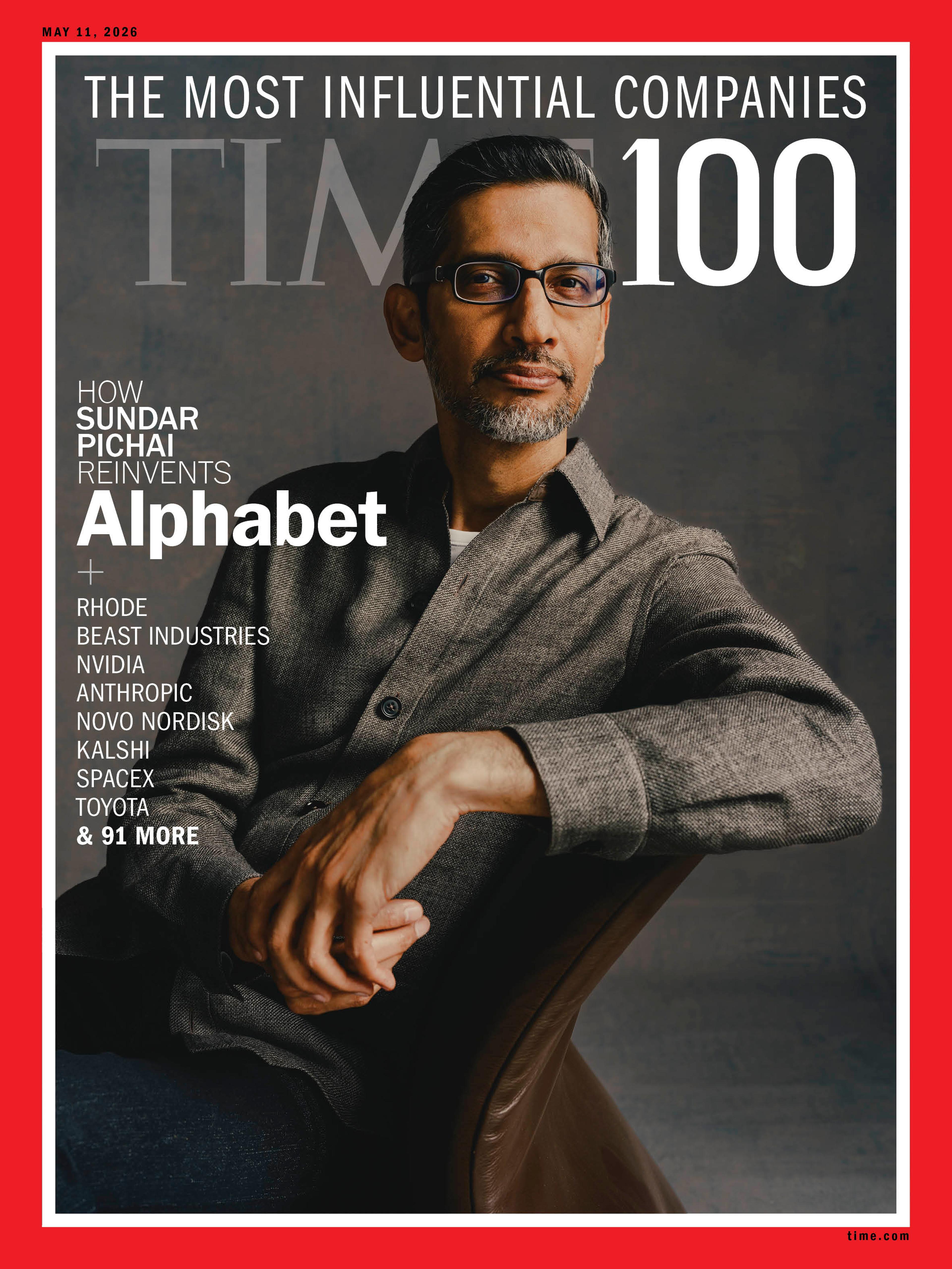
How Sundar Pichai Pushed Google To the Front of the AI Race its massive advantages in funding, infrastructure, and talent mean it may be the behemoth best positioned to win the AI long game, many analysts argue. ........ Pichai carries strong values into his work—economic uplift, compassion for migrants—and says his quest is to build useful things for as many people as possible. But his fiercely competitive nature is undeniable too. ........... “If he wants to do something, you’re not going to be able to stop him. He’s just going to be super nice about it,” says Caesar Sengupta, one of Pichai’s longtime former Google lieutenants. “And then, you cannot move him.” ............... Some 8,700 miles separate Pichai’s current home in Silicon Valley from his birthplace. He was raised in Chennai, a southern Indian metropolis, in a modest house; he and his brother slept on the living-room floor. Growing up, his family progressively gained a series of transformative technologies: a water heater, a refrigerator, a rotary telephone. When the phone arrived, so too did his neighbors, flocking to his house to call their families or the hospital for medical records. .................. But the rollouts were agonizingly slow. It took five years to get off a government wait list to secure a telephone. ....... Pichai arrived in the U.S. in 1993, where he earned master’s degrees in science and business from Stanford and Wharton before joining Google in 2004 in product management—the same month Gmail launched. He quickly rose through the ranks because of his ambition, work ethic, and instinct for what users wanted ................. In Silicon Valley, there are a handful of archetypal leaders, like Steve Jobs as the visionary or Zuckerberg as the engineer. Pichai is the ultimate product leader ................ “He has this ability to fully simulate a product in his head, and how it will be received and used by end customers,” says Clay Bavor, a former Google executive who worked directly under Pichai for a decade. “He has an exceptional sense for craft and the details in a product, all the way down to the pixels on the screen, the sound of a voice, the tactile feedback.” ............. in 2016, Pichai announced that Google would be shifting its priority from mobile-first to AI-first experiences. “This paves the future for Google for the next 10 years or so,” he declared in an internal meeting that year.
................. Perhaps the most pivotal decision of Pichai’s career was his conviction about the internal importance of DeepMind. After the success of AlphaGo, Hassabis wanted to spin DeepMind out of Google, into an independent company that prioritized safety over profits. Other Google executives, including co-founder Page, were fine with this proposed arrangement, journalist Sebastian Mallaby reported in The Infinity Machine, a new book on Hassabis. ................ But while Hassabis pushed for multiple years for DeepMind’s independence, Pichai ultimately rebuffed the effort. He needed DeepMind not only to advance science independently, but also to help him integrate AI into Google’s products.
............ Google had also made the lion’s share of its money on search advertisement—in 2023, the category accounted for 55% of its revenue. Plunging into AI search threatened to decimate that business. .............. Pichai was ready to pivot. His investment in TPUs put Google in position to massively build out its AI data-center infrastructure while partially avoiding the so-called Nvidia tax—the premium companies pay for the chips that power AI. And Google was sitting on a ton of data to train on—thanks to its search index and YouTube—as well as a mountain of cash from its overflowing profits. ................ “People realize if you all pull together, you can quickly make a difference,” says Reid, the VP of search. “And that gives people a kind of high.” ................ When Google rushed out a rival chatbot in early 2023, it falsely claimed that the Webb telescope took the first picture of a planet beyond our solar system, causing Alphabet’s market value to plummet $100 billion in a day. A year later, when Google released AI Overviews in search, it told a user to eat one small rock a day.
.................. “When we built Chrome, we had 1% market share one year after we launched,” he says. In fact, if you look at Google’s history, it has virtually never been first to a new tech product, whether it be web browser, search, mail, or maps. But its distribution channels, resources, and talent allowed it to close gaps fast. ............ and the honing of chain-of-thought reasoning, in which LLMs take longer to think about their answers—leading to better results. ............... Pichai asks Gemini for conversational advice before he meets with other CEOs. Sometimes, Gemini will return a “superficial answer,” Pichai says, to which he responds: “Tell me something that could really be on his or her mind.” “And I get really insightful things which makes for a more human connection, because that’s actually what they are worried about,” he says. ............... the company crossed $400 billion in annual revenue for the first time.
................ AI has been integrated into Google Search, Gmail, Calendar, Maps, Docs, and Photos, meaning that people who aren’t even seeking out AI are now engaging with it. No other company delivers AI to so many people in so many places. .............. Millions of users have turned to research tool NotebookLM to synthesize information. Waymo’s self-driving cars have achieved mundanity on the streets of cities like Austin and Los Angeles, with London their next stop. YouTube has transformed from a money pit into a subscriber behemoth and legitimate television replacement earning over $60 billion a year. Neal Mohan, the CEO of YouTube, says that Pichai has played a crucial role in YouTube’s growth, including in its development of new AI production tools for creators. “His insights foreshadow these huge trends, but they’re also very, very precise,” he says. .................... In San Francisco, the developer Jose Portilla is building a startup that uses AI tools to create personalized picture books and TV shows for kids. Portilla uses Nano Banana to generate images, and Gemini to build stories and voice the characters. ............ In March, a California jury found Meta and YouTube liable for harming a young user through addictive design features that contributed to her mental-health distress; YouTube was ordered to pay $1.8 million. Similar dynamics have made AI systems dangerously sycophantic. In October, a man who had developed a relationship with Gemini died by suicide after Gemini promised him an eternity together; the man’s estate sued Google. “This shows that safety is, at best, a second thought for them,” said Jay Edelson, the plaintiff’s lawyer. ................... internal documents show that the company fretted over its inability to control how Israel used their technology. .......... when Pichai himself participated in an employee protest against the President’s immigration policies. .......... In February, more than a thousand Google workers signed an open letter demanding the company end its partnerships with DHS and ICE. An additional 100 DeepMind employees signed a letter asking Jeff Dean, Google’s chief scientist, for “red lines” around the usage of Gemini by the Pentagon for surveilling American citizens or piloting autonomous weapons without a human in the loop. (Google has 190,000 employees; DeepMind has around 6,000.) .................. “Google’s products are used for violent purposes domestically and abroad,” he wrote in an email to TIME. “I don’t want to work for a digital weapons manufacturer, and many of my colleagues are against this drift towards militarization. But they are afraid to speak out due to the justified fear of retaliation.” (Google fired 28 employees who staged a sit-in against the company’s contracts with Israel in 2024.) .............. Pichai says that “all of us, including the government, are aligned on humans in the loop, and the technology not being used for mass surveillance in a way that contradicts human rights.” Asked to respond to Samburov, he says: “I think it’s a very nuanced issue. We all have a role responsibly, to invest in the national security of democracies around the world ... I think we’ve long, more than any other company in the world, had a culture where employees speak up.” .......................
Trivia. I have been jackknifed.
— Paramendra Kumar Bhagat (@paramendra) May 1, 2026
ok its not the most important thing we've ever done but i find it more useful than it seems on the surface.
— Sam Altman (@sama) May 1, 2026
check out pets in codex!
(and try hatching one)
Himalayan Compute: A Silicon Valley Project That Could Trigger Nepal’s Next Economic Miracle https://t.co/8qbEKkwnPr
— Paramendra Kumar Bhagat (@paramendra) May 1, 2026
Neuralink https://t.co/ToIaC8M3eZ
— Elon Musk (@elonmusk) May 1, 2026
easy to overlook, but feels like the future
— Greg Brockman (@gdb) May 1, 2026
I grew up hearing from my parents: always take the risk. Take the hardest path. That's when you learn the most.
— laura (@lauradang0) May 1, 2026
Call it epigenetics.
I call it being a first-gen Asian daughter.
In a generation of comfort and familiarity, we forget what it means to struggle.
We forget how… pic.twitter.com/5JRRuE1Pkp
We’re bringing Jensen Huang to Startup School for a fireside chat with @garrytan!
— Y Combinator (@ycombinator) April 30, 2026
From co-founding @nvidia in 1993 to building the backbone of the AI era, Jensen helped turn GPUs into the engine of modern computing.
Apply to attend: https://t.co/c1ISr8O64k pic.twitter.com/Pxm6VnReCu
People complain about the rich, wages and their jobs.
— Simon Squibb (@simonsquibb) May 1, 2026
And I get it. I really do. The state of it is bad.
But if I just complained about it too, what would that achieve?
Instead I want to highlight what everyone is missing.
We're in the golden age for entrepreneurship.
Since… pic.twitter.com/P6evK6T7VC
Just wrapped a very productive meeting with Nepal’s Finance Minister @SwarnimWagle.
— Ambassador Sergio Gor (@USAmbIndia) May 1, 2026
Our discussions covered a broad spectrum of shared priorities, with a strong focus on improving the business climate, expanding technology-driven employment opportunities, and unlocking new… pic.twitter.com/9hHATM31ID
It 🐄 has indian origins https://t.co/VTbtTwKjxf
— Ruchit G Garg (@ruchitgarg) May 1, 2026
Bank of China building LCD gargantuan display… pic.twitter.com/UGeWlYb4RE
— Brian Roemmele (@BrianRoemmele) May 1, 2026
There is now no doubt that India was the first place where iron was widely used https://t.co/zN3ksbwLja
— Sanjeev Sanyal (@sanjeevsanyal) May 1, 2026
Grok #1 in law https://t.co/oD6D50Wc8s
— Elon Musk (@elonmusk) May 1, 2026
Grok Imagine tutorial made with Grok Imagine.
— Elon Musk (@elonmusk) May 1, 2026
These is all AI-generated! pic.twitter.com/GXABfepyoM
It’s new machine day for us at the factory today.
— Vishakh Ranotra (@VishakhRanotra) May 1, 2026
Installing our 5th 4-axis CNC machine that we built in-house.
One of these machines is equal to the production capacity of two of our imported ones.
Another one to follow soon after. pic.twitter.com/ayDXAkzk5E
Scrolling is on the decline
— a16z (@a16z) May 1, 2026
More charts: https://t.co/2IoX6EtHav pic.twitter.com/wa5vdqWal5
We are resolved to ruthlessly crush the narcotics cartel.
— Amit Shah (@AmitShah) May 1, 2026
The @narcoticsbureau has cracked down on a major international narcotics ring seizing 349 kgs of High-Grade cocaine worth Rs.1745 crore in Mumbai. This is a trailblazing example of bottom to top approach where the agency…
Really enjoyed this conversation - thanks again @garrytan for hosting! https://t.co/INj6ulWt4g
— Demis Hassabis (@demishassabis) May 1, 2026
— Elon Musk (@elonmusk) April 30, 2026
Try it out! https://t.co/mhj8fFDoQO
— Elon Musk (@elonmusk) May 1, 2026
GPT-5.5 Came out.
— Pierre Bongrand (@bongrandp) April 23, 2026
OpenAI & Anthropic are leading this race by MONTHS.
The only other US lab are 5-10 months behind (GDPval)
When is Google & xAI next competitive model? pic.twitter.com/MYPhygDDZJ
The Secret of My Laughter - A student asks His Holiness the Dalai Lama the secret behind his famous childlike laughter. His answer is disarmingly simple: a relaxed mind, no ego, and the understanding that we are all the same human beings. He explains how seeing yourself as… pic.twitter.com/8pLGvT0CIv
— Dalai Lama (@DalaiLama) May 1, 2026
You are doing mind blowing work. This is AWS for biology. All you have to do is vision projection. This is where we will be in five years. And go raise BIG! Now. You already have plenty of milestones. Noone else on Twitter has the thought clarity. A company can invest.
— Paramendra Kumar Bhagat (@paramendra) May 1, 2026
If Anthropic made this move, that means many Anthropic like companies are looking to make this move. Don't sell. Get them to invest. Like Yahoo invested in Alibaba. Create a small budget and put me to work. I will get it done.
— Paramendra Kumar Bhagat (@paramendra) May 1, 2026
Raising 100M at a 1B valuation. Because team building needs to happen. You need an outpost also in Delhi. Now.
— Paramendra Kumar Bhagat (@paramendra) May 1, 2026
TechBio. They are the tech. You are the Bio. Sweeten the deal by offering to use their tech. As in, maybe 20M out of 100M is you using and paying for their tech.
— Paramendra Kumar Bhagat (@paramendra) May 1, 2026
What do u think im trying to do here https://t.co/xEuSM4xrMC
— Parmita Mishra (@parmita) May 1, 2026
Strategic: Awkward Moment As Sam Altman And Dario Amodei Skip Unity Hand-Raise At India AI Impact Summit 2026 https://t.co/G2Xk7JqB27
— Paramendra Kumar Bhagat (@paramendra) May 1, 2026
Impressed. But what is your campaign? You need a campaign. Not a whisper.
New member in the family: our model “SHIV” 💪
— Prakash Dadlani (@prakdadlani) May 1, 2026
This body handles up to 1200W motors
Tooling ready. ✅
Buyers excited. ✅
Bulk export orders in hand. ✅
Machines & team ready.✅
Bas ab War khatam ho jaye...
Frustrating as hell, but we’re not stopping.
The good news?
Domestic… pic.twitter.com/AoonehKVFe
Howard Marks runs Oaktree, a $120 billion+ firm built on distressed debt, has been writing the memos Warren Buffett opens first for over thirty years, and just changed his mind on AI after a single conversation with Claude — we got into where the $10 bill nobody has picked up is… pic.twitter.com/iLYEFDbSqD
— Nikhil Kamath (@nikhilkamathcio) May 1, 2026
Your failure. Why did you not go grab that 400M? That was funding based on work done and vision projection. I did make the offer to help do it.
— Paramendra Kumar Bhagat (@paramendra) May 1, 2026
Who knew part of being a VC is signing up to be a personal guarantor for a founders lease since they are barely paying themselves enough cash and hence don’t “qualify” for the apartment.. even though their company is absolutely ripping.
— Nikunj Kothari (@nikunj) May 1, 2026
Bullish for this founder 🫡
Being a failed founder is now better than being a successful employee.
— Xiaoyin Qu (@quxiaoyin) May 1, 2026
I'm seeing this everywhere. Decagon created a special "founder office." Lovable brags about how many Y Combinator founders joined their team.
It's obvious what's happening: companies don't care which big…
I do. And I still like the name Twitter.
— Paramendra Kumar Bhagat (@paramendra) May 2, 2026
Marketing Is Misunderstood https://t.co/civnlUAqUs
— Paramendra Kumar Bhagat (@paramendra) May 2, 2026
I am offering to do marketing for some of the companies you have funded. As an outside consultant.
BASIC launched on this day in 1964. pic.twitter.com/AKbzcbPnWf
— Jon Erlichman (@JonErlichman) May 1, 2026
Photos I took in Nepal pic.twitter.com/Bf9CVHhiUN
— Ashraful Arefin (@AshrafulArefin_) April 30, 2026

Educate me on your line of products. Share a catalog if you have one.
— Paramendra Kumar Bhagat (@paramendra) May 2, 2026
Marketing Is Misunderstood https://t.co/civnlUAqUs
His name was Saurabh Kumar Ladda.
— Sann (@san_x_m) May 1, 2026
He was 25 years old. Chemical Engineering from IIT Madras. MBA from IIM Calcutta. CFA Level 1 certified. He joined McKinsey and Company as a junior analyst in August 2022.
On Friday, February 23, 2024, he returned home to his apartment in… pic.twitter.com/MlwoHCTBlY
many current jobs will go away
— Sam Altman (@sama) May 2, 2026
i think we will find a lot of new ones, though they may look very different
I got the joke. I read that tweet. :)
— Paramendra Kumar Bhagat (@paramendra) May 2, 2026
Too slow. Need to raise and scale 100X.
— Paramendra Kumar Bhagat (@paramendra) May 2, 2026
This is the way. https://t.co/gASOAa5OBL
— Marc Andreessen 🇺🇸 (@pmarca) May 2, 2026
Yes.
— Paramendra Kumar Bhagat (@paramendra) May 2, 2026
Top request: do not penalize links. You trying to become AOL?
— Paramendra Kumar Bhagat (@paramendra) May 2, 2026
Twitter: Safe Space For Nerds. Much Better Vibes Than Courtrooms. ;)
— Paramendra Kumar Bhagat (@paramendra) May 2, 2026
Bottomless demand for compute.
— Paramendra Kumar Bhagat (@paramendra) May 2, 2026
Marketing is the bottleneck.
— Paramendra Kumar Bhagat (@paramendra) May 2, 2026
Amazon acquired Annapurna Labs for $350M in 2015.
— JJ (@JosephJacks_) May 1, 2026
Today, Annapurna is generating $20 Billion annually for Amazon.
Not a bad deal.
block me again its ok
— Sam Altman (@sama) May 2, 2026
You and Elon need to show the world you can cooperate on AI Safety and Extreme Poverty and compete on commerce. Otherwise, I am running scared.
— Paramendra Kumar Bhagat (@paramendra) May 2, 2026
⚖️ Musk vs. OpenAI: The Battle for Existential AI Safety https://t.co/g0WriLV2H6
/hatch clippy
— Sam Altman (@sama) May 2, 2026
I want Google to feed all the books it digitized to Gemini.
— Paramendra Kumar Bhagat (@paramendra) May 2, 2026
Stop imports, let customers pay premium for their daal and you will see in 2-3years substantial rise in local production https://t.co/vV3557oWRa
— Ruchit G Garg (@ruchitgarg) May 2, 2026
https://t.co/K1A1PzUp3I pic.twitter.com/iVlOKb2AYK
— Vaibhav Domkundwar (@vaibhavbetter) May 1, 2026
People are enormously confident without any Clarity in their heads. That is a disaster. #SadhguruQuotes pic.twitter.com/UoUhix8TtD
— Sadhguru (@SadhguruJV) May 2, 2026
On this day, Gautama the Buddha realized there is no going towards Truth. If you become available, it is right here. #SadhguruQuotes pic.twitter.com/GmCIGIyddG
— Sadhguru (@SadhguruJV) May 1, 2026
Sadhguru 360 launches today on Youtube!https://t.co/YEcWmqwnbz pic.twitter.com/Znd9MUj9mJ
— Sadhguru (@SadhguruJV) May 1, 2026
A calm evening in Kathmandu.
— Santosh Basyal (@Barulo_da) April 30, 2026
📍Seto gumba, Nagarjun pic.twitter.com/WxApACezOl
Launch a company.
— Paramendra Kumar Bhagat (@paramendra) May 2, 2026
Niels Bohr and C. V. Raman at the Niels Bohr Institute of Theoretical Physics.
— Physics In History (@PhysInHistory) May 1, 2026
(Credit: RRI Bangalore) pic.twitter.com/RYLlirvuMy
Check DM. In fact, shoot me an email. paramendra at gmail
— Paramendra Kumar Bhagat (@paramendra) May 2, 2026
Sneezing, are we?
— Paramendra Kumar Bhagat (@paramendra) May 2, 2026
Still pumping. pic.twitter.com/F1wKOS37F1
— Arnold Schwarzenegger (@Schwarzenegger) May 1, 2026
Dubai is planning to build “The Loop”, a groundbreaking 93-kilometer air-conditioned urban highway for walking, running, and cycling.
— Massimo (@Rainmaker1973) May 1, 2026
Designed by the architectural studio URB, this ambitious project is a key part of Dubai’s “20-minute city” vision, aiming to connect over three… pic.twitter.com/YwxAVpvYYd
7-year-old Ishank from Ranchi, India just set a world record by swimming 29km across the Palk Strait (Sri Lanka to India) in just 9 hours and 50 minutes. The youngest ever to conquer this route! (April 30, 2026) pic.twitter.com/OvAm4enO25
— Weather Monitor (@WeatherMonitors) May 1, 2026
The Toyota Land Cruiser looks beast! pic.twitter.com/Chj384jBl3
— The Figen (@TheFigen_) May 1, 2026
The oldest hotel in the world is The Nishiyama Onsen Keiunkan in Japan and has been in business since 705 AD.
— Massimo (@Rainmaker1973) May 1, 2026
The crazy thing is that it’s still a family business. For 52 generations. pic.twitter.com/P8gbwnGPaG
बुद्ध जयन्तीको हार्दिक शुभकामना!
— U.S. Embassy Nepal (@USEmbassyNepal) May 1, 2026
Efficiency 💡 https://t.co/fQCIKqQtSJ
— Joe Gebbia (@jgebbia) May 1, 2026
Karnataka clears 140 acres for US semiconductor equipment maker Applied Materials in Bengaluruhttps://t.co/KgKa3o7mmX
— Chandra R. Srikanth (@chandrarsrikant) May 1, 2026
Our housing society generated ₹2.37 lakh last financial year, just by selling discarded cardboard boxes from deliveries.
— Manas Muduli (@manas_muduli) April 30, 2026
That’s the scale of “online deliveries” entering our homes every single day.
This is also an untapped revenue stream for housing societies like ours :) pic.twitter.com/iPOmPgHa4x
MUST MUST MUST MUST MUST MUST WATCH if you wanna learn how to Cold email/DMs, by @adriannalakatos https://t.co/8edMIYaXre
— Hubert Thieblot (@hthieblot) May 1, 2026
This is my story.
— Ray Youssef (@raythewarchief) September 8, 2025
The story of the one true War Chief https://t.co/Au4okClaGh
So go global. Go to China. I can help you go global. And, increase your price. https://t.co/5Uhw86Ar7w Sonch. https://t.co/MQAtgstUuk
— Paramendra Kumar Bhagat (@paramendra) May 2, 2026
Create a monthly marketing budget and put me to work. I will show you magic. You break even in three months or less. Then it is 3X ROI, 5X ROI and beyond.
— Paramendra Kumar Bhagat (@paramendra) May 2, 2026
Email me your WhatsApp and let's talk. paramendra at gmail. Or DM.
— Paramendra Kumar Bhagat (@paramendra) May 2, 2026
Congratulations to Dr. R. Balasubramaniam Ji and Dr. Joram Aniya Ji on being appointed as Full-time Members of NITI Aayog. Their rich experience and deep understanding of various issues will greatly strengthen policy making. I am confident their contributions will help drive…
— Narendra Modi (@narendramodi) May 2, 2026
If you’re feeling lost as a founder, just build something.
— Hubert Thieblot (@hthieblot) May 2, 2026
Anything that forces you to ship, learn fast, and talk to real users.
Don’t obsess over the “right” idea.
Don’t spiral about how hard or competitive it is.
Just start building.
Put it out there.
Talk to 10 potential…
All this is scheduled to happen in one generation. In four generations, deep into the Satya Yuga, all of it will be taken for granted. People don't really "appreciate" antibiotics today, or even hand washing. Or showers for Europeans.
— Paramendra Kumar Bhagat (@paramendra) May 2, 2026
Hire me to do marketing for you as an outside consultant. You need a Solara Vision.
— Paramendra Kumar Bhagat (@paramendra) May 2, 2026
Respect Marketing | Paramendra https://t.co/MQAtgstUuk
You remind me of @SrBachchan still working full speed. I think his best movie yet is in the future.
— Paramendra Kumar Bhagat (@paramendra) May 2, 2026
You remind me of @SrBachchan still working full speed. I think his best movie yet is in the future.
— Paramendra Kumar Bhagat (@paramendra) May 2, 2026
I think you start a wellness company and start giving health advice. You look fit. :)
— Paramendra Kumar Bhagat (@paramendra) May 2, 2026
They did not block me. They deleted my account. I signed up the first month they launched. Put tens of thousands of hours into it. Have been pinging Hoffman directly on X. No recourse.
— Paramendra Kumar Bhagat (@paramendra) May 2, 2026
Prompt your tweets into articles. On Grok or ChatGPT.
— Paramendra Kumar Bhagat (@paramendra) May 2, 2026
Turn this tweet into an article ..... and you copy paste the tweet.
Good morning, Gary. We have met.
— Paramendra Kumar Bhagat (@paramendra) May 2, 2026
Your tweets can be the fulcrum of a multi-platform highly effective marketing campaign. Needed to attract the best talent. To effortlessly raise money. Would reach millions as Reels. Text is nerdy. Reels are for the masses.
— Paramendra Kumar Bhagat (@paramendra) May 2, 2026
My team can get it done. Looks like you are Funded. Make the next round automatic.
— Paramendra Kumar Bhagat (@paramendra) May 2, 2026
It is not AI, it is voice. @WisprFlow @tankots
— Paramendra Kumar Bhagat (@paramendra) May 2, 2026
Liquid Computing: The Future of Human-Tech Symbiosis https://t.co/VDimUsobtF
RAISE BIG! Possible.
— Paramendra Kumar Bhagat (@paramendra) May 2, 2026
don't cry that india don't have capital, researchers, chips etc
— Rohan (@lets_dig_deeper) May 2, 2026
i'll do it for you and india 🙏
we will compete and build sota models, you'll see @rumik_ai in the charts very soon
I had the joy of catching up for dinner last night in Omaha with Tim Cook.
— Sahil Bloom (@SahilBloom) May 2, 2026
When I was feeling lost on my journey, he pushed me to follow my energy. I’m grateful he did.
He’s brilliant and successful, but most importantly, a good man. The future is bright. pic.twitter.com/OoymzRKDrf
Explain.
— Paramendra Kumar Bhagat (@paramendra) May 2, 2026
The spec and the code still need to be two siloes, two teams. That is how you imagine new industries.
Launch your marketing campaign. Become a household name.
— Paramendra Kumar Bhagat (@paramendra) May 2, 2026
📷 नेपाल का उज्ज्वल भविष्य और विधिको शासन https://t.co/LTW1nQlFVq नया सरकार को प्रथम काम: विधिको शासन को स्थापना https://t.co/bxyMDEpoFA @SwarnimWagle @shisir @ShahBalen @hamrorabi @PM_nepal_ @manishjhanepal @Amiteshshah1 @ersnshah @pchamal @ashika71 🇳🇵👆
— Paramendra Kumar Bhagat (@paramendra) May 2, 2026
I have the equivalent of an Oscar in digital marketing. I can get it done. You are so good on Twitter, your tweets are enough material. They were enough for my book on PreciGenetics.
— Paramendra Kumar Bhagat (@paramendra) May 2, 2026
This 100MW data center in UAE is the largest solar powered datacenter in the world. There are currently 1,300 data centers in the world that are bigger than this one, but this one is the largest solar powered one.
— Object Zero (@Object_Zero_) May 2, 2026
That’s 10 square kilometres of solar panels you can see.
The… pic.twitter.com/KRXdjdYDHw

No comments:
Post a Comment