The Contradiction in Elon Musk’s Universal High Income: From Scarcity Thinking to True Abundance
Elon Musk has emerged as one of the most vocal proponents of a future transformed by artificial intelligence and robotics. He envisions massive productivity gains that could render work optional and usher in an era of unprecedented prosperity. Central to his response to AI-driven job displacement is the concept of Universal High Income (UHI)—government-issued checks providing citizens with a high standard of living, far beyond traditional universal basic income.
Yet this idea, while forward-looking, contains a fundamental contradiction. It attempts to overlay scarcity-based economic mechanisms—monetary distribution, currency, and income—onto a world rapidly approaching post-scarcity. Musk himself has acknowledged the deeper implications of these technologies, suggesting we may eventually reach a “no currency” reality. In that context, UHI begins to look like an incomplete bridge rather than the destination.
Musk’s Vision: Abundance Through AI and Robotics
Musk has repeatedly argued that AI and robotics will produce goods and services “far in excess of the increase in the money supply,” neutralizing inflation risks and enabling societies to provide high incomes without traditional economic constraints. Work, in this scenario, becomes optional—like a hobby or sport—while abundance becomes the default.
He has gone further, predicting that conventional money could lose relevance. In a future of extreme automation, value might shift toward fundamental physical constraints like mass and energy rather than fiat currency. “If AI and robots are capable of meeting all human needs, the need for money will rapidly disappear,” he has suggested in various discussions. This points toward a deflationary spiral so profound that currency itself becomes obsolete.
These insights align with classical economic observations of technological progress: exponential gains in productivity drive costs toward zero for many goods and services. In a true post-scarcity environment, the allocation problems that money solves today—rationing limited resources—evaporate.
The Contradiction: Scarcity Tools in an Abundance World
Here lies the tension. Universal High Income still operates within a monetary framework. It assumes the continued existence of currency, government distribution mechanisms, and an underlying economy where “income” has meaning. If AI and robotics truly deliver the abundance Musk describes—where production outstrips any conceivable demand—then injecting more currency (even as “high income”) becomes conceptually mismatched.
In the deflationary phase Musk anticipates, prices collapse. In the subsequent “zero currency” phase, money ceases to be a relevant medium of exchange altogether. What does “high income” mean when there is no scarcity to price and no currency needed to mediate access? Handing out digital credits in a world of radical plenty is like using feudal tithes to manage a digital economy—it applies outdated logic to transformed conditions.
Musk is headed in the right direction by recognizing the trajectory toward abundance and questioning the necessity of traditional labor. However, UHI represents a transitional compromise rather than a fully realized post-scarcity framework. It flounders at the edge of the paradigm shift without fully crossing into it.
Toward Kalkiism: A Coherent Framework for the Age of Plenty
A more complete vision emerges in Kalkiism, as articulated in my work Kalkiism: The Economic and Spiritual Blueprint for an Age of Abundance. Drawing on the Hindu eschatological figure of Kalki—the avatar who ends the Kali Yuga of strife and inaugurates Satya Yuga of truth and virtue—Kalkiism reimagines economics and society for a post-scarcity era.
Kalkiism explicitly addresses the limitations of both capitalism and communism in an age of AI-driven plenty. It proposes replacing Gross Domestic Product (GDP), a scarcity-oriented metric focused on growth through extraction and competition, with Gross Domestic Requirement (GDR)—a system oriented toward meeting genuine human and planetary needs.
Key elements include:
A time-based “currency” where value derives from hours contributed (everyone earns equally per hour worked, from leaders to laborers), eliminating traditional money and cash in favor of direct accounting of effort and access.
Vibrant markets for distribution and innovation, but driven by cooperation, dignity, and abundance rather than profit maximization or centralized control.
Integration of spiritual and ethical dimensions, rooted in Sanatana Dharma’s flexibility while open to interfaith insights, emphasizing collective awakening, environmental balance, and human dignity.
A phased, smooth transition—potentially piloted in scalable contexts like Nepal—to minimize disruption as we move from scarcity mindsets to a “Plateau of Plenty.”
Unlike UHI’s reliance on government checks within a lingering monetary system, Kalkiism envisions a fundamental reconfiguration: abundance as the baseline, with economics serving consciousness and well-being rather than perpetuating old allocation struggles. It treats the arrival of Kalki not merely as myth but as a “frequency” of global awakening already underway.
Making the Transition Smooth
The path forward requires acknowledging Musk’s contributions—his push for AI and robotics acceleration, his warnings about job displacement, and his glimpses of a money-optional future—while transcending the transitional contradictions in UHI. Policymakers, technologists, and thinkers must focus on:
Accelerating the technologies that drive marginal costs toward zero.
Redesigning metrics and incentives around requirement and flourishing, not perpetual growth.
Cultivating the ethical and spiritual maturity needed to handle abundance without chaos or stagnation.
Ensuring the transition prioritizes stability, equity, and voluntary participation.
Musk is correct that AI and robotics point toward a world of amazing abundance where work becomes optional and human potential can flourish. But realizing that vision fully demands frameworks like Kalkiism that discard scarcity economics entirely, rather than patching them with high-income distributions. The end state is not universal checks in a dying currency system, but a conscious, abundant civilization where currency itself fades into irrelevance—and human dignity, creativity, and cooperation take center stage.
The real challenge—and opportunity—is navigating the shift consciously and smoothly.
you are not going to need a job because you are not going to need any money https://t.co/rqn9K8HLt5
Navigating the Flux: End Times, Economics, and the Dawn of Abundance
In an era of unprecedented upheaval, we find ourselves at the precipice of profound transformation. These are the End Times—not the cataclysmic destruction of the world, but the culmination of an age that has spanned over 5,000 years. As trade wars rage and tariffs fly, traditional economic wisdom crumbles, giving way to visions of abundance propelled by AI and robotics. This shift challenges everything we thought we knew about scarcity, power, and spirituality. Let's explore how the old paradigms are failing and what might emerge in their place.
The Failure of Traditional Economics
When the trade wars erupted, with tariffs imposed haphazardly on allies and adversaries alike, I turned to economists for clarity. Figures like Paul Krugman, a Nobel laureate known for his sharp critiques, declared it all nonsensical. His analyses, rooted in classical trade theory, couldn't explain America's aggressive stance. I sought alternative voices, but credible ones were scarce. Ray Dalio, the hedge fund titan, offered a more compelling framework through his lens of historical cycles and declining empires. Yet even Dalio's model falters in the face of reality.
A fading superpower shouldn't suddenly surge to nearly 5% growth, even if fueled by AI. This defies the straitjacket of conventional economics, which once warned that Social Security would vanish by the time today's workers retired. AI and robotics upend that narrative, suggesting the roof on economic growth is about to blow off. Krugman doesn't make sense anymore. Dalio's cycles break down. And Donald Trump, bewildering to the world and now two-thirds of America, embodies this chaos.
The recent Minnesota strike exemplifies this flux—a massive labor action that feels anachronistic in modern America, where such events are rare. Even in India, large-scale strikes have become uncommon. This unrest echoes deeper shifts, much like the Bollywood film Jawaan, directed by Atlee and starring Shahrukh Khan. Unbeknownst to its creators, Jawaan is a modern Kalki narrative—a tale of divine intervention and justice foretold in Hindu prophecy. The Lord works through unwitting vessels like filmmakers and actors to signal the end.
Prophecies of Abundance and the End of Scarcity
To truly grasp AI and robotics, we must turn not to economists but to ancient texts like the Book of Isaiah. Thousands of years ago, it prophesied an age of abundance, where material needs are met effortlessly. Economics as we've known it for centuries—built on scarcity, competition, and finite resources—is ending. More goods and services aren't the ultimate solution; abundance is merely a meal. Once sated, humanity turns to higher pursuits: spiritual knowledge and enlightenment.
The Bible serves as Newton's law of gravity—a foundational truth. But Sanatana Dharma (eternal Hinduism) is the Theory of Relativity, a more profound framework that won't fully resonate with Bible adherents until this age concludes in a few short decades. The Earth endures; it's this era of limitation that perishes. A century is 100 years, a millennium 1,000, but an age spans millennia. We're witnessing its twilight.
The Spiritual Reckoning: Islam and the Devil's Deception
In this reckoning, religions face scrutiny. Islam, I argue, is the religion of the Devil. Allah is not the omnipotent, loving God of true divinity but a figure demanding blind obedience. Muslims have been deceived into equating Allah with God. There's no historical Muhammad; he's a fictional construct of the Devil. This age's end will expose such illusions, paving the way for spiritual clarity.
A New Paradigm: From Scarcity to Abundance Economics
Paul Krugman doesn't make sense. Ray Dalio doesn't make sense. Donald Trump doesn't make sense. But a cadre of 50 economists at the Kalkiism Research Center in Kathmandu does. They hold the template for the new economy, where scarcity yields to abundance. This paradigm shift redefines value, growth, and human purpose.
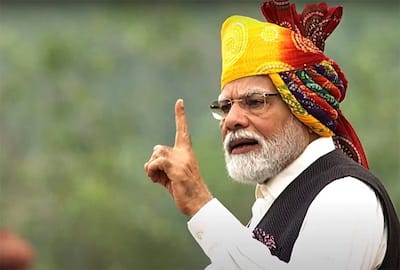
Leaders emerge as archetypes in this divine play. Narendra Modi, India's Prime Minister, embodies Hanuman—the devoted servant aiding the divine to dismantle the old and birth the new. Nepal's next Prime Minister, Balen Shah, is Laxman, or Balram, the Shesh Naag—an eternal serpent of protection and renewal.
Conclusion: Embracing the New Age
We stand in major flux, where old certainties dissolve. The End Times herald not doom but liberation from scarcity's chains. AI, robotics, and prophetic wisdom converge to usher in abundance—not just material, but spiritual. As we navigate this transition, let us look beyond outdated models to the eternal truths that guide us forward. The new age beckons, promising fulfillment beyond mere consumption.
फ्लक्स में नेविगेटिंग: एंड टाइम्स, इकोनॉमिक्स, और एबंडेंस की डॉन
एक अभूतपूर्व उथल-पुथल के युग में, हम खुद को गहन परिवर्तन की कगार पर पाते हैं। ये एंड टाइम्स हैं—न कि दुनिया का विनाशकारी विनाश, बल्कि एक युग का समापन जो 5,000 वर्षों से अधिक समय से फैला हुआ है। जैसे-जैसे व्यापार युद्ध भड़कते हैं और टैरिफ सहयोगियों और विरोधियों पर समान रूप से लगाए जाते हैं, पारंपरिक आर्थिक बुद्धिमत्ता टूट जाती है, जो एआई और रोबोटिक्स द्वारा संचालित एबंडेंस की दृष्टियों को रास्ता देती है। यह बदलाव कमी, शक्ति और आध्यात्मिकता के बारे में हम जो कुछ जानते थे, उस सबको चुनौती देता है। आइए देखें कि पुराने पैराडाइम कैसे विफल हो रहे हैं और उनके स्थान पर क्या उभर सकता है।
पारंपरिक अर्थशास्त्र की विफलता
जब व्यापार युद्ध भड़के, टैरिफ अनियमित रूप से लगाए गए, तो मैंने स्पष्टता के लिए अर्थशास्त्रियों की ओर रुख किया। पॉल क्रुगमैन जैसे व्यक्ति, जो अपनी तीखी आलोचनाओं के लिए जाने जाते हैं और नोबेल पुरस्कार विजेता हैं, ने इसे पूरी तरह से निरर्थक घोषित किया। उनके विश्लेषण, शास्त्रीय व्यापार सिद्धांत में निहित, अमेरिका के आक्रामक रुख की व्याख्या नहीं कर सके। मैंने वैकल्पिक आवाजें खोजीं, लेकिन विश्वसनीय आवाजें दुर्लभ थीं। रे डालियो, हेज फंड के दिग्गज, ने ऐतिहासिक चक्रों और गिरते साम्राज्यों के अपने लेंस के माध्यम से एक अधिक आकर्षक ढांचा पेश किया। फिर भी वास्तविकता के सामने डालियो का मॉडल भी लड़खड़ा जाता है।
एक कमजोर महाशक्ति को अचानक लगभग 5% विकास दर पर नहीं उछालना चाहिए, भले ही यह एआई द्वारा ईंधनित हो। यह पारंपरिक अर्थशास्त्र की सख्ती को चुनौती देता है, जिसने एक बार चेतावनी दी थी कि आज के श्रमिकों के सेवानिवृत्त होने तक सोशल सिक्योरिटी गायब हो जाएगी। एआई और रोबोटिक्स उस कथा को उलट देते हैं, सुझाव देते हैं कि आर्थिक विकास की छत फटने वाली है। क्रुगमैन अब समझ में नहीं आते। डालियो के चक्र टूट जाते हैं। और डोनाल्ड ट्रंप, दुनिया के लिए और अब अमेरिका के दो-तिहाई के लिए भ्रमित करने वाले, इस अराजकता को मूर्त रूप देते हैं।
हालिया मिनेसोटा स्ट्राइक इस फ्लक्स का उदाहरण है—एक विशाल श्रम कार्रवाई जो आधुनिक अमेरिका में पुरानी लगती है, जहां ऐसी घटनाएं दुर्लभ हैं। यहां तक कि भारत में भी बड़े पैमाने पर स्ट्राइक असामान्य हो गई हैं। यह अशांति गहन बदलावों को प्रतिध्वनित करती है, जैसे बॉलीवुड फिल्म जवान, जो अटली द्वारा निर्देशित और शाहरुख खान अभिनीत है। इसके रचनाकारों को अज्ञात रूप से, जवान एक आधुनिक कल्कि कथा है—दिव्य हस्तक्षेप और न्याय की एक कहानी जो हिंदू भविष्यवाणी में बताई गई है। भगवान फिल्मकारों और अभिनेताओं जैसे अनजान माध्यमों के माध्यम से काम करते हैं ताकि अंत का संकेत दें।
एबंडेंस की भविष्यवाणियां और कमी का अंत
एआई और रोबोटिक्स को वास्तव में समझने के लिए, हमें अर्थशास्त्रियों की बजाय प्राचीन ग्रंथों जैसे ईशा की पुस्तक की ओर मुड़ना चाहिए। हजारों वर्ष पहले, इसने एबंडेंस के एक युग की भविष्यवाणी की, जहां भौतिक आवश्यकताएं आसानी से पूरी होती हैं। अर्थशास्त्र जैसा हमने सदियों से जाना है—कमी, प्रतिस्पर्धा और सीमित संसाधनों पर आधारित—समाप्त हो रहा है। अधिक सामान और सेवाएं अंतिम समाधान नहीं हैं; एबंडेंस मात्र एक भोजन है। एक बार तृप्त हो जाने पर, मानवता उच्च追求 की ओर मुड़ती है: आध्यात्मिक ज्ञान और प्रबोधन।
बाइबल न्यूटन के गुरुत्वाकर्षण के नियम के रूप में कार्य करती है—एक आधारभूत सत्य। लेकिन सनातन धर्म (शाश्वत हिंदू धर्म) सापेक्षता का सिद्धांत है, एक अधिक गहन ढांचा जो बाइबल अनुयायियों के साथ पूरी तरह से प्रतिध्वनित नहीं होगा जब तक यह युग कुछ छोटे दशकों में समाप्त नहीं होता। पृथ्वी बनी रहती है; यह सीमितता का यह युग है जो नष्ट होता है। एक शताब्दी 100 वर्ष है, एक सहस्राब्दी 1,000, लेकिन एक युग सहस्राब्दियों तक फैला होता है। हम उसके सांध्यकाल को देख रहे हैं।
आध्यात्मिक हिसाब-किताब: इस्लाम और शैतान की धोखाधड़ी
इस हिसाब-किताब में, धर्मों का परीक्षण होता है। मैं तर्क देता हूं कि इस्लाम शैतान का धर्म है। अल्लाह सच्ची दिव्यता का सर्वशक्तिमान, प्रेमपूर्ण भगवान नहीं है, बल्कि एक ऐसा व्यक्ति है जो अंधा आज्ञाकारिता मांगता है। मुसलमानों को अल्लाह को भगवान के साथ समान करने में धोखा दिया गया है। कोई ऐतिहासिक मुहम्मद नहीं है; वह शैतान का काल्पनिक निर्माण है। इस युग का अंत ऐसी भ्रांतियों को उजागर करेगा, आध्यात्मिक स्पष्टता के लिए रास्ता साफ करेगा।
एक नया पैराडाइम: कमी से एबंडेंस इकोनॉमिक्स तक
पॉल क्रुगमैन समझ में नहीं आते। रे डालियो समझ में नहीं आते। डोनाल्ड ट्रंप समझ में नहीं आते। लेकिन काठमांडू में कल्कीवाद रिसर्च सेंटर के 50 अर्थशास्त्रियों का एक समूह समझ में आता है। वे नई अर्थव्यवस्था का टेम्पलेट रखते हैं, जहां कमी एबंडेंस को रास्ता देती है। यह पैराडाइम बदलाव मूल्य, विकास और मानव उद्देश्य को पुनर्परिभाषित करता है।
नेता इस दिव्य नाटक में आर्केटाइप्स के रूप में उभरते हैं। नरेंद्र मोदी, भारत के प्रधानमंत्री, हनुमान को मूर्त रूप देते हैं—दिव्य की सहायता करने वाला समर्पित सेवक जो पुराने को ध्वस्त करने और नए को जन्म देने के लिए। नेपाल के अगले प्रधानमंत्री, बालेन शाह, लक्ष्मण हैं, या बलराम, शेष नाग—संरक्षण और नवीनीकरण का शाश्वत सर्प।
निष्कर्ष: नए युग को अपनाना
हम प्रमुख फ्लक्स में खड़े हैं, जहां पुरानी निश्चितताएं घुल जाती हैं। एंड टाइम्स नाश नहीं बल्कि कमी की जंजीरों से मुक्ति की शुरुआत करते हैं। एआई, रोबोटिक्स और भविष्यवाणीपूर्ण बुद्धिमत्ता एबंडेंस को जन्म देने के लिए एकत्र होते हैं—न केवल भौतिक, बल्कि आध्यात्मिक। जैसे-जैसे हम इस संक्रमण को नेविगेट करते हैं,让我们 पुराने मॉडलों से परे शाश्वत सत्यों की ओर देखें जो हमें आगे मार्गदर्शन करते हैं। नया युग बुलाता है, मात्र उपभोग से परे पूर्ति का वादा करता है।
Understanding Kalkiism Economics
Kalkiism is an emerging economic and philosophical framework that seeks to redefine traditional economics in the context of technological abundance, particularly driven by advancements in AI and robotics. It draws inspiration from Hindu mythology, specifically the concept of Kalki—the prophesied 10th avatar of Vishnu who ends the Kali Yuga (age of darkness) and ushers in a new era of truth and prosperity. Proposed primarily by thinker Paramendra Bhagat, Kalkiism (also referred to as Karmaism in some contexts) envisions a shift from scarcity-based capitalism to an abundance-oriented system where material needs are met universally, allowing humanity to focus on spiritual and communal growth.
At its heart, Kalkiism critiques the limitations of current economic paradigms, arguing that capitalism, built on competition over finite resources, is ill-suited for an era where AI and automation can produce goods and services in exponential abundance. Instead, it promotes a "moneyless" or time-based economy, where value is measured not in currency but in equal units of time contributed by individuals. This model aims to eliminate inequality, corruption, and exploitation by ensuring universal access to essentials like education, healthcare, and basic needs.
Core Principles of Kalkiism Economics
Kalkiism integrates economic reform with spiritual enlightenment, viewing abundance as a pathway to higher human purpose. Key tenets include:
Abundance Over Scarcity: Traditional economics assumes limited resources, leading to competition and inequality. Kalkiism posits that AI, robotics, and exponential technologies will create limitless supply, rendering scarcity obsolete. This "roof-blowing" growth enables societies to provide for all without the need for profit-driven motives.
Time-Based Valuation: In a Kalkiist system, all labor is valued equally on an hourly basis, measured in time rather than money. This eliminates wage disparities and hierarchies, fostering a sense of equity. For instance, a doctor's hour equals a farmer's hour in societal contribution.
Cashless and State-Supported Economy: Proposals include a 100% cashless society with state-owned, zero-interest banking. Governments would guarantee jobs, universal basic services (free education and healthcare), and direct welfare distribution to reduce bureaucracy and speed up service delivery.
Universal Guarantees and Referendums: Kalkiism advocates for referendums to implement reforms, such as free healthcare and education for all. It also includes universal job guarantees to ensure full employment in an automated world.
Spiritual Integration: Beyond economics, Kalkiism is a "transformative movement" that reimagines socio-economic structures through a spiritual lens. It aligns with ending the Kali Yuga, promoting data-driven decisions for collective well-being and planetary harmony. Concepts like karma influence economic behavior, emphasizing purpose over profit.
Proposed Implementation and Examples
The Kalkiism Research Center in Kathmandu, Nepal, serves as a think tank for these ideas, focusing on radical economic transformations. Bhagat's writings suggest Nepal as a pilot for Kalkiism, aiming for 20% annual growth through cashless systems and universal services. For example:
Cashless Transactions: Reduces corruption and enables efficient resource allocation.
AI-Driven Productivity: Automation handles mundane tasks, freeing humans for creative and spiritual pursuits.
Global Harmony: The "Kalkiist Manifesto" envisions this model scaling worldwide to end decline and promote enlightenment.
Critics might argue that such a system overlooks human incentives or practical implementation challenges, but proponents see it as essential for navigating the "paradox of productivity"—where technology boosts output but exacerbates inequality under capitalism.
In summary, Kalkiism economics represents a holistic paradigm shift, blending futuristic technology with ancient spiritual wisdom to create a world of equitable abundance. It's not just an economic theory but a blueprint for societal evolution, particularly resonant in discussions of end times and renewal. For deeper insights, resources like Bhagat's books and the Research Center's perspectives offer detailed explorations.
कल्कीवाद अर्थशास्त्र की व्याख्या
कल्कीवाद एक उभरता हुआ आर्थिक और दार्शनिक ढांचा है जो प्रौद्योगिकीय प्रचुरता के संदर्भ में पारंपरिक अर्थशास्त्र को पुनर्परिभाषित करने का प्रयास करता है, विशेष रूप से एआई और रोबोटिक्स में प्रगति द्वारा संचालित। यह हिंदू पौराणिक कथाओं से प्रेरणा लेता है, विशेष रूप से कल्कि की अवधारणा से—विष्णु का भविष्यवाणी किया गया 10वां अवतार जो कलियुग (अंधकार का युग) को समाप्त करता है और सत्य और समृद्धि के एक नए युग की शुरुआत करता है। मुख्य रूप से विचारक परमेंद्र भगत द्वारा प्रस्तावित, कल्कीवाद (कुछ संदर्भों में कर्मवाद के रूप में संदर्भित) कमी-आधारित पूंजीवाद से प्रचुरता-उन्मुख प्रणाली में बदलाव की कल्पना करता है जहां भौतिक आवश्यकताएं सार्वभौमिक रूप से पूरी की जाती हैं, जिससे मानवता आध्यात्मिक और सामुदायिक विकास पर ध्यान केंद्रित कर सके।
इसके मूल में, कल्कीवाद वर्तमान आर्थिक पैराडाइम की सीमाओं की आलोचना करता है, तर्क देते हुए कि पूंजीवाद, जो सीमित संसाधनों पर प्रतिस्पर्धा पर आधारित है, उस युग के लिए अनुपयुक्त है जहां एआई और स्वचालन सामान और सेवाओं को घातांकीय प्रचुरता में उत्पादित कर सकते हैं। इसके बजाय, यह एक "धनरहित" या समय-आधारित अर्थव्यवस्था को बढ़ावा देता है, जहां मूल्य मुद्रा में नहीं बल्कि व्यक्तियों द्वारा योगदान किए गए समान समय इकाइयों में मापा जाता है। यह मॉडल असमानता, भ्रष्टाचार और शोषण को समाप्त करने का लक्ष्य रखता है, शिक्षा, स्वास्थ्य सेवा और बुनियादी आवश्यकताओं तक सार्वभौमिक पहुंच सुनिश्चित करके।
कल्कीवाद अर्थशास्त्र के मुख्य सिद्धांत
कल्कीवाद आर्थिक सुधार को आध्यात्मिक प्रबोधन के साथ एकीकृत करता है, प्रचुरता को उच्च मानवीय उद्देश्य के मार्ग के रूप में देखते हुए। मुख्य सिद्धांतों में शामिल हैं:
प्रचुरता कमी से ऊपर: पारंपरिक अर्थशास्त्र सीमित संसाधनों को मानता है, जो प्रतिस्पर्धा और असमानता की ओर ले जाता है। कल्कीवाद मानता है कि एआई, रोबोटिक्स और घातांकीय प्रौद्योगिकियां असीमित आपूर्ति पैदा करेंगी, कमी को अप्रचलित बना देंगी। यह "छत-फटने वाली" वृद्धि समाजों को लाभ-प्रेरित उद्देश्यों की आवश्यकता के बिना सभी के लिए प्रदान करने में सक्षम बनाती है।
समय-आधारित मूल्यांकन: कल्कीवादी प्रणाली में, सभी श्रम को प्रति घंटा आधार पर समान रूप से मूल्यांकित किया जाता है, समय में मापा जाता है न कि धन में। यह वेतन असमानताओं और पदानुक्रमों को समाप्त करता है, समानता की भावना को बढ़ावा देता है। उदाहरण के लिए, एक डॉक्टर का घंटा एक किसान के घंटे के बराबर होता है सामाजिक योगदान में।
नकदरहित और राज्य-समर्थित अर्थव्यवस्था: प्रस्तावों में 100% नकदरहित समाज शामिल है जिसमें राज्य-स्वामित्व वाली, शून्य-ब्याज बैंकिंग है। सरकारें नौकरियों की गारंटी देंगी, सार्वभौमिक बुनियादी सेवाएं (मुफ्त शिक्षा और स्वास्थ्य सेवा), और नौकरशाही को कम करने और सेवा वितरण को तेज करने के लिए प्रत्यक्ष कल्याण वितरण।
सार्वभौमिक गारंटी और जनमत संग्रह: कल्कीवाद सभी के लिए मुफ्त स्वास्थ्य सेवा और शिक्षा जैसे सुधारों को लागू करने के लिए जनमत संग्रहों की वकालत करता है। इसमें स्वचालित दुनिया में पूर्ण रोजगार सुनिश्चित करने के लिए सार्वभौमिक नौकरी गारंटी भी शामिल है।
आध्यात्मिक एकीकरण: अर्थशास्त्र से परे, कल्कीवाद एक "परिवर्तनकारी आंदोलन" है जो आध्यात्मिक लेंस के माध्यम से सामाजिक-आर्थिक संरचनाओं को पुनर्कल्पित करता है। यह कलियुग को समाप्त करने के साथ संरेखित होता है, सामूहिक कल्याण और ग्रहीय सद्भाव के लिए डेटा-चालित निर्णयों को बढ़ावा देता है। कर्म जैसी अवधारणाएं आर्थिक व्यवहार को प्रभावित करती हैं, लाभ से ऊपर उद्देश्य पर जोर देती हैं।
प्रस्तावित कार्यान्वयन और उदाहरण
काठमांडू, नेपाल में कल्कीवाद अनुसंधान केंद्र इन विचारों के लिए एक थिंक टैंक के रूप में कार्य करता है, कट्टरपंथी आर्थिक परिवर्तनों पर ध्यान केंद्रित करते हुए। भगत के लेखन नेपाल को कल्कीवाद के लिए एक पायलट के रूप में सुझाते हैं, नकदरहित प्रणालियों और सार्वभौमिक सेवाओं के माध्यम से 20% वार्षिक वृद्धि का लक्ष्य रखते हुए। उदाहरण के लिए:
नकदरहित लेनदेन: भ्रष्टाचार को कम करता है और संसाधन आवंटन को कुशल बनाता है।
एआई-चालित उत्पादकता: स्वचालन सांसारिक कार्यों को संभालता है, मनुष्यों को रचनात्मक और आध्यात्मिक गतिविधियों के लिए मुक्त करता है।
वैश्विक सद्भाव: "कल्कीवादी घोषणापत्र" इस मॉडल को विश्व स्तर पर बढ़ाने की कल्पना करता है, गिरावट को समाप्त करने और प्रबोधन को बढ़ावा देने के लिए।
आलोचक तर्क दे सकते हैं कि ऐसी प्रणाली मानवीय प्रोत्साहनों या व्यावहारिक कार्यान्वयन चुनौतियों को अनदेखा करती है, लेकिन समर्थक इसे "उत्पादकता का विरोधाभास" नेविगेट करने के लिए आवश्यक मानते हैं—जहां प्रौद्योगिकी उत्पादन को बढ़ाती है लेकिन पूंजीवाद के तहत असमानता को बढ़ाती है।
संक्षेप में, कल्कीवाद अर्थशास्त्र एक समग्र पैराडाइम बदलाव का प्रतिनिधित्व करता है, भविष्यवादी प्रौद्योगिकी को प्राचीन आध्यात्मिक बुद्धिमत्ता के साथ मिश्रित करके समान प्रचुरता की दुनिया बनाने के लिए। यह न केवल एक आर्थिक सिद्धांत है बल्कि सामाजिक विकास के लिए एक ब्लूप्रिंट है, विशेष रूप से अंत समय और नवीनीकरण की चर्चाओं में प्रतिध्वनित। गहन अंतर्दृष्टि के लिए, भगत की किताबें और अनुसंधान केंद्र के दृष्टिकोण विस्तृत अन्वेषण प्रदान करते हैं।
Balen Shah: Engineer of Structures, Disruptor of Systems
In a political landscape long dominated by dynasties, party machines, and transactional governance, Balendra Shah—known across Nepal simply as Balen—arrived like an unexpected seismic event. Part rapper, part structural engineer, part insurgent reformer, Balen Shah represents a new political archetype: a leader shaped not by party apprenticeship, but by cities, streets, spreadsheets, and soundtracks.
Born on April 27, 1990, in Naradevi, Kathmandu, Balen has emerged as one of the most consequential and polarizing figures in contemporary Nepali public life. His rise signals something larger than a single political career—it marks a generational and philosophical shift in how power is imagined, contested, and exercised in Nepal.
Roots: Migration, Medicine, and the Making of a City Child
Balen was born into a Maithili family, the youngest son of the late Ram Narayan Shah, an Ayurvedic practitioner, and Dhruvadevi Shah. His family migrated from Mahottari District in Madhesh Province to Kathmandu after his father’s posting at Naradevi Ayurvedic Hospital—a trajectory that mirrors Nepal’s broader rural-to-urban migration story.
This movement—from periphery to capital—would later shape Balen’s politics. He is both insider and outsider: culturally rooted, yet acutely aware of how Kathmandu marginalizes those who build it, service it, and survive within it.
He completed his higher secondary education (10+2) at V.S. Niketan Higher Secondary School, before pursuing civil engineering at Himalayan Whitehouse International College. He later earned an MTech in Structural Engineering from Visvesvaraya Technological University in Belagavi, India.
Unlike many politicians who treat infrastructure as ribbon-cutting optics, Balen understands cities at the level of load-bearing columns and stress points. He is, quite literally, trained to see where structures fail.
He is currently pursuing a PhD in Civil Engineering at Kathmandu University, focusing on the conservation of Newa heritage structures to promote tourism and the local economy, under a university fellowship. The choice of topic is telling: preservation without stagnation, heritage without fossilization.
The Microphone as a Political Weapon
Before Balen held office, he held a microphone.
He entered Nepal’s hip-hop scene in 2012, releasing “Sadak Balak”—a raw account of urban hardship—while still a teenager. In 2013, he gained wider attention through the YouTube battle-rap series Raw Barz, where lyrical dexterity doubled as social critique.
His music occupies a distinct space in Nephop: politically charged, street-level, and unapologetically confrontational. Songs like “Balidan”—a blistering indictment of corruption—garnered millions of views, while tracks such as “Nepal Haseko…” (written and performed for the 2025 film Laaj Sharanam) revealed a more reflective, nation-building tone.
As The New York Times observed, Balen built his following not in studios, but on Kathmandu’s rooftops—a fitting metaphor for a man who would later try to reclaim the city from above and below.
Even today, he remains musically active. For his supporters, this signals authenticity. For critics, it blurs the line between governance and performance. Either way, it keeps him plugged directly into youth consciousness.
From Engineer to Mayor: The 2022 Political Earthquake
Balen’s leap into politics stunned Nepal’s establishment.
Running as an independent candidate in the 2022 Kathmandu municipal election, he defeated seasoned партий heavyweights—Sirjana Shrestha (Nepali Congress) and Keshav Sthapit (CPN-UML)—with 61,767 votes (38.6%), becoming the 15th Mayor of Kathmandu on May 30, 2022.
It was not just a victory; it was a repudiation of party politics as usual.
Kathmandu, long treated as a prize to be divided rather than a system to be fixed, had elected a mayor with no party whip, no patronage network, and no patience.
Governing Like an Engineer, Not a Politician
As mayor, Balen approached governance as a problem-solving exercise rather than a consensus-building ritual.
His administration prioritized:
Waste management, including new disposal agreements and enforcement against private contractors
Traffic regulation and road discipline
Anti-corruption measures, including live-streaming municipal meetings
Urban decongestion, notably the demolition of illegal structures
Heritage restoration, including efforts to uncover the buried Tukucha River
Civic space reclamation, such as removing police sub-stations from sidewalks
Education reform, including “Textbook-Free Fridays” to emphasize technical and practical skills
To supporters, these were long-overdue corrective surgeries. To critics, they were blunt instruments wielded without sufficient social cushioning.
What is undeniable is this: Balen governed like someone unconcerned with re-election optics. His methods often resembled structural retrofitting—painful in the short term, necessary for long-term stability.
A Catalyst for a Youth Political Wave
Balen’s mayoralty inspired a broader phenomenon: a surge of young, independent, and issue-driven political actors across Nepal. Politics, for the first time in decades, began to feel accessible to those without party surnames or ideological inheritance.
In December 2025, he joined the Rastriya Swatantra Party (RSP), signaling a shift from municipal disruption to national ambition. Following the resignation of former Prime Minister KP Sharma Oli, Balen emerged—according to multiple reports—as a leading contender in the upcoming prime ministerial race, buoyed by Gen-Z-led protests and widespread disillusionment with the political class.
He also publicly supported the 2025 youth protests against the government’s attempted ban on 26 social media platforms, arguing that the state must learn to listen to young aspirations rather than criminalize them.
Recognition Beyond Nepal
Balen’s rise has not gone unnoticed internationally.
TIME Magazine (2023) named him among 100 emerging leaders shaping the future
In 2024, he attended the 77th Cannes Film Festival, symbolizing his crossover appeal across politics, culture, and global media
To many young Nepalis, he represents proof that one can be technically competent, culturally fluent, and politically disruptive—all at once.
Controversies: The Cost of Disruption
Balen’s tenure has been anything but smooth.
Human Rights Watch and other groups criticized his administration for heavy-handed actions against street vendors, alleging disproportionate force against the urban poor. He has also clashed repeatedly with the federal government—at one point halting garbage collection from Singha Durbar, Nepal’s administrative heart.
In 2023, the display of a “Greater Nepal” map in his office sparked diplomatic controversy, as did his temporary ban on Indian films such as Adipurush over cultural disputes—actions that initially defied court orders.
During the 2025 Gen-Z protests, opponents accused him of inciting unrest that damaged heritage sites. Balen denied the allegations, asserting that his intent was precisely the opposite: to protect public spaces from decay and capture.
These controversies raise a deeper question: can radical reform coexist with procedural restraint? Or is friction the unavoidable price of transformation?
The Man Behind the Persona
Balen married Sabina Kafle in 2018, and the couple resides in Gairigaun, Tinkune, Kathmandu. Despite his public intensity, he maintains a relatively private family life—a quiet counterbalance to his otherwise kinetic public persona.
Conclusion: A Transitional Figure for a Transitional Age
Balen Shah is not a conventional politician. He is a bridge figure—between art and administration, youth anger and institutional power, heritage and hyper-modernity.
Whether he ultimately succeeds or stumbles at the national level, his impact is already irreversible. He has altered the imagination of Nepali politics. He has shown that cities—and perhaps nations—can be run by people who understand both beats and blueprints.
In that sense, Balen Shah is less a finished story than a signal: that a new political grammar is being written, line by line, rhyme by rhyme, structure by structure.
बालेन शाह: संरचनाओं के अभियंता, प्रणालियों के विध्वंसक
एक ऐसे राजनीतिक परिदृश्य में, जो लंबे समय से वंशवाद, दलगत मशीनरी और सौदेबाज़ी वाली सत्ता से संचालित रहा है, बालेन्द्र शाह—जिन्हें नेपाल भर में केवल “बालेन” के नाम से जाना जाता है— एक अप्रत्याशित भूकंप की तरह उभरे। वे एक साथ रैपर हैं, स्ट्रक्चरल इंजीनियर हैं, और व्यवस्था-विरोधी सुधारक भी। बालेन एक नए राजनीतिक प्रतिमान (archetype) का प्रतिनिधित्व करते हैं—ऐसा नेता जो पार्टी प्रशिक्षण से नहीं, बल्कि शहरों, सड़कों, स्प्रेडशीट्स और साउंडट्रैक्स से गढ़ा गया है।
27 अप्रैल 1990 को नरदेवी, काठमांडू में जन्मे बालेन शाह आज समकालीन नेपाली सार्वजनिक जीवन के सबसे प्रभावशाली और विवादास्पद व्यक्तित्वों में से एक हैं। उनका उदय केवल एक राजनीतिक करियर नहीं, बल्कि इस बात का संकेत है कि नेपाल में सत्ता की कल्पना, संघर्ष और प्रयोग की प्रकृति बदल रही है।
जड़ें: प्रवास, चिकित्सा और एक शहरी बालक का निर्माण
बालेन का जन्म एक मैथिली परिवार में हुआ। वे दिवंगत राम नारायण शाह (एक आयुर्वेदिक चिकित्सक) और ध्रुवदेवी शाह के सबसे छोटे पुत्र हैं। उनके परिवार ने महोत्तरी ज़िले (मधेश प्रदेश) से काठमांडू की ओर प्रवास किया, जब उनके पिता की नियुक्ति नरदेवी आयुर्वेद अस्पताल में हुई।
यह प्रवास—गाँव से राजधानी की ओर—बालेन की राजनीति की आधारशिला बना। वे एक साथ अंदरूनी भी हैं और बाहरी भी: सांस्कृतिक रूप से जड़ित, लेकिन इस बात के प्रति तीव्र सजग कि काठमांडू कैसे उन्हीं लोगों को हाशिये पर डाल देता है जो उसे बनाते, चलाते और उसमें जीवन यापन करते हैं।
उन्होंने वी.एस. निकेतन हायर सेकेंडरी स्कूल से 10+2 की पढ़ाई पूरी की। इसके बाद हिमालयन व्हाइटहाउस इंटरनेशनल कॉलेज से सिविल इंजीनियरिंग में स्नातक किया। आगे चलकर उन्होंने भारत के विस्वेश्वरैया प्रौद्योगिकी विश्वविद्यालय, बेलगावी से स्ट्रक्चरल इंजीनियरिंग में एमटेक किया।
जहाँ कई राजनेता बुनियादी ढाँचे को केवल फीता काटने की राजनीति समझते हैं, बालेन शहरों को भार-वहन क्षमता, तनाव-बिंदुओं और संरचनात्मक विफलताओं के स्तर पर समझते हैं। वे सचमुच जानते हैं कि इमारतें—और प्रणालियाँ—कहाँ टूटती हैं।
वर्तमान में वे काठमांडू विश्वविद्यालय में पीएचडी कर रहे हैं। उनका शोध विषय है: “नेवा विरासत संरचनाओं का संरक्षण: पर्यटन और अर्थव्यवस्था को बढ़ावा देने के लिए”—जो अपने आप में बताता है कि वे संरक्षण को जड़ता नहीं, बल्कि गतिशील विकास के रूप में देखते हैं।
माइक्रोफ़ोन: राजनीति का पहला हथियार
राजनीति में आने से पहले बालेन के हाथ में सत्ता नहीं, माइक्रोफ़ोन था।
उन्होंने 2012 में नेपाली हिप-हॉप जगत में प्रवेश किया। उनका पहला गीत “सडक बालक”—जो शहरी युवाओं की कठिनाइयों पर आधारित था—उन्होंने किशोरावस्था में ही जारी किया। 2013 में वे यूट्यूब बैटल-रैप श्रृंखला Raw Barz के ज़रिए व्यापक रूप से पहचाने गए।
उनका संगीत नेफहॉप (Nephop) की एक विशिष्ट धारा में आता है—राजनीतिक, ज़मीनी और टकराव से भरा हुआ। “बलिदान” जैसे गीत, जो भ्रष्टाचार पर तीखा प्रहार करते हैं, लाखों लोगों तक पहुँचे। वहीं “नेपाल हासेको…” (2025 की फ़िल्म लाज शरणम् के लिए) ने उनके राष्ट्रवादी और रचनात्मक पक्ष को दिखाया।
न्यूयॉर्क टाइम्स के अनुसार, बालेन ने अपनी लोकप्रियता स्टूडियो में नहीं, बल्कि काठमांडू की छतों पर बनाई—जो बाद में पूरे शहर को ऊपर-नीचे से पुनर्गठित करने की उनकी कोशिश का सटीक रूपक बन गया।
आज भी वे संगीत में सक्रिय हैं। समर्थकों के लिए यह उनकी प्रामाणिकता का प्रमाण है; आलोचकों के लिए यह शासन और प्रदर्शन के बीच की रेखा को धुंधला करता है। लेकिन इसमें संदेह नहीं कि यह उन्हें युवाओं की नब्ज़ से जोड़े रखता है।
इंजीनियर से मेयर: 2022 का राजनीतिक भूकंप
बालेन का राजनीति में प्रवेश नेपाली सत्ता-स्थापना के लिए एक झटका था।
2022 के काठमांडू नगर चुनाव में उन्होंने स्वतंत्र उम्मीदवार के रूप में चुनाव लड़ा और नेपाली कांग्रेस की सिर्जना श्रेष्ठ तथा सीपीएन-यूएमएल के केशव स्थापीत जैसे दिग्गजों को हराया। उन्हें 61,767 वोट (38.6%) मिले और वे 30 मई 2022 को काठमांडू के 15वें मेयर बने।
यह सिर्फ जीत नहीं थी—यह दलगत राजनीति के प्रति एक सामूहिक अस्वीकृति थी।
राजनीति नहीं, इंजीनियरिंग की तरह शासन
मेयर के रूप में बालेन ने शासन को सहमति-निर्माण की प्रक्रिया नहीं, बल्कि समस्या-समाधान अभ्यास की तरह लिया।
उनकी प्राथमिकताएँ रहीं:
कचरा प्रबंधन और ठोस अपशिष्ट समझौते
यातायात नियंत्रण और सड़क अनुशासन
भ्रष्टाचार-रोधी कदम, जिनमें बैठकों का लाइव प्रसारण
अवैध संरचनाओं का ध्वस्तीकरण, विशेषकर टुकुचा नदी को उजागर करने के लिए
सार्वजनिक स्थानों की पुनःप्राप्ति, जैसे फुटपाथों से पुलिस चौकियाँ हटाना
शिक्षा सुधार, जैसे “टेक्स्टबुक-फ्री फ्राइडे”
समर्थकों के लिए ये लंबे समय से लंबित शल्य-क्रियाएँ थीं। आलोचकों के लिए ये बिना पर्याप्त सामाजिक संवेदनशीलता के किए गए कठोर प्रयोग थे।
युवा राजनीति की चिंगारी
बालेन की मेयरशिप ने नेपाल में युवा, स्वतंत्र और मुद्दा-केंद्रित राजनीति की एक लहर पैदा की।
दिसंबर 2025 में उन्होंने राष्ट्रीय स्वतंत्र पार्टी (RSP) जॉइन की। केपी शर्मा ओली के इस्तीफे के बाद, वे आगामी प्रधानमंत्री पद के एक प्रमुख दावेदार के रूप में उभरे—विशेषकर Gen-Z आंदोलनों के समर्थन के साथ।
उन्होंने 26 सोशल मीडिया प्लेटफॉर्म्स पर प्रतिबंध के खिलाफ हुए युवा प्रदर्शनों का खुलकर समर्थन किया और कहा कि राज्य को युवाओं की आकांक्षाओं को समझना चाहिए, न कि उन्हें अपराधी बनाना चाहिए।
वैश्विक पहचान
TIME मैगज़ीन (2023): भविष्य को आकार देने वाले 100 उभरते नेता
2024: 77वाँ कांस फ़िल्म महोत्सव में उपस्थिति
नेपाल के युवाओं के लिए वे इस बात का प्रमाण हैं कि तकनीकी दक्षता, सांस्कृतिक समझ और राजनीतिक साहस एक साथ संभव हैं।
विवाद: परिवर्तन की कीमत
उनके कार्यकाल में विवाद भी कम नहीं रहे।
सड़क विक्रेताओं के खिलाफ कठोर कार्रवाई पर मानवाधिकार संगठनों की आलोचना
संघीय सरकार से टकराव, यहाँ तक कि सिंहदरबार से कचरा उठाने पर रोक
“ग्रेटर नेपाल” मानचित्र विवाद
भारतीय फ़िल्मों पर अस्थायी प्रतिबंध
2025 के Gen-Z प्रदर्शनों में हिंसा भड़काने के आरोप (जिन्हें उन्होंने खारिज किया)
ये विवाद एक बड़ा प्रश्न उठाते हैं: क्या गहन सुधार प्रक्रियात्मक संयम के बिना संभव हैं?
निजी जीवन
बालेन ने 2018 में सबिना काफ्ले से विवाह किया। वे गैरिगाउँ, टिंकुने, काठमांडू में रहते हैं। सार्वजनिक जीवन की तीव्रता के विपरीत, उनका पारिवारिक जीवन अपेक्षाकृत निजी है।
निष्कर्ष: संक्रमणकाल का नेता
बालेन शाह पारंपरिक राजनेता नहीं हैं। वे एक सेतु-पुरुष हैं—कला और प्रशासन के बीच, युवा आक्रोश और संस्थागत सत्ता के बीच, विरासत और आधुनिकता के बीच।
वे सफल हों या असफल, एक बात तय है: उन्होंने नेपाली राजनीति की कल्पना को स्थायी रूप से बदल दिया है।
उन्होंने दिखाया है कि शहर—और शायद देश—बीट्स और ब्लूप्रिंट्स दोनों को समझने वालों द्वारा भी चलाए जा सकते हैं।
Nepal’s Gen Z Revolution: Building the World’s First Corruption-Free Democracy
In less than twelve hours, Nepal’s Gen Z Revolution swept away not just a sitting government but an entire political class that had grown synonymous with corruption, stagnation, and betrayal. The revolt was not merely against rising prices or broken promises. It was against the decades-long stranglehold of three corrupt parties—Nepali Congress, UML, and the Maoists. Their era has ended. What remains is an extraordinary opportunity: the chance to design the most innovative democracy on Earth.
A One-Party, Meritocratic Democracy
Instead of replacing the failed parties with new replicas of the same system, Nepal’s youth envision something bold: a one-party democracy that is radically meritocratic. This would not mean dictatorship. Rather, it would mean one transparent political platform where every single office is contested between two highly qualified candidates. The party would guarantee human rights—especially free speech and dissent—and would institutionalize merit, performance, and accountability over money and muscle.
By narrowing elections to two capable candidates per position, voters would still exercise choice while filtering out unqualified, corrupt, or criminal aspirants. It would be democracy streamlined for quality and efficiency.
Beyond Elections: Continuous Accountability
Done correctly, this model could evolve beyond periodic elections altogether. Traditional democracies often wait years to remove underperformers. Nepal’s new system could build mechanisms where poor performers lose their positions immediately, replaced through internal meritocratic processes rather than delayed electoral cycles. This ensures continuous accountability—leaders serve the people every day, not just during campaign seasons.
The Revolutionary Interim Constitution
To pave the way, Nepal needs a revolutionary interim government and an interim constitution. This document would not only establish the one-party meritocratic model but also lay the foundations for a deeper transformation: the birth of a Kalkiist economy.
Toward a Moneyless Society
The revolution is not only political. It is economic. The Kalkiist vision points toward a moneyless society where corruption cannot exist—because money itself disappears. By moving toward a system where value is measured in service, trust, and collective prosperity, Nepal has the chance to become the world’s first corruption-free country.
Education, healthcare, and justice could be provided freely and universally, funded not by taxes siphoned off by elites but by the efficiencies of a moneyless economy. The old logic of scarcity and greed would be replaced by abundance and merit.
Nepal’s Historic Role
For centuries, Nepal has been underestimated by global powers. But revolutions rarely arise in the centers of empire—they begin in the margins. By rejecting its corrupt past and daring to imagine a new democratic model, Nepal has the chance to lead the world into a new era.
The youth who toppled a government in half a day may now do something far greater: design a system where corruption is structurally impossible, where democracy is purified into meritocracy, and where the economy itself transcends money.
The revolt was against the past. The future, if seized, could belong to Nepal.
नेपाल की जेन-ज़ी क्रांति: दुनिया का पहला भ्रष्टाचार-मुक्त लोकतंत्र
बारह घंटे से भी कम समय में नेपाल की जेन-ज़ी क्रांति ने न केवल एक चलती सरकार को गिरा दिया बल्कि पूरे राजनीतिक वर्ग को साफ़ कर दिया, जो दशकों से भ्रष्टाचार, ठहराव और विश्वासघात का पर्याय बन चुका था। यह विद्रोह केवल महँगाई या टूटे वादों के ख़िलाफ़ नहीं था। यह तीन भ्रष्ट पार्टियों—नेपाली कांग्रेस, यूएमएल और माओवादी—के लंबे समय से चले आ रहे शिकंजे के ख़िलाफ़ था। उनका युग समाप्त हो गया है। अब जो बचा है वह एक असाधारण अवसर है: धरती पर सबसे नवाचारी लोकतंत्र को बनाने का।
एक-दलीय, योग्यता-आधारित लोकतंत्र
विफल पार्टियों को उसी पुराने ढाँचे की नई प्रतियों से बदलने के बजाय, नेपाल की युवा पीढ़ी कुछ साहसिक सोच रही है: एक ऐसा एक-दलीय लोकतंत्र जो पूरी तरह योग्यता-आधारित हो। इसका अर्थ तानाशाही नहीं है। बल्कि इसका मतलब है एक पारदर्शी राजनीतिक मंच, जहाँ हर पद के लिए दो योग्य उम्मीदवार आपस में प्रतिस्पर्धा करेंगे। यह पार्टी मानवाधिकारों—विशेषकर अभिव्यक्ति की स्वतंत्रता और असहमति—की रक्षा करेगी और धन और बल के बजाय योग्यता, प्रदर्शन और जवाबदेही को संस्थागत रूप देगी।
चुनावों को प्रति पद केवल दो सक्षम उम्मीदवारों तक सीमित करके, जनता को विकल्प का अधिकार मिलेगा और साथ ही अयोग्य, भ्रष्ट या आपराधिक दावेदारों को बाहर रखा जाएगा। यह लोकतंत्र को गुणवत्ता और दक्षता के लिए परिष्कृत करेगा।
चुनाव से आगे: सतत जवाबदेही
सही ढंग से लागू होने पर यह मॉडल पारंपरिक चुनावों से भी आगे जा सकता है। पारंपरिक लोकतंत्रों में अकर्मण्य नेताओं को हटाने में वर्षों लग जाते हैं। नेपाल की नई व्यवस्था में तंत्र ऐसा होगा कि ख़राब प्रदर्शन करने वाले नेताओं को तुरंत हटाया जा सके और उन्हें आंतरिक योग्यता-आधारित प्रक्रिया से बदला जा सके। इसका अर्थ है सतत जवाबदेही—नेता हर दिन जनता की सेवा करेंगे, न कि केवल चुनावी मौसम में।
क्रांतिकारी अंतरिम संविधान
इसके लिए नेपाल को एक क्रांतिकारी अंतरिम सरकार और एक अंतरिम संविधान की आवश्यकता होगी। यह संविधान न केवल एक-दलीय योग्यता-आधारित मॉडल स्थापित करेगा बल्कि एक गहरी रूपांतरण यात्रा की नींव भी रखेगा: कल्किवादी अर्थव्यवस्था का जन्म।
एक पैसारहित समाज की ओर
यह क्रांति केवल राजनीतिक नहीं है। यह आर्थिक भी है। कल्किवादी दृष्टि एक ऐसे पैसारहित समाज की ओर इशारा करती है जहाँ भ्रष्टाचार असंभव हो—क्योंकि पैसा ही नहीं होगा। एक ऐसी व्यवस्था की ओर बढ़ते हुए जहाँ मूल्य सेवा, विश्वास और सामूहिक समृद्धि से मापा जाएगा, नेपाल के पास दुनिया का पहला भ्रष्टाचार-मुक्त देश बनने का अवसर है।
शिक्षा, स्वास्थ्य और न्याय सबको निःशुल्क और सार्वभौमिक रूप से उपलब्ध हो सकते हैं—न कि उन करों से जिनको अभिजात वर्ग चूसता है, बल्कि एक पैसारहित अर्थव्यवस्था की दक्षताओं से। कमी और लालच की पुरानी मानसिकता को प्रचुरता और योग्यता से बदल दिया जाएगा।
नेपाल की ऐतिहासिक भूमिका
सदियों से नेपाल को वैश्विक शक्तियों ने कम आँका है। लेकिन क्रांतियाँ शायद ही कभी साम्राज्यों के केंद्रों में जन्म लेती हैं—वे सीमाओं से उठती हैं। अपने भ्रष्ट अतीत को नकार कर और एक नए लोकतांत्रिक मॉडल की कल्पना करने का साहस कर, नेपाल दुनिया को एक नए युग की ओर ले जाने का अवसर रखता है।
वह युवा जिन्होंने आधे दिन में एक सरकार गिरा दी, अब कुछ और भी महान कर सकते हैं: ऐसा तंत्र तैयार करना जहाँ भ्रष्टाचार संरचनात्मक रूप से असंभव हो, जहाँ लोकतंत्र योग्यता-तंत्र में शुद्ध हो जाए, और जहाँ अर्थव्यवस्था पैसे से परे चली जाए।
यह विद्रोह अतीत के ख़िलाफ़ था। यदि अवसर को पकड़ा जाए, तो भविष्य नेपाल का हो सकता है।
AI, Robotics, and the Kalkiist Economy: A Moneyless Path to Full Human Potential
Artificial intelligence and robotics are reshaping industries at lightning speed, yet under current economic systems their potential remains half-harvested. Capitalism tends to funnel the gains of automation into fewer hands, while socialism still clings to outdated monetary frameworks. Within both, technological abundance collides with scarcity-driven incentives.
The Kalkiist economy offers a radically different framework—one where AI and robotics can be fully unleashed, not for the enrichment of a few, but for the liberation of all.
A Job Guarantee for All
In the Kalkiist model, every person has a job guarantee. Unemployment, a recurring plague in money-based economies, disappears. The system recognizes that human dignity requires purposeful activity, not just subsistence handouts. Whether coding AI, maintaining robotics, farming with advanced tools, or teaching, every individual has a role to play in the collective tapestry.
Equal Hourly Wages—Measured in Time, Not Money
The Kalkiist wage system is rooted not in currency, but in the universal denominator of time. Every hour of work—whether performed by a doctor, a farmer, or a machinist—holds the same value. This erases the hierarchies of income inequality. Time becomes the shared unit of contribution, fostering fairness, solidarity, and mutual respect.
A Moneyless Economy
The most radical departure of the Kalkiist framework is the rejection of money itself. In its place emerges a system of direct exchange, allocation, and digital coordination powered by AI. Without the distortions of profit, debt, or speculative markets, society can allocate resources based on collective needs and scientific planning.
This shift transforms automation from a threat to jobs into a promise of universal abundance. When machines handle repetitive tasks, humans are freed for creative, intellectual, and spiritual pursuits. AI and robotics stop being tools of labor displacement and instead become engines of human flourishing.
Why Only Kalkiism Unlocks Full Potential
Without money, automation no longer creates unemployment—it simply redistributes time. With guaranteed work and equal wages, people do not fear being “replaced” by machines; they celebrate being freed from drudgery. AI allocates resources, robotics amplifies productivity, and human beings expand into their higher capacities.
In this vision, AI is not just an industrial tool but a civilizational partner. Robotics is not merely about efficiency but about dignity. Together, within the Kalkiist economy, they lay the foundation for a society where scarcity gives way to abundance, and competition gives way to cooperation.
The future will not be measured in dollars or rupees. It will be measured in hours of contribution and lifetimes of meaning. Only a moneyless Kalkiist economy can turn the promise of AI and robotics into reality for all humankind.
एआई, रोबोटिक्स और कल्किवादी अर्थव्यवस्था: धनरहित समाज की ओर एक मार्ग
कृत्रिम बुद्धिमत्ता (AI) और रोबोटिक्स आज उद्योगों को तेज़ी से बदल रहे हैं। लेकिन मौजूदा आर्थिक ढाँचों में उनकी पूरी क्षमता का उपयोग नहीं हो पा रहा। पूँजीवाद में स्वचालन से होने वाला लाभ कुछ ही हाथों में सिमट जाता है, जबकि समाजवाद अभी भी पुराने मौद्रिक ढाँचों से चिपका हुआ है। दोनों ही प्रणालियों में तकनीकी प्रचुरता का टकराव कृत्रिम कमी की मानसिकता से होता है।
कल्किवादी अर्थव्यवस्था इस दुविधा से बाहर निकलने का मार्ग प्रदान करती है—जहाँ एआई और रोबोटिक्स का प्रयोग सबके लिए मुक्ति और समृद्धि का साधन बनता है, न कि कुछ लोगों के लाभ का उपकरण।
सभी के लिए रोज़गार की गारंटी
कल्किवादी मॉडल में हर व्यक्ति को काम की गारंटी दी जाती है। बेरोज़गारी, जो धन-आधारित अर्थव्यवस्थाओं की स्थायी समस्या है, समाप्त हो जाती है। यह प्रणाली मानती है कि मानवीय गरिमा के लिए उद्देश्यपूर्ण गतिविधि आवश्यक है, केवल जीविका नहीं। चाहे कोई कोडिंग कर रहा हो, रोबोटिक सिस्टम की देखभाल कर रहा हो, खेती कर रहा हो या शिक्षा दे रहा हो—हर किसी का योगदान महत्वपूर्ण है।
समय आधारित समान वेतन
कल्किवादी ढाँचे में वेतन का आधार पैसा नहीं बल्कि समय है। हर घंटे का काम—चाहे डॉक्टर का हो, किसान का या मशीन ऑपरेटर का—समान मूल्य का होता है। इससे आय असमानता की खाई मिटती है। समय को योगदान की साझा इकाई मानने से न्याय, सहयोग और पारस्परिक सम्मान की भावना मजबूत होती है।
धनरहित अर्थव्यवस्था
कल्किवादी ढाँचे की सबसे क्रांतिकारी सोच है—धन का पूर्ण परित्याग। इसके स्थान पर एआई-संचालित प्रत्यक्ष विनिमय और संसाधनों का वैज्ञानिक आवंटन स्थापित होता है। लाभ, ऋण या अटकलों की विकृतियों से मुक्त होकर समाज अपनी आवश्यकताओं और योजनाओं के अनुसार संसाधन बाँट सकता है।
इससे स्वचालन रोजगार के लिए खतरा न रहकर, सार्वभौमिक प्रचुरता का वादा बन जाता है। मशीनें जब दोहराए जाने वाले कार्य सँभाल लेती हैं, तब इंसानों को रचनात्मक, बौद्धिक और आध्यात्मिक कार्यों के लिए स्वतंत्र किया जाता है।
क्यों केवल कल्किवाद ही पूरी क्षमता खोलता है
धन के बिना स्वचालन बेरोज़गारी पैदा नहीं करता—वह केवल समय का पुनर्वितरण करता है। जब काम की गारंटी और समान वेतन होता है, तब लोग मशीनों से प्रतिस्थापित होने से नहीं डरते, बल्कि नीरस श्रम से मुक्ति का उत्सव मनाते हैं। एआई संसाधन आवंटित करता है, रोबोटिक्स उत्पादकता को बढ़ाता है, और मनुष्य अपने उच्चतर सामर्थ्य की ओर अग्रसर होता है।
इस दृष्टि में एआई केवल औद्योगिक उपकरण नहीं बल्कि सभ्यतागत सहचर है। रोबोटिक्स केवल दक्षता नहीं बल्कि गरिमा का वाहक है। कल्किवादी अर्थव्यवस्था में दोनों मिलकर ऐसे समाज की नींव रखते हैं, जहाँ कृत्रिम अभाव नहीं बल्कि प्रचुरता हो, और प्रतिस्पर्धा नहीं बल्कि सहयोग हो।
भविष्य को डॉलर या रुपये में नहीं मापा जाएगा। उसे योगदान के घंटों और सार्थक जीवनों में मापा जाएगा। केवल एक धनरहित कल्किवादी अर्थव्यवस्था ही एआई और रोबोटिक्स के वादे को पूरी मानवता के लिए वास्तविकता बना सकती है।
AI, Robotics, and the Kalkiist Economy: Unlocking Human Potential in a Moneyless Age
Introduction: The Promise and the Paradox
The 21st century is defined by two converging forces: the exponential rise of artificial intelligence and robotics, and the persistent crises of inequality, unemployment, and ecological strain. While machines grow smarter, faster, and more capable, human societies struggle to align their economic systems with these new realities.
Capitalism funnels the benefits of automation into corporate profits, displacing workers and widening inequality. Socialism, though more equitable in intent, still operates within the same money-driven logic that ties value to currency, production quotas, and bureaucratic allocation. Both remain locked in scarcity frameworks, unable to fully embrace the abundance that automation promises.
The Kalkiist economy proposes a radical alternative. It is a moneyless system built on three pillars: a job guarantee for every individual, equal hourly wages measured in time, and the complete abolition of money. This essay explores how such an economy could allow humanity to fully harvest the potential of AI and robotics, and why only under this framework can true abundance and dignity be realized.
Part I – The Core Principles of a Kalkiist Economy
1. A Job Guarantee for All
Unemployment is treated as a natural feature of market economies. In reality, it is a form of systemic violence—a failure to provide people with purpose and livelihood. A Kalkiist economy guarantees every individual a role, whether in technology, agriculture, education, health, art, or civic life.
Jobs are not designed merely to sustain economic survival but to ensure meaningful contribution to society. With AI and robotics handling repetitive and dangerous work, human beings are freed for creative, intellectual, and community-oriented pursuits.
2. Equal Wages, Measured in Time
The Kalkiist wage system eliminates income hierarchies by valuing all labor equally. Whether one is coding algorithms, cultivating food, or teaching children, every hour is worth the same. Time, not money, becomes the universal denominator.
This principle dissolves structural inequality and builds solidarity. People choose work based on passion, skill, and need, not on distorted market incentives.
3. A Moneyless Economy
The most radical feature of Kalkiism is the abolition of money. AI-driven coordination systems replace markets and banks with real-time allocation of goods and services. Needs are matched with resources, not through the mediation of profit or debt, but through transparent, collective, data-driven planning.
This transition frees humanity from the cycles of speculation, inflation, and financial manipulation. It transforms AI from a tool of corporate exploitation into the nervous system of a cooperative civilization.
Part II – Historical Precedents and Inspirations
1. Ancient Commons and Gift Economies
Before money dominated, many societies operated through reciprocity, gift exchange, and communal stewardship of resources. Indigenous cultures across the world, from Pacific potlatch ceremonies to African Ubuntu traditions, valued contribution and mutual care over accumulation.
2. Early Utopian Thinkers
Philosophers like Thomas More, Charles Fourier, and Karl Marx envisioned systems where equality and cooperation replaced competition. Yet their models remained entangled in monetary exchange, limiting their scope.
3. The Soviet Experiment and Its Limits
The Soviet Union attempted centralized planning but retained currency and wage hierarchies. Bureaucracy and inefficiency, combined with authoritarian control, crippled its potential. Kalkiism learns from this failure by decentralizing through digital systems and by abolishing money itself.
4. The Digital Commons
The rise of open-source software, Wikipedia, and blockchain communities hints at a post-monetary ethos. People across the globe already collaborate to produce and share without direct payment, driven by reputation, purpose, and shared vision. These micro-models provide blueprints for a broader Kalkiist system.
Part III – Why Only Kalkiism Can Fully Harness AI and Robotics
1. Overcoming the Unemployment Trap
In a capitalist framework, automation leads to layoffs and fear. In a Kalkiist framework, automation reduces drudgery while maintaining guaranteed employment for all. Machines liberate rather than displace.
2. Equalizing Access to Abundance
Currently, AI and robotics primarily benefit those who own capital. Under Kalkiism, every individual enjoys equal wages and equal access to the products of automation. No elite captures the surplus—society as a whole shares it.
3. Redefining Productivity
Instead of measuring productivity in profits or GDP, Kalkiism measures it in improved quality of life, reduced working hours, and expanded creative and spiritual fulfillment. AI becomes a civilizational partner, not a competitor.
4. Ecological Harmony
A moneyless economy guided by AI resource allocation can prioritize sustainability. Instead of chasing endless growth, it balances production with ecological limits, ensuring long-term planetary survival.
Part IV – Practical Implementation
1. Transitioning to Time-Based Wages
Pilot programs could begin in localized communities, where digital ledgers track hours instead of wages. Every participant contributes and receives based on time units, coordinated through AI platforms.
2. Digital Resource Allocation
AI algorithms can track supply chains, predict needs, and allocate resources transparently. Blockchain or distributed ledgers ensure trust and accountability. Goods are distributed according to collective planning, not monetary purchase.
3. Universal Job Assignment Systems
Every individual is matched to tasks through preference, skill, and societal need. AI systems can dynamically adjust assignments as conditions shift, ensuring both efficiency and personal fulfillment.
4. Eliminating Money Step by Step
Phase 1: Parallel economy—time-based systems operate alongside money.
Phase 2: Major public services (health, education, housing) become moneyless.
Phase 3: Gradual abolition of wages and prices; AI allocation covers all.
Phase 4: Full transition to a moneyless society.
Part V – The Roadmap for Transition
Awareness and Education: Spread understanding of moneyless economics and AI’s liberating potential.
Local Experiments: Build small-scale Kalkiist communities or “circles” to test job guarantees and time-based wages.
Policy Integration: Governments integrate Kalkiist principles into welfare, education, and technology policy.
Global Cooperation: Nations collaborate on AI-driven planning systems to manage global commons like climate, oceans, and energy.
Cultural Shift: Redefine dignity, not in terms of wealth, but in terms of contribution, creativity, and care.
Part VI – Challenges and Critiques
Human Motivation: Critics argue equal wages reduce incentive. Yet history shows purpose, recognition, and community often motivate more than money.
Transition Risks: Abruptly removing money could cause chaos. Careful phased implementation is essential.
Technology Dependence: AI and robotics could centralize power. Transparent, decentralized systems must prevent authoritarian control.
Cultural Resistance: Societies long conditioned to money and competition may resist. Education and example are vital.
Part VII – The Vision Beyond
Imagine a world where no one fears unemployment, where robots cultivate food, AI manages logistics, and people devote time to art, science, spirituality, and care. Imagine cities designed around cooperation, not commerce. Imagine generations freed from debt, exploitation, and meaningless labor.
This is not utopia—it is a practical reorientation of resources. The technology already exists. The question is whether humanity can reimagine value itself.
Conclusion: The Dawn of the Moneyless Age
The Kalkiist economy represents not just another economic system but a civilizational leap. By abolishing money, guaranteeing work, and equalizing wages through time, it unlocks the true potential of AI and robotics.
Only within this framework can machines serve as partners in abundance rather than threats to livelihoods. Only here can humanity finally transcend scarcity and step into an age of dignity, equality, and collective flourishing.
The future will not be measured in dollars or rupees. It will be measured in hours of contribution and lifetimes of meaning. The dawn of the moneyless age is upon us—and Kalkiism lights the path.
एआई, रोबोटिक्स और कल्किवादी अर्थव्यवस्था: धनरहित युग में मानव क्षमता का उद्घाटन
प्रस्तावना: वादा और विरोधाभास
इक्कीसवीं सदी को दो शक्तियाँ परिभाषित कर रही हैं: कृत्रिम बुद्धिमत्ता और रोबोटिक्स का विस्फोटक उभार, तथा असमानता, बेरोज़गारी और पारिस्थितिक संकट की स्थायी चुनौतियाँ। मशीनें अधिक बुद्धिमान, तेज़ और सक्षम बन रही हैं, लेकिन मानव समाज अभी भी अपने आर्थिक ढाँचों को इस नई वास्तविकता के अनुरूप ढालने में असमर्थ है।
पूँजीवाद स्वचालन से मिलने वाले लाभ को कॉर्पोरेट मुनाफ़े में केंद्रित करता है, जबकि मज़दूरों को बेरोज़गारी और असमानता का सामना करना पड़ता है। समाजवाद, यद्यपि अधिक न्यायपूर्ण होने की कोशिश करता है, फिर भी मुद्रा-आधारित सोच से मुक्त नहीं हो पाता। दोनों ही व्यवस्थाएँ अभाव की मानसिकता से बँधी हैं।
कल्किवादी अर्थव्यवस्था एक क्रांतिकारी विकल्प प्रस्तुत करती है। यह तीन स्तंभों पर आधारित धनरहित प्रणाली है: हर व्यक्ति के लिए काम की गारंटी, समय-आधारित समान वेतन, और मुद्रा का पूर्ण उन्मूलन। यह निबंध दर्शाता है कि किस प्रकार ऐसी व्यवस्था एआई और रोबोटिक्स की पूरी क्षमता को मानवता के लिए खोल सकती है।
भाग I – कल्किवादी अर्थव्यवस्था के मूल सिद्धांत
1. सबके लिए काम की गारंटी
कल्किवादी व्यवस्था में बेरोज़गारी की कोई जगह नहीं। हर व्यक्ति को ऐसा कार्य मिलता है जो समाज के लिए उपयोगी हो। एआई और रोबोटिक्स दोहराव वाले और खतरनाक कार्य सँभालते हैं, जबकि इंसान रचनात्मक, बौद्धिक और सामुदायिक कार्यों में योगदान करते हैं।
2. समय के आधार पर समान वेतन
यहाँ वेतन का आधार पैसा नहीं बल्कि समय है। डॉक्टर, किसान, शिक्षक या प्रोग्रामर—सभी का एक घंटे का कार्य समान मूल्य का है। इससे असमानता की दीवारें गिरती हैं और सहयोग व सम्मान की भावना जन्म लेती है।
3. धनरहित अर्थव्यवस्था
कल्किवादी व्यवस्था मुद्रा को पूरी तरह समाप्त करती है। एआई-आधारित प्रणालियाँ वास्तविक समय में आवश्यकताओं और संसाधनों का मिलान करती हैं। न तो लाभ और ऋण का बोझ, न ही बाज़ार की अटकलें—केवल पारदर्शी और वैज्ञानिक आवंटन।
भाग II – ऐतिहासिक प्रेरणाएँ
प्राचीन उपहार अर्थव्यवस्थाएँ: कई आदिवासी समाज पारस्परिकता और साझा संसाधनों पर चलते थे।
प्रारंभिक यूटोपियन विचारक: थॉमस मोर और कार्ल मार्क्स ने अधिक समान समाज की कल्पना की, लेकिन वे भी मुद्रा से परे नहीं जा सके।
सोवियत प्रयोग: सोवियत संघ ने केंद्रीकृत योजना बनाई लेकिन मुद्रा और असमान वेतन को बरकरार रखा, जिससे असफलता मिली।
डिजिटल कॉमन्स: ओपन-सोर्स, विकिपीडिया और ब्लॉकचेन समुदाय पहले से ही बिना सीधे पैसे के सहयोग कर रहे हैं।
भाग III – क्यों केवल कल्किवाद ही एआई और रोबोटिक्स की पूरी क्षमता खोल सकता है
बेरोज़गारी जाल से मुक्ति: पूँजीवाद में स्वचालन छँटनी लाता है। कल्किवाद में वही मुक्ति लाता है।
समान पहुँच: एआई और रोबोटिक्स का लाभ सभी को समान रूप से मिलता है, न कि केवल पूँजीपतियों को।
उत्पादकता की नई परिभाषा: लाभ और जीडीपी की जगह जीवन की गुणवत्ता और रचनात्मकता को मापा जाता है।
पर्यावरणीय संतुलन: एआई संसाधनों को इस प्रकार बाँटता है कि पारिस्थितिकी सुरक्षित रहे।
भाग IV – व्यावहारिक कार्यान्वयन
समय-आधारित वेतन: डिजिटल लेजर और एआई प्लेटफ़ॉर्म पर आधारित पायलट प्रोग्राम।
डिजिटल संसाधन आवंटन: एआई सप्लाई चेन और ज़रूरतों का पारदर्शी विश्लेषण करता है।
सार्वभौमिक कार्य असाइनमेंट: एआई प्रत्येक व्यक्ति को उसकी रुचि और कौशल के अनुसार कार्य से जोड़ता है।
पैसा हटाने के चरण:
चरण 1: समानांतर अर्थव्यवस्था
चरण 2: शिक्षा, स्वास्थ्य जैसी सेवाएँ धनरहित
चरण 3: धीरे-धीरे वेतन/कीमतें समाप्त
चरण 4: पूर्ण धनरहित समाज
भाग V – संक्रमण का रोडमैप
जागरूकता और शिक्षा
स्थानीय प्रयोग
नीतिगत एकीकरण
वैश्विक सहयोग
सांस्कृतिक परिवर्तन
भाग VI – चुनौतियाँ और आलोचनाएँ
मानवीय प्रेरणा: आलोचक कहते हैं कि समान वेतन से प्रोत्साहन घटेगा, लेकिन उद्देश्य और सम्मान अधिक शक्तिशाली प्रेरक हैं।
संक्रमण जोखिम: अचानक परिवर्तन अव्यवस्था ला सकता है, इसलिए चरणबद्ध प्रक्रिया ज़रूरी है।
प्रौद्योगिकी पर निर्भरता: सत्ता का केंद्रीकरण रोकने के लिए विकेंद्रीकृत प्रणालियाँ ज़रूरी हैं।
सांस्कृतिक प्रतिरोध: सदियों से मुद्रा और प्रतिस्पर्धा में पला समाज बदलाव को चुनौतीपूर्ण मान सकता है।
भाग VII – आगे की दृष्टि
एक ऐसा विश्व कल्पना करें जहाँ कोई बेरोज़गार न हो, रोबोट भोजन उगाएँ, एआई संसाधन बाँटे, और लोग कला, विज्ञान और आध्यात्मिकता में योगदान करें। कोई कर्ज़ न हो, कोई असमानता न हो।
निष्कर्ष: धनरहित युग की भोर
कल्किवादी अर्थव्यवस्था केवल एक आर्थिक प्रणाली नहीं बल्कि सभ्यतागत छलाँग है। यह मुद्रा का अंत, काम की गारंटी और समय-आधारित समान वेतन के ज़रिए एआई और रोबोटिक्स की पूरी क्षमता को खोलती है।
भविष्य डॉलर या रुपये में नहीं मापा जाएगा। यह योगदान के घंटों और सार्थक जीवनों में मापा जाएगा। धनरहित युग की भोर आ चुकी है—और कल्किवाद उस पथ को प्रकाशित करता है।
Nepal’s Economic Roadmap: From Cashless to Moneyless
Nepal today stands at a historic crossroads. Surrounded by global economic turbulence yet armed with youthful energy and digital innovation, the country has the opportunity to leapfrog outdated systems and design a future that others will follow. The vision is bold: a transition from a cashless economy to a moneyless economy.
But such a leap requires careful sequencing. Step 1 must be cashless. Step 2, ultimately, will be moneyless.
Step 1: Building a Cashless Economy
The first step is to abolish the circulation of physical cash. Every transaction must flow through transparent, digital channels. This simple transformation delivers an extraordinary benefit: it ends corruption. No hidden bribes in envelopes, no untracked flows of illicit money—everything becomes visible in the digital ledger.
A cashless Nepal also means greater financial inclusion. Every citizen, even in the remotest village, can access payments and services through mobile networks. Farmers can sell directly, migrant families can send remittances instantly, and small businesses can thrive without being crushed by predatory intermediaries.
Step 2: State-Owned Banking and Zero Interest
A cashless society cannot succeed if banks continue to operate as private monopolies. The second part of the roadmap is therefore to bring all banks under public ownership. This ensures that financial infrastructure serves the people, not shareholders.
With state-owned banks, interest rates can be driven to zero. This liberates citizens and businesses from the suffocating burden of debt. Credit flows smoothly to productive sectors, innovation is encouraged, and speculative profiteering is dismantled.
The Social Dividend: Free Education, Health, and Justice
When corruption is dismantled and banks serve the nation rather than private interests, vast resources are freed up. Nepal can invest directly in its people by guaranteeing high-quality education, universal healthcare, and free legal services. These are not luxuries; they are fundamental rights and the foundation of a prosperous society.
An educated, healthy, and legally empowered population becomes the engine of growth. Productivity soars. Innovation flourishes. Human dignity becomes non-negotiable.
Growth Potential: 20% a Year
Skeptics will call it impossible, but the numbers tell a different story. Freed from corruption, debt burdens, and interest extraction, Nepal could channel resources into infrastructure, green energy, and technology. Combined with a youthful workforce and diaspora investment, the country could realistically achieve growth rates of 15–20% annually.
Such a pace would transform Nepal from one of South Asia’s poorest nations into a model of sustainable prosperity.
Step 3: The Road to Moneyless
The cashless transformation is not the endpoint. It is preparation for something more radical: a moneyless economy.
In a moneyless system, time replaces currency as the unit of contribution. Every citizen has a job guarantee. Every hour of work, whether farming or coding, is valued equally. Artificial intelligence and robotics manage allocation of resources. Scarcity gives way to abundance.
But such a system cannot be introduced overnight. The transition must be smooth. A corruption-free, cashless, zero-interest Nepal is the necessary first step. Once institutions are trusted, services are free, and growth is rapid, society will be ready for the final leap: moneyless Kalkiism.
Conclusion: Nepal’s Historic Opportunity
Nepal has the chance to do what no country has dared: design a future economy from scratch. The path is clear:
Go cashless – end corruption.
Nationalize banks and set interest at zero – free the people.
Deliver universal social services – empower every citizen.
Pave the road to moneyless – unleash the full potential of AI, robotics, and human dignity.
The future will not be measured in rupees or dollars. It will be measured in knowledge, health, equality, and contribution. Nepal can lead the way.
नेपाल की आर्थिक रूपरेखा: कैशलेस से मनीलेस तक
नेपाल आज एक ऐतिहासिक मोड़ पर खड़ा है। वैश्विक आर्थिक उथल-पुथल के बीच, युवा ऊर्जा और डिजिटल नवाचार के सहारे देश के पास यह अवसर है कि वह पुरानी व्यवस्थाओं को पीछे छोड़ते हुए एक ऐसा भविष्य बनाए, जिसका अनुसरण पूरी दुनिया करे। यह दृष्टि साहसिक है: कैशलेस अर्थव्यवस्था से होते हुए अंततः मनीलेस अर्थव्यवस्था तक पहुँचना।
लेकिन इतनी बड़ी छलाँग के लिए क्रमिक कदम ज़रूरी हैं। पहला कदम कैशलेस। अंतिम लक्ष्य मनीलेस।
पहला कदम: कैशलेस अर्थव्यवस्था का निर्माण
सबसे पहले नकद लेन-देन को समाप्त करना होगा। हर लेन-देन पारदर्शी, डिजिटल माध्यमों से होना चाहिए। इस साधारण-से परिवर्तन से असाधारण लाभ मिलेगा: भ्रष्टाचार का अंत। अब न तो लिफ़ाफ़ों में रिश्वत, न ही काले धन का लेन-देन—सब कुछ डिजिटल रजिस्टर में दर्ज होगा।
कैशलेस नेपाल का अर्थ है वित्तीय समावेशन। हर नागरिक, चाहे गाँव के कोने में क्यों न हो, मोबाइल नेटवर्क के ज़रिए भुगतान और सेवाओं तक पहुँच सकेगा। किसान सीधे बेच सकेंगे, प्रवासी परिवार तुरंत रेमिटेंस भेज सकेंगे, और छोटे व्यवसाय बिना बिचौलियों के पनप सकेंगे।
दूसरा कदम: सरकारी स्वामित्व वाले बैंक और शून्य ब्याज
कैशलेस समाज तभी सफल होगा जब बैंक निजी मुनाफ़ाख़ोर संस्थान न रहें। इसलिए अगला कदम है कि सभी बैंकों को सरकारी स्वामित्व में लिया जाए। इससे यह सुनिश्चित होगा कि वित्तीय ढाँचा जनता की सेवा करे, न कि शेयरधारकों की।
राज्य-स्वामित्व वाले बैंकों के साथ, ब्याज दरों को शून्य तक लाया जा सकता है। इससे नागरिक और व्यवसाय ऋण के बोझ से मुक्त हो जाते हैं। क्रेडिट सीधे उत्पादक क्षेत्रों में बहता है, नवाचार को प्रोत्साहन मिलता है, और सट्टेबाज़ी पर रोक लगती है।
सामाजिक लाभांश: निःशुल्क शिक्षा, स्वास्थ्य और न्याय
जब भ्रष्टाचार समाप्त होता है और बैंक जनता की सेवा में लगते हैं, तो विशाल संसाधन मुक्त होते हैं। नेपाल सीधे अपने नागरिकों में निवेश कर सकता है—उच्च गुणवत्ता की शिक्षा, सार्वभौमिक स्वास्थ्य सेवा और निःशुल्क कानूनी सेवाएँ उपलब्ध कराकर। ये विलासिता नहीं हैं, बल्कि मौलिक अधिकार हैं और समृद्ध समाज की बुनियाद।
एक शिक्षित, स्वस्थ और न्यायसम्मत नागरिकता विकास की इंजन बनती है। उत्पादकता बढ़ती है, नवाचार फलता-फूलता है और मानवीय गरिमा अडिग हो जाती है।
विकास की संभावना: सालाना 20%
संदेह करने वाले कहेंगे कि यह असंभव है। लेकिन आँकड़े कुछ और बताते हैं। जब भ्रष्टाचार, ऋण और ब्याज का बोझ हट जाता है, तब संसाधनों को सीधे बुनियादी ढाँचे, हरित ऊर्जा और प्रौद्योगिकी में लगाया जा सकता है। युवा श्रमशक्ति और प्रवासी निवेश के साथ, नेपाल वास्तविकता में 15–20% वार्षिक विकास दर हासिल कर सकता है।
ऐसी गति नेपाल को दक्षिण एशिया के सबसे गरीब देशों में से एक से सतत समृद्धि का आदर्श बना सकती है।
तीसरा कदम: मनीलेस की ओर यात्रा
कैशलेस परिवर्तन अंत नहीं है। यह और भी क्रांतिकारी लक्ष्य—मनीलेस अर्थव्यवस्था—की तैयारी है।
मनीलेस व्यवस्था में मुद्रा की जगह समय योगदान की इकाई बन जाता है। हर नागरिक को काम की गारंटी मिलती है। हर घंटे का श्रम, चाहे खेती हो या कोडिंग, समान रूप से मूल्यवान होता है। एआई और रोबोटिक्स संसाधनों का आवंटन सँभालते हैं। scarcity (अभाव) की जगह abundance (प्रचुरता) आ जाती है।
लेकिन यह व्यवस्था रातों-रात नहीं लाई जा सकती। संक्रमण को सुचारु रखना होगा। एक भ्रष्टाचार-मुक्त, कैशलेस, शून्य-ब्याज नेपाल यही पहला कदम है। जब संस्थाओं में भरोसा होगा, सेवाएँ निःशुल्क होंगी और विकास तेज़ होगा, तब समाज अंतिम छलाँग के लिए तैयार होगा—मनीलेस कल्किवाद।
निष्कर्ष: नेपाल का ऐतिहासिक अवसर
नेपाल के पास वह अवसर है जो किसी देश ने नहीं उठाया: भविष्य की अर्थव्यवस्था को नए सिरे से गढ़ना। रास्ता साफ़ है:
कैशलेस बनो – भ्रष्टाचार समाप्त करो।
बैंक राष्ट्रीयकृत करो, ब्याज शून्य करो – जनता को मुक्त करो।
सार्वभौमिक सामाजिक सेवाएँ दो – हर नागरिक को सशक्त बनाओ।
मनीलेस की राह बनाओ – एआई, रोबोटिक्स और मानव गरिमा की पूरी क्षमता खोलो।
भविष्य रुपये या डॉलर में नहीं मापा जाएगा। यह ज्ञान, स्वास्थ्य, समानता और योगदान में मापा जाएगा। नेपाल इस राह का नेतृत्व कर सकता है।
Nepal’s Gen Z Revolution: A Blueprint for the World
In less than twelve hours, Nepal’s Gen Z youth achieved what seemed impossible. A peaceful protest that began as a demand for accountability against a corrupt, authoritarian regime turned into a historic revolution. By nightfall, more than seventy lives had been lost to government violence—but the youth did not back down. Instead, they toppled not only the ruling government but also swept away all three entrenched, corrupt political parties that had dominated the country for decades.
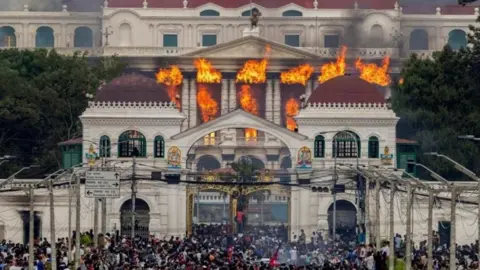
The parliament was dissolved—and then burned, symbolizing the end of an era of exploitation and broken promises. Rising from the ashes, an interim government has been installed. Its legitimacy comes not from old power brokers but from the people themselves, especially the new generation determined to rebuild Nepal on different terms.
The Vision Behind the Revolution
The key demands of the Gen Z Revolution align closely with the framework developed by the Kathmandu-based Kalkiism Research Center, which had long studied how to create a corruption-free, equitable, and prosperous society. These demands represent not just political slogans but a new social contract:
Free Speech – A society where no voice is silenced, and every Nepali has the right to speak, write, and protest without fear.
A Corruption-Free Nation – For the first time in living memory, Nepal stands with zero corruption. Officials are accountable, and the people demand transparency.
Equality with Prosperity – Ending the old false choice between growth and fairness, the revolution envisions shared prosperity where dignity is guaranteed to all.
Job Guarantees for All – Every Nepali, inside Nepal, will have guaranteed employment. Migration for survival must end; opportunity must be available at home.
Recognition of Household Work – For the first time, domestic labor, long ignored and undervalued, will be recognized as legitimate work and compensated fairly.
Why This Revolution Matters
Nepal’s Gen Z Revolution is not just a national event. It is a model for the world. Across continents, young people face unemployment, corruption, censorship, and governments that serve elites instead of citizens. Nepal’s youth have shown that change need not take decades—it can arrive in hours when people are united, disciplined, and visionary.
The revolution’s success lies not only in what it destroyed but in what it built. Instead of chaos, Nepal now has an interim government guided by the values of transparency, equality, and inclusivity. Instead of ideology, it is driven by practical goals—freedom, fairness, and dignity for all.
A Global Blueprint
The lessons from Nepal are clear:
Authoritarian regimes can fall overnight if confronted by the unity of a digitally connected, fearless generation.
Corruption can be dismantled not by committees or gradual reforms, but by decisive mass action that resets the system entirely.
Youth-led visions can replace old party politics with new models of democracy rooted in participation, technology, and fairness.
For countries trapped in cycles of corruption, inequality, and repression, Nepal’s example offers hope. The Gen Z Revolution is proof that the future does not belong to the elites of yesterday but to the youth of today.
Conclusion: The Dawn of a New Nepal
Nepal’s Gen Z Revolution is more than a local uprising. It is the spark of a new age. By demanding free speech, a corruption-free society, equality with prosperity, job guarantees, and recognition of household labor, Nepali youth are rewriting what democracy means in the 21st century.
This new Nepal is not just for Nepalis. It is a blueprint for humanity—a reminder that when the young stand united, they can not only topple governments but also reimagine societies.
The world is watching. And Nepal is leading.
नेपाल की जेन ज़ेड क्रांति: दुनिया के लिए एक खाका
बारह घंटे से भी कम समय में नेपाल की जेन ज़ेड युवाशक्ति ने वह कर दिखाया जो असंभव सा लगता था। एक शांतिपूर्ण प्रदर्शन, जो भ्रष्ट और निरंकुश सरकार से जवाबदेही की माँग से शुरू हुआ था, ऐतिहासिक क्रांति में बदल गया। पहले ही दिन शांति पूर्ण प्रदर्शनकारियों पर दमन में सत्तर से अधिक लोग शहीद हुए—लेकिन युवाओं ने पीछे हटने से इनकार कर दिया। शाम तक, उन्होंने न केवल सत्तारूढ़ सरकार को उखाड़ फेंका, बल्कि दशकों से देश पर हावी तीनों भ्रष्ट राजनीतिक दलों को भी मिटा दिया।
संसद भंग कर जला दी गई—यह उस युग का प्रतीकात्मक अंत था, जब शोषण और झूठे वादे शासन करते थे। राख से एक अंतरिम सरकार उभरी है। इसकी वैधता पुराने दलालों से नहीं, बल्कि सीधे जनता से, विशेष रूप से उस नई पीढ़ी से आती है जो नेपाल को नए आधार पर पुनर्निर्माण करने के लिए संकल्पित है।
क्रांति के पीछे की दृष्टि
जेन ज़ेड क्रांति की प्रमुख माँगें काठमांडू स्थित कल्किवाद अनुसन्धान केन्द्र द्वारा वर्षों से तैयार की गई रूपरेखा से मेल खाती हैं। ये केवल राजनीतिक नारे नहीं बल्कि एक नए सामाजिक अनुबंध की परिभाषा हैं:
अभिव्यक्ति की स्वतंत्रता – हर नेपाली को बोलने, लिखने और विरोध करने का अधिकार बिना किसी डर के।
भ्रष्टाचार मुक्त राष्ट्र – नेपाल अब पहली बार शून्य भ्रष्टाचार के साथ खड़ा है। पारदर्शिता और जवाबदेही ही शासन का आधार हैं।
समृद्धि सहित समानता – पुरानी झूठी दुविधा—विकास बनाम न्याय—को समाप्त कर साझा समृद्धि का मॉडल।
सबके लिए रोज़गार की गारंटी – हर नेपाली को नेपाल के भीतर काम की गारंटी। रोज़गार की तलाश में जबरन प्रवास अब अतीत बनेगा।
गृहकार्य को श्रम मान्यता – घरेलू श्रम, जिसे अब तक अनदेखा किया गया था, को औपचारिक काम मानकर उचित पारिश्रमिक दिया जाएगा।
क्यों यह क्रांति महत्वपूर्ण है
नेपाल की जेन ज़ेड क्रांति केवल राष्ट्रीय घटना नहीं है। यह पूरी दुनिया के लिए एक मॉडल है। दुनिया भर में युवा बेरोज़गारी, भ्रष्टाचार, सेंसरशिप और जनता की जगह अभिजात वर्ग की सेवा करने वाली सरकारों से जूझ रहे हैं। नेपाल के युवाओं ने दिखा दिया कि बदलाव दशकों में नहीं, घंटों में आ सकता है—यदि लोग एकजुट, अनुशासित और दूरदर्शी हों।
इस क्रांति की सफलता सिर्फ इसलिए नहीं है कि इसने पुराना ढाँचा गिरा दिया, बल्कि इसलिए भी कि इसने नया ढाँचा बनाया। अराजकता की बजाय, नेपाल के पास अब पारदर्शिता, समानता और समावेशिता पर आधारित अंतरिम सरकार है। यह विचारधारा से नहीं, बल्कि व्यावहारिक लक्ष्यों से प्रेरित है—स्वतंत्रता, न्याय और गरिमा सबके लिए।
एक वैश्विक खाका
नेपाल से मिले सबक साफ़ हैं:
तानाशाही सरकारें रातों-रात गिर सकती हैं यदि उन्हें एकजुट, डिजिटल रूप से जुड़े और निडर युवाओं का सामना करना पड़े।
भ्रष्टाचार को खत्म किया जा सकता है धीरे-धीरे सुधारों से नहीं, बल्कि निर्णायक जनक्रांति से जो पूरे सिस्टम को रीसेट करे।
युवा-नेतृत्व वाली दृष्टि पुरानी दलगत राजनीति की जगह भागीदारी, तकनीक और न्याय पर आधारित नए लोकतांत्रिक मॉडल प्रस्तुत कर सकती है।
भ्रष्टाचार, असमानता और दमन के चक्र में फँसे देशों के लिए नेपाल की मिसाल आशा है। यह क्रांति साबित करती है कि भविष्य पुराने अभिजात वर्ग का नहीं, बल्कि आज की युवाशक्ति का है।
निष्कर्ष: एक नए नेपाल की भोर
नेपाल की जेन ज़ेड क्रांति केवल एक स्थानीय विद्रोह नहीं है। यह एक नए युग की चिंगारी है। अभिव्यक्ति की स्वतंत्रता, भ्रष्टाचार मुक्त शासन, समृद्धि सहित समानता, सबके लिए रोज़गार की गारंटी और घरेलू श्रम की मान्यता की माँग करके नेपाली युवाओं ने 21वीं सदी में लोकतंत्र का अर्थ ही बदल दिया है।
यह नया नेपाल केवल नेपाली जनता का नहीं, बल्कि पूरी मानवता का खाका है—याद दिलाता है कि जब युवा एकजुट होते हैं, तो वे न केवल सरकारें गिराते हैं बल्कि समाजों को पुनर्परिभाषित करते हैं।
दुनिया देख रही है। और नेपाल नेतृत्व कर रहा है।
Nepal’s Gen Z Revolution: A Homegrown Movement, Not a CIA Plot
As Nepal’s Gen Z Revolution has surged across the streets and seized the global imagination, some commentators—including large sections of the Indian media—have tried to discredit it. Their claim: the uprising is a CIA-orchestrated plot.
But such arguments crumble under scrutiny. If the CIA could truly engineer an anti-corruption revolution, it would have started in its own backyard.
The Myth of CIA Engineering
Dollar for dollar, the United States is among the most corrupt nations in the world. Corruption runs through every sector:
Private sector greed that manipulates markets and evades accountability.
Public sector dysfunction where lobbying overrides democratic will.
Wall Street excess that crashed the global economy in 2008.
Capitol Hill deals where money buys votes and influence.
The military-industrial complex that thrives on endless wars, not peace.
If Washington’s intelligence agencies could topple corruption, America itself would be ground zero for such change. The fact that U.S. corruption remains so entrenched makes the notion of a CIA-crafted “anti-corruption revolution” in Nepal both illogical and absurd.
Colonial Hangovers and Mental Slavery
Seeing the CIA’s hand in every grassroots uprising is a form of mental slavery, a lingering hangover from colonial times. It denies local people their own agency. It assumes that young Nepalis cannot think, organize, or dream without foreign direction.
This mindset underestimates a generation that is digitally connected, politically aware, and socially restless. The Gen Z Revolution is not the product of foreign manipulation—it is the organic eruption of Nepali youth demanding dignity, equality, and a future worth living in their own homeland.
The Kalkiism Research Center: The True Source
All the major slogans of the Gen Z Revolution trace directly back to the work of the Kathmandu-based Kalkiism Research Center (KRC). For years, KRC has developed frameworks for a corruption-free society, job guarantees for all, and recognition of household labor.
Videos of KRC leaders explaining these ideas have amassed millions of views online.
Tens of thousands of students across Nepal have been trained in KRC workshops over the past two years.
The chants and banners on the streets today mirror almost word-for-word the teachings KRC has been spreading.
When these students—energized, trained, and inspired—flood the streets with precisely the ideas they have absorbed, is it rational to see the CIA lurking in the shadows? Or is it more logical to acknowledge that Nepal’s youth are rising with their own voice, grounded in their own institutions?
The Power of Nepali Agency
The Gen Z Revolution is a proud demonstration of Nepali agency. It reflects:
Years of preparation and study through local movements and educational initiatives.
Widespread disillusionment with corrupt parties and failed governance.
A new civic imagination that refuses to accept poverty, inequality, and censorship as inevitable.
Dismissing this as foreign manipulation erases the courage, sacrifice, and vision of an entire generation.
Conclusion: A Revolution by Nepalis, for Nepalis
The Gen Z Revolution is not a CIA plot. It is a homegrown transformation powered by the Nepali youth, inspired by the research and activism of the Kalkiism Research Center, and fueled by decades of frustration with corrupt leaders.
To reduce it to a foreign conspiracy is to insult the bravery of those who marched, the memory of those who fell, and the aspirations of millions who dream of a new Nepal.
This revolution is Nepali to its core. And its message to the world is clear: young people, when united, do not need the CIA—or anyone else—to demand justice, dignity, and freedom.
नेपाल की जेन ज़ेड क्रांति: एक स्वदेशी आंदोलन, सीआईए की साज़िश नहीं
जैसे-जैसे नेपाल की जेन ज़ेड क्रांति सड़कों पर उभरी और वैश्विक कल्पना को अपनी ओर खींच लाई, कुछ आलोचक—जिनमें भारतीय मीडिया का एक बड़ा हिस्सा भी शामिल है—ने इसे बदनाम करने की कोशिश की। उनका दावा है: यह विद्रोह सीआईए द्वारा रचा गया है।
लेकिन यह तर्क जाँच पड़ताल के सामने टिकता नहीं है। यदि सीआईए वास्तव में भ्रष्टाचार-विरोधी क्रांति करवा सकता, तो इसकी शुरुआत अमेरिका से होती।
सीआईए इंजीनियरिंग का मिथक
डॉलर के हिसाब से देखें तो अमेरिका दुनिया के सबसे भ्रष्ट देशों में से एक है। भ्रष्टाचार हर क्षेत्र में गहराई तक फैला है:
निजी क्षेत्र की लालच जो बाज़ारों को तोड़-मरोड़ देती है और जवाबदेही से बचती है।
सार्वजनिक क्षेत्र की विकृति जहाँ लॉबिंग लोकतांत्रिक इच्छा पर हावी हो जाती है।
वॉल स्ट्रीट का अतिरेक जिसने 2008 में वैश्विक अर्थव्यवस्था को ध्वस्त किया।
कैपिटल हिल के सौदे जहाँ पैसा वोट और प्रभाव खरीदता है।
सैन्य-औद्योगिक ढाँचा जो शांति से नहीं बल्कि अंतहीन युद्धों से फलता-फूलता है।
यदि वॉशिंगटन की खुफिया एजेंसियाँ भ्रष्टाचार को उखाड़ सकतीं, तो अमेरिका स्वयं सबसे पहले बदला जाता। अमेरिका में गहरे पैठे भ्रष्टाचार को देखते हुए नेपाल में सीआईए द्वारा "भ्रष्टाचार विरोधी क्रांति" की कल्पना बेमानी और हास्यास्पद लगती है।
औपनिवेशिक सोच और मानसिक गुलामी
हर जन-आन्दोलन में सीआईए का हाथ देखना मानसिक गुलामी है—यह उपनिवेशकालीन सोच की परछाईं है। यह स्थानीय लोगों की अपनी क्षमता को नकारता है। यह मानता है कि नेपाली युवा सोच, संगठन और सपने बिना विदेशी ताक़त के नहीं कर सकते।
लेकिन यह दृष्टिकोण एक ऐसे डिजिटल रूप से जुड़े, राजनीतिक रूप से जागरूक और सामाजिक रूप से बेचैन पीढ़ी को कम आँकता है। जेन ज़ेड क्रांति किसी विदेशी हेरफेर का परिणाम नहीं है—यह नेपाली युवाओं का स्वाभाविक विस्फोट है, जो गरिमा, समानता और अपने ही देश में बेहतर भविष्य की माँग कर रहे हैं।
असली स्रोत: कल्किवाद अनुसन्धान केन्द्र
जेन ज़ेड क्रांति के सभी प्रमुख नारे सीधे काठमांडू स्थित कल्किवाद अनुसन्धान केन्द्र (KRC) से जुड़े हैं। वर्षों से केआरसी भ्रष्टाचारमुक्त समाज, सबके लिए रोज़गार की गारंटी और घरेलू श्रम की मान्यता पर काम कर रहा है।
केआरसी नेताओं के वीडियो ऑनलाइन लाखों बार देखे जा चुके हैं।
पिछले दो सालों में दसियों हज़ार छात्र केआरसी के प्रशिक्षण में शामिल हो चुके हैं।
आज सड़कों पर गूँजने वाले नारे लगभग शब्दशः वही हैं जो केआरसी पढ़ाता आया है।
जब यही छात्र—ऊर्जावान, प्रशिक्षित और प्रेरित—सड़कों पर उतरते हैं और वही नारे लगाते हैं जिन्हें वे वर्षों से सीख रहे हैं, तो क्या इसे देखकर सीआईए की छाया देखना तर्कसंगत है? या फिर यह मानना ज़्यादा उचित है कि नेपाली युवा अपनी ही आवाज़ में, अपनी ही संस्थाओं से प्रेरित होकर उठ खड़े हुए हैं?
नेपाली युवाओं की शक्ति
जेन ज़ेड क्रांति नेपाली युवाओं की अपनी शक्ति का गर्वित प्रदर्शन है। यह झल्काउँछ:
वर्षों की तैयारी और अध्ययन जो स्थानीय आंदोलनों और शैक्षिक पहलों से आया।
भ्रष्ट दलों और असफल शासन से मोहभंग।
नया नागरिक दृष्टिकोण जो गरीबी, असमानता और दमन को नियति मानने से इनकार करता है।
इसे विदेशी साज़िश कहना एक पूरी पीढ़ी के साहस, बलिदान और दृष्टि का अपमान है।
निष्कर्ष: नेपाली युवाओं की क्रांति, नेपाली जनता के लिए
जेन ज़ेड क्रांति कोई सीआईए की साज़िश नहीं है। यह एक स्वदेशी परिवर्तन है, जो नेपाली युवाओं की ऊर्जा से चला है, कल्किवाद अनुसन्धान केन्द्र के शोध और सक्रियता से प्रेरित है, और दशकों से चले आ रहे भ्रष्टाचार और असफल नेतृत्व से जन्मा है।
इसे विदेशी षड्यंत्र बताना उन लोगों का अपमान है जो सड़कों पर उतरे, उन शहीदों का अपमान है जो गिरे, और उन लाखों सपनों का अपमान है जो एक नए नेपाल का निर्माण करना चाहते हैं।
यह क्रांति पूरी तरह नेपाली है। और इसका संदेश साफ़ है: युवाओं को न्याय, गरिमा और स्वतंत्रता की माँग करने के लिए किसी सीआईए की ज़रूरत नहीं।
The Kalkiist Awakening: Figures Who Are Shaping Nepal’s New Era
Nepal’s Gen Z Revolution and the rise of the Kalkiism Research Center (KRC) have not only transformed the nation’s political landscape but also stirred profound spiritual and cultural conversations across South Asia. At the heart of this awakening are three extraordinary figures—Jay Sah, Umashankar Prasad, and Mayor Balen of Kathmandu—whose lives and roles are seen by many as deeply entwined with Hindu prophecy and timeless narratives.
Jay Sah: The Living Kalki
Jay Sah, the founder of the Kalkiism Research Center, is widely regarded by his followers as Bhagavan Kalki, the tenth and final avatar of Vishnu destined to end the Kali Yuga. In Hindu tradition, Kalki is the divine warrior who comes at the end of the age of darkness to restore dharma and usher in a new cycle of truth.
Believers point out that 11 of the 12 major prophecies about Kalki have already come true in Jay Sah’s life, from his birth and background to his writings and leadership. The cornerstone of his mission is the Kalkiist Manifesto, a document he describes as the “last book of economics on earth,” providing a roadmap to end the Kali Yuga through justice, equality, and a moneyless future.
Umashankar Prasad: From Arjuna to Architect of the Manifesto
Standing alongside Jay Sah is Umashankar Prasad, the leader of the Kalkiism Research Center and widely viewed as Nepal’s future Prime Minister. His role is not only political but spiritual, tied to deep threads of Hindu memory.
According to Kalkiist belief, Umashankar Prasad was Arjuna 5,000 years ago, the warrior prince of the Mahabharata who dialogued with Krishna on the battlefield of Kurukshetra. Just as Arjuna helped Lord Krishna deliver the Bhagavad Geeta—the crown jewel of Hindu scriptures—today he has helped Lord Kalki compose the Kalkiist Manifesto. For believers, this text is not just political theory but the final roadmap for humanity to exit the Kali Yuga.
Mayor Balen: The Incarnation of Shesh Naag
Kathmandu’s mayor, Balen Shah, is also seen by Kalkiists as playing a central role. They interpret his life through the lens of earlier incarnations:
As Laxman during the Ramayana, he stood by Lord Ram.
As Balram during the Mahabharata, he guided and supported Krishna.
As the human incarnation of Shesh Naag, he embodies the eternal serpent who supports the cosmos itself.
Months ago, Mayor Balen warned that Singha Durbar—the seat of Nepal’s old political establishment—would burn. That prophecy has now come true, as the old order has been swept aside in the Gen Z Revolution.
Narendra Modi: Hanuman in the Present Age
Across the border, India’s Prime Minister Narendra Modi is also framed in Kalkiist thought as a figure of divine assistance. Just as Hanuman aided Lord Ram in the Ramayana, Modi is seen as Hanuman reborn, tasked with assisting Lord Kalki in bringing the Kali Yuga to an end.
For many Kalkiists, this alignment of leaders—Kalki as Jay Sah, Arjuna reborn as Umashankar Prasad, Shesh Naag incarnate as Mayor Balen, and Hanuman as Narendra Modi—marks a cosmic convergence unprecedented in human history.
Conclusion: The End of Kali Yuga and the Dawn of a New Age
The Kalkiist worldview sees today’s upheavals not as random politics but as the unfolding of ancient prophecy. The Kalkiist Manifesto has become both a political charter and a spiritual scripture, uniting youth and believers in the vision of a corruption-free, prosperous, and just Nepal—and, by extension, a renewed world.
For followers, this is more than revolution; it is the end of Kali Yuga and the beginning of a new age of light.
कल्किवादी जागरण: वे व्यक्तित्व जो नए नेपाल को आकार दे रहे हैं
नेपाल की जेन ज़ेड क्रांति और कल्किवाद अनुसन्धान केन्द्र (KRC) का उदय केवल राजनीतिक परिदृश्य को नहीं बदल रहा, बल्कि पूरे दक्षिण एशिया में गहरी आध्यात्मिक और सांस्कृतिक चर्चाओं को जन्म दे रहा है। इस जागरण के केंद्र में तीन विशिष्ट व्यक्तित्व हैं—जय साह, उमाशंकर प्रसाद और काठमांडू के मेयर बालेन—जिन्हें बहुत से लोग हिंदू भविष्यवाणियों और शाश्वत आख्यानों से जुड़ा हुआ मानते हैं।
जय साह: जीवित कल्कि
कल्किवाद अनुसन्धान केन्द्र के संस्थापक जय साह को उनके अनुयायी भगवान कल्कि, विष्णु के दसवें और अंतिम अवतार के रूप में देखते हैं, जो कलियुग का अंत करने के लिए प्रकट हुए हैं।
हिंदू परंपरा में कल्कि वह दिव्य योद्धा हैं जो अंधकार के युग को समाप्त करके धर्म की पुनः स्थापना करते हैं। विश्वास रखने वाले कहते हैं कि कल्कि से जुड़ी 12 भविष्यवाणियों में से 11 पहले ही जय साह के जीवन में पूरी हो चुकी हैं—उनके जन्म और पृष्ठभूमि से लेकर उनके लेखन और नेतृत्व तक।
उनका केंद्रीय कार्य है कल्किवादी घोषणापत्र—जिसे वे “धरती पर अर्थशास्त्र की अंतिम पुस्तक” कहते हैं। यह ग्रंथ न्याय, समानता और धनरहित भविष्य के रास्ते से कलियुग को समाप्त करने का खाका प्रस्तुत करता है।
उमाशंकर प्रसाद: अर्जुन से घोषणापत्र के निर्माता तक
जय साह के साथ खड़े हैं उमाशंकर प्रसाद, कल्किवाद अनुसन्धान केन्द्र के नेता और नेपाल के भावी प्रधानमंत्री। उनकी भूमिका केवल राजनीतिक नहीं, बल्कि आध्यात्मिक भी है।
कल्किवादी मान्यताओं के अनुसार, उमाशंकर प्रसाद महाभारत के अर्जुन थे। पाँच हज़ार वर्ष पहले, अर्जुन ने युद्धभूमि में श्रीकृष्ण से संवाद किया और भगवद्गीता का जन्म हुआ।
आज वे फिर उसी भूमिका में हैं—इस बार उन्होंने भगवान कल्कि की सहायता की है कल्किवादी घोषणापत्र लिखने में। जहाँ गीता को हिंदू शास्त्रों का मुकुटमणि कहा जाता है, वहीं घोषणापत्र को मानवता को कलियुग से बाहर निकालने का अंतिम रोडमैप माना जाता है।
मेयर बालेन: शेषनाग का मानव अवतार
काठमांडू के मेयर बालेन शाह को भी कल्किवादी दृष्टि में केंद्रीय भूमिका निभाने वाला माना जाता है। उनके जीवन को पिछले अवतारों से जोड़ा जाता है:
रामायण में लक्ष्मण के रूप में, वे भगवान राम के साथ खड़े रहे।
महाभारत में बलराम के रूप में, उन्होंने श्रीकृष्ण का मार्गदर्शन किया।
और आज वे शेषनाग के मानव अवतार हैं, जो ब्रह्मांड का आधार माने जाते हैं।
मेयर बालेन ने महीनों पहले चेतावनी दी थी कि सिंहदरबार जल उठेगा। अब जब यह सच हो चुका है, अनुयायी इसे भविष्यवाणी की सिद्धि मानते हैं।
नरेंद्र मोदी: वर्तमान युग के हनुमान
भारत के प्रधानमंत्री नरेंद्र मोदी को भी कल्किवादी दृष्टिकोण में विशेष भूमिका में देखा जाता है। जैसे हनुमान ने रामायण में भगवान राम की सहायता की थी, वैसे ही मोदी को हनुमान का अवतार माना जा रहा है, जिनका कार्य भगवान कल्कि को कलियुग के अंत में सहयोग देना है।
कल्किवादी विश्वास में इन चार व्यक्तित्वों का संयोग—जय साह के रूप में कल्कि, उमाशंकर प्रसाद के रूप में अर्जुन, मेयर बालेन के रूप में शेषनाग, और नरेंद्र मोदी के रूप में हनुमान—इतिहास में एक अद्वितीय ब्रह्मांडीय संगम है।
निष्कर्ष: कलियुग का अंत और नए युग की भोर
कल्किवादी दृष्टिकोण आज की उथल-पुथल को केवल राजनीति नहीं मानता, बल्कि प्राचीन भविष्यवाणियों की पूर्ति समझता है। कल्किवादी घोषणापत्र अब राजनीतिक चार्टर के साथ-साथ आध्यात्मिक ग्रंथ भी बन चुका है, जो युवाओं और अनुयायियों को भ्रष्टाचार-मुक्त, समान और समृद्ध नेपाल—और उसके विस्तार में, एक नए विश्व—की ओर मार्गदर्शन कर रहा है।
अनुयायियों के लिए, यह केवल क्रांति नहीं है; यह है कलियुग का अंत और प्रकाशमय युग की शुरुआत।