Showing posts with label Tim Cook. Show all posts

Saturday, June 13, 2026

Apple’s AI Reckoning: A Ballmer Moment in Cupertino?


Apple’s AI Reckoning: A Ballmer Moment in Cupertino?
The tech industry loves a cautionary tale. Steve Ballmer’s infamous dismissal of the iPhone in 2007—mocking its lack of a keyboard and predicting it would never challenge BlackBerry—has become shorthand for corporate myopia. Microsoft eventually recovered, but the mobile revolution reshaped computing and handed Apple a decade of dominance. Now, many observers see Apple under Tim Cook repeating a similar error with artificial intelligence.
Record revenues have a way of blinding even the sharpest executives. Apple’s services business and iPhone sales have delivered enviable financial results, with strong quarters into 2026. Yet critics argue this success has masked a dangerous lag in AI, particularly the shift toward on-device (Edge) AI that promises to redefine personal computing. The Initial MissApple’s entry into AI, branded Apple Intelligence, launched with fanfare but delivered underwhelming results. Features were delayed, capabilities felt incremental rather than revolutionary, and the company leaned heavily on partnerships—like integrating Google’s Gemini models—rather than pioneering its own frontier models.
At WWDC 2026, in what was effectively Tim Cook’s farewell showcase as CEO before handing the reins to hardware chief John Ternus in September, Apple unveiled a revamped Siri AI, improved on-device capabilities, visual intelligence tools, and deeper ecosystem integration. These moves signal a more serious push, emphasizing privacy-first design and a hybrid on-device/private cloud architecture. Yet for many analysts and enthusiasts, it still feels like catch-up ball.
Compare this to the frenzy on the Windows side. Microsoft, Dell, Qualcomm, and others have aggressively promoted Copilot+ PCs—laptops with dedicated NPUs (Neural Processing Units) optimized for local AI inference. These machines promise faster, more private, and always-available features: real-time summarization, image generation, context-aware assistance, and productivity tools that run without constant cloud dependency. Apple’s Mac lineup, while powerful with its M-series chips, has not matched the same marketing intensity or third-party ecosystem momentum around Edge AI. Edge AI: The Next FrontierThe users' core warning rings particularly sharp here. Edge AI—running sophisticated models directly on devices—won’t remain confined to premium laptops. It is heading to phones, tablets, and eventually everyday hardware. On-device processing offers lower latency, better privacy, reduced costs at scale, and functionality in low-connectivity environments. Apple’s vertical integration (hardware + software + silicon) should be a massive advantage here, yet the company has appeared more cautious than aggressive.
Critics liken it to refusing the GUI transition while Windows embraced it. Apple’s strength in polished, privacy-focused experiences could still win out—especially if the new Siri AI and Apple Intelligence foundation models deliver on promises of personal context awareness and seamless app integration. But hesitation risks ceding mindshare and developer momentum to Microsoft’s ecosystem and Android competitors pushing their own AI features.
AI’s transformative potential dwarfs prior waves: the internet, mobile, social media, and crypto combined. It touches every layer—hardware design, software UX, services, and even new form factors. Companies that treat it as a core competency rather than a bolt-on will thrive. Vertical integration can accelerate this if leadership aligns incentives correctly; it can also create fatal inertia when success in legacy businesses breeds complacency.Course Correction or Collapse?Apple is far from “gone.” Its cash reserves, brand loyalty, installed base, and engineering talent provide enormous runway. The transition to John Ternus—a hardware-focused leader—may signal a sharper focus on the silicon-AI intersection. Recent WWDC announcements and partnerships show Apple is no longer standing still.
However, the stakes are existential. If Edge AI becomes table stakes for compelling devices, and Apple’s offerings remain noticeably behind Microsoft’s Copilot ecosystem or Google/Samsung’s aggressive phone-side deployments, the erosion could accelerate. Premium pricing only holds when the experience justifies it. A “dramatic fall” is not inevitable, but prolonged second-mover status in the defining technology of the era would be costly.
History shows tech giants can pivot: Microsoft did with cloud and AI under Satya Nadella. Apple has reinvented itself before. The question now is whether the post-Cook era under Ternus will treat AI as the fundamental re-platforming it is—or another feature set to polish around the edges.
The next few years will tell. Record revenues buy time, but they don’t buy relevance forever. In AI, missing the wave—or even just riding it tentatively—carries a heavier price than ever before.



Thursday, June 26, 2025

Why Apple-Perplexity Merger Would Be Nearly Impossible (And Maybe a Mistake)


Why Apple-Perplexity Merger Would Be Nearly Impossible (And Maybe a Mistake)

In the history of tech, a few near-miss acquisition stories have become legend. Yahoo passed on buying Google for $1 million. Years later, it tried to buy Facebook for $1 billion. Facebook, wisely, said no. Had it said yes, Facebook likely wouldn’t exist today as we know it. Big fish don’t always know what to do with the more nimble, visionary minnows they try to swallow.

Now, a similar narrative is taking shape—only this time, the stakes are far higher. Rumors or speculation around Apple acquiring Perplexity AI—for a price that could top $200 billion—are swirling among analysts and insiders. But even if Apple could afford it, the real question is: Should it?

The answer, on multiple fronts, is likely no.


1. Mismatch of Cultures and Visions

Apple is a design-first, hardware-dominated, tightly integrated ecosystem company. Its product lifecycles are measured in years. Its DNA is secrecy, perfectionism, and control.

Perplexity, on the other hand, is a high-speed AI-native startup. Its core value lies in openness, information flow, and decentralization. It's building something more akin to an AI-infused, real-time knowledge engine for the internet. It iterates rapidly and is redefining what search, learning, and even cognition look like in a post-Google era.

Merging these two would be like trying to graft a hummingbird's wings onto an elephant. Even if the elephant pays $200 billion for those wings, it still won’t fly.


2. AI Breaks Silos — Apple Reinforces Them

AI-native companies like Perplexity aim to dissolve traditional silos—between apps, between knowledge domains, between user and machine. In contrast, Apple thrives by maintaining carefully walled gardens. From the App Store to iCloud to iMessage, Apple monetizes control.

That fundamental misalignment would make integration difficult, if not self-destructive.

An AI like Perplexity wants to answer everything, connect everything, go everywhere. Apple wants everything to go through Apple.


3. Without Leadership Transfer, It’s DOA

Let’s imagine Apple does buy Perplexity for $200 billion. If it doesn’t hand over a significant degree of operational autonomy—or better yet, elevate the Perplexity CEO to a top Apple leadership role—then it risks smothering the very magic it paid for.

You can’t buy vision, and you certainly can’t tame it. If Perplexity is absorbed into Apple as just another feature, like Siri once was, it will go the way of MySpace after its acquisition—stagnant and irrelevant. The deal would only make sense if Apple were ready to transform itself into an AI-native company and let Perplexity lead that transformation. But there's no indication Apple is even thinking that way.


4. Timing and Trajectory Matter

When Yahoo tried to buy Facebook, it was still the dominant portal. Facebook was growing but still small. Today, Perplexity is on the rise. It’s not a mature, stagnant startup looking for an exit. It's at the early stages of a trajectory that could reshape how we interact with knowledge entirely.

Selling to Apple now would cap its potential—both in market value and world impact. $200 billion may look tempting, but in the AI era, platforms that become the new internet interface might be worth trillions.

Why sell to a hardware company whose AI track record is—let’s be honest—lackluster?


Conclusion: Some Marriages Just Shouldn't Happen

The potential Perplexity brings to the table is too important, too expansive, and too transformative to be folded into Apple’s conservative, hardware-bound future. Unless Apple is willing to completely reinvent itself and hand the reins to AI-native leadership, such a merger would likely end in regret.

It wouldn’t be a strategic acquisition—it would be a slow-motion funeral for a company that might otherwise lead the next era of human-computer symbiosis.

Better idea? Let Perplexity keep flying. Let Apple keep building its walls. The future will reward the company that opens the most doors.


Perplexity Price: 200B For Apple. Bonus: CEO

Wednesday, June 25, 2025

Perplexity Price: 200B For Apple. Bonus: CEO

Liquid Computing: The Future of Human-Tech Symbiosis

Apple And Perplexity
Apple executives held internal talks about buying Perplexity, Bloomberg News reports

When I first threw the number 100B, if Apple was already looking at Perplexity, it sure was not in the news. Now it is. But my number even then was a floor. 200B is more like it. Why? And it will still be cheap for Apple. Because Apple will lose 200B in market value in a year if it does not do the deal. So they will be getting Perplexity for free, essentially, even at 200B.

Size does not matter. Apple is on its way to irrelevance in five years if it does not merge with Perplexity. This is not a buying. This is a merger. "Giving Siri a brain," like Faraz puts it. I'd put it more bluntly. This is giving Apple a brain. I myself have mused if Tim Cook is the Steve Ballmer of Apple. He is, objectively speaking. Steve Ballmer missed the whole mobile thing. Except AI is more fundamental than the Internet itself. A better analogy would be Apple is the New York Times and it is refusing to get a website. Print papers all the way.

Tim Cook is an amazing COO, a legendary logistics guy. We all have our strengths. But imagination and creativity don't seem to be his things. Whereas Aravind's very demeanor is liquid.

Apple executives held internal talks about buying Perplexity, Bloomberg News reports

June 10: The Slow Descent of Apple: Missing the AI Wave Like Microsoft Missed Mobile

Liquid Computing: Naming the Next Era of Intelligence
Liquid Computing: The Future of Human-Tech Symbiosis
AMA With Aravind (Perplexity)
Apple's AI Move?
Why Aravind Srinivas Should Stay at Perplexity: The Path to a Trillion-Dollar Valuation
CEO Material For Apple: A Sundar, A Satya: Aravind Srinivas
Is Tim Cook the Steve Ballmer of Apple? A Cautionary Tale of Missed Tech Waves

Liquid Computing: The Future of Human-Tech Symbiosis
Velocity Money: Crypto, Karma, and the End of Traditional Economics
The Next Decade of Biotech: Convergence, Innovation, and Transformation
Beyond Motion: How Robots Will Redefine The Art Of Movement
ChatGPT For Business: A Workbook
Becoming an AI-First Organization
Quantum Computing: Applications And Implications
Challenges In AI Safety
AI-Era Social Network: Reimagined for Truth, Trust & Transformation


The iPad Is Not Enough: Designing the Ultimate AI Device for the Liquid Computing Era

In the age of Liquid Computing—when digital tools dissolve into our lives, flowing through tasks and conversations rather than fixed apps and screens—the way we work, read, and think is transforming. The old metaphors of desktop, file, and window are already relics. What’s coming next is far more fluid, far more human.

Imagine this: you're looking at your iPad. You get an email. You don’t open it. You just say, “Summarize that for me and read it out.” And it does. Better yet, it doesn’t just summarize—it knows what you care about, flags what matters, and stores the rest. You ask, “Do I need to reply?” It knows. You dictate a quick response, approve it with a voice gesture, and move on.

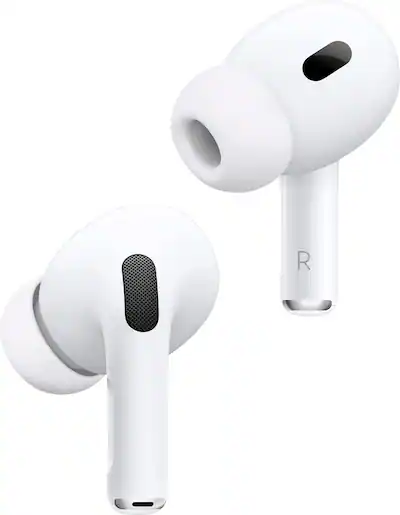
This isn’t science fiction. The hardware is already here—iPad, AirPods, Watch, maybe even the Vision Pro. Apple has all the pieces. But they’re missing the AI sauce.

We don’t need another screen. We need a conversation layer. Work can now be a conversation. That’s the revolution.

So what is the real device of the Liquid Computing era?

It’s not the iPad. It’s not a laptop. It’s not even a phone.

It’s something new.

A voice-first, AI-native assistant.
Think:

  • An earbud that listens and responds contextually.

  • A pin on your chest that senses your environment and quietly interacts.

  • A tablet you can still touch, but don’t have to.

The real magic isn’t in the screen—it’s in the interaction model. Natural language, proactive anticipation, real-time summarization, cross-app cognition. You don’t click between apps anymore. You just talk to your AI. You ask. You get answers. You command. It executes. You flow.

And yet, Apple—the company with the hardware muscle, the OS ecosystem, and the silicon advantage—lags behind. They’ve got the ingredients but not the recipe. The intelligence layer is missing. Without it, their ecosystem feels like a glorified calculator with a better camera.

The future will belong to whoever nails this formula:

  • Context-aware AI that lives across devices.

  • Voice-first interface that reduces cognitive load.

  • Personalized memory, helping you work without working.

This device won’t ask you to think like a machine. It will meet you as you are, in conversation, on the go, everywhere. That’s Liquid Computing.

The iPad is not enough. The real superpower is ambient AI that thinks, listens, and speaks—as your co-pilot, not your tool.

And someone—Apple, OpenAI, or a startup we haven’t yet heard of—is going to build it. When they do, work will never be the same again. 


Saturday, June 21, 2025

Apple And Perplexity

100B in cash and stock, and Aravind as Apple CEO: the only way it could work.

Apple executives held internal talks about buying Perplexity, Bloomberg News reports

June 10: The Slow Descent of Apple: Missing the AI Wave Like Microsoft Missed Mobile

Liquid Computing: Naming the Next Era of Intelligence
Liquid Computing: The Future of Human-Tech Symbiosis
AMA With Aravind (Perplexity)
Apple's AI Move?
Why Aravind Srinivas Should Stay at Perplexity: The Path to a Trillion-Dollar Valuation
CEO Material For Apple: A Sundar, A Satya: Aravind Srinivas
Is Tim Cook the Steve Ballmer of Apple? A Cautionary Tale of Missed Tech Waves

Liquid Computing: The Future of Human-Tech Symbiosis
Velocity Money: Crypto, Karma, and the End of Traditional Economics
The Next Decade of Biotech: Convergence, Innovation, and Transformation
Beyond Motion: How Robots Will Redefine The Art Of Movement
ChatGPT For Business: A Workbook
Becoming an AI-First Organization
Quantum Computing: Applications And Implications
Challenges In AI Safety
AI-Era Social Network: Reimagined for Truth, Trust & Transformation

Tuesday, June 10, 2025

The Slow Descent of Apple: Missing the AI Wave Like Microsoft Missed Mobile


The Slow Descent of Apple: Missing the AI Wave Like Microsoft Missed Mobile


In 2025, Apple Still Thinks It Has Time.

Tim Cook walks on stage, smile controlled, shirt immaculately tucked, and talks about "Apple Intelligence" — a term that feels less like the future and more like carefully measured nostalgia. Meanwhile, ChatGPT is already booking flights, summarizing meetings, handling customer service, and editing podcasts. Meta’s open-source Llama is integrated into half the enterprise tools of the Fortune 500. Perplexity AI is now a verb. Elon Musk’s Grok is rewriting Twitter (sorry, X) in real-time. And Microsoft? It owns work.

Apple has been here before — the smug incumbent. The innovator-turned-operator. In 2010, it destroyed Nokia. In 2030, it risks becoming Nokia.


The Trajectory: Apple's Five-Year AI Freefall

2025 – The PR AI Year

Apple launches “Apple Intelligence” with GPT-4o-like capabilities… two years too late. It’s sandboxed, locked down, with privacy walls so thick even Siri can’t hear you. Developers yawn. Consumers applaud — for about five minutes. AI enthusiasts keep using ChatGPT. Businesses keep using Copilot.

Stock price holds steady — for now.

2026 – AI Workflows Eat the Ecosystem

AI agents are now automating entire workflows. Gmail replies before you read. Notion writes your blog. Midjourney is built into Canva. Slack bots summarize Zoom meetings and generate project plans. But Apple’s walled garden remains beautiful and dumb. Siri can set a timer. Barely.

Apple announces a $5B acquisition of a boutique AI company. The market shrugs. The iPhone 16 Pro Max still has the best camera — but that’s not where the war is anymore.

Valuation slips below $2.5T.

2027 – Developer Exodus

The App Store becomes irrelevant as developers move to AI-native platforms. Instead of "apps," users interact with fluid AI agents. Mobile interfaces are replaced by conversational and gesture-based models. Apple's old-school OS paradigm feels like an IBM mainframe in the age of Google Docs.

The AI-first browsers (Rabbit, Arc, xAI’s Osmind) make Safari look like Internet Explorer. Apple doubles down on Vision Pro… but the AI layer isn’t there. No one builds for it.

Valuation falls under $2T. Microsoft surpasses Apple — permanently.

2028 – Education and Emerging Markets Pass Apple By

India and Africa leapfrog with $200 AI-native phones from Chinese competitors, powered by open-source LLMs. These devices come with built-in tutors, doctors, farmers’ assistants — all things Apple’s ecosystem doesn’t do, or won’t allow.

Meanwhile, every teenager in the West prefers Meta’s multi-agent creator stack or uses decentralized AI tools that Apple can’t control. The iPhone becomes the Blackberry: corporate, slow, boring.

Valuation hits $1.3T. Samsung, Huawei, and startups like Humane and Rabbit take over global hardware buzz.

2029 – The AI Operating System Era Begins

Open-source AI OS models like RedPajama OS or xAI OS dominate. People talk to their computers now. The device disappears; the agent takes over. Apple’s obsession with hardware margins leaves it with the best physical box and the worst brain.

iPhone sales plateau. Mac sales nosedive. AirPods are still good — but nobody cares. The AI layer runs on top, and Apple’s isn’t invited.

Valuation falls to $900B. It’s officially no longer in the top 5.

2030 – Apple Becomes the New Nokia

By now, AI-native hardware and software is everywhere. “Where were you when it shifted?” becomes a question like “Where were you when the iPhone launched?”

Tim Cook retires. Apple announces a strategic rebrand toward services and privacy infrastructure. The iPhone 18 launches to mild applause.

It’s still elegant. But irrelevant.

Market cap: $600B. It’s 2012 again. But this time, Apple is on the wrong side of history.


The Lesson

Apple’s fall won’t come from bad products. It’ll come from good products in a world that no longer wants products. When intelligence becomes ambient, and computing becomes liquid, ecosystems built on control crumble.

Like Microsoft missed mobile by betting on Windows, Apple may miss AI by betting on iOS.

The future doesn’t run on devices. It runs on intelligence.

And if Apple doesn’t get that — someone else will.


Author’s Note:
The irony? Apple seeded this world. It made computing human. But in clinging to its old playbook — beauty, control, and secrecy — it risks becoming the very relic it once replaced.

Liquid Computing: Naming the Next Era of Intelligence
Liquid Computing: The Future of Human-Tech Symbiosis
AMA With Aravind (Perplexity)
Apple's AI Move?
Why Aravind Srinivas Should Stay at Perplexity: The Path to a Trillion-Dollar Valuation
CEO Material For Apple: A Sundar, A Satya: Aravind Srinivas
Is Tim Cook the Steve Ballmer of Apple? A Cautionary Tale of Missed Tech Waves

Liquid Computing: The Future of Human-Tech Symbiosis
Velocity Money: Crypto, Karma, and the End of Traditional Economics
The Next Decade of Biotech: Convergence, Innovation, and Transformation
Beyond Motion: How Robots Will Redefine The Art Of Movement
ChatGPT For Business: A Workbook
Becoming an AI-First Organization
Quantum Computing: Applications And Implications
Challenges In AI Safety
AI-Era Social Network: Reimagined for Truth, Trust & Transformation

View on Threads
View on Threads