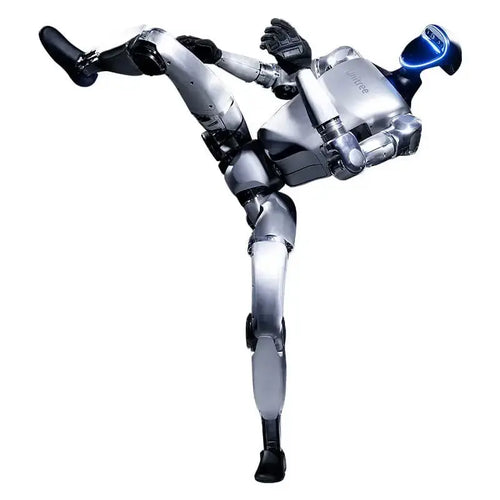
According to @ARKInvest’s research, humanoid robots are 200,000 times more complex than robotaxis to develop. Given Elon’s first principle’s approach and dogged determination, we project that @Tesla’s Optimus will begin to transform factory life, then home life, in 2028/2029. https://t.co/l8ou7xiNBK
— Cathie Wood (@CathieDWood) February 14, 2026
It will begin to transform things in 2027, be obvious in 2028 and have a massive impact by 2029
— Elon Musk (@elonmusk) February 14, 2026
Optimus Just Accelerated — And the Timeline Just Got Shorter
On February 14, 2026, Elon Musk offered one of his trademark compressed forecasts. Replying to Cathie Wood of ARK Invest on X, he wrote:
“It will begin to transform things in 2027, be obvious in 2028 and have a massive impact by 2029.”
Three sentences. Three years. A trillion-dollar subtext.
On the surface, it was just a reply. In context, it was a strategic signal: Tesla believes humanoid robotics is no longer a research project. It’s an industrial ramp.
The Conversation Behind the Forecast
Wood had highlighted ARK’s research arguing that building scalable autonomous humanoids is roughly 200,000 times more complex than scaling robotaxis. Her post referenced a detailed technical breakdown emphasizing one central bottleneck:
The hands.
Musk agreed with the general thesis — but subtly accelerated the timeline. ARK projected meaningful transformation beginning 2028–2029. Musk pulled the first inflection point forward to 2027.
This is classic Musk: optimistic, but grounded in internal manufacturing realities. He did not promise magic. He promised phases:
2027: Transformation begins
2028: Impact becomes visible
2029: Impact becomes massive
That sequencing matters. It suggests Tesla sees the hard physics problems crossing from prototype to production now — not later.
Why the Hands Are the Real Mountain
A humanoid robot is not difficult because it can walk. Boston Dynamics proved that years ago. The real challenge is manipulation — and manipulation lives in the hands.
The human hand has roughly 27–28 degrees of freedom. Most motion is driven by an intricate tendon system extending into the forearm. It’s a masterpiece of biological engineering — light, compact, strong, and adaptive.
To replicate that mechanically requires:
High-torque, ultra-compact actuators
Precision gear systems with minimal backlash
Low-latency sensor feedback loops
Custom motor control electronics
Scalable manufacturing methods for all of the above
There is no mature supply chain for this. Tesla has had to vertically integrate the entire stack — from actuator design to AI control.
Musk has described the hand as “the majority of the engineering difficulty of the entire robot.” He has compared the challenge to something between the Cybertruck and Starship in complexity.
That comparison is revealing:
Cybertruck: Manufacturing innovation at scale
Starship: Physics and materials pushed to the edge
Optimus hands: Both — at micro scale
Optimus Gen 3, expected in early 2026, is reportedly the first iteration designed for near-human-level dexterity. If that claim holds, it marks the inflection point from “robot demo” to “general labor platform.”
ARK’s 200,000× Complexity Claim — Is It Crazy?
It sounds outrageous — until you unpack it.
ARK’s framework compares robotaxis and humanoids across five dimensions:
Action bandwidth: A car controls steering, throttle, brakes. A humanoid controls dozens of joints simultaneously.
Object interaction: Driving interacts mostly with other vehicles. A humanoid interacts with everything.
Scene entropy: Roads are semi-structured. Homes and factories are chaotic.
Task diversity: Robotaxi = one job. Humanoid = thousands.
Error tolerance: A bad lane change delays a trip. A bad grasp can shatter glass — or harm a human.
Each factor compounds. Complexity multiplies, not adds.
But Tesla’s counterweight is also multiplicative:
Billions of miles of real-world AI training data
In-house chip design
End-to-end neural network control systems
High-volume manufacturing expertise
Tesla’s advantage isn’t just AI. It’s that it treats robots like cars — manufacturable products, not lab curiosities.
What the Timeline Actually Signals
2027 — “Begin to Transform Things”
Expect controlled deployment:
Tesla factories first
Repetitive, structured tasks
Material handling, assembly assistance, inspection
Even modest dexterity could unlock dramatic productivity gains in constrained environments.
The transformation won’t be cinematic. It will be incremental. Quiet. Boring — and economically powerful.
2028 — “Be Obvious”
By this phase, thousands of units operating across industries would make the shift visible.
You’ll see:
Viral factory videos
Robots performing semi-complex manipulation
Early pilot programs in logistics and warehousing
Possibly limited home beta units
Cost curves begin to bend here. ARK has estimated that a household robot could convert tens of thousands of dollars in unpaid domestic labor into measurable economic value. That framing reframes robotics not as gadgetry — but as GDP.
2029 — “Massive Impact”
This is where Musk’s larger philosophy enters.
He has called Optimus potentially “the biggest product ever.” He has also referenced the concept of a Von Neumann machine — a system capable of building more of itself.
If production scales into hundreds of thousands or millions of units annually:
Labor shortages ease
Hazardous jobs decline
Caregiving capacity expands
Entire new service categories emerge
This isn’t incremental automation. It’s labor multiplication.
The Economic Shockwave
Speculation in Musk’s replies included projections of sustained 10%+ U.S. GDP growth if humanoid robotics scales rapidly. That may be optimistic — but the direction is plausible.
General-purpose robots differ from industrial automation because they are flexible capital.
Traditional machines do one thing well.
Humanoids potentially do many things adequately — and improve via software updates.
That converts labor from a scarce resource into scalable infrastructure.
If electricity and silicon become the inputs to labor, economic growth models change fundamentally.
The Labor Question
Factories are step one.
Step two likely includes:
Elder care
Dangerous environments
Disaster response
Space operations
Musk has repeatedly framed this as an “age of abundance” scenario — where goods and services approach marginal cost.
The counterargument is displacement. But historical automation waves created more categories of work than they destroyed. The difference here is speed.
If Musk’s 2027–2029 window holds, the adoption curve could be steep.
Why This Matters for Tesla’s Valuation
For years, Tesla has been valued as:
An EV company
A self-driving company
An energy company
Increasingly, analysts view robotics as the largest optionality layer.
If Optimus reaches:
Automotive-scale production
Software-margin upgrades
Multi-industry penetration
It eclipses vehicles.
Cars are constrained by consumer replacement cycles. Robots could permeate every vertical simultaneously.
The Bigger Lens: Civilization Engineering
There is a deeper implication embedded in Musk’s phrasing.
Robotaxis optimize transportation.
Humanoids optimize civilization.
They are a general-purpose labor substrate — adaptable, reprogrammable, scalable.
If they reach affordability and reliability, they alter:
Urban design
Manufacturing geography
Immigration economics
Defense strategy
Space colonization viability
The hands were the bottleneck because manipulation is civilization. Tool use defines us. Solve the hand, and you unlock the workshop of the species.
The Timeline Just Shifted
The most important line in Musk’s reply wasn’t 2029.
It was 2027.
That suggests Tesla believes the hard problems — dexterity, actuator density, cost per unit — are crossing from experimental to producible now.
The robot future isn’t decades away in this framing. It’s three manufacturing cycles out.
And if that is true, the next three years won’t just be about electric vehicles or AI chatbots.
They will be about whether we have finally built something that can build alongside us.
The hands were the hardest part.
Tesla appears to be solving them.
Everything else follows.
Optimus की रफ़्तार तेज़ हुई — और टाइमलाइन छोटी हो गई
14 फ़रवरी 2026 को, Elon Musk ने अपनी विशिष्ट संक्षिप्त शैली में एक भविष्यवाणी की। ARK Invest की संस्थापक Cathie Wood को जवाब देते हुए उन्होंने X पर लिखा:
“यह 2027 में चीज़ों को बदलना शुरू कर देगा, 2028 में इसका प्रभाव स्पष्ट दिखेगा और 2029 तक इसका भारी असर होगा।”
तीन वाक्य। तीन साल। और एक ट्रिलियन-डॉलर का संकेत।
ऊपर से यह एक साधारण जवाब था। लेकिन संदर्भ में देखें तो यह एक रणनीतिक संकेत था: टेस्ला मानती है कि ह्यूमनॉइड रोबोटिक्स अब केवल शोध परियोजना नहीं रही — यह औद्योगिक स्तर पर उत्पादन की ओर बढ़ रही है।
इस बातचीत का संदर्भ
कैथी वुड ने ARK के शोध का हवाला देते हुए कहा कि स्वायत्त ह्यूमनॉइड रोबोट को बड़े पैमाने पर विकसित करना, रोबोटैक्सी को स्केल करने की तुलना में लगभग 200,000 गुना अधिक जटिल है। उन्होंने विशेष रूप से एक तकनीकी विश्लेषण का उल्लेख किया, जिसमें सबसे बड़ी चुनौती बताई गई:
रोबोट के हाथ।
मस्क ने इस आकलन से सहमति जताई — लेकिन टाइमलाइन को थोड़ा आगे खिसका दिया। जहाँ ARK ने 2028–2029 में बड़े बदलाव की संभावना जताई थी, मस्क ने “परिवर्तन की शुरुआत” 2027 में ही होने की बात कही।
यह मस्क की शैली है: आशावादी, पर उत्पादन की वास्तविकताओं पर आधारित।
हाथ ही असली पहाड़ क्यों हैं?
ह्यूमनॉइड रोबोट के लिए चलना सबसे बड़ी चुनौती नहीं है। वर्षों पहले अन्य कंपनियाँ यह दिखा चुकी हैं कि रोबोट संतुलन बना सकते हैं। असली चुनौती है — सूक्ष्म वस्तु-संचालन (manipulation)।
मानव हाथ में लगभग 27–28 डिग्री ऑफ़ फ्रीडम होते हैं। उँगलियों की जटिल गति, अग्र-भुजा से जुड़े टेंडन सिस्टम द्वारा नियंत्रित होती है। यह जैविक इंजीनियरिंग की उत्कृष्ट कृति है — हल्की, शक्तिशाली और अनुकूलनशील।
इसे यांत्रिक रूप में दोहराने के लिए चाहिए:
उच्च टॉर्क वाले अति-छोटे एक्टुएटर
सटीक गियर सिस्टम
कम विलंबता वाले सेंसर
उन्नत मोटर नियंत्रण इलेक्ट्रॉनिक्स
बड़े पैमाने पर निर्माण योग्य डिज़ाइन
ऐसी आपूर्ति श्रृंखला पहले से मौजूद नहीं है। टेस्ला को लगभग सब कुछ शून्य से विकसित करना पड़ा।
मस्क ने कहा है कि हाथ ही पूरे रोबोट की इंजीनियरिंग कठिनाई का “अधिकांश हिस्सा” हैं। उन्होंने इसकी तुलना Cybertruck और Starship के बीच की जटिलता से की है।
यह तुलना बहुत कुछ कहती है:
साइबरट्रक — निर्माण नवाचार
स्टारशिप — भौतिकी की सीमाएँ
ऑप्टिमस के हाथ — सूक्ष्म स्तर पर दोनों का संगम
यदि Gen 3 वास्तव में मानव-स्तर की दक्षता के करीब पहुँचता है, तो यह शोध से उत्पादन की दिशा में निर्णायक मोड़ होगा।
200,000 गुना जटिलता — क्या यह अतिशयोक्ति है?
पहली नज़र में यह असंभव लगता है। लेकिन जब इसे परत-दर-परत समझें, तो बात स्पष्ट होती है।
ARK ने पाँच आयामों में तुलना की:
क्रिया जटिलता: कार कुछ ही नियंत्रणों को संभालती है; ह्यूमनॉइड दर्जनों जोड़ एक साथ नियंत्रित करता है।
वस्तु संपर्क: रोबोटैक्सी सड़क तक सीमित; ह्यूमनॉइड हर वस्तु से।
पर्यावरण अव्यवस्था: सड़कें अपेक्षाकृत संरचित; घर और फैक्ट्री अराजक।
कार्य विविधता: रोबोटैक्सी = एक काम; ह्यूमनॉइड = हजारों काम।
त्रुटि जोखिम: ड्राइविंग की गलती देरी कर सकती है; हाथ की गलती नुकसान या चोट पहुँचा सकती है।
ये जटिलताएँ गुणा होती हैं, जुड़ती नहीं।
लेकिन टेस्ला के पास भी गुणात्मक लाभ हैं:
अरबों मील का एआई प्रशिक्षण डेटा
इन-हाउस चिप डिज़ाइन
एंड-टू-एंड न्यूरल नेटवर्क
बड़े पैमाने का निर्माण अनुभव
टाइमलाइन का वास्तविक अर्थ
2027 — “परिवर्तन की शुरुआत”
संभावना है कि पहले रोबोट टेस्ला की अपनी फैक्ट्रियों में काम करेंगे। दोहराव वाले, संरचित कार्य — जहाँ सीमित दक्षता भी उत्पादकता बढ़ा सकती है।
परिवर्तन नाटकीय नहीं होगा। लेकिन यह आर्थिक रूप से शक्तिशाली होगा।
2028 — “प्रभाव स्पष्ट होगा”
हजारों यूनिट्स कई उद्योगों में काम करते दिख सकते हैं।
फैक्ट्री वीडियो वायरल होंगे
लॉजिस्टिक्स और वेयरहाउस में तैनाती
शुरुआती घरेलू पायलट
लागत-वक्र झुकना शुरू करेगा। घरेलू श्रम का आर्थिक मूल्यांकन नए सिरे से होगा।
2029 — “भारी असर”
मस्क ने ऑप्टिमस को संभावित रूप से “सबसे बड़ा उत्पाद” कहा है। उन्होंने “वॉन न्यूमैन मशीन” की अवधारणा का भी उल्लेख किया — ऐसी प्रणाली जो स्वयं को पुनरुत्पादित कर सके।
यदि उत्पादन लाखों इकाइयों तक पहुँचता है:
श्रम की कमी घट सकती है
जोखिमपूर्ण काम कम होंगे
वृद्ध देखभाल में सहायता बढ़ेगी
नए उद्योग जन्म लेंगे
यह केवल ऑटोमेशन नहीं — यह श्रम का गुणन (multiplication) है।
आर्थिक प्रभाव
यदि सामान्य-उद्देश्य रोबोट सफल होते हैं, तो वे “लचीली पूंजी” बन सकते हैं।
पारंपरिक मशीन एक काम करती है।
ह्यूमनॉइड कई काम कर सकता है — और सॉफ़्टवेयर अपडेट से बेहतर होता जाता है।
इससे श्रम एक सीमित संसाधन के बजाय स्केलेबल इन्फ्रास्ट्रक्चर बन सकता है।
श्रम बाज़ार का भविष्य
पहला चरण: फैक्ट्रियाँ।
दूसरा चरण: घर, वृद्ध देखभाल, खतरनाक वातावरण, आपदा प्रतिक्रिया, और अंतरिक्ष।
मस्क इसे “प्रचुरता का युग” कहते हैं — जहाँ वस्तुओं और सेवाओं की लागत घटती जाती है।
टेस्ला के मूल्यांकन के लिए क्या अर्थ?
टेस्ला को अब केवल ईवी कंपनी नहीं देखा जा रहा।
यदि ऑप्टिमस:
ऑटो-स्केल उत्पादन तक पहुँचता है
सॉफ़्टवेयर मार्जिन मॉडल अपनाता है
कई उद्योगों में प्रवेश करता है
तो यह वाहनों से भी बड़ा अवसर बन सकता है।
सभ्यता-स्तरीय परिवर्तन
रोबोटैक्सी परिवहन को अनुकूलित करती है।
ह्यूमनॉइड सभ्यता को।
मानवता की परिभाषा उपकरण-उपयोग से जुड़ी है। यदि मशीनें मानव-स्तर के उपकरण-संचालन में सक्षम हो जाती हैं, तो वे केवल काम नहीं करेंगी — वे निर्माण में भागीदार बनेंगी।
सबसे कठिन समस्या हाथ थे।
यदि टेस्ला वास्तव में उन्हें हल कर रही है, तो शेष पहेली अपेक्षाकृत आसान हो सकती है।
टाइमलाइन एक साल छोटी हो गई है।
और भविष्य — पहले से कहीं अधिक रोचक।
Optimus Just Accelerated — And the Timeline Just Got Shorter https://t.co/cWxiRIf4CT
— Paramendra Kumar Bhagat (@paramendra) February 14, 2026
AI And Robotics Break Capitalism https://t.co/T9UW1scjPZ
— Paramendra Kumar Bhagat (@paramendra) February 14, 2026