Showing posts with label poverty. Show all posts

Monday, April 13, 2026

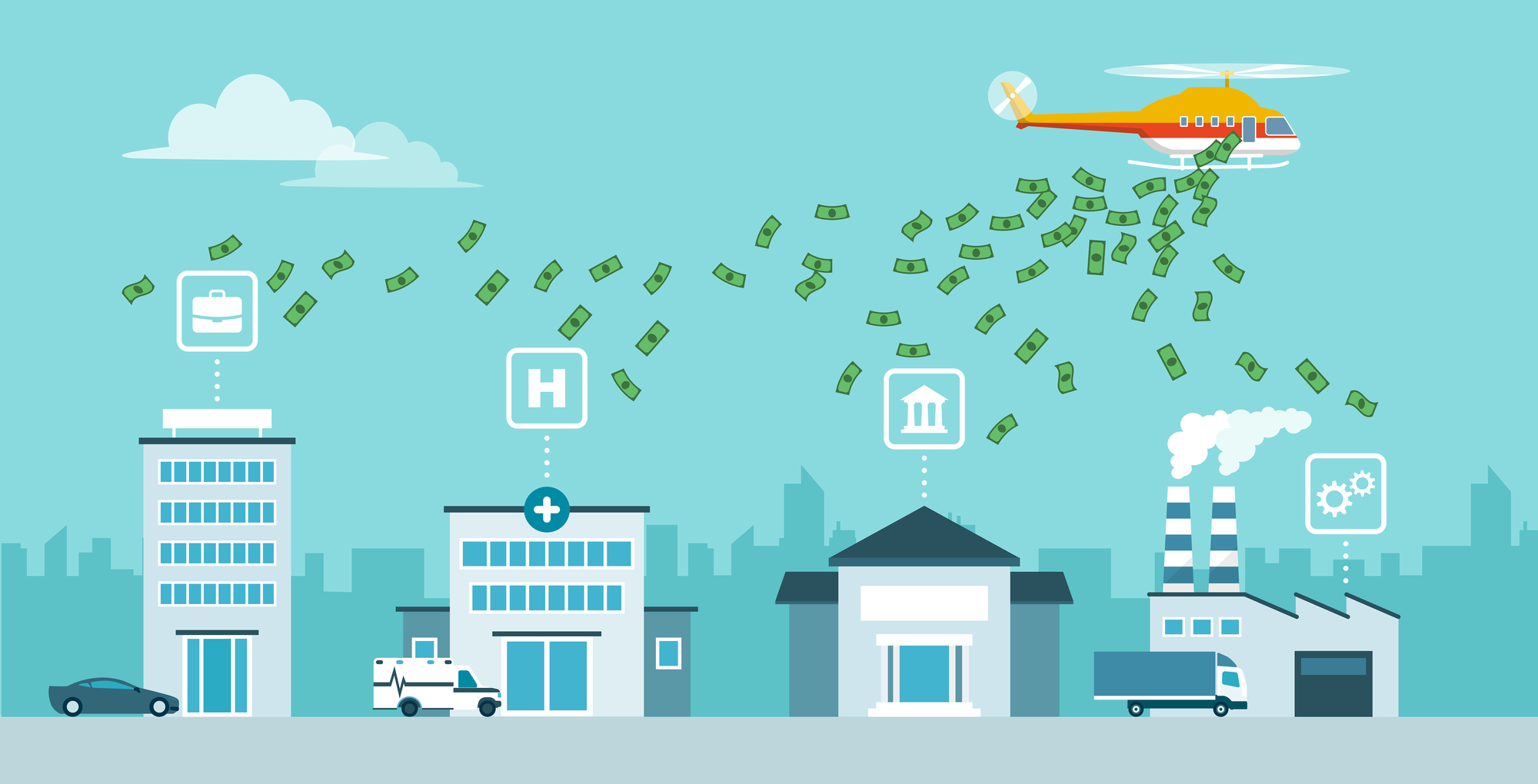
Poverty Is A Lack Of Cash (Rap Song)

[Hook]
Poverty is a lack of cash, straight facts, no cap
If you wanna end it, just give cash—make it snap
Direct transfers to the poorest, no middleman trap
Forget wealth tax, forget the government, forget the NGOs
Just give cash, watch the whole game collapse

[Verse 1]
I’m talkin’ build your billion-dollar company, stack it ruthless
Scale that vision to a trillion, move like you bulletproof, bitch
Consume what you will—private jets, yachts, the lavish truth
But what you will not consume? Give it away, that’s the proof
No more waitin’ on committees, no more red tape excuses
No more virtue-signal donors hidin’ behind their excuses
Direct to the bottom, hit the poorest with the nooses
Of poverty—cut ‘em loose, let the cash flow like juices

[Hook]
Poverty is a lack of cash, straight facts, no cap
If you wanna end it, just give cash—make it snap
Direct transfers to the poorest, no middleman trap
Forget wealth tax, forget the government, forget the NGOs
Just give cash, watch the whole game collapse

[Verse 2]
Not tomorrow, not in ten years, fuck the slow lane
Not when AI and robotics kill currency, that’s a future daydream
Today, right now—hit send, feel the power surge
Split the shares, keep the voting power if you gotta preserve
But liquidate the cash, flood the streets where the hurt live
End poverty in real time, make the numbers flip the script
Billionaires movin’ different, trillionaires in the mix
This ain’t charity, this is math—poverty’s just a lack of chips

[Bridge]
Yo, the system’s slow, the system’s broke, we all know the deal
But you the one with the bag, you the one who can heal
No more talkin’, no more posts, no more feel-good reels
Just wire the funds, change the lives, make the poverty kneel

[Verse 3]
Build your empire, flex the muscle, own the whole board
Then give away what you don’t burn—watch the scoreboard
Reset the game for the forgotten, the ones ignored
Direct cash transfers hittin’ harder than any award
Keep the control, keep the throne, keep the founder’s edge
But flood the cash to the bottom where the real pain’s bred
This the new wave, this the real move, this the pledge
End poverty now—give cash, watch the world pledge

[Outro/Hook – slowed + reverb]
Poverty is a lack of cash… just give cash…
Direct to the poorest… today… right now…
Split the shares… keep the vote… but give away the cash…
End poverty.
End poverty.
End poverty.

View on Threads

Friday, April 10, 2026

Reimagining Equity To Serve Humanity


Elon Musk’s Next Bold Move: Giving Away $300 Billion While Keeping Control
Elon Musk was once showering at the YMCA while building his first company. The image sticks with you—not because it’s glamorous, but because it captures the raw intensity of a founder who has spent decades pushing the boundaries of what’s possible. He still pushes them. SpaceX, Tesla, Neuralink, xAI: each venture is framed as a step toward saving humanity, whether that means colonizing Mars before an asteroid ends life on Earth, or ensuring humanity has a backup plan if one does hit Mars.
Yet here we are, in the present. Today. Musk’s net worth hovers around $300 billion or more, almost entirely tied up in equity he refuses to sell. That is not an accident. As a founder-CEO, he understands that voting power is what matters more than cash in the bank. It lets him steer these companies toward the long-term missions he believes will define our species’ future. Fair enough. Control is a founder thing.
But what about right now?
There is a better way. Not a wealth tax. Not government seizure. Not another round of bureaucratic redistribution. Musk himself could reinvent the structure of his holdings—a corporate reinvention executed by the founder, for the founder’s own stated purpose of saving humanity. He keeps every vote, every board seat, every ounce of strategic control. But $300 billion in value is spun out into direct, immediate help for the world’s poorest people. No intermediaries. No foundations with overhead. Just cash where it is needed most.
India has already shown it is possible at scale. A few months ago, one state—roughly the size of France—direct-deposited the equivalent of $100 into the bank accounts of every woman in the state. The infrastructure exists: Aadhaar for identity, UPI for instant payments. The same system could be scaled globally. Take Aadhaar and UPI, export the model to every willing country, and let governments run quantitative easing straight into the accounts of the poorest 10 percent of their populations. No strings attached. Poverty, at its core, is a lack of cash. Give people cash and watch them spend it—on food, school fees, medicine, small businesses. The poorest spend immediately. Economists have long argued this is the least inflationary, most stimulative form of stimulus possible.
Musk could start tomorrow. Fund clean drinking water for entire regions—tens of billions of dollars, life-changing and measurable. Or scale the Sikh concept of Langar—free community kitchens serving one nutritious meal a day—to every village in India, every single day. A few weeks ago I was exchanging ideas on X with Sabeer Bhatia, the founder of Hotmail, about exactly this: turning Langar into a daily national program. The logistics are solvable. The money is the missing piece.
Accountability is built in. Musk would decide the structure, the timing, the metrics. No one could blame “the government” if something went wrong. He simply gives, the same way MacKenzie Scott has done it for years—quietly, quickly, and at massive scale. She doesn’t build another foundation with staff and reports and galas. She identifies effective organizations or, better yet, just transfers the money and gets out of the way. Billionaires everywhere should study that playbook.
This is not about punishing success. Musk has earned his voting power the hard way. It is about recognizing that the same founder discipline that built reusable rockets and electric cars can be applied to the urgent human suffering happening right now, on this planet, today. Split the shares. Keep the control. Deploy the capital directly. End poverty where it is cheapest and most effective to do so.
The man who wants to make humanity multi-planetary has already proven he can think in centuries. The question is whether he—and the rest of the world’s wealthiest—will also act in the present tense. Just give. The infrastructure is ready. The need is immediate. The founder who once showered at the YMCA is uniquely positioned to show the world what radical, self-directed generosity looks like while still steering the companies that will take us to Mars.
Humanity’s backup plan is important. So is the life of the child who goes to bed hungry tonight. Both can be true at the same time.


Wednesday, March 25, 2026

The Fastest Way to Eliminate Poverty


The Fastest Way to Eliminate Poverty
In the fight against global poverty, governments have spent trillions on complex welfare schemes, subsidies, and bureaucratic programs—only to watch inefficiency, leakage, and red tape swallow most of the money before it reaches those who need it. What if the solution could be simpler, faster, and more effective than anything tried before? The answer lies in a proven technological stack already operating at massive scale in India, combined with two radical policy moves: unconditional direct cash transfers funded, if necessary, by quantitative easing—and universal access to personal AI tutors in every citizen’s first language.Step One: Universal Digital Identity and Instant BankingFirst, put the entire population on a biometric digital ID system—think Aadhaar on steroids. Every adult and child receives a unique, verifiable digital identity linked to their biometrics or other secure markers. At the same moment, open an automatic bank account for every citizen. No paperwork. No branch visit. The digital ID and the bank account are instantly connected through a real-time payment infrastructure like India’s Unified Payments Interface (UPI).
The result is breathtakingly simple: every human being becomes a node on a national (or even global) financial grid. Money can move from government to citizen in seconds, with zero friction. No forms to fill, no officials to bribe, no queues at ration shops. The poorest 10 percent of the population—identified purely by income data already flowing through tax records, consumption patterns, and the digital ID—receive automatic monthly transfers straight into their accounts. No questions asked. The money simply appears.This is not theory. India has already enrolled over 1.4 billion people in Aadhaar and processes billions of UPI transactions every month. The infrastructure exists today. Scaling it to deliver poverty-ending cash is an engineering problem, not a political or technological one.Step Two: Unconditional Cash Transfers—Print the Money If You MustOnce the plumbing is in place, the government begins direct cash transfers to the bottom 10 percent. The transfers are large enough to lift every recipient above the poverty line—enough for food, shelter, healthcare, and a basic dignified life. No conditions. No means-testing bureaucracy. If you’re in the bottom decile, the money arrives on the first of every month, every year, until you climb out.
Critics will immediately raise the inflation objection. The elegant counter-argument is already visible in practice: when cash reaches the poorest, it gets spent immediately on local goods and services. That spending becomes income for farmers, shopkeepers, transporters, and small manufacturers. Demand rises, supply responds, and the velocity of money surges. The stimulus is direct and productive rather than leaking into asset bubbles or elite bank accounts.
If tax revenue and existing fiscal space are insufficient, print the money. Conduct targeted quantitative easing—not to bail out banks or inflate stock prices, but to inject liquidity straight into the hands of the hungriest consumers. Because the money is spent instantly on real-economy needs rather than hoarded or invested in financial speculation, the inflationary risk is minimal and the growth effect is immediate. History shows that well-targeted transfers in developing economies have multiplier effects far higher than conventional stimulus. This is stimulus on steroids—without the steroids’ side effects.Step Three: The Ultimate Force Multiplier—Personal AI TutorsWhile cash ends immediate deprivation, long-term escape from poverty requires capability. Here is the second revolutionary pillar: give every citizen a personal AI tutor, available 24/7 on their smartphone, speaking fluently in their mother tongue.
Imagine a child in a remote village who now has an infinitely patient teacher that adapts to their pace, explains concepts visually, quizzes them gently, and tracks progress in real time. An adult who wants to learn a trade, improve English, or understand financial literacy can do so without leaving home or paying fees. The AI tutor knows the curriculum, the local culture, and the individual’s learning style. It turns every phone into a world-class classroom.
The cost is negligible once the models are trained. The payoff is incalculable: a generation that is healthier, more skilled, more entrepreneurial, and far less likely to remain in the bottom 10 percent. Cash buys today; AI buys tomorrow.Why This Works Where Everything Else Has FailedTraditional anti-poverty programs fail for three predictable reasons: they are leaky, they are slow, and they treat symptoms instead of causes. The digital-ID-plus-UPI system plugs the leaks. Direct, unconditional transfers remove the delays. Cash plus AI attacks both symptoms and root causes—hunger today, ignorance tomorrow.
No new ministries are required. No army of inspectors. Just three things: (1) finish the digital identity and payment grid, (2) push the cash, and (3) deploy the AI tutors. The poorest will eat better tonight, sleep safer tomorrow, and—within a decade—raise children who never know poverty at all.
The technology already exists. The economic logic is sound. The only missing ingredient is the political will to execute at speed and at scale. Poverty is not inevitable. It is a solvable engineering problem—and we now have the tools to solve it faster than any generation in human history.


Aadhaar's Impact: India's Biometric Revolution – Transformation, Triumphs, and Trade-offs
Launched in 2009 by the Unique Identification Authority of India (UIDAI), Aadhaar is the world's largest biometric digital identity program. It assigns every resident a unique 12-digit number backed by fingerprints, iris scans, facial recognition, and demographic details. As of early 2026, more than 1.4 billion Aadhaar numbers have been issued—covering virtually the entire adult population and many children—making it a cornerstone of India's digital public infrastructure (DPI).
Its original goal was simple: provide a verifiable identity to the undocumented poor to improve welfare delivery. What followed was far bigger. Aadhaar became the foundation of the "JAM Trinity" (Jan Dhan bank accounts + Aadhaar + Mobile), enabling real-time, paperless, leakage-proof government-to-citizen payments. Paired with the Unified Payments Interface (UPI), it turbocharged financial inclusion and digital governance.The Economic Wins: Massive Savings and Leakage ReductionThe most quantifiable impact has been on government finances through Direct Benefit Transfers (DBT). By linking Aadhaar to bank accounts, the system automatically verifies beneficiaries and transfers subsidies straight into accounts—eliminating middlemen, ghost recipients, and duplicate claims.
  • Cumulative savings from DBT (largely Aadhaar-enabled) reached approximately ₹3.48 lakh crore (about $49 billion) by early 2026.
  • Food subsidies and Public Distribution System (PDS) alone accounted for ₹1.85 lakh crore—over half the total—by weeding out 5.2 crore ghost beneficiaries through biometric de-duplication.
  • Other schemes (LPG, pensions, scholarships) saw similar clean-ups, with ineligible beneficiaries (tax filers, landowners, government employees) removed en masse.
In FY26 alone, DBT disbursements hit ₹5.6 lakh crore across hundreds of schemes, reaching 176 crore beneficiaries—a 16-fold increase since DBT's full rollout.
These aren't just accounting wins. The money that used to vanish in corruption now reaches the intended recipients faster and more reliably. Studies link this to higher account usage, reduced precautionary savings by the poor, and broader economic activity. Financial Inclusion and Poverty AlleviationAadhaar has been credited with bringing hundreds of millions into the formal banking system:
  • Over 57.78 crore Jan Dhan accounts opened by February 2026, many for women and rural households who had never had a bank account before.
  • Aadhaar-enabled e-KYC made account opening instant and paperless.
  • It powers AEPS (Aadhaar Enabled Payment System) for biometric withdrawals even in remote areas and underpins the UPI explosion (billions of low-cost digital transactions monthly).
The broader effect? Greater transparency and targeting in welfare, which has supported India's dramatic poverty reduction (from ~47% in the early 1990s to around 4-5% by the late 2010s, per various government and World Bank metrics). Cash transfers via DBT have improved household savings, food security, children's education, and women's economic agency.
In the context of ideas like unconditional cash transfers to the bottom 10%, Aadhaar (plus UPI) provides the exact "plumbing" needed: universal digital ID + instant bank accounts = money delivered in seconds with near-zero leakage.The Challenges: Exclusion, Privacy, and Surveillance RisksAadhaar's story is not without serious costs. Critics argue the system has created new forms of exclusion while raising profound privacy and security questions.
  • Exclusion errors: Biometric authentication fails 8-10% of the time—higher for the elderly, manual laborers (whose fingerprints wear down), or people in areas with poor internet/connectivity. Surveys in places like Jharkhand once estimated exclusion rates as high as 20% in fully Aadhaar-mandated PDS outlets. Real-world cases have included denial of rations and, in extreme past instances, reports of starvation deaths linked to authentication failures.
  • Privacy and data risks: The centralized database has sparked fears of mass surveillance. Multiple data leaks (of Aadhaar numbers linked to other services) have occurred, though UIDAI insists the core biometric database has never been breached. The Supreme Court in 2018 upheld Aadhaar but struck down mandatory use for private entities and limited it to specific welfare cases—yet "Aadhaar creep" into banking, hotels, schools, and more persists. Civil society groups continue to warn it sets a risky global precedent for biometric ID systems.
  • Implementation flaws: Rushed rollout led to data errors that are hard to correct. Marginalized groups (rural poor, migrants) often bear the brunt.
UIDAI has responded with upgrades—facial authentication, virtual IDs, better encryption, and security protocols—but concerns about accountability and over-reliance on a single system remain. Net Impact: A Transformative Tool with Lessons for the WorldAadhaar has proven that a robust digital identity layer can slash corruption, accelerate financial inclusion, and make welfare delivery faster and fairer than ever before. It has saved the government tens of billions of dollars while putting money directly into the pockets of the poorest—exactly the mechanism envisioned in proposals for rapid poverty elimination via unconditional transfers.
At the same time, it demonstrates the trade-offs of centralized biometric systems: efficiency gains versus risks of exclusion, privacy erosion, and surveillance. Success depends on strong safeguards, redress mechanisms, offline fallbacks, and judicial oversight.
India's experience shows Aadhaar isn't a silver bullet—but when combined with UPI and political will, it becomes one of the most powerful anti-poverty tools ever built. The infrastructure exists today. The real question is how future governments (in India and beyond) learn from both its extraordinary achievements and its documented shortcomings.