
— Peter H. Diamandis, MD (@PeterDiamandis) April 2, 2026

The Sky's the New Highway: Why Flying Cars (eVTOLs) Are Inevitable—and Don't Need a Single Inch of New Asphalt
Peter Diamandis just dropped a prescient newsletter on X outlining how autonomous vehicles and eVTOLs—electric vertical takeoff and landing aircraft, or what we casually call flying cars—will reshape real estate, urban design, and daily life. He’s right: these machines aren’t sci-fi anymore. They’re here, they’re getting certified, and they’re about to make ground infrastructure look like a relic of the 20th century.
Here’s the core argument that seals their future: Flying cars don’t need you to build roads or lay down tracks. Above a few hundred feet, the sky is one vast, open superhighway in every direction—three-dimensional freedom that ground transport could never dream of. They’re essentially advanced drones: electric, increasingly autonomous, whisper-quiet (Joby’s aircraft cruise at just 45 decibels—library levels—and 100 times quieter on takeoff/landing than helicopters), and rapidly becoming cost-competitive with Uber rides or even personal car ownership. No traffic lights, no potholes, no endless commutes. Just point-to-point aerial hops that turn hours into minutes.
This isn’t hype. It’s physics and economics meeting exponential tech progress. Traditional transport demands trillions in concrete and steel. eVTOLs need only compact “vertiports”—small pads often on rooftops, parking garages, or existing heliports—plus charging infrastructure that recharges in under 20 minutes. The airspace above cities is already regulated; scaling it for drones and air taxis is far cheaper and faster than expanding highways. And because they’re drones at heart, many will operate with minimal human pilots (or none), leveraging the same AI safety leaps we’re seeing in robotaxis like Waymo’s 92% crash reduction.
Major Players, Current Stages, and Expansion Plans
The eVTOL industry has narrowed to about 20 serious contenders out of 500+ worldwide, with a handful leading the charge toward commercial reality as of April 2026.


/EHang%20216/EHang-26-fron-view-doors-open.jpg)
How Long Until an Average City Globally?
The timeline is accelerating faster than most expect—thanks precisely to that “no roads required” advantage.
The Bottom Line: A Three-Dimensional Future
Diamandis nails it: we don’t have a land scarcity problem—we have a mobility problem. Flying cars solve it elegantly. They’re quiet, safe, efficient drones operating in an infinite sky of “roads.” No more parking lots devouring city land. No more hours wasted in gridlock. Islands, mountains, and suburbs become viable daily destinations. Real estate reprices. Time expands.
The companies above aren’t dreaming—they’re flying prototypes today, certifying now, and launching services this year. The sky isn’t falling. It’s opening up. The only question left is whether you’ll be riding in one before everyone else figures it out. The future isn’t coming—it’s already airborne.
Peter Diamandis just dropped a prescient newsletter on X outlining how autonomous vehicles and eVTOLs—electric vertical takeoff and landing aircraft, or what we casually call flying cars—will reshape real estate, urban design, and daily life. He’s right: these machines aren’t sci-fi anymore. They’re here, they’re getting certified, and they’re about to make ground infrastructure look like a relic of the 20th century.
Here’s the core argument that seals their future: Flying cars don’t need you to build roads or lay down tracks. Above a few hundred feet, the sky is one vast, open superhighway in every direction—three-dimensional freedom that ground transport could never dream of. They’re essentially advanced drones: electric, increasingly autonomous, whisper-quiet (Joby’s aircraft cruise at just 45 decibels—library levels—and 100 times quieter on takeoff/landing than helicopters), and rapidly becoming cost-competitive with Uber rides or even personal car ownership. No traffic lights, no potholes, no endless commutes. Just point-to-point aerial hops that turn hours into minutes.
This isn’t hype. It’s physics and economics meeting exponential tech progress. Traditional transport demands trillions in concrete and steel. eVTOLs need only compact “vertiports”—small pads often on rooftops, parking garages, or existing heliports—plus charging infrastructure that recharges in under 20 minutes. The airspace above cities is already regulated; scaling it for drones and air taxis is far cheaper and faster than expanding highways. And because they’re drones at heart, many will operate with minimal human pilots (or none), leveraging the same AI safety leaps we’re seeing in robotaxis like Waymo’s 92% crash reduction.
Major Players, Current Stages, and Expansion Plans
The eVTOL industry has narrowed to about 20 serious contenders out of 500+ worldwide, with a handful leading the charge toward commercial reality as of April 2026.
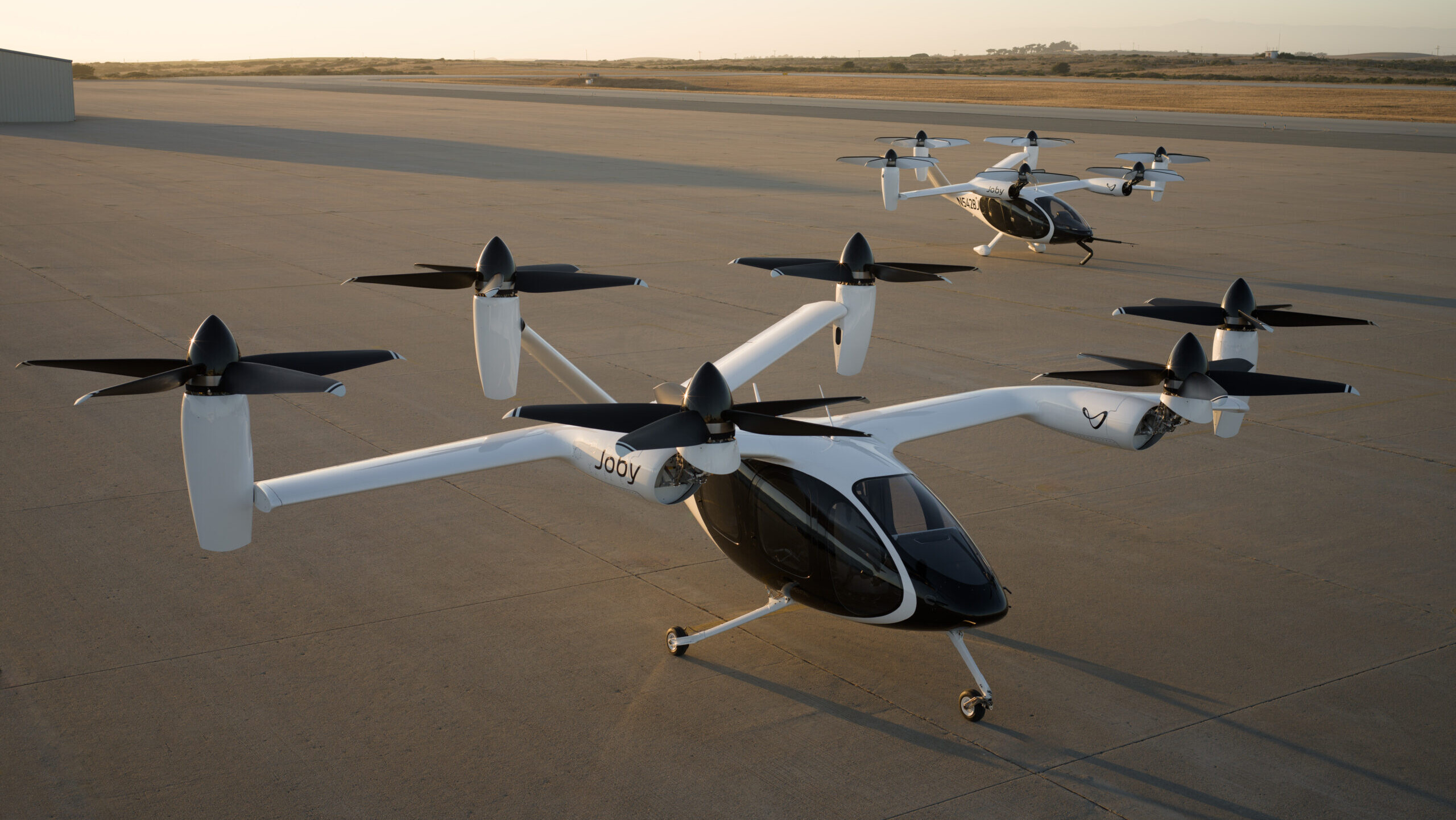
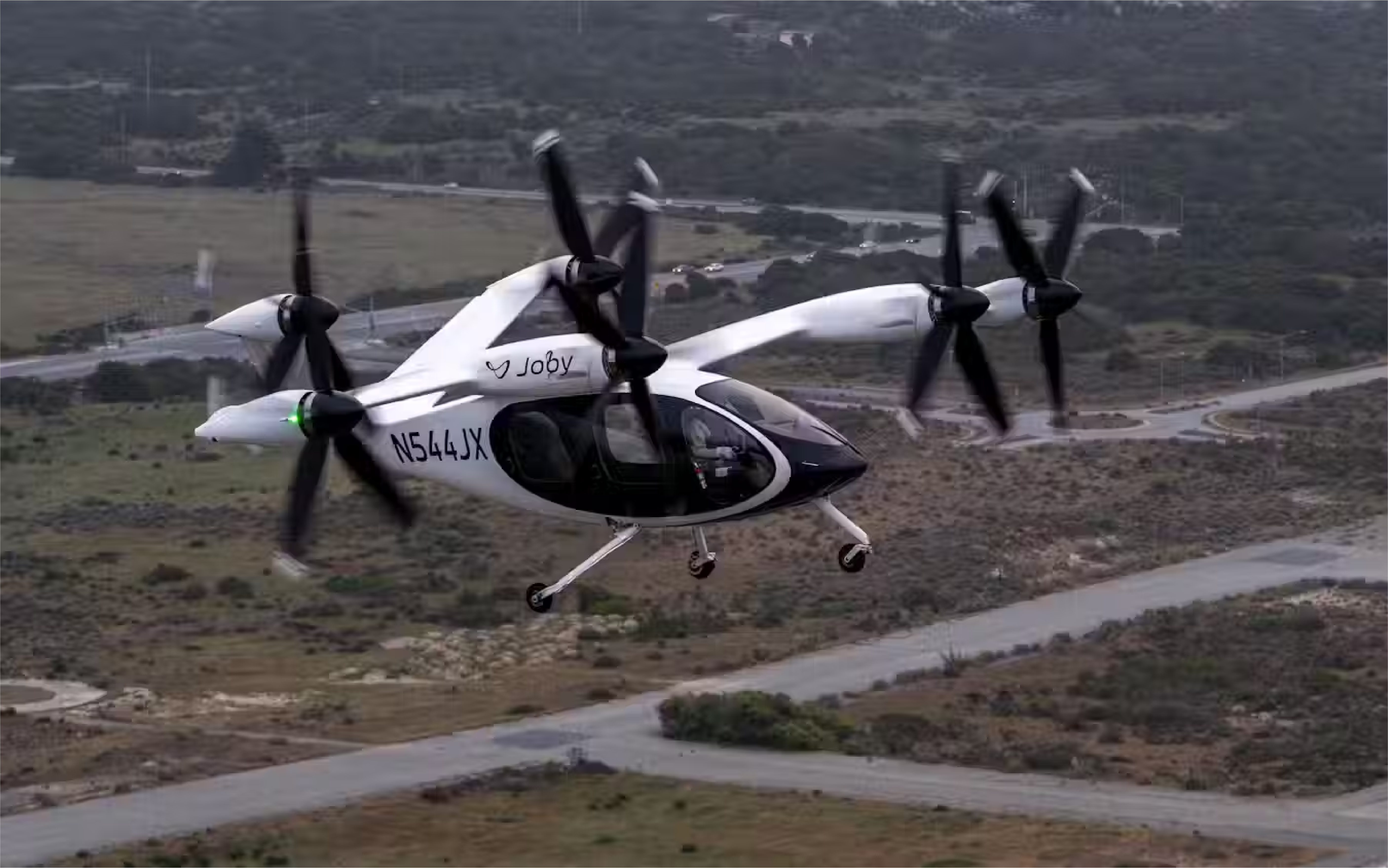
- Joby Aviation (S4 aircraft): The U.S. frontrunner. It just completed testing of its first FAA-conforming production aircraft, including demo flights over San Francisco’s Golden Gate Bridge. Joby is in Stage 4 of the FAA’s five-stage certification (test plans and flights underway), with full type certification targeted soon. Specs: 1 pilot + 4 passengers, 200 mph cruise, 150-mile range—perfect for LA-to-San Diego or Manhattan-to-Hamptons hops. It’s partnering with Uber for “Uber Air” services and recently acquired Blade Air Mobility’s passenger routes for instant infrastructure. Expansion: Commercial launch in Dubai as early as 2026; U.S. pilot program flights starting summer 2026 across multiple states via the FAA’s new eVTOL Integration Pilot Program (e-IPP). Joby aims for rapid urban air taxi networks, with Toyota as a major manufacturing partner.
- Archer Aviation (Midnight aircraft): Right on Joby’s heels and the first U.S. company to secure 100% FAA acceptance of its “means of compliance.” Optimized for shorter urban hops: 1 pilot + 4 passengers, 150 mph, 60-mile range. It has a massive $6 billion order backlog (including United Airlines) and was named the official air taxi provider for the 2028 LA Olympics. Archer just bought Hawthorne Airport near LAX as a hub. Expansion: Heavy involvement in the FAA’s 26-state e-IPP pilot starting summer 2026, with eyes on Texas, California, and beyond. Full commercial ops targeted for 2028 in LA.
- EHang (EH216-S): The world’s first fully certified autonomous eVTOL (China’s CAAC approval in 2023). No pilot needed—just two passengers in a drone-like pod. It has logged 40,000+ test flights and is already generating revenue. Expansion: Ticketed sightseeing flights launching in Chinese cities like Guangzhou right now (Q1 2026), with plans for broader passenger services. It’s expanding into the Middle East and Europe, backed by China’s “low-altitude economy” push.
How Long Until an Average City Globally?
The timeline is accelerating faster than most expect—thanks precisely to that “no roads required” advantage.
- 2026: First commercial passenger flights in Dubai (Joby) and China (EHang sightseeing). U.S. e-IPP pilots begin summer operations across 26 states for testing urban air taxis, regional links, cargo, and medical flights.
- 2027–2028: Limited U.S. commercial air taxi services in major metros like LA (Archer for Olympics) and select hubs. Vertiports will start appearing on rooftops and airports.
- 2030s: Scale-up in high-density cities worldwide. Costs drop to rival ground transport as fleets grow and autonomy matures (ARK Invest projects ~20–40 cents per mile). Europe, Middle East, and Asia follow China/UAE leads.
The Bottom Line: A Three-Dimensional Future
Diamandis nails it: we don’t have a land scarcity problem—we have a mobility problem. Flying cars solve it elegantly. They’re quiet, safe, efficient drones operating in an infinite sky of “roads.” No more parking lots devouring city land. No more hours wasted in gridlock. Islands, mountains, and suburbs become viable daily destinations. Real estate reprices. Time expands.
The companies above aren’t dreaming—they’re flying prototypes today, certifying now, and launching services this year. The sky isn’t falling. It’s opening up. The only question left is whether you’ll be riding in one before everyone else figures it out. The future isn’t coming—it’s already airborne.
Out of the Box: Why Flying Cars Will Make the 100-Mile City Unimaginable Without Them
The surface of the Earth is a box. We’ve been trapped inside it for a century—building wider roads, deeper tunnels, and taller rail lines just to inch a little farther, a little faster. But flying cars, or eVTOLs, break the box. They go vertical. And once they do, the geometry changes everything.
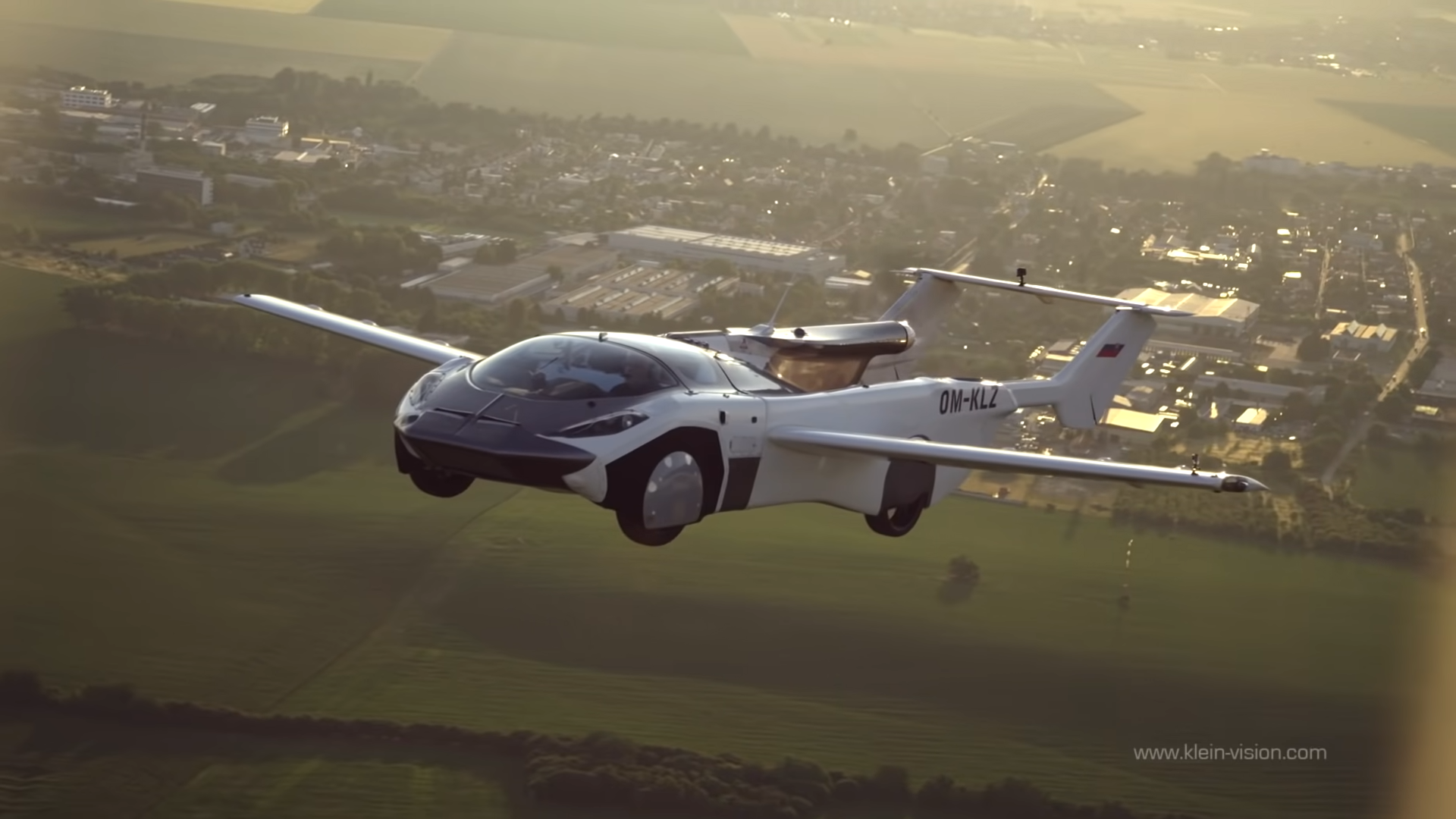
Peter Diamandis highlighted it, and the math is irrefutable: in the 100-mile range, flying cars have geometric advantages so profound that cities without them will soon feel as outdated as cities without subways. Above a few hundred feet, the sky becomes an infinite, three-dimensional superhighway. No lanes. No intersections. No gridlock. Just straight-line freedom in every direction—point-to-point from almost anywhere to almost anywhere else.
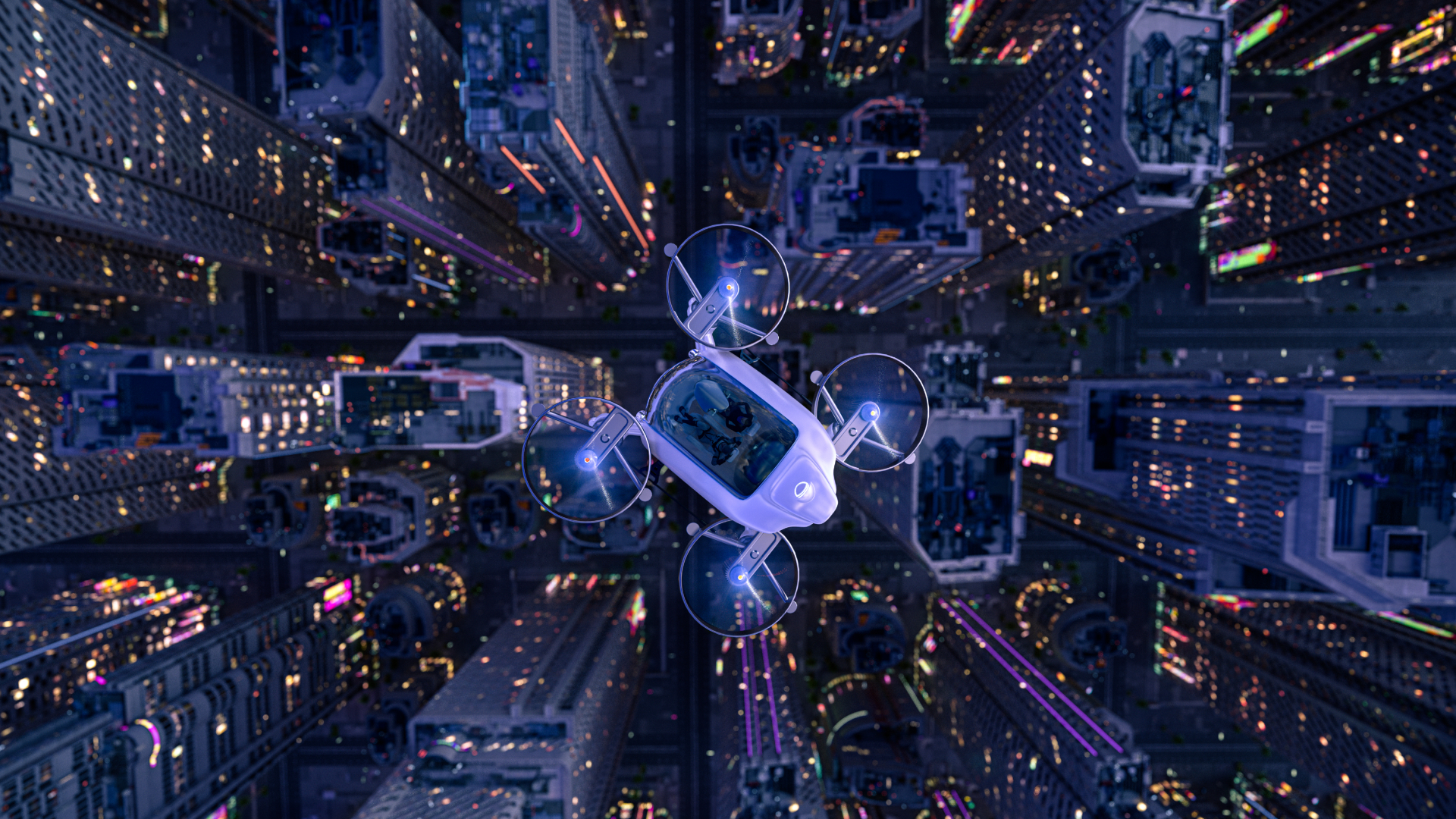
Think about it. A typical eVTOL sweet spot is 50–150 miles: perfect for the daily sprawl of modern metros. Los Angeles to San Diego. New York to the Hamptons. London to Birmingham. Shanghai suburbs to the financial district. On the ground, you’re fighting 2D constraints—fixed roads, traffic signals, construction zones, and parking shortages. Buses and trains lock you into rigid corridors with massive stations that devour downtown real estate. Even cars, the supposed kings of flexibility, demand vast networks of asphalt and can’t escape rush-hour paralysis.
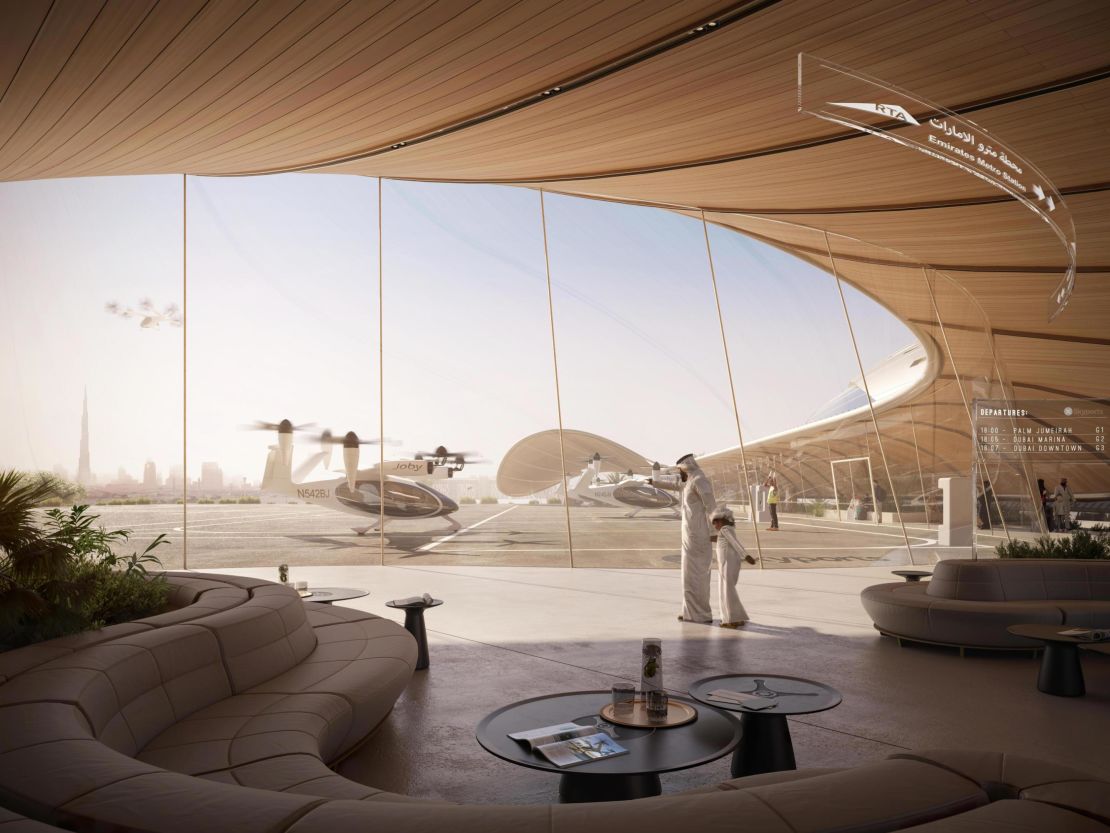
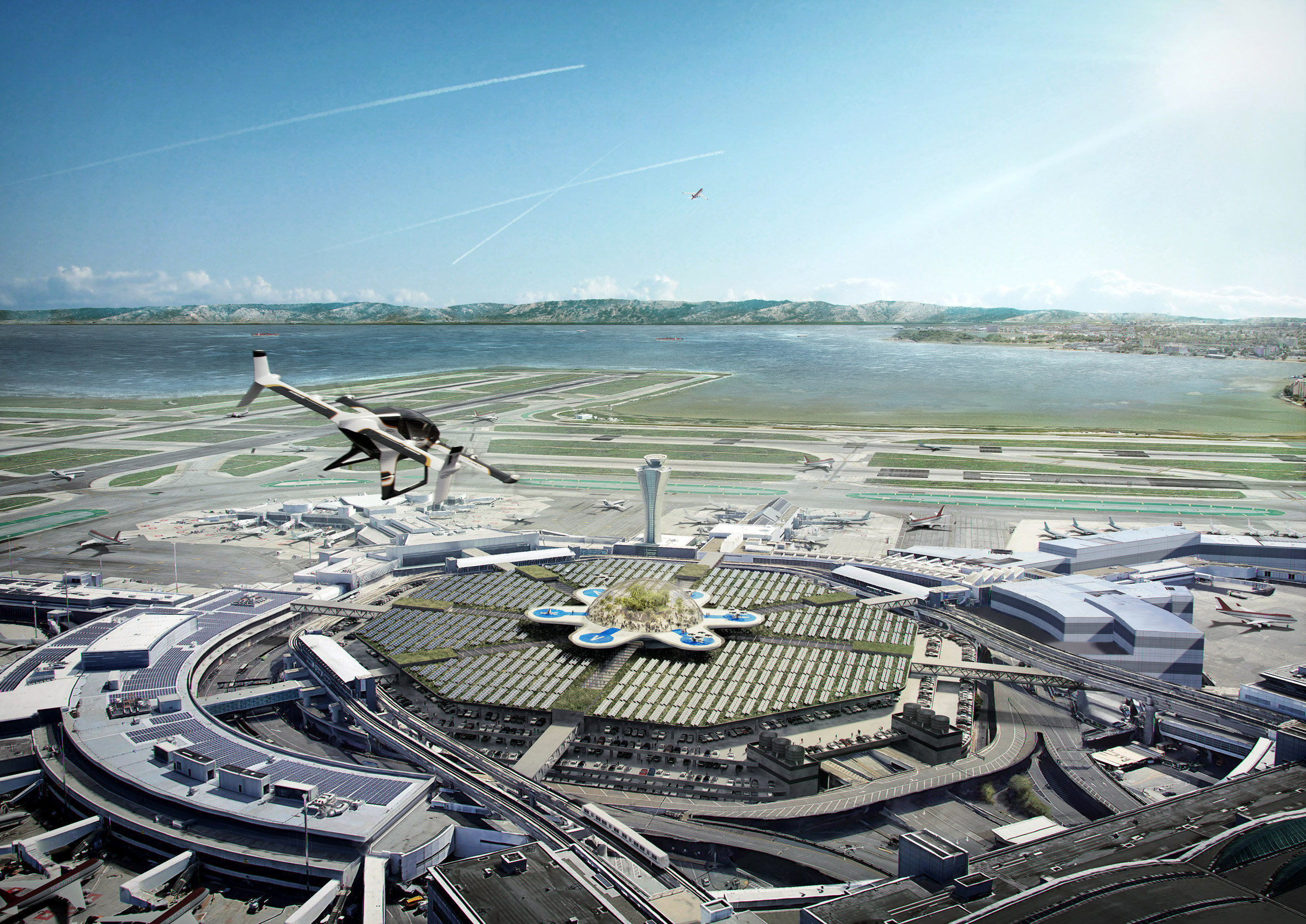
Flying cars flip the script. They carry small loads—usually four to six passengers—exactly like an Uber or taxi, but without the roads. No need for elaborate terminals or rail yards. A vertiport can be a compact pad on a rooftop, the top level of a parking garage, or a repurposed corner of an existing heliport. Land, charge in 15–20 minutes, and lift off again. The entire “infrastructure” is measured in square meters, not square miles.


This is out-of-the-box thinking in the most literal sense. By escaping the surface, you suddenly have unlimited road surface overhead. One eVTOL route doesn’t block another; they simply stack in three dimensions with safe vertical separation. The same AI that powers today’s robotaxis handles the coordination effortlessly. And because these vehicles are electric and drone-like at heart, they’re quiet—far quieter than helicopters—and emissions-free.
The Metro Moment for the Sky
It’s hard to imagine a large city today without a metro system. Yet metros are 19th-century technology: expensive tunnels, fixed tracks, huge stations, and one-size-fits-all capacity. Flying cars deliver metro-level transformation with 21st-century elegance. They don’t replace subways for ultra-dense downtown hops; they complement them for the 20–100 mile “last mile” (or last hundred miles) that ground options struggle with. Suburbs, airports, business parks, and even nearby cities become as accessible as a quick elevator ride to the roof.
Once fleets scale and costs drop to Uber-comparable levels (projected within the decade as utilization soars), adoption will feel inevitable. Daily commutes that once devoured two hours become 20-minute aerial hops. Real-estate values shift—waterfront or mountain homes become viable daily commutes. Emergency services reach patients faster. Tourism explodes with sky views instead of gridlock. And cities breathe easier as surface traffic eases.
Real Aircraft, Real Timelines
This isn’t vaporware. Joby Aviation’s S4 and Archer’s Midnight are in late-stage FAA certification, with commercial flights slated for Dubai and U.S. pilot programs this year (2026). EHang’s fully autonomous EH216-S is already flying paying passengers in China. Beta, Lilium, and others are close behind. Vertiports are being designed into new buildings and retrofitted onto existing ones right now. The 100-mile geometric sweet spot is exactly where these aircraft shine—fast, efficient, and ready to prove the point.
The Sky Is the New Default
In a few short years, we’ll look back at surface-only mobility the way we now view horse-and-buggy eras: quaint, but obviously limited. Flying cars don’t just solve congestion; they redefine possibility. They turn the box we’ve lived in upside down and open the lid to unlimited freedom above.
The average city won’t just have flying cars. It will be unimaginable without them—just like it’s unimaginable today without a metro. The only question is how quickly we stop staring at the ground and start looking up. The future isn’t coming down the road. It’s already lifting off.
The surface of the Earth is a box. We’ve been trapped inside it for a century—building wider roads, deeper tunnels, and taller rail lines just to inch a little farther, a little faster. But flying cars, or eVTOLs, break the box. They go vertical. And once they do, the geometry changes everything.
Peter Diamandis highlighted it, and the math is irrefutable: in the 100-mile range, flying cars have geometric advantages so profound that cities without them will soon feel as outdated as cities without subways. Above a few hundred feet, the sky becomes an infinite, three-dimensional superhighway. No lanes. No intersections. No gridlock. Just straight-line freedom in every direction—point-to-point from almost anywhere to almost anywhere else.
Think about it. A typical eVTOL sweet spot is 50–150 miles: perfect for the daily sprawl of modern metros. Los Angeles to San Diego. New York to the Hamptons. London to Birmingham. Shanghai suburbs to the financial district. On the ground, you’re fighting 2D constraints—fixed roads, traffic signals, construction zones, and parking shortages. Buses and trains lock you into rigid corridors with massive stations that devour downtown real estate. Even cars, the supposed kings of flexibility, demand vast networks of asphalt and can’t escape rush-hour paralysis.
Flying cars flip the script. They carry small loads—usually four to six passengers—exactly like an Uber or taxi, but without the roads. No need for elaborate terminals or rail yards. A vertiport can be a compact pad on a rooftop, the top level of a parking garage, or a repurposed corner of an existing heliport. Land, charge in 15–20 minutes, and lift off again. The entire “infrastructure” is measured in square meters, not square miles.
This is out-of-the-box thinking in the most literal sense. By escaping the surface, you suddenly have unlimited road surface overhead. One eVTOL route doesn’t block another; they simply stack in three dimensions with safe vertical separation. The same AI that powers today’s robotaxis handles the coordination effortlessly. And because these vehicles are electric and drone-like at heart, they’re quiet—far quieter than helicopters—and emissions-free.
The Metro Moment for the Sky
It’s hard to imagine a large city today without a metro system. Yet metros are 19th-century technology: expensive tunnels, fixed tracks, huge stations, and one-size-fits-all capacity. Flying cars deliver metro-level transformation with 21st-century elegance. They don’t replace subways for ultra-dense downtown hops; they complement them for the 20–100 mile “last mile” (or last hundred miles) that ground options struggle with. Suburbs, airports, business parks, and even nearby cities become as accessible as a quick elevator ride to the roof.
Once fleets scale and costs drop to Uber-comparable levels (projected within the decade as utilization soars), adoption will feel inevitable. Daily commutes that once devoured two hours become 20-minute aerial hops. Real-estate values shift—waterfront or mountain homes become viable daily commutes. Emergency services reach patients faster. Tourism explodes with sky views instead of gridlock. And cities breathe easier as surface traffic eases.
Real Aircraft, Real Timelines
This isn’t vaporware. Joby Aviation’s S4 and Archer’s Midnight are in late-stage FAA certification, with commercial flights slated for Dubai and U.S. pilot programs this year (2026). EHang’s fully autonomous EH216-S is already flying paying passengers in China. Beta, Lilium, and others are close behind. Vertiports are being designed into new buildings and retrofitted onto existing ones right now. The 100-mile geometric sweet spot is exactly where these aircraft shine—fast, efficient, and ready to prove the point.
The Sky Is the New Default
In a few short years, we’ll look back at surface-only mobility the way we now view horse-and-buggy eras: quaint, but obviously limited. Flying cars don’t just solve congestion; they redefine possibility. They turn the box we’ve lived in upside down and open the lid to unlimited freedom above.
The average city won’t just have flying cars. It will be unimaginable without them—just like it’s unimaginable today without a metro. The only question is how quickly we stop staring at the ground and start looking up. The future isn’t coming down the road. It’s already lifting off.
Sky-Born Cities: The First Metropolises Built for Walking and Flying Cars Alone
Imagine a city with no roads for cars. No bus lanes. No train tracks carving through neighborhoods. No parking lots swallowing blocks of land. Instead, the ground belongs entirely to people—wide pedestrian promenades, lush parks, bike paths, and open plazas. To go anywhere beyond a short stroll, you simply walk five minutes to the nearest vertiport and hop into a flying car. On-demand, electric, point-to-point. This isn’t a sci-fi sketch. It’s the logical endpoint of the eVTOL revolution, and it will first happen in cities built from scratch.
The surface of the Earth has always been the box constraining urban design. Legacy cities are prisoners of 20th-century infrastructure: highways that divide communities, vast asphalt deserts for parking, and rigid transit corridors that dictate where you can live and work. But a brand-new city has no such baggage. Planners can design it for the third dimension from day one. The sky becomes the highway. The ground becomes livable again.

In these sky-born cities, transportation shrinks to two simple choices: walk or fly. Every building—residential towers, offices, schools, hospitals, shops—will integrate compact vertiports on rooftops or upper levels. No massive stations. No elaborate infrastructure. Just a safe landing pad, charging station, and passenger lounge the size of a small café. AI-orchestrated air traffic keeps thousands of quiet eVTOLs flowing safely overhead in stacked corridors, while the streets below remain car-free paradises. Need groceries? Walk to the corner store or summon a two-minute aerial ride. Heading to the airport district 40 miles away? Your flying car is already descending onto the roof as you step out the door.

This model turns urban geometry inside out. Traditional cities waste enormous amounts of land on roads and parking—up to 30–40% in some American metros. A flying-car-only city reclaims every square foot for housing, greenery, recreation, and community. Density can increase without congestion. Commutes that once devoured hours become 10–20 minute hops. Emergency services reach anyone in minutes. And because eVTOLs carry small groups (four to six passengers) like aerial Ubers, they match the flexible, on-demand lifestyle modern cities crave—without the noise or emissions of helicopters.
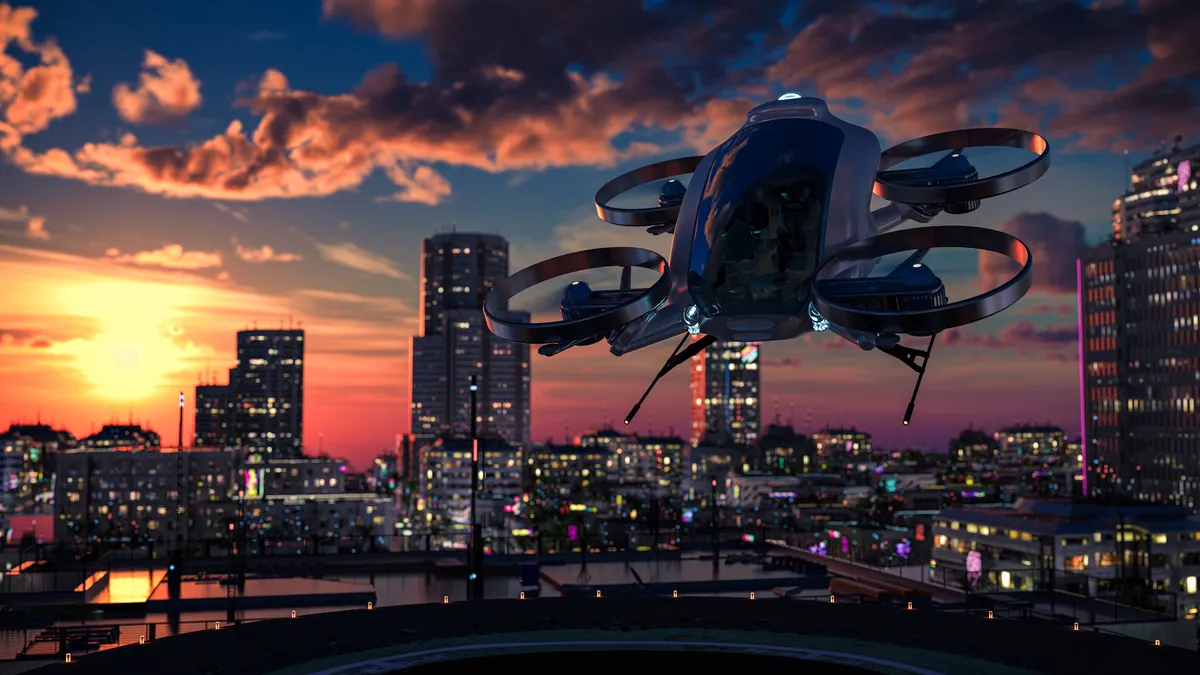
The seeds of this future are already sprouting. Saudi Arabia’s NEOM—the world’s most ambitious from-scratch megacity—is explicitly planning advanced air mobility as a cornerstone. It has already flown its first eVTOL test and is integrating vertiports into its design alongside sustainable energy and robotics. The UAE, racing ahead with 2026 commercial launches in Dubai and Abu Dhabi via Joby Aviation and Archer Aviation, is proving the technology works in dense environments and will likely inspire new districts or satellite cities built around it. China’s EHang is already operating autonomous passenger flights, showing that drone-like flying cars can scale safely today.
Major Players Ready for the Sky-Born Leap
The Livability Revolution
Picture it: morning coffee on your balcony as an eVTOL silently lifts off the roof above. Kids walking safely to school on tree-lined paths with no traffic danger. Dinner across the city in under 15 minutes, no reservation needed for a parking spot because there are none. Air quality improves dramatically. Real estate explodes in value as “location, location, location” now includes “altitude accessibility.” And the psychological shift is profound—cities feel open, connected, and future-proof rather than cramped and exhausting.
Of course, challenges remain: airspace management at scale, equitable access, and public acceptance. But these are solvable engineering and policy problems, not fundamental barriers. Cities built from scratch skip the hardest part—ripping out old roads.
The box is opening. The first sky-born cities won’t just have flying cars. They will be defined by them—pedestrian at heart, limitless in reach. In a world racing toward sustainability and density, this is the ultimate out-of-the-box solution: keep the ground for living, and give the sky to movement. The future isn’t paved. It’s airborne. And some cities will prove it first.
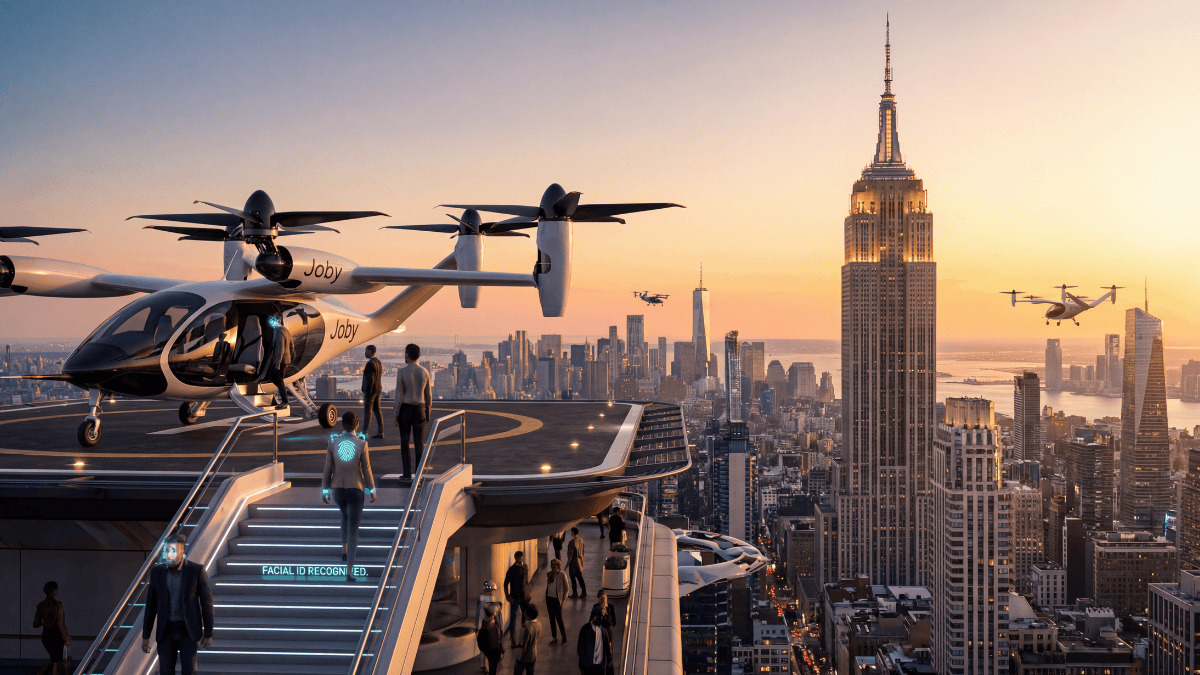
Imagine a city with no roads for cars. No bus lanes. No train tracks carving through neighborhoods. No parking lots swallowing blocks of land. Instead, the ground belongs entirely to people—wide pedestrian promenades, lush parks, bike paths, and open plazas. To go anywhere beyond a short stroll, you simply walk five minutes to the nearest vertiport and hop into a flying car. On-demand, electric, point-to-point. This isn’t a sci-fi sketch. It’s the logical endpoint of the eVTOL revolution, and it will first happen in cities built from scratch.
The surface of the Earth has always been the box constraining urban design. Legacy cities are prisoners of 20th-century infrastructure: highways that divide communities, vast asphalt deserts for parking, and rigid transit corridors that dictate where you can live and work. But a brand-new city has no such baggage. Planners can design it for the third dimension from day one. The sky becomes the highway. The ground becomes livable again.
In these sky-born cities, transportation shrinks to two simple choices: walk or fly. Every building—residential towers, offices, schools, hospitals, shops—will integrate compact vertiports on rooftops or upper levels. No massive stations. No elaborate infrastructure. Just a safe landing pad, charging station, and passenger lounge the size of a small café. AI-orchestrated air traffic keeps thousands of quiet eVTOLs flowing safely overhead in stacked corridors, while the streets below remain car-free paradises. Need groceries? Walk to the corner store or summon a two-minute aerial ride. Heading to the airport district 40 miles away? Your flying car is already descending onto the roof as you step out the door.
This model turns urban geometry inside out. Traditional cities waste enormous amounts of land on roads and parking—up to 30–40% in some American metros. A flying-car-only city reclaims every square foot for housing, greenery, recreation, and community. Density can increase without congestion. Commutes that once devoured hours become 10–20 minute hops. Emergency services reach anyone in minutes. And because eVTOLs carry small groups (four to six passengers) like aerial Ubers, they match the flexible, on-demand lifestyle modern cities crave—without the noise or emissions of helicopters.
The seeds of this future are already sprouting. Saudi Arabia’s NEOM—the world’s most ambitious from-scratch megacity—is explicitly planning advanced air mobility as a cornerstone. It has already flown its first eVTOL test and is integrating vertiports into its design alongside sustainable energy and robotics. The UAE, racing ahead with 2026 commercial launches in Dubai and Abu Dhabi via Joby Aviation and Archer Aviation, is proving the technology works in dense environments and will likely inspire new districts or satellite cities built around it. China’s EHang is already operating autonomous passenger flights, showing that drone-like flying cars can scale safely today.
Major Players Ready for the Sky-Born Leap
- Joby Aviation and Archer Aviation: Both targeting UAE operations in 2026, with production aircraft certified and vertiport networks under construction. Their quiet, efficient designs are perfect for dense, car-free urban grids.
- EHang: Fully autonomous EH216-S already carrying paying passengers in China—ideal for pilotless, on-demand service in a new city where every rooftop is a stop.
- Partnerships with Toyota, Boeing, and Embraer are accelerating manufacturing, while governments in the Gulf and Asia fast-track regulations precisely because new-build cities need no retrofitting.
The Livability Revolution
Picture it: morning coffee on your balcony as an eVTOL silently lifts off the roof above. Kids walking safely to school on tree-lined paths with no traffic danger. Dinner across the city in under 15 minutes, no reservation needed for a parking spot because there are none. Air quality improves dramatically. Real estate explodes in value as “location, location, location” now includes “altitude accessibility.” And the psychological shift is profound—cities feel open, connected, and future-proof rather than cramped and exhausting.
Of course, challenges remain: airspace management at scale, equitable access, and public acceptance. But these are solvable engineering and policy problems, not fundamental barriers. Cities built from scratch skip the hardest part—ripping out old roads.
The box is opening. The first sky-born cities won’t just have flying cars. They will be defined by them—pedestrian at heart, limitless in reach. In a world racing toward sustainability and density, this is the ultimate out-of-the-box solution: keep the ground for living, and give the sky to movement. The future isn’t paved. It’s airborne. And some cities will prove it first.
🚁 The Sky’s New Highway: The Rise of Flying Cars https://t.co/Aj4jx9vZ3D
— Paramendra Kumar Bhagat (@paramendra) April 2, 2026
I am doing the same to real estate, and you should invest: https://t.co/3XqoaGmqyZhttps://t.co/2jkvPbqYB2https://t.co/lxYVU9KLNh
— Paramendra Kumar Bhagat (@paramendra) April 2, 2026
