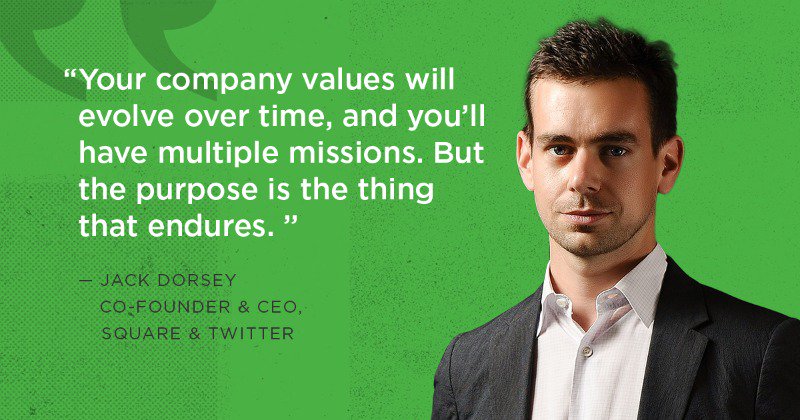
When Jack Dorsey talks about “intelligence tools” combined with “smaller and flatter teams,” he’s not describing incremental productivity gains. He’s describing a structural mutation in the organism of the company itself.
We are watching the industrial-era corporation dissolve.
For over a century, companies scaled through layers. Managers supervised managers who supervised workers. Information moved slowly. Decisions were centralized because coordination was expensive. Headcount was power. Control required hierarchy.
Intelligence tools change the math.
AI systems now write code, generate designs, analyze contracts, draft marketing campaigns, simulate strategy, and answer customer support queries. They compress what once required entire departments into a handful of humans working with machine copilots. The bottleneck is no longer labor hours—it’s judgment and direction.
That alters everything.
1. From Headcount to Leverage
In the 20th century, scale meant hiring. In the 21st century, scale increasingly means deploying intelligence.
A five-person startup today can:
Build software that once required a 50-person engineering team
Launch global marketing campaigns without an agency
Run financial modeling without a CFO office
Offer 24/7 support without a call center
The team becomes a control center, not a workforce. AI handles repetition; humans handle taste, strategy, and moral decisions.
The result: fewer people, but higher leverage per person.
2. The Collapse of Middle Management
Flatter teams aren’t just culturally trendy—they’re economically inevitable.
When AI systems provide:
Real-time dashboards
Automated reporting
Instant analysis
Transparent knowledge bases
The informational advantage of middle layers erodes. Managers used to exist partly because they aggregated and interpreted information. Now intelligence tools do that instantly.
This doesn’t eliminate leadership. It redefines it.
Leaders move from:
Supervising activity
toSetting direction, defining constraints, and allocating capital
The managerial role shifts from “overseeing tasks” to “designing systems.”
3. From Process to Iteration Speed
Intelligence tools drastically compress iteration cycles.
Product idea in the morning.
Prototype by lunch.
User feedback by evening.
Version two tomorrow.
This was once the privilege of well-funded organizations. Now it’s available to lean teams. The cost of experimentation approaches zero.
The competitive advantage shifts from “resources” to “speed of learning.”
Companies that learn fastest win.
4. The Rise of the Operator-Architect
In the old model, roles were narrow:
Marketing did marketing.
Engineering did engineering.
Finance did finance.
Now a single operator can:
Write product specs
Generate UI mockups
Build MVP code
Run paid ad tests
Model unit economics
AI collapses silos. The new archetype isn’t the specialist—it’s the orchestrator. Someone who understands systems and directs intelligence tools across domains.
Small teams become multidisciplinary by default.
5. Capital Efficiency as Strategy
Historically, raising capital was necessary to hire armies. Now capital can be deployed into:
Data infrastructure
AI models
Automation pipelines
Distribution
Instead of spending on payroll expansion, companies invest in intelligence amplification.
This increases margins.
It reduces burn.
It changes fundraising dynamics.
A startup reaching $10M ARR with 8 employees is no longer shocking. It’s becoming normal.
6. Asymmetry Between Individuals and Institutions
A powerful consequence: individuals gain disproportionate power.
A solo founder with AI tools can:
Build SaaS products
Publish books
Produce films
Analyze markets
Create global brands
The gap between what one person could do in 2005 and what one person can do in 2026 is staggering.
Companies are no longer fortresses of accumulated manpower. They are networks of augmented individuals.
7. Culture Becomes More Important, Not Less
When teams are small, each hire dramatically shapes culture.
There’s nowhere to hide.
No bureaucratic insulation.
No room for low performers.
Trust, autonomy, and alignment become existential. A 10-person team must function like a brain—high bandwidth, minimal friction, unified direction.
The intelligence tools amplify output. But human cohesion determines trajectory.
8. The Acceleration Factor
Dorsey’s final point—“and that’s accelerating rapidly”—may be the most important.
This isn’t a slow adoption curve like email or cloud software. AI capabilities compound monthly. Tooling improves continuously. Costs fall. Access widens.
Each new generation of models:
Handles more complex tasks
Requires less supervision
Integrates more deeply into workflows
The acceleration creates a strategic imperative: companies must redesign themselves now, not later.
Waiting means competing against teams that are:
5× faster
10× more capital efficient
Operating with 24/7 intelligence augmentation
9. What It Fundamentally Changes
It changes what it means to:
Build a company
Building is less about assembling labor and more about architecting intelligence systems.
Run a company
Running becomes about decision quality, speed, and alignment—not bureaucracy.
Scale a company
Scaling becomes distributing software and models, not hiring layers.
Lead a company
Leadership becomes system design, moral compass, and long-term vision.
We are moving from:
Industrial Organization → Intelligence Organization
From:
Hierarchies
Departments
Slow planning cycles
To:
Small, autonomous teams
AI-augmented workflows
Continuous iteration
The companies that internalize this shift will look almost alien compared to 20th-century corporations. Lean. Software-native. Hyper-adaptive.
Dorsey isn’t just describing a new productivity tool.
He’s describing the early stages of a post-bureaucratic corporate era—where intelligence is embedded into the fabric of work itself, and where the smallest teams, properly augmented, can rival giants.
The definition of “company” is being rewritten in real time.
There’s a massive transformation underway. Outsourcing giants like Infosys and Wipro were caught flat-footed by the AI wave. The same applies to individuals. Reinvent or become irrelevant. 2 years ago I didn’t know what an influencer was. Today, I am one.
— Sabeer Bhatia (@sabeer) February 27, 2026
I am a techno-optimist
— Shaun Maguire (@shaunmmaguire) February 27, 2026
The next few years will see a lot of people's jobs change
But I strongly believe the overall rising tide will lift all boats
It just requires an open mind to change
Below is a deep-dive analysis of Block, Inc. (formerly Square): its origin story, financial performance so far, trajectory for the next five years, and—critically—an argument that a more aggressive “up pivot” (e.g., 5×–10× ambition) strategy might have avoided recent massive layoffs and better unlocked long-term value.
1. Origin and Evolution
Founding & Early Purpose
Block began life as Square, Inc., co-founded in 2009 by Jack Dorsey and Jim McKelvey with a deceptively simple mission: democratize credit-card acceptance for small merchants. The iconic white Square Reader—a small dongle that plugged into a smartphone—gave tiny sellers access to digital payments they had previously been shut out of, transforming point-of-sale infrastructure for micro-businesses. (The Chronicle-Journal)
Strategic Expansion
Over the next decade, the company expanded far beyond hardware:
Cash App (2013): A peer-to-peer payments and financial services platform that grew into a consumer finance ecosystem. (The Chronicle-Journal)
Rebrand to Block, Inc. (2021): Signaled broader ambition beyond payments—into finance, embedded services, Bitcoin infrastructure, and ecosystem playbooks. (The Chronicle-Journal)
Afterpay Acquisition (2021): ~$29 billion buy-now-pay-later acquisition to link consumer and merchant experiences. (CNBC)
Ecosystem Strategy Today
Block’s model now rests on a dual-sided ecosystem:
Square (commerce/merchant platform) – POS systems, banking, payroll, and business financial tools.
Cash App (consumer ecosystem) – peer-to-peer, cards, banking, lending, investing.
Afterpay – BNPL bridging consumer demand and merchant throughput. (The Chronicle-Journal)
This cross-pollination strategy is explicitly designed to increase lifetime value (LTV) and reduce customer acquisition cost (CAC) by driving users and merchants deeper into Block’s stack.
2. Financial Story So Far
Block’s financial trajectory is nuanced—steady growth with shifting emphasis between top-line revenue, gross profit, and profitability:
Revenue & Profit Highlights
Recent reported performance
Full-year 2025 gross profit: ~$10.36 billion, ~17–24 % YoY growth. (Investing.com)
Q4 2025 gross profit accelerated ~24 % YoY to ~$2.87 billion. (Investing.com)
Adjusted operating income expanded ~30–46 % YoY (varies by segment). (Investing.com)
Business Segment Performance
Cash App Financial Solutions grew ~51 % in Q4 2025. (Investing.com)
**Commerce Enablement (Square) grew ~11 % in the same period. (Investing.com)
Quarterly Trends
Early-mid 2025 saw growth slow in some quarters (Cash App ~10 % gross profit growth). (Investing.com)
Stock performance has been volatile with periods of decline tied to revenue misses and slower user growth. (CNBC)
Market & Valuation Context
Block’s stock has faced significant downside pressure (~down ~29 % during portions of 2025). (The Guardian)
Yet, strong margin performance and improved earnings outlook have occasionally triggered share rallies.
Profitability improvements—augmented by cost discipline and share repurchases—underline a shift from growth-at-all-costs to more profit-centric economics.
3. Current Trajectory (2026–2030)
Block’s forward guidance leans on sustained growth, ecosystem integration, and profitability expansion.
Management Guidance
According to investor day projections:
Gross profit growing mid-teens annually through 2028, reaching ~$15.8 billion. (StreetInsider.com)
Adjusted operating income growing ~30 % annually through 2028, reaching ~$4.6 billion. (StreetInsider.com)
Targeted non-GAAP cash flow at ~25 % of gross profit by 2028. (StreetInsider.com)
Key Strategic Levers
Ecosystem integration: tighter cross-sell between Square, Cash App, and Afterpay. (The Chronicle-Journal)
International expansion: growing Square GPV outside the U.S. (Investing.com)
Product innovation: including financial solutions, lending, and embedded finance. (Nasdaq)
AI & efficiency: management pushing AI tools for product velocity and operational leverage.
While these projections suggest consistent growth, they still reflect mid-range ambition rather than transformational scaling.
4. The Layoffs: What Happened and Why
In early 2026, Block announced massive layoffs—initially reported at ~10 % from late 2025 reporting, and more recently up to ~40 % of workforce in restructuring moves focused on AI efficiency. (Blockchain Magazine)
Management framed these cuts as:
A pivot to smaller, more potent teams leveraging internal AI (e.g., tools to boost engineer output). (Reddit)
Streamlined structure to support long-term growth and product execution.
But workforce reductions approaching half the company raise questions about whether the company is optimizing—or shrinking because broader ambition stalled.
5. What an Up Pivot (5×–10× Ambition) Could Have Looked Like—and Why It Might Have Prevented Layoffs
An “up pivot” here means transforming Block’s ambition from incremental fintech growth to category-defining alpha ambitions—far beyond mid-teens growth—to create entirely new vectors of revenue and defensible moats.
Here’s how a 5×–10× strategy would differ:
A. Vision Shift: From Payment Processor to Financial Operating System
Instead of narrowing focus post-pandemic, Block could have:
Positioned itself aggressively as a global financial OS integrating payments, lending, deposits, identity, and credit at scale.
Launched embedded finance platform APIs that wholesale power neobanks and fintechs.
This unlocks network effects and recurring platform revenues.
Become a core financial layer for gig-economy platforms (Uber, DoorDash, Shopify).
Value levers arising:
Platform fees from third-party developers and partners.
Large and sticky recurring revenues.
A deep data moat for risk, underwriting, and personalization.
B. Compounding Network Effects
Traditional Square value is linear: each merchant pays fees.
A true financial OS would create multi-sided network effects:
More merchants → more consumer deposits → cheaper capital for lending → richer services → more users.
Monetization accelerates beyond point-of-sale margins.
C. Category Expansion Beyond Fintech
A real up pivot could have explored:
Business operating systems (accounting/ERP) as core revenue hubs.
AI-enhanced risk and credit scoring platforms sold to banks.
Tokenized assets and programmable finance leveraging Bitcoin/crypto.
Insurance and wealth platforms integrated via APIs.
These expansions would deliver:
Non-cyclical, sticky revenue
High gross margins
Data-driven network effects
D. Implications for Workforce and Growth
A more aggressive pivot toward platform and ecosystem growth—with higher revenue multipliers—could have:
Increased revenue faster.
Raised market confidence, reducing downward stock pressure.
Attracted talent and capital, thereby reducing the need to cut staff to meet short-term margins.
Investors typically freak out when growth slows, even if profits hold. But compounding revenue engines—with platform fees and rich data services—tend to trade at higher valuations and tolerate investment up front.
Why layoffs might have been avoidable
Block trimmed staff partially to improve margins and adoption of AI internally. But if:
Revenue growth had expanded faster—e.g., not mid-teens but steeper low-20s or 30 %+ compounding,
Recurring platform fees overtook transactional fees,
Gross margins improved from product diversification,
…then Block would have had both the growth narrative and profit profile investors crave—reducing pressure to cut.
Instead, with revenue growing only modestly and heavy cost cutting, the market narrative became “shrink to serve profit,” rather than “invest to win.”
6. Conclusion: A Strategic Crossroads
Block stands at a fork:
Current trajectory: steady fintech growth, margin focus, modest returns, layoffs as tactical resets.
Up pivot trajectory: build an unmatched financial OS with multi-sided network effects, API ecosystems, embedded finance, and platform monetization.
A strong up pivot doesn’t just reduce cost pressures—it redefines the growth equation by:
unlocking higher revenue multipliers,
increasing investor confidence, and
creating a structural moat around Block’s ecosystem.
In that world, layoffs become tactical reallocations of resources toward new growth engines, not reactive responses to stalled ambition.
Block is still a powerful company with quality fundamentals. But where it could have led the fintech landscape at 5× or 10× ambition is a story that would have looked very different from trimming nearly half its workforce in 2026.
If Block wants to rewrite its narrative from “lean-and-efficient fintech” to the foundational financial OS of the next decade, a bold up pivot—and the capabilities, investments, and cultural alignment behind it—may be its most transformative pivot yet.
The Layoffs at Block, Inc.: A Failure of Imagination at the Top?
When a company lays off a massive share of its workforce, the explanation is usually framed as discipline, efficiency, or strategic focus. In the case of Block, Inc., the narrative has centered on AI-driven productivity, flatter teams, and a sharpened mission.
But there is another interpretation.
What if the layoffs are not primarily a sign of strength or technological evolution—but a failure of ambition?
And what if that failure sits squarely with its co-founder and CEO, Jack Dorsey?
The Easier Path vs. The Harder Path
It is tempting to think layoffs are the “hard” decision and expansion is the “easy” one. In reality, the opposite is often true.
Cutting headcount is financially straightforward:
Reduce payroll.
Improve margins.
Signal discipline to markets.
Buy time.
But scaling ambition—5× or 10×—is harder. It requires:
Narrative courage.
Capital allocation boldness.
Organizational redesign.
Willingness to endure short-term volatility for long-term dominance.
It requires imagination.
If you have thousands of highly trained engineers, product leaders, designers, compliance experts, and fintech operators already embedded in your company, the most asymmetric move is often not contraction—but redeployment toward a bigger vision.
For a company already generating billions in gross profit, contraction signals something deeper: the ceiling of ambition may have been lowered.
Block Was Built for Something Bigger
From its founding as Square, Inc., the mission was not incremental. It was transformative: democratize access to financial infrastructure.
The acquisition of Afterpay.
The explosive rise of Cash App.
The rebrand to Block.
The early embrace of Bitcoin infrastructure.
This was the architecture of a financial super-platform.
Block was uniquely positioned to become:
The financial operating system for small businesses globally.
The programmable bank for the digital generation.
The connective tissue between merchants and consumers.
A developer platform for embedded finance.
Instead, recent years have seen cost tightening, margin focus, and restructuring.
Those are managerial moves.
They are not visionary ones.
The Moral Asymmetry
Here’s the uncomfortable truth:
It would likely have been easier for Jack Dorsey to:
5× the ambition of Block,
Raise capital around that ambition,
Redirect teams toward new moonshots,
Hire even more people into new growth engines,
than it will be for thousands of laid-off employees to:
Secure capital,
Form teams,
Build infrastructure,
Navigate regulatory complexity,
Launch viable companies in fintech.
A founder-CEO of a multibillion-dollar company has asymmetric leverage.
A laid-off product manager does not.
When you hold the asymmetric leverage and choose contraction over expansion, it invites scrutiny.
What a 5× or 10× Ambition Might Have Looked Like
Instead of optimizing mid-teens gross profit growth, Block could have declared:
We are building the global financial layer for the internet.
That might have meant:
1. Embedded Finance at Planetary Scale
Turning Block into the API backbone for every platform that needs:
Payments
Lending
Payroll
Compliance
Cross-border settlement
Becoming indispensable infrastructure rather than a product suite.
2. AI-Native Financial Intelligence
Deploying AI not just for internal efficiency—but as a new revenue category:
Real-time merchant optimization engines
Automated tax and accounting systems
Predictive cash flow lending models
Consumer financial copilots
Monetizable intelligence layers.
3. A Global SMB Banking Network
Launching aggressively in underbanked markets with:
Mobile-first merchant banking
Microcredit rails
Global cross-border payment corridors
The opportunity is not incremental. It is enormous.
4. Bitcoin & Programmable Finance Infrastructure
Rather than cautious positioning, doubling down:
Developer tools.
Open financial protocols.
Cross-border programmable settlement rails.
Whether one agrees with that direction or not, it would have been bold.
Bold narratives attract capital.
Bold narratives retain talent.
The Imagination Constraint
Layoffs often reveal not financial crisis—but strategic constraint.
If a company generating billions in gross profit chooses to shrink rather than build entirely new growth pillars, it suggests one of two things:
The leadership does not see credible 5× or 10× pathways.
The leadership does not believe markets will fund those pathways.
Both are imagination problems.
Because historically, capital flows toward ambition.
Companies that declare expansive missions—cloud infrastructure, electric vehicles, AI platforms—often receive long leashes from investors when the ambition is coherent and compelling.
Block had the ingredients:
Merchant base.
Consumer base.
Data.
Brand.
Engineering talent.
If those ingredients do not translate into radical expansion, the constraint is strategic vision.
The Psychological Signal
Layoffs send a signal to markets.
But they also send a signal internally:
We are tightening.
We are cautious.
We are optimizing.
That is a different psychological climate than:
We are expanding.
We are inventing.
We are hiring for new frontiers.
Talent gravitates toward expansion narratives.
In a world where AI is compressing cost structures, the companies that win will not be the most efficient. They will be the most expansive in scope.
The Counterargument—and Why It Falls Short
Defenders will say:
AI makes smaller teams more powerful.
Efficiency is strength.
Markets demand profitability.
All true.
But profitability and ambition are not mutually exclusive.
A company can:
Maintain discipline,
Use AI to amplify output,
And simultaneously expand scope.
The fact that thousands were let go instead of reassigned to new high-growth divisions suggests the ambition envelope narrowed rather than widened.
The Bigger Question
The core question is not whether the layoffs improve margins.
The question is:
Did they maximize possibility?
Because leadership at scale is not just about managing downside. It is about engineering upside.
If thousands of highly capable people leave a company not because they were unnecessary—but because the company chose not to pursue bigger terrain—that is not purely a financial event.
It is a strategic decision about how large the future is allowed to be.
Conclusion: A Test of Daring
Jack Dorsey has built world-changing platforms before. Few founders have shaped modern digital communication and fintech as profoundly.
But this moment feels less like visionary expansion and more like retrenchment.
The easier narrative is operational efficiency.
The harder narrative is insufficient daring.
In a time when intelligence tools enable smaller teams to build enormous systems, the paradox is this:
The constraint is no longer manpower.
It is imagination.
And when a company with Block’s assets shrinks rather than surges, it is fair to ask whether the ceiling was financial—or visionary.
we're making @blocks smaller today. here's my note to the company.
— jack (@jack) February 26, 2026
####
today we're making one of the hardest decisions in the history of our company: we're reducing our organization by nearly half, from over 10,000 people to just under 6,000. that means over 4,000 of you are…
Jack Dorsey's Reason For Firing Half His Team And How He Might Have Skipped It https://t.co/s9OyE3b1ta
— Paramendra Kumar Bhagat (@paramendra) February 28, 2026