I made a list of 100 AI tech startup ideas, all of them promising. From that I made a short list of 10 most likely to go to unicorn status the fastest. Then I wanted one that might rush to a trillion-dollar valuation. Answer: AI applied to marketing.
I have the top recognition in digital marketing. It is like an Oscar but for digital marketing.
It is also an amazingly revenue driven proposition. Every company needs marketing. And I am starting at the high end.
Any tech startup that has achieved product-market fit and has some revenues can hope to achieve unicorn status. I ask for 20% of revenues, and 20% of money raised. I outline how in my book Marketing Escape Velocity.
And then there is the Solara. A unicorn that has trillion-dollar potential. Solaras will be as common in 10 years as unicorns today.
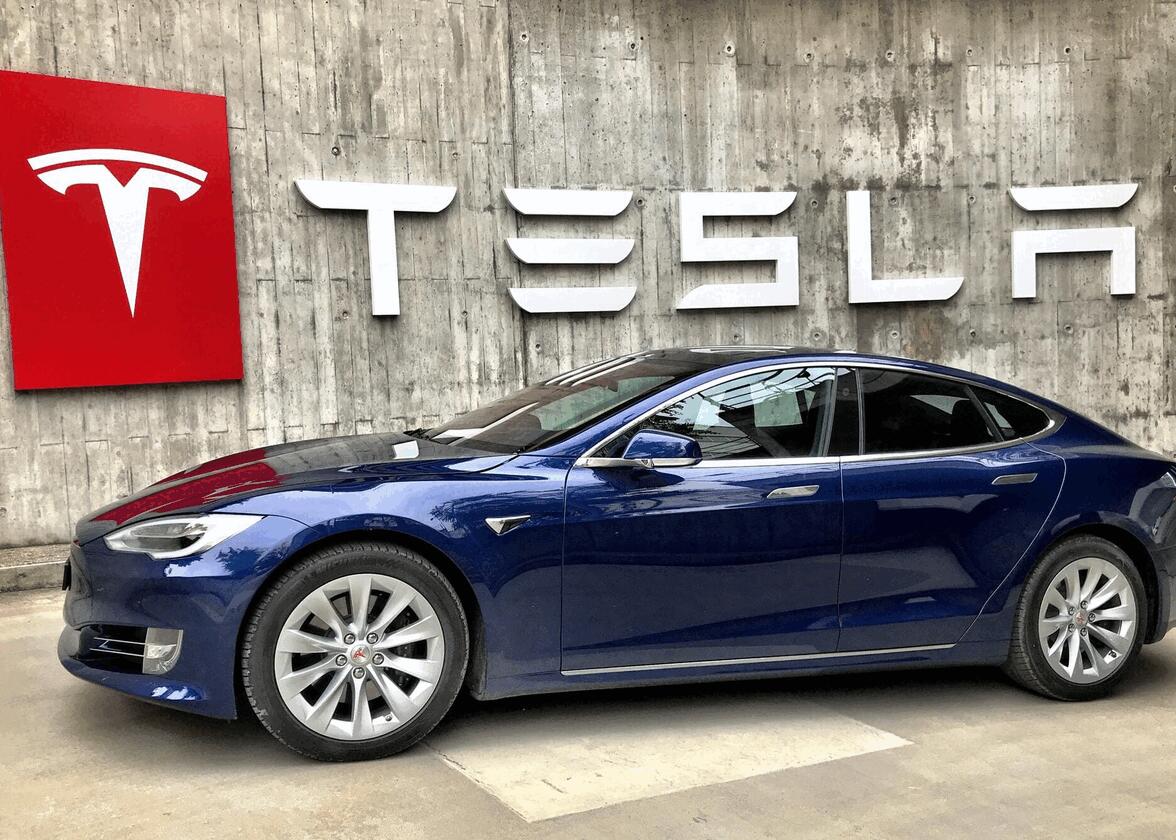
Solugen, the Tesla of chemicals, is one such candidate. It has clear Solara potential.
You don't generate your own electricity. You don't generate your own compute. You should not be doing your own marketing.

A Pitch to Gaurab Chakrabarti, CEO of Solugen: Building the Grand Solara Vision
Dear Gaurab,
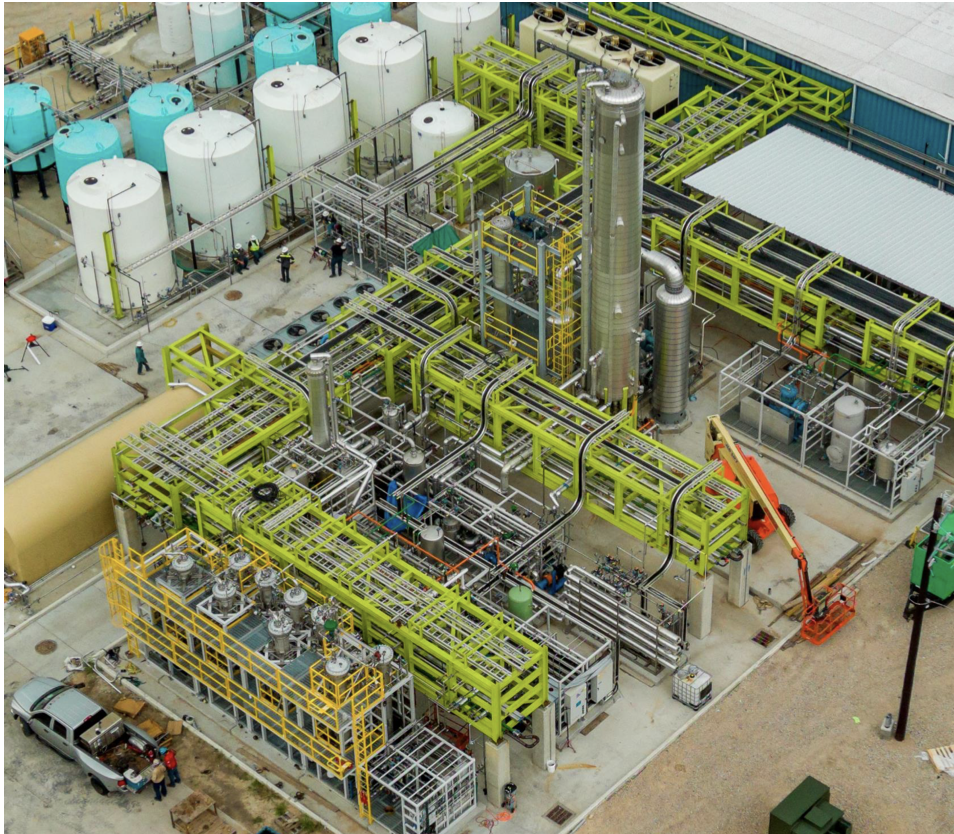
Solugen stands as one of those rare companies with the potential to become a trillion-dollar enterprise. Your Bioforge platform, which produces sustainable, high-performance chemicals from plant sugars rather than petroleum, positions you to decarbonize a massive industry while delivering superior economics. A unicorn is a billion-dollar company. You are aiming higher—a Solara, a trillion-dollar force reshaping materials, manufacturing, and sustainability. I coined the term to capture this ambition.
Achieving this requires more than groundbreaking science and operational excellence. It demands a Grand Solara Vision—a hyper-detailed, moonshot-level roadmap that leaves no confusion about the destination or the path forward.
What Is the Grand Solara Vision?
Think of it as the Apollo program for your company. You do not launch a mission to the moon and then debate direction mid-flight. The vision is a comprehensive, granular framework: a precise 10-year (or longer) action plan that outlines product roadmaps, market expansions, manufacturing scale-up, brand positioning, capital raises, talent acquisition, and partnerships—all aligned to trillion-dollar impact. It is both ambitious and pragmatic. The actual journey will adapt to market realities, technological breakthroughs, and opportunities—the "jazz" that emerges along the way. Yet the vision forces rigorous, big thinking from day one. It becomes a living document: digested, circulated, revised annually, and used to guide decisions. Most importantly, it raises capital, attracts extraordinary talent, and transforms the daily grind into a shared epic. "Where there is no vision, the people perish." With one, everything aligns.
Why an Outside Marketer Is Best Positioned to Craft It
You, the Founder-CEO, are uniquely qualified in many ways. No one understands the technology, mission, or soul of Solugen better. Your vision has already taken the company from idea to a scaled Bioforge platform with significant funding and partnerships.
However, building the full Grand Solara Vision benefits from an external perspective for several reasons:
Fresh eyes on the market and narrative: An outsider brings distance to synthesize your history, current traction (in cleaning, agriculture, water treatment, and beyond), competitive landscape, and trillion-dollar whitespace without internal biases or day-to-day operational blinders.
Marketing as a core discipline: Marketing is not a support function—it is foundational, like electricity or compute. It powers brand perception, customer acquisition, talent attraction, and cultural momentum. Treating it with the respect it deserves often requires dedicated, specialized orchestration that complements rather than burdens the core leadership team.
Proven frameworks for scale: External experts focused solely on this can draw from cross-industry playbooks for consumer visibility, B2B partnerships, and platform storytelling—essential for moving beyond ingredients to iconic brand status.
The Founder-CEO remains the ultimate owner and implementer. This is not delegation of vision; it is amplification. History shows that legendary companies thrive when founders partner with world-class specialists in areas like marketing and strategy.
A Proven, Results-Driven Process
We can deliver the Grand Solara Vision in a matter of weeks:
Month 1: Deep Digestion — Intensive immersion into Solugen’s origins, technology, team, products (e.g., Altiv builders, bio-peroxide, Azogen fertilizer, and emerging applications), customer wins, and aspirations. This phase also shapes the integrated marketing strategy.
solugen.com
Launch and Validation — Roll out with clear metrics. The goal: break even on the marketing investment within three months or less (marketing ROI as the primary KPI). This establishes a "marketing product-market fit."
Scale — Once validated, shift to pedal-to-the-metal growth: 3X, 5X, and higher returns.
Your existing sales and marketing team stays intact for morale and continuity. They gain clear direction and leadership from this effort. I bring my own expandable team as an outside consultant—plug-and-play expertise, treating marketing like reliable infrastructure. The budget covers all paid channels and expenses; you focus solely on one number: positive impact on revenue.
The Outcome
A Grand Solara Vision turns Solugen into a household name while scaling industrial impact. It funds the future, inspires the team, and creates a framework flexible enough for real-world execution yet disciplined enough to reach trillion-dollar scale.Solugen has the technology and the mission. With a bold, detailed vision guiding the way, the journey to Solara status becomes not just possible—but inevitable.I would welcome the opportunity to discuss this further and begin the digestion phase. The vision is ready to be built.
Recommended Marketing Budgets for Solugen (2026 Context)
Solugen reported approximately $44.7 million in revenue (as of 2024 data), operates at a $2 billion valuation, and remains in heavy growth/capex mode with significant funding raised ($850 million total). It is primarily a B2B industrial biotech company transitioning toward greater consumer visibility through products like its Altiv™ bio-based detergent builders and potential branded cleaning lines.
Industry benchmarks provide context:
Manufacturing/Industrial B2B: Typically 5–7.5% of revenue.
Life sciences/biotech: Often 5–10% or higher for growth-focused firms.
Consumer Packaged Goods (CPG)/detergents (for brand-building): 10–20%+.
Growth-stage companies shifting B2B-to-B2C or prioritizing awareness: Can justify 15–30% of current revenue (or more as a fixed investment).
etropo.com
Given Solugen’s stage—scaling manufacturing while needing brand recognition to pull demand—marketing should be viewed as strategic investment rather than pure cost. A focused push on one hero consumer product (e.g., a high-performance, carbon-negative detergent or cleaning line) could deliver strong ROI through direct sales, retail partnerships, media coverage, and B2B pull-through.Here are three scenarios with projected ROI assumptions (3X, 5X, and beyond). ROI here means incremental revenue generated per marketing dollar spent within 12–24 months (conservative for a differentiated sustainability brand with strong storytelling). Actuals depend on execution, creative quality, channel mix (digital ads, PR, retail, influencer, content), and LTV of acquired customers.
1. Moderate Budget: Build Sustainably ($2.5–4 million annually)
% of 2024 Revenue: ~5.5–9%.
Rationale: Aligns with upper-end industrial benchmarks while adding a consumer layer. Enough for professional digital campaigns, PR, content marketing, trade shows, and initial DTC testing without straining cash flow.
Allocation Example:
40% Digital ads + performance marketing (Google, Meta, retail media).
25% Content/SEO/brand storytelling (sustainability narrative).
20% Partnerships/influencers/retail activation.
15% Events/PR/analytics.
Expected ROI:
3X ROI: Generates $7.5–12 million in new/attributable revenue. Solid for B2B reinforcement + modest consumer lift.
5X ROI: $12.5–20 million incremental revenue — realistic with strong product-market fit and carbon-negative differentiation.
Best For: Proving concepts, supporting existing B2B sales, and gradual brand building while Bioforge Marshall ramps.
2. Aggressive Budget: Brand Acceleration ($6–10 million annually)
% of 2024 Revenue: ~13–22%.
Rationale: Treats marketing as growth fuel, similar to high-growth tech or CPG startups entering consumer markets. This level funds a national/regional campaign around a flagship detergent, heavy digital + retail media, PR pushes, and influencer partnerships. It positions Solugen as “the Tesla of chemicals” in public discourse.
Allocation Example:
35–40% Paid acquisition (performance + brand ads).
20–25% Creative/content production + video storytelling.
15–20% Retail/DTC infrastructure and promotions.
10–15% PR, events, and partnerships.
10% Measurement and experimentation.
Expected ROI:
3X ROI: $18–30 million new revenue — accelerates awareness and supports facility utilization.
5X ROI: $30–50 million incremental revenue — moves Solugen toward household recognition and justifies higher future spend.
Beyond (7–10X+): Possible with viral sustainability angles, celebrity/influencer endorsements, or major retail wins (e.g., Target, Whole Foods). Strong margins on detergent products help here.
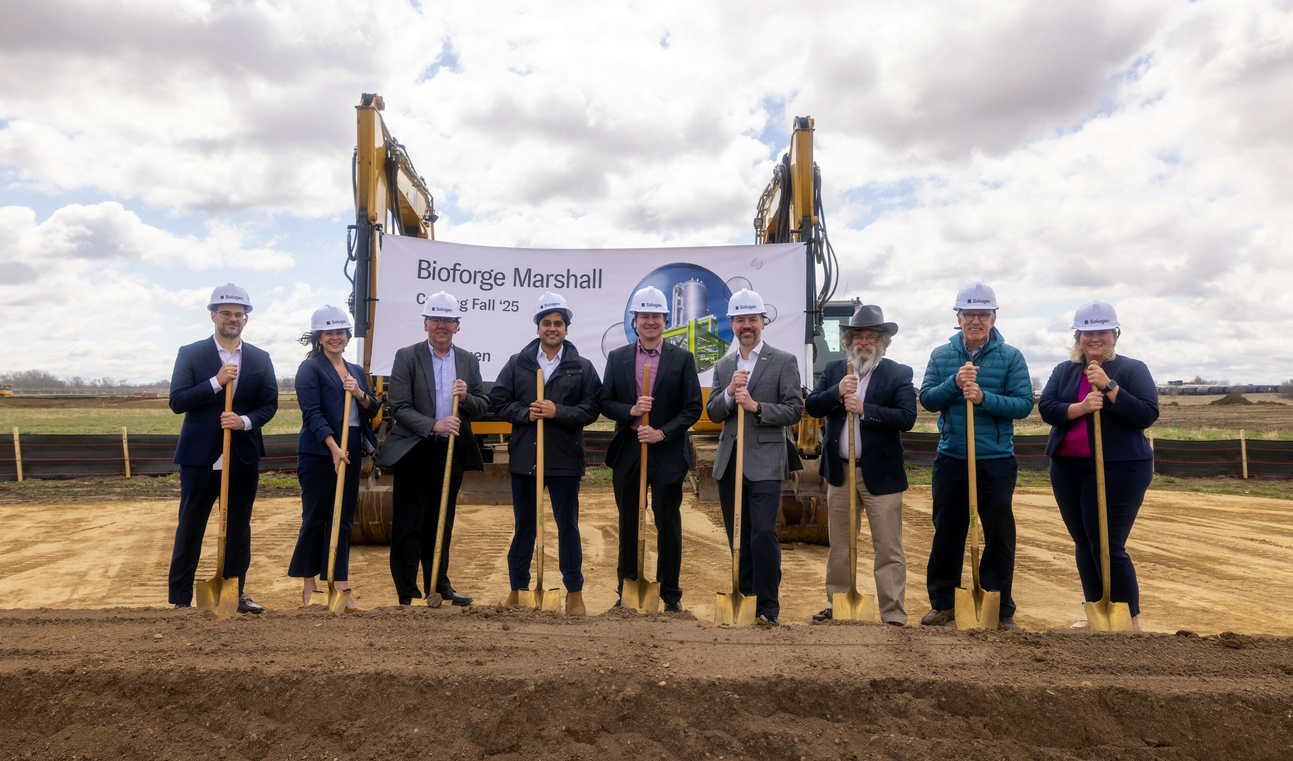
Best For: Capitalizing on new production capacity from Bioforge Marshall (starting fall 2025) and creating demand pull.
3. Super Aggressive Budget: Category Creation Mode ($15–25+ million annually)
% of 2024 Revenue: ~33–55%+ (or framed as a 1–2 year fixed investment funded partly by equity/debt).
Rationale: Full-throttle push to make Solugen a recognized consumer name quickly, akin to how some climate or health brands have scaled awareness. This includes TV/streaming ads, major partnerships, experiential marketing, and a dedicated external marketing team/agency. High but feasible given Solugen’s war chest and valuation.
Allocation Example:
40%+ Mass + digital reach campaigns.
20% Big creative/production (commercials, documentaries on green chemistry).
15% Retail shelf presence and co-branded launches.
15% Influencer/PR/amplification.
10% Tech/tools/team.
Expected ROI:
3X ROI: $45–75 million new revenue — transformative for visibility.
5X ROI: $75–125 million incremental revenue — establishes Solugen as a category leader in sustainable cleaning/chemicals.
Beyond (10X+): Achievable long-term through brand equity, premium pricing power, licensing, and ecosystem effects (e.g., B2B customers preferring a known brand). Consumer LTV from repeat detergent purchases compounds returns.
Best For: Ambitious global ambitions, countering energy constraints with demand certainty, and maximizing valuation multiples.
Key Considerations and Recommendations
Start with a Test: Allocate $1–2 million initially to a focused detergent launch (as previously discussed) to measure real CAC, conversion, and ROI before scaling.
Funding Mix: Tie part of the budget to the next capital raise or operational cash flow from new facilities. Marketing can improve fundraising optics by demonstrating consumer traction.
Metrics to Track: CAC (target under industry averages for CPG ~$80–150), ROAS (aim 4:1+), brand awareness lifts, and attributable revenue (via promo codes, retail tracking).
Risk vs. Reward: Under-spending keeps Solugen as a “best-kept secret” B2B player. Over-spending without discipline burns cash. The aggressive range strikes the best balance for a company with Solugen’s technical edge and mission.
External Expertise: As noted in prior discussions, bring in specialized marketing talent or agencies experienced in CPG/sustainability for execution.
A $6–10 million aggressive annual budget is likely the sweet spot in the near term. It meaningfully moves the needle on visibility without excessive risk, supports revenue growth to match expanding production capacity, and positions Solugen to become the recognizable leader in sustainable chemistry. With disciplined execution and its genuine carbon-negative advantage, 5X+ ROI is attainable and would deliver substantial long-term value.
One scenario: You start with a 6M marketing budget for the year with a goal of 5X to 10X ROI. 10X would mean 60M in new revenue. To that add the Grand Solara Vision. Then you raise 2B at a 20B valuation so as to expand rapidly. Year 2 it is 5B at a 50B valuation. So the marketing is not just increasing revenues, it is raising the money, and exploding the valuation.
50K sign up bonus. Then 500K per month is released at the beginning of each month. Break even expected by month 3. Then it is up and up and up. 2X ROI, 3X ROI, 5X ROI and beyond. Aim a massive fundraising round in 12-15 months.
Digital Sales Funnels https://a.co/d/aEyWYpt
Digital Marketing Minimum: Channels, Optimization, and Analytics
https://www.youtube.com/watch?v=LAFTQfidUrA
Digital Marketing Minimum https://a.co/d/2zLKh8B
Marketing Principles Plus AI https://a.co/d/b07vhfm
The AI Marketing Revolution: How Artificial Intelligence is Transforming Content,
Creativity, and Customer Engagement https://a.co/d/5T9aKEm
The AI Marketing Revolution https://www.youtube.com/watch?v=YbYRN2baywA
The 8-Step Sales Playbook: From Prospecting to Closing
https://paramendra.gumroad.com/l/selling
30 Ways To Close Sales https://a.co/d/c6limLj
Digital Sales Funnels https://a.co/d/aEyWYpt
Unicorns, Solaras, And The Marketing Propulsions They Need 🧵 👇 @coinbase @brian_armstrong @Instacart @Reddit @spez @Dropbox @drewhouston
— Paramendra Kumar Bhagat (@paramendra) May 7, 2026
I made a list of 100 AI tech startup ideas, all of them promising. From that I made a short list of 10 most likely to go to unicorn status the fastest. Then I wanted one that might rush to a trillion-dollar valuation. Answer: AI applied to marketing. 👇👆
— Paramendra Kumar Bhagat (@paramendra) May 7, 2026
And then there is the Solara. A unicorn that has trillion-dollar potential. Solaras will be as common in 10 years as unicorns today. 👇👆
— Paramendra Kumar Bhagat (@paramendra) May 7, 2026
Marketing Escape Velocity: The Path To Unicorn Status And Beyond https://t.co/hUmu5bv6z0
— Paramendra Kumar Bhagat (@paramendra) May 7, 2026
Unicorn to Solara: A Journey of Imagination: From Billion-Dollar Startups to Trillion-Dollar Suns https://t.co/aW3k05R3bM 👆👆👆
Solugen, The Tesla Of Chemicals, Has Solara Potential https://t.co/U4ReObYBDx @solugen @Gaurab
— Paramendra Kumar Bhagat (@paramendra) May 7, 2026
The audio is inaccurate (minute 32) in claiming the 50K sign up bonus, and the 500K per month is separate from the 6M for the year. 50K + 6M broken into 12 parts.
— Paramendra Kumar Bhagat (@paramendra) May 7, 2026