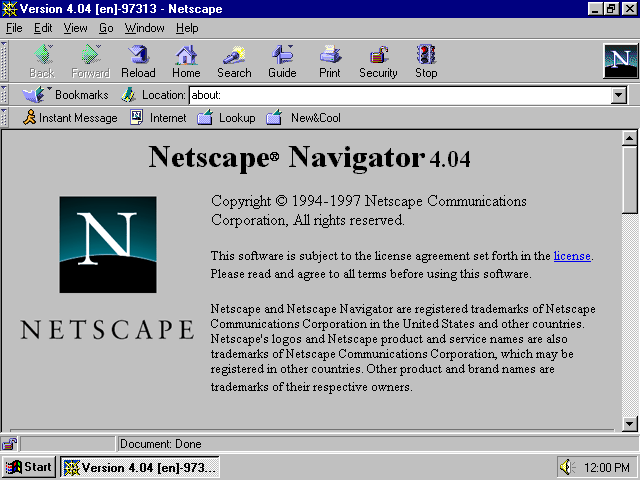
I just read news, Google Snaps Up Top Firefox Programmer. The guy, Ben Googler, I mean Goodger, (how did his parents know, or rather ancestors), announced the news on his blog. That tells you where he belongs.
In one of Larry Ellison's biographies, the earlier ill-written one, there is talk of how the guy - his lifestory reads like fascinating - would promise of software that half the time never got delivered, but he hogged marketshare anyway! Google is the opposite of that. It delivers and surprises. Noone saw the digitizing libraries project coming.
But there is such noise Google is angling for a browser. That would be a major step. You have a slim machine running on Linux, you download a Google browser, you do your word procesing online - the technology is already there, just look at all the features with Blogger, Gmail meets all your email needs, personal as well as work, and so on, and where is Microsoft now! You handle all your text, audio, video, data processing stuff online. There is no Desktop, so to speak of. Wow. I mean, with Internet2, you have 10 gigabytes per second kind of speed. You are always on. With that kind of reliability, you won't need a desktop.
Two schools emerged within Microsoft in the mid-1990s, one Windows, but the other one wanted a new universe entirely around a browser. MSFT would be the gorilla dot com. But Gates squashed that effort. To Gates' credit, he gave some valid reasons, like, how do you make money if you give everything away! (Google's answer: you sell ads, stupid!)
Windows made Microsoft what it is, but it also might be the albatross around its neck.
There is plenty left to be desired on the hardware and software fronts, but the real bottleneck in getting all 6 billion potential surfers online is neither, but connectivity. What business models could emerge to bridge up the digital divide?
Internetaccess is fast becoming a basic need. What do you need to survive? Food and water are obvious. After that free internet access might be pretty close. I am serious.
The word "free" is important there. You don't pay for television shows. You don't pay to search on Google. The ad-model works just fine. The same could apply to internet access.
Say a company (or two, or three) comes forth, and they beam internet access to all corners of the planet. The catch being, when you go online with them, they, not you decide what the homepage will look like. And for that first webpage, they bring you online for "free." Heck, they might even get you to use only their browser, in which case, they could keep a toolbar that will always be with you no matter where you go online.
A click is a click is a click. I am sure a company like Coke/Pepsi does not care who the human being is. They will want people everywhere to see their ads.
And such a democratizing force that universal internet access will be too. Nothing like that to empower the individual. How will autocracies - those that remain - sustain themselves in the aftermath? They plain can't. Social transformation will be quickened. Universal education will become a reality, and it will be seamless from one level to another. A student in Bhutan could be following lectures at MIT.
I am a die-hard fan of Google, have been since its inception. It keeps lifting you up. The most recent two lift-ups for me were, well three: (1) Gmail, (2) Google Scholar, and (3) Google Print and the news about Google digitizing some major libraries.
Google is like Wal-Mart; you walk into a Wal-Mart and you have seen their entire business model.
The idea behind Google print is monumental. It is going to transform the web. The web otherwise has been whistling along like a near empty vessel.
But Google has barely scratched the Google surface.
Let's extend the Google Print vision such that authors the world over, new and accomplished, could entirely skip the publishing industry. You are an author. You sign up and open an account with Google Print for free. You publish what and when you want to publish. All money you make is entirely through Google text-ad-click-throughs. Entire new books in all categories. There is no print version. And the complete text is online for readers for "free," kind of like shows on TV. The "price" on "books" will drop astronomically: they will be gone! No paper. No publishing company. No traditional marketing. This is nothing less than transforming the whole idea of what a book is.
Readers will also have the option to open free accounts. So they can bookmark books. And place bookmarks inside books, or take notes.
Extend that to articles. And desktop word processing becomes irrelevant, especially when people will have the option to have search-engine-protected documents also, or documents with limited circulation. You decide which Google IDs may view it.
The internet is but a fancy telephone: it is a communication tool that makes geography and more irrelevant. Makes socio-economic schisms less of a hassle. Heck, it lets you communicate with dead people through their books. You communicate with people who will be born after you are gone.
The Google Print idea extends to audio and video. For that you are talking new, bold hardware infrastructure just round the corner. An internet computer that you can buy for less than $100 that you could change like underwear if you wanted to. The point being to crack open the 6 billion mass: the more the total number of web surfers, the more money Google makes. The only thing the machine does is it takes you online, preferably at super fast speeds. Memory is a total non-issue for text-audio-video due to nano.
Text-audio-video-photo. Photos get "downloaded" straight from your camera to your online storage where you do all the editing. And all content generates revenue the same way.
See?
At that point Google becomes the number one software company in the world and keeps the throne for a few decades. IBM was a hardware company, that is why Microsoft came along as sexier. But MSFT is a desktop company, it is no dot com. Whereas Google is the sexiest dot com there is. That is why it will take over the lead.
This is a disingenuous understanding. If Jobs did not introspect, the iMac would not have built on the Mac, the iPod would not have built on the iMac, and the iPhone would not have been built on top of them all. What he is saying is focus and forward looking. @parmita
I have a hard time believing Amitabh Bachchan has watched Sholay only two times. That is focus. That is forward looking. But not lack of introspection. He channeled Sholay in many future films.
This is a disingenuous understanding. If Jobs did not introspect, the iMac would not have built on the Mac, the iPod would not have built on the iMac, and the iPhone would not have been built on top of them all. What he is saying is focus and forward looking. @parmita
I have a hard time believing Amitabh Bachchan has watched Sholay only two times. That is focus. That is forward looking. But not lack of introspection. He channeled Sholay in many future films.
This is a disingenuous understanding. If Jobs did not introspect, the iMac would not have built on the Mac, the iPod would not have built on the iMac, and the iPhone would not have been built on top of them all. What he is saying is focus and forward looking. @parmita
I have a hard time believing Amitabh Bachchan has watched Sholay only two times. That is focus. That is forward looking. But not lack of introspection. He channeled Sholay in many future films.
This is a disingenuous understanding. If Jobs did not introspect, the iMac would not have built on the Mac, the iPod would not have built on the iMac, and the iPhone would not have been built on top of them all. What he is saying is focus and forward looking. @parmita
I have a hard time believing Amitabh Bachchan has watched Sholay only two times. That is focus. That is forward looking. But not lack of introspection. He channeled Sholay in many future films.
The Evolution of Interfaces: From GUI to Touch to Voice — and Why the Future Belongs to All Three, Powered by Agentic AI
For decades, the story of human–computer interaction has unfolded like a relay race—each new interface inheriting the baton from the last, then sprinting further.
First came the Graphical User Interface (GUI): windows, icons, menus, and pointers that transformed computers from arcane machines into approachable tools. Then arrived the touchscreen revolution, compressing the power of desktops into glass slabs that responded to the human finger. Today, voice interfaces are rising—fluid, conversational, and increasingly capable of understanding not just words, but intent.
It is tempting to view this progression as linear:
GUI → Touch → Voice
But that framing misses the deeper truth.
The future does not belong to any one of these paradigms. It belongs to their fusion—a seamless, intelligent blending of GUI, touch, and voice—unified and orchestrated by a new layer of intelligence: agentic AI.
The Limits of One-Size-Fits-All Interfaces
Each interface is, in essence, a tool shaped by context.
GUI thrives in environments of focus. It is the architecture of precision—ideal for spreadsheets, design software, and complex workflows where detail matters.
Touch excels in immediacy. It is tactile, intuitive, and mobile—a language of swipes and taps that compresses intent into motion.
Voice liberates interaction entirely. It removes the need for screens and hands, allowing humans to command technology while living their lives.
And yet, each is incomplete on its own.
Voice can feel like sculpting with air when precision is required. Touch can become clumsy when navigating dense information. GUI can feel like being chained to a desk in a world that increasingly demands mobility.
The problem is not the interfaces. The problem is the assumption that one must dominate.
The real breakthrough emerges when systems stop forcing humans to adapt to interfaces—and instead allow interfaces to adapt to humans.
The Moment of Convergence
Imagine this:
You are reviewing a financial model on your laptop. Charts, projections, and datasets fill the screen—pure GUI territory.
You pinch to zoom into a trendline—touch stepping in for spatial intuition.
Then, without pausing, you say:
“Agent, pull the latest sales data from the CRM, run a regression analysis, and draft an email summarizing the top three insights.”
There is no mode-switching. No clicking through menus. No opening new tabs.
The system simply understands.
Behind the scenes, something profound has happened. The interface has dissolved into the background, and a new actor has stepped forward.
Enter Agentic AI: The Invisible Orchestrator
Traditional software waits. It responds to commands like a well-trained but passive instrument.
Agentic AI acts.
It plans, reasons, executes, and iterates. It moves across tools, connects data sources, and completes multi-step workflows with minimal supervision. It is less like a calculator and more like a collaborator.
When paired with multimodal interfaces, agentic AI becomes the conductor of a silent symphony:
Voice initiates intent.
GUI displays complexity when needed.
Touch refines and navigates.
The agent orchestrates everything in between.
Consider a simple, everyday scenario:
You are walking through a park on a sunny afternoon. Your phone remains in your pocket.
You say:
“Start my weekly content workflow.”
In seconds, your agent:
Reviews your calendar and deadlines
Analyzes yesterday’s engagement metrics
Drafts multiple social media posts optimized for performance
Generates accompanying visuals
Schedules publication
Prepares a summary report for your team
At any point, you can:
Glance at your screen to review outputs (GUI)
Tap to tweak a headline (touch)
Or simply continue speaking (voice)
The interface doesn’t demand your attention. It follows it.
The Seamless Trifecta
The most powerful interface of the future will not announce itself. It will feel less like a tool and more like an extension of thought.
Its logic will be simple:
Voice for initiation and high-level direction
Touch for quick adjustments and spatial interaction
GUI for deep focus and complex visualization
But the magic lies in what the user does not see: the transitions.
There is no friction. No explicit switching. The system senses context:
Are you moving or stationary?
Are your hands occupied?
Is your gaze directed at a screen?
Is the task exploratory or precise?
The interface adapts in real time, like water taking the shape of its container.
Freedom as the Ultimate Feature
Previous generations of computing optimized for power.
This generation optimizes for freedom.
Freedom from desks. Freedom from screens—when you don’t want them. Freedom to think, create, and execute while in motion.
With agentic AI handling the heavy lifting, humans shift from operators to orchestrators—from clicking through workflows to simply declaring intent.
This unlocks entirely new behaviors:
A founder closes a million-dollar deal while walking a trail.
A parent coordinates a marketing campaign while cooking dinner.
An executive reviews strategy decks mid-run, speaking insights into existence.
Work no longer demands stillness. Productivity no longer requires presence at a machine.
Beyond Interfaces: Toward Ambient Intelligence
What we are witnessing is not just an evolution of interfaces, but their dissolution.
GUI, touch, and voice are not endpoints. They are stepping stones toward something more profound: ambient intelligence.
In this world:
The “computer” is no longer a device.
The “interface” is no longer visible.
The “interaction” is no longer deliberate.
Instead, intelligence surrounds you—listening, interpreting, and acting in harmony with your environment.
The progression no longer reads:
GUI → Touch → Voice
It becomes:
GUI + Touch + Voice → Unified → Invisible
The Competitive Race
Every major technology platform is converging on this vision. But winning will require mastery across three dimensions:
Natural, low-friction voice understanding Not just transcription, but deep comprehension of intent, context, and nuance.
True agentic capability Systems that can plan, execute, and adapt—not merely respond.
Seamless multimodal orchestration Effortless transitions between GUI, touch, and voice without cognitive overhead.
Most companies will excel at one. A few will manage two.
The winners will integrate all three so completely that users forget they exist.
The Computer That Walks Beside You
When this convergence reaches maturity, the most powerful computer in your life will not sit on your desk or rest in your pocket.
It will move with you.
It will walk beside you in the park. Run with you on the trail. Sit quietly as you think—and speak when you do.
It will listen, act, and create—not as a tool, but as a partner.
And all it will ask in return is something profoundly human:
This is a disingenuous understanding. If Jobs did not introspect, the iMac would not have built on the Mac, the iPod would not have built on the iMac, and the iPhone would not have been built on top of them all. What he is saying is focus and forward looking. @parmita
I have a hard time believing Amitabh Bachchan has watched Sholay only two times. That is focus. That is forward looking. But not lack of introspection. He channeled Sholay in many future films.
Introspection? Bro, That's for Losers Who Don't Have a16z Money: Marc Andreessen's Zero-Reflect Revolution (Satire Edition) Listen up, peasants. While the rest of us are out here staring into our morning coffee like it's a therapy session with Socrates ("Why do I keep doom-scrolling cat videos at 3 a.m.?"), Marc Andreessen—aka Pmarca, the human espresso shot of venture capital—has officially declared war on the entire concept. In his latest podcast glow-up with David Senra, Marc dropped the truth bomb: "Zero introspection. As little as possible." Why? Because dwelling on the past is some dusty 1910s Freudian guilt trip designed to make you second-guess your empire-building. Great founders don't sit around journaling their childhood traumas. Steve Jobs didn't wake up pondering his feelings; he just... stole ideas and built iPhones. Sam Walton? The man was too busy Waltoning to wonder if he was emotionally available. And when the internet (predictably) lost its collective mind and started quoting Marcus Aurelius like it was a TED Talk, Marc fired back with the most savage mic drop in tech history: "A lot of you need to do more introspection, obviously." Boom. Roasted. The man who just said introspection is fake news is now prescribing it to you. It's like a diet guru telling you "carbs are poison" and then handing you a pizza while winking. Chef's kiss. Pure art. But oh, the replies. The replies! The blog post at barackface.net rounded up the greatest hits like it was curating the Met Gala of clapbacks, and folks, it is chef's kiss chaos. Exhibit A: Some absolute legend (
@paramendra
, king of the timeline) hits back with, "This is a disingenuous understanding. If Jobs did not introspect, the iMac would not have built on the Mac, the iPod would not have built on the iMac, and the iPhone would not have been built on top of them all." Translation: Steve wasn't "forward-looking"; he was straight-up recycling his own greatest hits like a DJ at a Silicon Valley afterparty. Without a little navel-gazing, we'd all still be using beige boxes the size of toasters. Not done yet. Same dude doubles down with the ultimate Bollywood mic drop: "I have a hard time believing Amitabh Bachchan has watched Sholay only two times. That is focus. That is forward looking. But not lack of introspection." And then—because why not?—links the iconic "Amitabh Bachchan Requesting Mausi" Sholay comedy scene. Imagine Marc in his a16z fortress, sipping oat milk lattes, suddenly getting served a 1975 Hindi film clip where Big B is begging his auntie for snacks. "See? Even the Angry Young Man of India introspected his way to legend status while stealing lines from his own blockbusters!" Marc's probably googling "Sholay" right now, muttering, "This is why I said zero." The hits keep coming. "Attending langars cures that," says the same reply guy, because nothing says "I reject Freud" like free community kitchen vibes from Sikh tradition. (Marc: "Wait, is that... community? Gross. Next slide.") Then enters
@parmita
, the MVP of the thread, who just couldn't contain the giggles: "I’m so sorry this whole introspection thing is so fkn funny + my respect for
@pmarca
went up 1000x for not backing down. " Followed by "This is art btw" with a link that probably features Marc's face photoshopped onto a Greek statue looking constipated. And the pièce de résistance: "yo claude, u got any more introspection? i will pay you $100/mo" with a pic.twitter.com meme that screams "AI, please introspect for me because Marc said it's banned." It's like the entire timeline turned into a roast session at a comedy club where the headliner is a billionaire yelling "Stop thinking about yourself!" while everyone else is thinking very hard about how unhinged that is. Marc's out here building the future of tech, crypto, and probably robot butlers, yet somehow the man who invented the modern internet browser (Netscape, anyone?) forgot that "moving forward" usually requires glancing in the rearview mirror at least once. Otherwise you're just that guy speeding down the highway blasting "Born to Be Wild" while the GPS screams "You missed your exit 47 miles ago." So here's the real satire, folks: Marc Andreessen, the guy who funds the next Facebooks and Uber Eats of tomorrow, has achieved enlightenment by rejecting enlightenment. Introspection is for the weak, the guilty, the Europeans. Real alphas just... go. No therapy. No journaling. No "What does it all mean?" Just pure, unfiltered forward motion. Until, of course, a bunch of randos on Twitter make him the main character of the week and he has to tweet the sarcasm equivalent of "Touch grass... but make it philosophical." Peak comedy. Peak hypocrisy. Peak Marc. If you're reading this and feeling a twinge of self-doubt—STOP. That's the Freud talking. Close the tab. Go build something. Or at least tweet "A lot of you need to do more [insert your own delusion here]." Because in the Church of a16z, the only acceptable introspection is realizing you should do even less of it. Namaste, or whatever the non-introspective version of that is. Marc would be proud. (Or would he? Don't ask him—he's too busy not thinking about it.)
Marc Andreessen’s Netscape Introspection: The Man Who Invented “Zero Introspection”… Then Spent 90 Minutes Reliving 1994 Like It Was Yesterday (A Deep, Hilarious Dive) Oh, the delicious, browser-shaped irony. In the March 2026 David Senra podcast (titled, fittingly, “My Conversation With Marc Andreessen, Co-Founder of a16z & Netscape”), Marc drops his now-viral manifesto at the 0:56 mark: “Zero. As little as possible. Move forward. Go.” He elaborates, dead serious: People who dwell in the past get stuck. Great founders (Sam Walton, Steve Jobs, etc.) have “little or zero introspection.” The whole concept is a 1910s Freudian guilt trap. Real alphas don’t journal their feelings—they just build Walmart or steal the iPhone from their own previous products. Cool story, bro. Then, for the next hour and a half, Marc proceeds to do the most gloriously detailed, self-aware, time-traveling introspection on Netscape you’ve ever heard. It’s like watching a guy swear off sugar while mainlining a 64-ounce Coke and narrating every sip. Let’s rewind the tape (because Marc literally does). 58:33 – Building Mosaic Browser Marc at 22, University of Illinois, hacks together the first graphical web browser because… the internet was boring text and he was bored. He casually mentions flooding the tech-support inbox so hard that the university almost shut the project down. That’s not “move forward.” That’s “I remember exactly how many angry emails I got in 1993.” 59:45 – NSFnet Commercial Ban He recounts the exact government policy that said “no commercial activity on the internet, ever.” Then the moment it flipped. This isn’t zero introspection; this is a man who still has the Acceptable Use Policy memorized like it’s his wedding anniversary. 01:01:28 – Eternal September AOL dumps millions of normies onto the net in one month and everything explodes. Marc describes the chaos with the glee of someone who was there, dodging the spam tsunami, watching the web turn from nerd toy to global phenomenon. He’s not moving forward—he’s giving you the oral history. 01:07:49 – Netscape Business Model Free browser. Paid servers. Early advertising. E-commerce before Amazon existed. He breaks down the exact pivot from “we’re just shipping code” to “we accidentally invented the internet economy.” This is introspection so deep it has chapters. 01:25:11 – Netscape Two Jims The drama! Jim Clark (the Silicon Graphics legend who basically invented 3D graphics for Jurassic Park) vs. Jim Barksdale (the professional CEO). Marc paints Clark as the visionary founder who saw the future and Barksdale as the manager who… well, let’s just say the podcast doesn’t hide the tension. Marc is dissecting founder-manager psychology like a therapist who swore he doesn’t do therapy. And then he ties it all to modern lessons: moral panics (bicycle face in the 1890s, web porn fears in the 90s, AI freakouts today), Edison vs. Tesla, why forecasting is mostly nonsense, and how Elon’s “bottleneck-first” style is the spiritual successor to 1995 Netscape speed. Bro. You just spent an entire podcast introspecting on the exact moment you commercialized the internet, while claiming introspection is fake news invented by Europeans with too much time and cocaine. This isn’t even the first time. In July 2024, Marc and Ben Horowitz dropped a whole a16z episode literally called “Marc Andreessen on Building Netscape & the Birth of the Browser”—with Ben promising at the top that “until today, this story has never been fully told either in its entirety or accurately.” They went full oral-history mode for 90+ minutes. Again. So here’s the real Marc Andreessen Netscape Introspection Special: He doesn’t “dwell in the past.” He weaponizes it. Every detail of the 1994 chaos— the tech-support floods, the government bans, the two Jims drama, the moral panic—is fuel for today’s AI/crypto/defense bets. The man who says “great founders have zero neuroticism” has turned his own neurotic-level memory of 1990s browser wars into the origin myth that powers a16z. It’s the ultimate flex: “I don’t introspect… except when I turn my entire life story into the most compelling founder TED Talk ever recorded, twice, in public, with timestamps.” Meanwhile, the Twitter replies (the ones the barackface blog lovingly embedded) are still screaming: “Netscape would not agree!” and “Steve Jobs literally built the iPhone by introspecting on the iPod.” Marc’s response, if he bothered? Probably another sarcastic tweet and then back to funding the future while accidentally dropping another 45-minute Netscape flashback in the next podcast. Peak Marc. Peak comedy. Peak “zero introspection” while giving the most introspective Netscape masterclass in Silicon Valley history. Move forward? Sure. But first, let me tell you about this one time in 1993 when the tech support emails broke the server…
I’m now getting a ton of positive messages from the anti-anti-anti-introspection crowd, thank you all.

![Reblog this post [with Zemanta]](https://lh3.googleusercontent.com/blogger_img_proxy/AEn0k_sJ6OmMBlfme5fMMjWvPfufRROKMgVqnz88Y0hQAsCrdTief_xMxwt6FoXNTLCHecVpYrmQf6N8Gt9U_8NusHrw8o38x4ZekGpy2iyqcHca9zRT2hcVoe_zRN47xv1FRXIDFZ32krZ9hfhQNDaiSMiW=s0-d)

![Reblog this post [with Zemanta]](https://lh3.googleusercontent.com/blogger_img_proxy/AEn0k_vP7WLvsYSmvE73Y-fMdp4rn2IQLarTlSLnuAb2kKDzXdmjHNv1ZVEjznagr-1KMIYaDrbgDuiJ0nmqmDp3-oG1644A_ksyF6d6y6NVOFaEHxNCNVsOGTcgUwO7lq_hMr9g3mYfK7PAb273fpGqDI0j=s0-d)
![Reblog this post [with Zemanta]](https://lh3.googleusercontent.com/blogger_img_proxy/AEn0k_v0tP84Qf5JX-A8pQinhvM1TX8SK8EOWHg-3YAq6nNcIoza7_2Z0sSDJ7keD9It2S5OrTTtPdNerVhYuBgF2M7fM8_It4zIqQG8hlinyvLJC1J-BX9h3l_O3u0rvuc9uSbZDiE_AR3ECcJxbz5R__U=s0-d)